

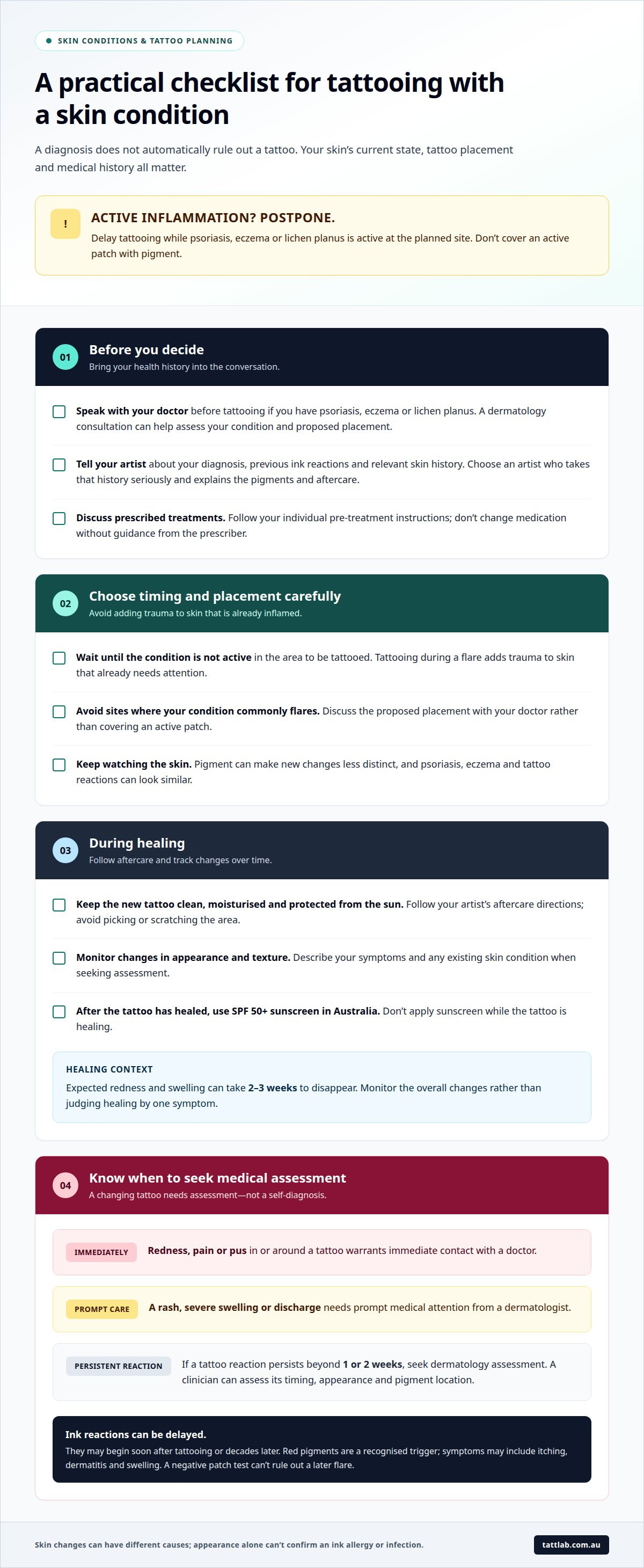
A skin condition doesn’t automatically rule out a tattoo, but an active inflammatory flare is a reason to postpone. Tattooing for clients with skin conditions calls for careful consideration of the diagnosis, the skin’s current state, and any history of scarring or ink reactions. If you have psoriasis, eczema or lichen planus, speak with a doctor before tattooing and avoid areas where your condition commonly flares.
It’s understandable to want a clear picture of the risks before making a decision about your skin. This guide explains how ink reactions and infection may appear, which warning signs need prompt medical attention, and how psoriasis, eczema, lichen planus, vitiligo and keloid scarring may affect tattooing. It also covers healing and aftercare, helping you weigh the considerations before deciding.
Key Takeaways
- Ink reactions can emerge long after the appointment, and a negative patch test can’t rule out a future flare.
- Know which changes need prompt medical attention, and keep monitoring the tattoo as it heals.
- With psoriasis, eczema or lichen planus, timing and tattoo placement matter; active inflammation is a reason to delay.
- Keloid scarring and vitiligo can affect healing or the skin’s appearance, so discuss your medical history before deciding.
Allergic reactions to tattoo ink
Ink reactions can begin soon after tattooing or decades later. Red pigments are a recognised trigger, and symptoms may include itching, dermatitis and swelling.
Patch testing may identify pigments linked to hypersensitivity, but a negative result can’t rule out a later flare. Reactions can have other causes too, so appearance alone can’t confirm an ink allergy.
Choose an artist who asks about your skin history, explains the pigments being used and follows clear hygiene practices. Before the session, share any previous ink reactions and relevant diagnoses.
Tattooing rules in Australia can differ between states and territories, so requirements aren’t identical nationwide. Ask the relevant local health authority about the rules where the tattoo will be done.
A skin condition doesn’t automatically determine a tattoo’s price or session time. Design size, detail, placement and pauses for comfort all affect the work involved.
Before tattooing, tell your treating doctor and artist about prescribed treatments, and follow your individual pre-treatment instructions. Don’t change medication without guidance from the prescriber.
Diagnosis and Treatment of Tattoo Reactions
A tattoo reaction is a change in the treated skin that needs clinical assessment to identify its cause. A dermatologist can review its timing, appearance and pigment location; a biopsy may help distinguish a lichenoid reaction from a pseudolymphomatous one. Treatment depends on the diagnosis and can involve medical therapies. If a reaction persists beyond 1 or 2 weeks, seek dermatology assessment.
Sun-Triggered and Granulomatous Reactions
Sun-triggered reactions are symptoms that emerge or worsen after ultraviolet exposure, while granulomatous reactions involve clustered immune cells around material such as pigment. Granulomas in tattooed skin can occur alongside sarcoidosis, a condition that needs medical evaluation. Protect healed tattoos with SPF 50+ sunscreen in Australia; don’t apply sunscreen while the tattoo is healing. Have persistent raised or inflamed areas assessed, rather than assuming they are routine aftercare or skin cancer.
Infection prevention and warning signs
Fresh tattoos need attentive care as the skin recovers from the procedure. Expected redness and swelling can take 2-3 weeks to disappear, so monitor changes rather than judging healing by one symptom.
Tattoo-Related Infection Risks
A tattoo-related infection is a complication involving germs entering or affecting the pierced skin. Risk matters because a larger tattoo increases the area of skin exposed to potential problems. A 2021 analysis reviewed 308 tattoo and permanent makeup complication cases, illustrating the range of issues that can follow these procedures.
Redness, pain or pus in or around a tattoo warrants immediate contact with a doctor. A rash, severe swelling or discharge also needs prompt medical attention from a dermatologist. These signs need assessment, so don’t rely on appearance alone to decide whether the problem is an infection.
Infection Prevention
Preventing infection involves careful hygiene during tattooing and consistent care while the skin heals. Keep a new tattoo clean, moisturised and protected from the sun. Follow your artist’s aftercare directions, and avoid picking or scratching the area, which can disturb healing skin.
Check the tattoo regularly for changes in appearance or texture. If redness, pain or pus appears, contact a doctor immediately. For a rash, marked swelling or discharge, seek prompt dermatology care. Eczema and contact dermatitis can also cause skin changes, so describe your symptoms and any existing skin condition during assessment.
Choose an artist who takes your skin history seriously and explains the procedure and aftercare clearly. For the healing phase, tattoo aftercare essentials can support a consistent care routine. A changing tattoo deserves medical assessment rather than a self-diagnosis of infection or skin cancer.
Psoriasis, eczema and lichen planus flare-ups
Psoriasis, eczema and lichen planus can affect tattoo decisions, even when the aim is cosmetic. The key considerations are whether the condition is active and where it typically flares.
Psoriasis and Eczema Flare-Ups
A flare-up is a period when psoriasis or eczema is active, with symptoms affecting the planned tattoo area or elsewhere. Delay tattooing while inflammatory skin disease is active. Tattooing during a flare adds trauma to skin that already needs attention.
If you have psoriasis or eczema, discuss tattooing with a doctor first. A dermatology consultation can help assess your condition and proposed placement. Avoid locations where the condition commonly flares rather than covering an active patch. Before planning the design, tell your artist about your diagnosis and any previous allergic reactions.
Psoriasis in Tattoos
Psoriasis can affect tattooed skin, so pay close attention to new or changing patches within a design. A tattoo doesn’t establish a psoriasis diagnosis; both the skin’s appearance and your history matter. Tell your doctor when a change began and whether it resembles symptoms you’ve had elsewhere.
Don’t assume every raised, itchy or inflamed patch is an ink allergy. Psoriasis, eczema and tattoo reactions can look similar, while their causes and treatment differ. A dermatologist can assess the skin and guide next steps. This distinction matters for permanent makeup as well as decorative tattoos, because both involve pigment placed in skin.
Healing, Results, and Visible Skin Changes
Tattooing affected skin can make healing and the final appearance harder to assess. Active psoriasis, eczema or lichen planus at the planned site is a reason to postpone, not cover the area with pigment. A tattoo can also make new skin changes less distinct, so monitor the area as it heals.
Can tattooing affected skin influence healing, results or the visibility of skin changes? Yes. Active inflammation can complicate healing, and pigment can make changes harder to see. Choose a site without active disease, discuss placement with your doctor, and seek assessment for new or persistent changes.
Tattooing with other medical conditions
Planning a tattoo when you have a skin condition starts with discussing your diagnosis, allergy history and tendency to scar with your dermatologist. Ask whether the proposed placement affects your risks and which symptoms should prompt medical review.
Keloid scarring needs particular consideration because tattooing causes skin trauma. If you’re prone to keloids, reconsider getting a tattoo, as raised scars can permanently alter its appearance. Ask your dermatologist how your scarring history relates to the planned area, and tell your artist about previous keloids before settling on a design or placement.
For tattooing for clients with skin conditions such as vitiligo, ask specifically about the Koebner phenomenon. It describes new lesions developing at sites of skin trauma, including tattoo sites. An estimated 21 to 62% of patients with vitiligo experience this phenomenon after tattoos or other cutaneous trauma. Discuss how to monitor the area and whether the planned design could affect the visibility of lesions as skin changes develop.
Before deciding, prepare a concise history for your dermatologist and artist. Include previous ink allergies, diagnosed skin conditions, scarring patterns and reactions after earlier procedures. Ask which areas commonly flare or scar, and whether the planned site avoids them. Discuss tattoo inks and any past pigment reactions. Share the design’s size and placement so these factors inform the conversation. For professional tattoo inks, explore available options as part of planning with your care team.
Have these conversations while deciding whether to proceed, not as a final check after settling on a design. Explain known allergy concerns and existing skin conditions to both your dermatologist and tattoo artist, so they can consider them before you decide. Focus on whether tattooing is appropriate for you and whether any concerns need further attention. If you’re prone to keloids, consider how scarring could change the tattoo’s appearance and whether you want to proceed. Take time to weigh the advice; postponing your decision is preferable to proceeding without discussing your concerns.
Tatt Lab: Tattoo Aftercare
Tatt Lab offers Tattoo Aftercare products for your routine after a tattoo. If you have a medical skin condition, use aftercare alongside your tattoo-care instructions, not as a substitute for medical advice or assessment.
Keep your care plan simple and consistent. Follow the instructions you’ve been given, and contact a doctor if concerning changes develop during healing. Tatt Lab also supplies tattoo inks, needles and cartridges for tattoo professionals.
Visit tattlab.com.au to explore Tattoo Aftercare and related tattoo supplies.
Make your next step a considered one
A thoughtful approach to tattooing for clients with skin conditions respects both your health and personal goals. Before booking, write down questions for your dermatologist and artist, including how the planned placement relates to your medical history and which changes to monitor afterward. That conversation can help you make an informed decision without rushing.
Once your care plan is clear, practical preparation matters too. Tatt Lab supplies Tattoo Aftercare, Traditional Needles and Tattoo Catridges for tattoo care and professional studio use. These products support the practical side of tattooing, while decisions about a skin condition belong in your healthcare discussion.
For product information or to discuss tattoo supplies, contact Tatt Lab about your tattoo. Take the next step at a pace that feels right, with your skin health guiding the process.
Frequently Asked Questions
Which skin conditions may make tattooing unsafe or require medical advice?
Active psoriasis, eczema or lichen planus calls for medical advice before tattooing, and you should wait until inflammatory disease is no longer active. A history of keloid scars also matters, as further skin trauma can affect the tattoo’s appearance. Before planning, tell your dermatologist about past ink allergies, recurring flare sites and previous scars. Then discuss how the proposed location relates to these factors.
Can people with eczema, psoriasis, acne, or vitiligo get tattoos?
Some people with these conditions may consider tattooing, but the diagnosis and the skin’s current state affect the decision. A psoriasis or eczema flare is a reason to delay; avoid sites where these conditions commonly flare. Vitiligo can involve a Koebner response after skin trauma. If you have acne, discuss the intended site and its current condition with a doctor before deciding, rather than tattooing through an active problem area.
Can tattooing trigger psoriasis, eczema, keloids, or other skin reactions?
Yes, tattooing can be followed by a flare or other skin response. Skin trauma may trigger psoriasis or vitiligo changes at the tattoo site; an estimated 21 to 62% of patients with vitiligo experience the Koebner phenomenon after tattoos or other cutaneous trauma. People prone to keloids may develop raised scarring that changes the design. Tell your dermatologist about your history and ask what changes warrant review.
What are the typical tattoo costs in Australia, and do skin conditions change the price or session time?
Skin conditions don’t automatically determine price or session time. Design size, detail, placement and pauses for comfort affect the work involved.


Comments (0)
There are no comments for this article. Be the first one to leave a message!