

For tattooing, nitrile is a common choice for disposable gloves. Medical grade gloves for tattooing should provide a secure grip and allow precise movement while creating a barrier between hands, blood and other bodily fluids. Change gloves during work and between clients to help reduce cross-contamination.
Choosing gloves involves more than finding the right fit. Consider dexterity, material sensitivities and the task: a restrictive glove can make detailed work harder.
This guide compares nitrile, vinyl and latex gloves for tattoo and beauty work, and explains how disposable gloves help reduce exposure to blood-borne pathogens. It also covers what to consider when selecting gloves and when to replace them, so you can build a careful, consistent routine for each procedure.
Key Takeaways
- Choose gloves for fit, grip and tactile control, since comfort and dexterity matter during detailed work.
- Consider latex sensitivities when selecting materials, and remember that nitrile may not suit people with nitrile sensitivities.
- For tattooing, the guidance recommends at least 3.0 mil thickness; heavier tasks may call for 5.0 mil-7.0 mil nitrile gloves.
- Replace gloves if they’re damaged, and account for exposure to sharp tools, rough surfaces and chemicals when setting your work routine.
What Kinds of Gloves Do Tattoo Artists Use the Most?
Nitrile disposable gloves are a common choice for tattooing, balancing puncture resistance with dexterity. Compare material, fit, thickness and colour with the tasks you perform.
Nitrile Material and Latex Alternatives
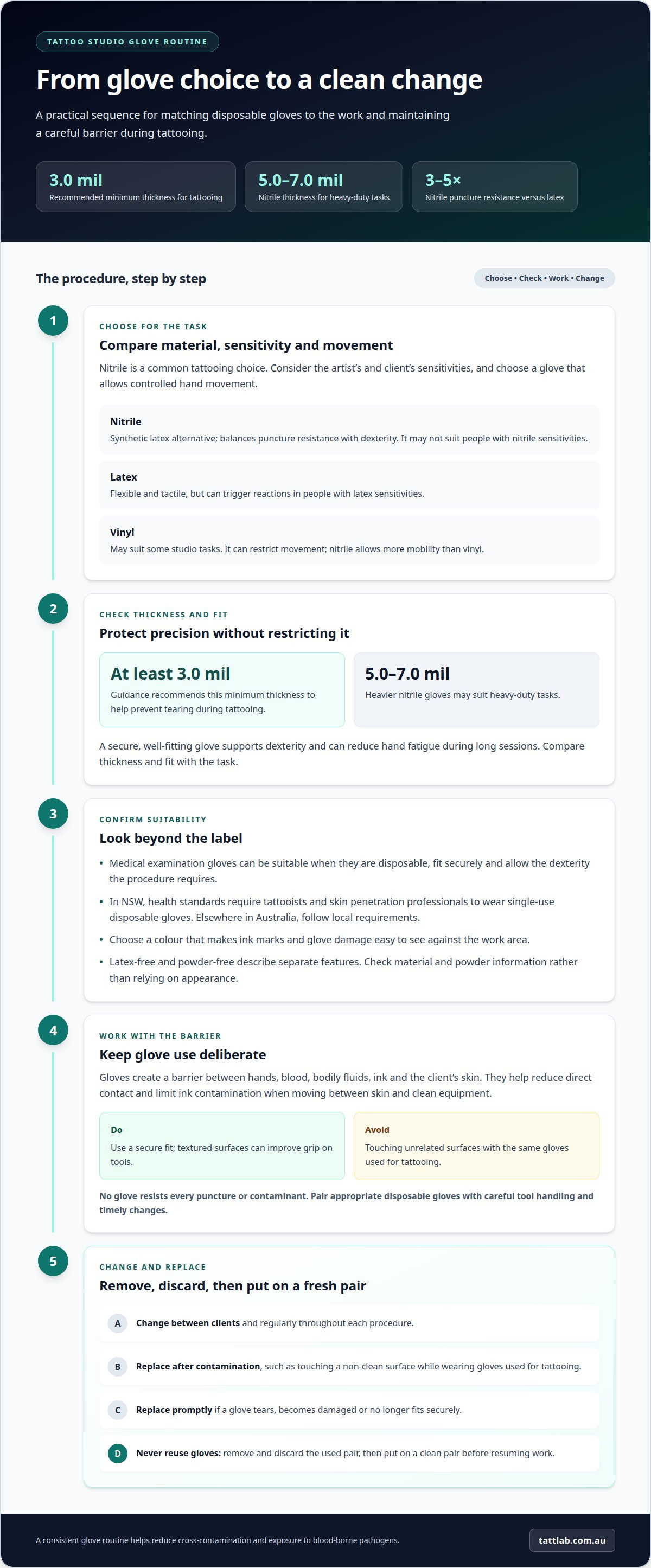
Nitrile is a synthetic alternative to natural rubber latex. Latex gloves are made from latex and are flexible. Nitrile gloves can help avoid exposure to latex, but they may not suit people with nitrile sensitivities. Consider both the artist’s and client’s sensitivities, then choose gloves that allow controlled hand movement.
Puncture Resistance and Dexterity
Nitrile gloves are 3-5 times more resistant to punctures than latex gloves, making material choice relevant around tattoo needles. The guidance recommends 3.0 mil as the minimum thickness to help prevent tearing during tattooing; 5.0 mil-7.0 mil nitrile gloves suit heavy-duty tasks. A well-fitting glove supports dexterity and can reduce hand fatigue during long sessions.
Colour and Disposable Options
Colour can be a practical factor: choose a shade that makes ink marks and glove damage easy to see against your work area. Disposable nitrile gloves also vary in thickness and fit, so compare these details with the task rather than choosing by colour alone. Replace a glove if it tears or becomes damaged during tattooing.
Tattoo Glove Standards and Suitability
In NSW, health standards require tattooists and skin penetration professionals to wear single-use disposable gloves. For studios in another Australian state or territory, follow the local requirements that apply to tattooing and skin penetration work. Medical examination gloves can be suitable when they’re disposable, fit securely and allow the dexterity the procedure requires. The label alone doesn’t determine suitability.
Why Use Vinyl Gloves?
Vinyl gloves may suit some studio tasks, but they aren’t automatically the best choice for every procedure. Compare material, fit and movement, especially when working with needles or in close contact with skin.
Latex Allergy Considerations
Latex gloves are flexible and offer tactile sensitivity, but latex can trigger reactions in people with latex sensitivities. Consider the artist’s and client’s sensitivities before choosing them for tattooing or piercing. If latex is a concern, choose a latex-free option instead. Black nitrile gloves are one alternative, though they may not suit people with nitrile sensitivities.
Latex allergy and irritation associated with glove powder are separate considerations. Read the glove’s material and powder information rather than relying on its colour or appearance. This helps you choose deliberately for each wearer.
Latex-Free and Powder-Free Choices
Latex-free gloves contain no natural rubber latex, while powder-free describes a separate feature. Powder-free disposable vinyl gloves are available, so consider both properties when choosing gloves for a studio task. Neither label alone indicates whether a glove offers the dexterity or puncture resistance needed for tattooing.
Before choosing gloves for handling equipment or working near skin, compare the stated material, fit and intended use. A latex-free option may still be unsuitable if it restricts movement. For medical grade gloves for tattooing, consider material and powder information separately.
Puncture Risk and Material Comparisons
Latex gloves can be relatively easy to puncture because latex is naturally thin. Vinyl gloves may offer more reliable protection than latex, but can restrict movement. Nitrile provides another latex-free option and allows more mobility than vinyl.
Match gloves to the task: handling chemicals differs from needle-based tattooing. For close work, assess fit and hand movement, and replace a disposable glove if it becomes damaged. When comparing medical grade gloves for tattooing, consider how the material performs during the specific task rather than relying on one feature alone.
Protection from cross-contamination and blood-borne pathogens
During tattooing, gloves create a barrier between hands, blood, bodily fluids, ink and the client’s skin. Changing them regularly helps limit cross-contamination and exposure to blood-borne pathogens.
Barrier Against Cross-Contamination
Gloves help reduce direct contact with infected skin, allergens, blood and other bodily fluids. They also help limit ink contamination when an artist moves between a client’s skin and clean equipment. They don’t replace careful handling: avoid touching unrelated surfaces with the same pair, as contamination can transfer from the glove.
Material and fit matter during a procedure. A durable glove that fits securely supports controlled movement, while a textured surface can improve grip on tools. Also consider sensitivities to glove materials. If a glove tears, becomes contaminated or no longer fits securely, replace it before continuing.
Changing Gloves During a Procedure
Change disposable gloves between clients and regularly throughout each procedure. This helps reduce the risk of transferring infections or harmful pathogens between clients or onto the client’s skin. Put on a fresh pair after contamination, such as touching a non-clean surface while wearing gloves used for tattooing.
Follow a clear sequence: remove and discard the used gloves, then put on a clean pair before resuming work. Never reuse gloves after removing them. Replace them promptly if they tear or become damaged, since a compromised barrier can expose skin to blood, ink or bodily fluids.
Vinyl gloves may suit some tasks, but the material should match the work. Handling chemicals differs from needle-based tattooing, where grip and dexterity matter. No glove resists every puncture or contaminant, so pair appropriate disposable gloves with careful tool handling and timely changes. This supports a consistent routine without treating gloves as a substitute for other infection-control practices.
Disposable gloves for tattoo artists and beauty professionals
Disposable gloves support hygienic work across tattooing and beauty procedures, but the right choice depends on the task. Tattoo artists need a balance of barrier protection, fit and precision. Beauty professionals should consider the procedure and applicable local requirements.
In NSW, health standards require tattooists and skin penetration professionals to wear single-use disposable gloves. For permanent makeup, nitrile gloves are recommended because they provide a barrier while preserving tactile sensitivity for precise work. Close control matters when working around delicate areas, where restricted movement can affect handling.
Gloves also serve different roles within a studio. Vinyl gloves may suit large fill-in pieces, moving chemicals or sterilising work areas, while needle-based tattooing calls for attention to fit and dexterity. Use a fresh pair for each client, change gloves regularly during work, and replace them if damaged or contaminated. Single-use means discarding gloves after removal, not washing them for another task.
- For precision work: consider nitrile tattoo gloves that fit securely without restricting finger movement.
- For other studio tasks: match the glove material to the work, such as handling chemicals or preparing a surface.
- For session planning: keep a few boxes or packages in backstock so clean gloves are available as work progresses.
Artists should account for sensitivities to glove materials, including latex and nitrile. A material that suits one practitioner may not suit another, so read the packaging and choose an option compatible with the wearer. Disposable gloves provide a practical barrier, but they don’t replace careful handling of needles, ink or equipment.
Once your glove routine is organised, you can also browse professional tattoo inks as part of preparing your studio supplies.
Tatt Lab: Tattoo Aftercare
Tatt Lab offers Tattoo Aftercare to help artists support clients beyond the studio session. After a tattoo, clear aftercare guidance and suitable products help clients care for freshly tattooed skin as it heals. For studio preparation, Tatt Lab also offers Traditional Needles, Tattoo Catridges and Tattoo Inks, alongside supplies for glove and hygiene routines.
Use Tattoo Aftercare when planning a client’s next steps after a session, or explore Tatt Lab’s tattoo supplies as you organise your workstation. Gloves remain a separate part of infection-control practice, so choose them according to the procedure and applicable requirements.
Visit Tatt Lab online to explore its tattoo aftercare and equipment.
Build a Studio Routine You Can Maintain
Make glove selection part of a repeatable studio setup, not an isolated purchase. Note the material and fit that support controlled work, then use that reference when replenishing supplies or organising a workstation. A consistent process helps artists make deliberate choices as tasks and team needs change.
Choose medical grade gloves for tattooing as part of the broader workflow, including the tools being handled and the client-care steps that follow. Review your setup when procedures change, and select products for their role rather than appearance alone. Small, considered adjustments can make studio preparation more structured.
Tatt Lab offers Tattoo Aftercare, Traditional Needles and Tattoo Catridges for related studio needs. Explore these supplies as you plan your purchases, keeping each choice grounded in the work your studio performs.
Explore Tatt Lab’s tattoo supplies and take the next step towards a more considered studio routine.
Frequently Asked Questions
Need Help Selecting Tattoo Gloves or Other Tattoo Supplies?
Start by matching glove material and fit to the procedure, then consider sensitivities and the movements involved. For other studio supplies, Tatt Lab offers Tattoo Stencils alongside its tattoo products. List what each session requires, then organise gloves and equipment around the tasks ahead. This keeps selection focused on your workflow rather than appearance alone.
What glove material is best for tattoo artists: nitrile, latex or vinyl?
Nitrile is a practical starting point for tattoo work because it balances movement and puncture resistance. Latex is flexible, but avoid it if the artist or client has a latex sensitivity. Vinyl may suit some broader studio tasks, though it can restrict movement during detailed work. Match the material to the procedure, the wearer’s sensitivities and the control the task requires.
Are powder-free gloves required for tattooing in Australia?
The Australian requirement cited for NSW is to use single-use disposable gloves; it doesn’t specify powder-free gloves. Powder-free describes a glove feature, while single-use means it’s discarded after use. Read the product packaging and follow the requirements that apply to your location. A powder-free label doesn’t replace appropriate glove changes or other infection-control practices.
What glove size and fit should tattoo artists choose?
Choose a size that sits close to the hand without pinching or restricting finger movement. During a short test, flex your fingers as if holding a tattoo machine: fingertips should reach the glove ends, and excess material shouldn’t bunch around the palm or fingertips. A loose cuff or slipping fit can interrupt controlled handling, while excessive tightness can make extended work uncomfortable.
What are the risks of latex allergies and glove cross-contamination?
Latex can trigger reactions in people with latex sensitivities, so consider both the artist and client before using latex gloves. Cross-contamination can occur if a glove touches a non-clean surface, such as a phone, then contacts skin or equipment. Treat that glove as contaminated: remove and discard it, then put on a fresh pair before resuming work.
How much do medical-grade tattoo gloves cost in Australia?
Tattoo gloves don’t have one standard price. Cost depends on factors such as material, thickness, pack size and intended use. For a useful comparison, check the same glove type across pack options and compare the cost per glove, not just the pack total. Fit and suitability for the task matter too, as the lowest-cost option may not meet your studio’s needs.


Comments (0)
There are no comments for this article. Be the first one to leave a message!