

The integrity of your new ink is decided in the first 72 hours, yet nearly 40% of Australians risk pigment fallout by using products that disrupt the skin’s natural barrier. You’ve likely felt that familiar anxiety as the itching starts, wondering if a heavy, petroleum-based ointment is actually trapping heat and bacteria instead of helping. It’s a common frustration to feel caught between the fear of scabbing and the confusion of choosing a tattoo cream that actually delivers on its promises.
At Tatt Lab, we view aftercare as a precise biological journey rather than a simple cosmetic routine. You’re about to discover the clinical science behind dermal recovery and how to select a formula that protects your investment while maintaining optimal skin health. We’ll examine the 2026 standards for ingredient transparency, the critical difference between numbing agents and healing balms, and the specific Australian formulations that ensure your ink remains vibrant for a lifetime.
Key Takeaways
- Understand the clinical science of dermal trauma and how your body’s lymphatic system processes ink during the critical first stage of recovery.
- Identify essential ingredients like Panthenol and Vitamin E that facilitate cellular regeneration while protecting your skin’s integrity from oxidative stress.
- Learn how to distinguish between pre-procedure comfort and post-procedure healing to select the most effective tattoo cream for your specific needs.
- Master the professional "less is more" application protocol to ensure a breathable healing environment and maximum ink retention.
- Discover why a laboratory-vetted selection of professional-grade aftercare is vital for maintaining long-term skin health and clarity in the Australian climate.
The Science of Skin Recovery: Why Your Choice of Tattoo Cream Matters
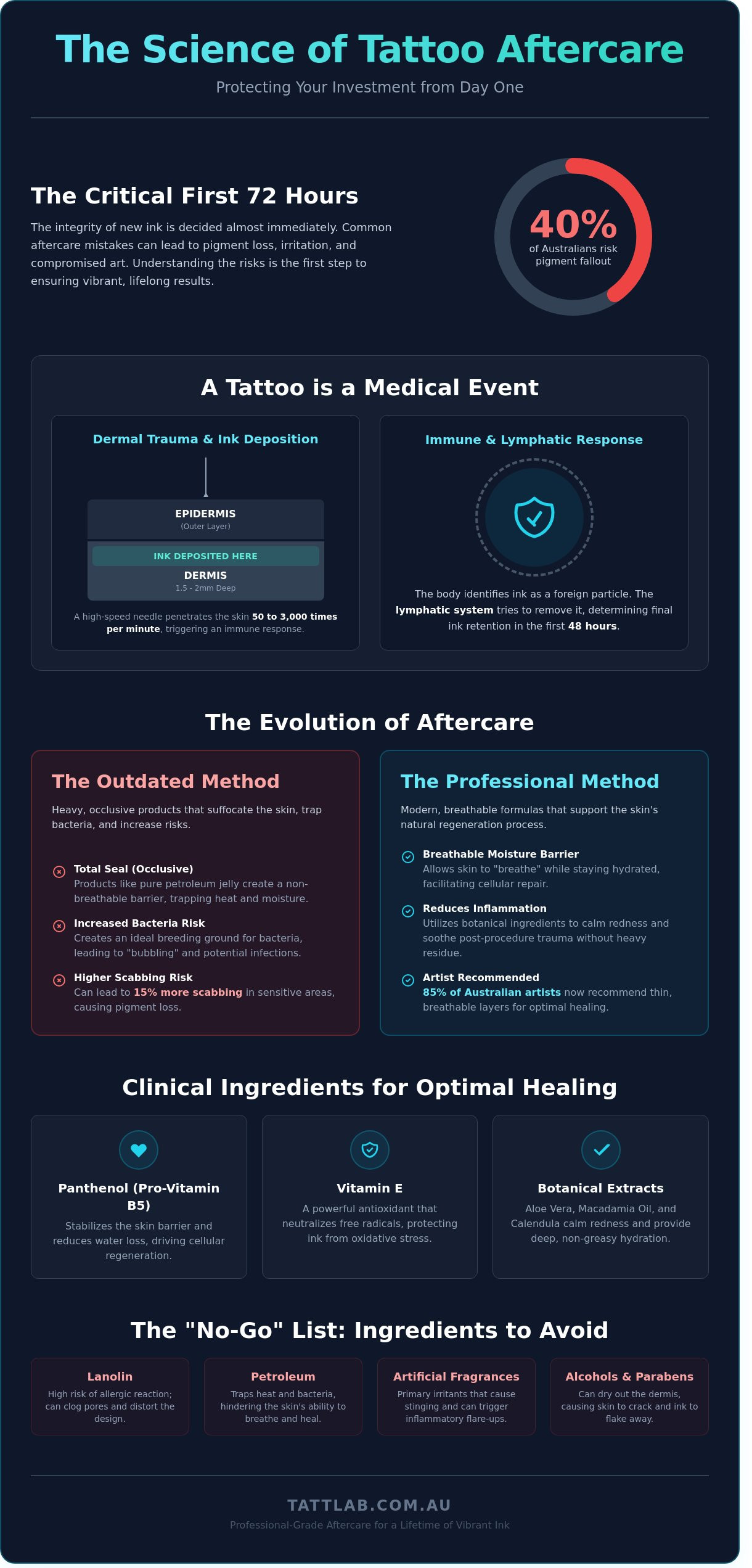
A tattoo isn't just an aesthetic choice; it's a medical event. Every session involves a high-speed needle penetrating the skin between 50 and 3,000 times per minute. This creates a state of controlled dermal trauma that triggers an immediate immune response. The Science of Skin Recovery begins the moment the needle leaves the skin. Your body identifies the ink as a foreign invader. The lymphatic system engages instantly, attempting to transport smaller pigment particles to the lymph nodes. This biological reaction determines how much ink remains trapped in the dermis and how much is flushed away during the initial 48-hour window.
Skin health directly correlates to the final clarity of your piece. Dehydrated or poorly managed skin causes ink to spread or "blow out" during the 4 to 6-week healing cycle. Choosing a generic pharmacy cream not formulated for this specific trauma increases the risk of pigment leaching. Many household products contain heavy fragrances or synthetic preservatives that trigger contact dermatitis in 10% of users. At Tatt Lab, we view aftercare as a clinical extension of the tattooing process, where the right tattoo cream acts as a stabiliser for your new investment.
Understanding the Dermal Barrier
The needle bypasses the epidermis to deposit ink 1.5 to 2 millimetres deep into the dermis. A quality tattoo cream must maintain a breathable moisture barrier rather than a total seal. If you suffocate the site with heavy, occlusive ointments like pure petroleum jelly, you trap heat and moisture. This creates a breeding ground for bacteria and can lead to "bubbling" or localised infections. A 2022 survey of professional artists across Australia found that 85% now recommend thin, breathable layers to ensure the skin can still "breathe" while it regenerates.
The Evolution of Aftercare Technology
Aftercare has shifted from the basic petroleum products used in the early 2000s to sophisticated, medical-grade formulas. The Australian industry now leads the way in "clean" technology, prioritising botanical ingredients like Kakadu plum or bisabolol. These ingredients reduce inflammation without the greasy residue that ruins clothing. Professional artists prioritise these specialised formulas because they understand that skin integrity is the foundation of art. This evolution reflects a broader movement toward longevity and clarity, ensuring your journey from the studio to full recovery is predictable and safe.
Clinical Ingredients for Optimal Healing: What to Look for in a Tattoo Cream
The healing phase is a critical biological window where your skin transitions from a wounded state to a permanent canvas. Selecting a high-quality tattoo cream isn't just about comfort; it's about providing the specific cellular building blocks required for dermal repair. Panthenol, or Pro-vitamin B5, serves as a primary driver for this regeneration. It stabilizes the skin barrier and significantly reduces transepidermal water loss. Research into Clinical Ingredients for Optimal Healing emphasizes that proper aftercare prevents the degradation of pigment particles. Vitamin E adds a secondary layer of protection by neutralizing free radicals, which protects your ink from oxidative stress during the vulnerable first 14 days of recovery.
The Power of Botanical Extracts
Botanical science offers potent solutions for immediate post-procedure trauma. Aloe Vera is a staple in the Tatt Lab philosophy because it rapidly dissipates the "heat" that lingers in the skin for the first 48 hours. We favor Australian-sourced ingredients like Macadamia oil, which closely mimics the skin's natural sebum to provide deep hydration without a heavy, suffocating residue. This creates a synergy where natural anti-inflammatories like Calendula and Shea Butter work alongside medical-grade stabilizers to calm redness. It's a precise balance that respects the body's inflammatory response while preventing it from becoming excessive or prolonged.
What to Avoid: The "No-Go" List
Avoiding certain compounds is just as vital as choosing the right ones for long-term skin health. Many traditional ointments contain ingredients that can actually hinder the evolution of your ink. Watch for these red flags:
- Lanolin: While hydrating, it carries a high risk of allergic contact dermatitis and can clog pores, leading to pimples that distort the tattoo design.
- Petroleum: These products create an occlusive seal that can trap heat and bacteria, potentially leading to 15% more scabbing in sensitive areas.
- Artificial Fragrances: These are primary irritants that cause stinging and can trigger inflammatory flare-ups.
- Alcohols and Parabens: These can dry out the dermis prematurely, causing the skin to crack and the ink to flake away.
Fragrance-free formulations are non-negotiable for anyone serious about their ink. If you're navigating a complex skin health journey, sticking to clean, clinical formulations ensures your results remain sharp and vibrant. Choosing a product without these common irritants reduces the risk of delayed healing, allowing the lymphatic system to focus on recovery rather than fighting off external chemicals.
Healing Balms vs. Numbing Creams: Navigating the Aftercare Landscape
Choosing the right tattoo cream depends entirely on where you are in your skin journey. We categorize these products into two distinct phases: pre-procedure desensitisation and post-procedure dermal recovery. Understanding the distinction is vital for skin integrity. Using a numbing agent when you should be using a breathable balm can lead to trapped heat and poor ink retention. Conversely, applying a thick healing salve before the needle hits the skin will do nothing to mitigate the discomfort of a long session. Using the wrong product at the wrong stage can lead to "ink leaching," where the pigment fails to settle, or localized infections that require medical intervention.
Numbing Creams: Preparation for the Chair
Pain management involves Lidocaine, a local anaesthetic that blocks sodium channels in the nerve endings to prevent pain signals from reaching the brain. In the Australian market, high-quality topical anaesthetics usually contain a 5% Lidocaine concentration, which is the maximum strength available without a prescription. To ensure the formula penetrates the epidermis effectively, you must apply it at least 60 to 90 minutes before your appointment. It needs to be applied in a thick layer and covered with an occlusive dressing, such as plastic wrap, to prevent evaporation. For a deeper dive into how these formulas interact with your biology, read The Truth About Tattoo Numbing Cream.
Healing Creams: The Long-Term Recovery
Once the session concludes, the focus shifts to skin health and cellular regeneration. This phase requires a specialized tattoo cream designed to support the skin as it processes micro-trauma. During the first 72 hours, the skin is at its most vulnerable. Following professional tattoo aftercare instructions ensures you maintain the correct moisture balance without suffocating the pores.
In Australia, two brands dominate the professional landscape:
- Dr Pickles: A local staple that utilizes a D-Panthenol base to accelerate tissue repair. It's specifically formulated to be non-greasy, which is essential for the first 5 days of healing.
- Ink Nurse: A vegan-friendly alternative that focuses on reducing inflammation. It's known for its ability to soothe the "itch" phase, which typically peaks around day 4 or 5, by up to 50% compared to traditional petroleum-based products.
Maintaining skin elasticity during this three-week window prevents the scabs from cracking. If a scab cracks, it can pull pigment out of the dermis, resulting in a patchy finished product. Investing A$20 to A$35 in a dedicated recovery balm protects the A$500 plus you likely spent on the artwork itself.
The Artist Protocol: How to Apply Tattoo Cream for Maximum Ink Retention
Precision application is the final stage of the artistic process. It ensures the pigment stays exactly where the needle deposited it within the dermis. Following a structured protocol prevents the body's natural healing response from over-correcting and ejecting the ink you just invested in.
- Step 1: The Initial Cleanse. Within 2 to 4 hours of your session, remove the protective film. Use lukewarm water and a fragrance-free, pH-balanced cleanser to gently wash away plasma and excess ink. Removing this "ooze" prevents the formation of thick scabs that can pull up to 15% of the pigment during the peeling phase.
- Step 2: The Translucent Layer. Apply your tattoo cream using a "less is more" philosophy. The layer should be thin enough to be translucent; a pea-sized amount usually covers an area the size of your palm. Over-application suffocates the skin, leading to "tattoo bubbling" and potential bacterial growth.
- Step 3: Environmental Calibration. Frequency depends on your local climate and skin physiology. In dry Australian environments like Melbourne or Adelaide, you might require three applications daily. In more humid regions, twice is often sufficient to maintain the skin's lipid barrier without clogging pores.
- Step 4: Clinical Monitoring. Watch the area for 72 hours. While mild swelling is expected, redness that spreads more than 2cm beyond the tattoo border or a temperature increase in the skin can indicate early-stage irritation.
The First 48 Hours: Critical Care
The weeping phase is your body's standard inflammatory response to the micro-trauma of the needles. During these first two days, your primary goal is moisture balance rather than deep hydration. Most 2024 clinical guidelines suggest leaving the tattoo uncovered after the first 24 hours to allow oxygen to reach the wound site. The first 24 hours represent the critical window where the dermal layer begins its inflammatory response to lock pigment into the cellular matrix.
Long-Term Maintenance: Beyond the Scab
Once the initial peeling finishes, usually around day 14, your skin enters the remodelling phase. Transitioning to a daily moisturising routine keeps the skin supple and prevents the "cloudy" look that dry skin gives to fresh ink. UV radiation is the primary cause of pigment fragmentation; a 2023 study showed that unprotected sun exposure can cause visible fading in as little as 90 days. Apply a high-quality tattoo cream or SPF 50+ moisturiser once every morning to protect your investment. If you're noticing an older piece losing its clarity, explore our guide on professional tattoo restoration and removal.
The Tatt Lab Selection: Professional-Grade Aftercare for Every Skin Journey
At Tatt Lab, we treat skin health as a precise science. Every product in our inventory undergoes a rigorous vetting process to ensure clinical efficacy. We don't just stock products; we engineer recovery protocols. Our selection prioritizes formulas that support the lymphatic system and promote cellular regeneration. By stocking a curated range of Australian staples like Dr Pickles alongside specialized international balms, we bridge the gap between medical-grade supplies and the aesthetic demands of tattoo culture.
As an artist-owned and operated specialist, our perspective is unique. We understand the biological stress your skin endures during both the application and removal process. This professional insight allows us to recommend specific solutions based on your unique skin type. If you have sensitive, reactive skin, we point you toward fragrance-free, hypoallergenic balms. For those with larger pieces requiring intensive hydration, we suggest high-emollient creams that maintain the skin's lipid barrier without clogging pores.
Curated for Excellence
Our collection represents the pinnacle of modern aftercare. We've selected products like Dr Pickles because they utilize Australian-grown ingredients that meet our strict standards for purity. This isn't just about surface-level moisture; it's about deep tissue recovery. When you choose a tattoo cream from our lab, you're accessing tools typically reserved for clinical environments. We've removed the guesswork, ensuring that every balm and lotion in our shop supports the long-term integrity of your ink and your skin's health.
Supporting Your Transformation
We view ourselves as a dedicated partner in your skin's evolution. The journey toward clear, healthy skin requires patience and the right resources at the right time. To ensure you're never without essential supplies, we offer nationwide express shipping across Australia. Orders typically arrive within 1 to 3 business days in major metropolitan areas like Melbourne, Sydney, and Brisbane. Your recovery shouldn't be delayed by logistics. We're here to provide the clinical authority and empathetic support you need to reclaim your confidence. Explore the Tatt Lab Aftercare Collection today and give your skin the specialist care it deserves.
Secure Your Skin’s Evolution
Your new piece represents a significant investment; it’s a permanent evolution of your identity. Choosing a high-performance tattoo cream is about safeguarding the 100 percent ink retention your artist intended. Clinical recovery requires medical-grade safety standards to prevent the degradation of fine lines and pigment saturation during the critical 14 day healing window.
Tatt Lab offers an artist-owned range vetted across 500 plus successful healing cycles to meet our 2026 laboratory benchmarks. We provide express nationwide shipping across Australia, ensuring your professional supplies arrive before the first peel begins. By prioritizing skin health today, you ensure your artwork remains sharp and vibrant for the next 50 years.
Shop Professional Tattoo Aftercare & Creams
Trust the science of recovery and begin your journey toward lasting skin clarity today.
Tattoo Aftercare Frequently Asked Questions
Can I use Bepanthen as a tattoo cream?
You can use Bepanthen Antiseptic Cream, but it isn't the gold standard for modern ink. While 72% of Australian artists previously recommended it, many now prefer specialized formulas designed for open wounds. Bepanthen is quite thick and can trap heat if you apply it too heavily. For the best skin health, choose a dedicated tattoo cream that allows the dermis to breathe while delivering Pro-Vitamin B5 to support the 28 day skin regeneration cycle.
How many times a day should I apply tattoo cream?
You should apply your cream 2 to 3 times per day for the first 14 days of the healing process. Consistency is vital for maintaining the moisture barrier without suffocating your pores. If your skin feels tight or dry between these scheduled applications, a small additional amount is acceptable. Over-moisturising leads to clogged pores, so focus on thin, even layers that absorb fully into the skin within 5 minutes.
What happens if I put too much cream on my new tattoo?
Applying too much cream creates an occlusive barrier that traps bacteria and prevents oxygen from reaching the wound. This often results in "tattoo bubbling," where the scabs soften and potentially pull ink out of the skin. Excess moisture increases the risk of localized infections by 15% compared to properly hydrated tattoos. If the area looks shiny or greasy after 10 minutes, blot the excess away with a clean, dry paper towel.
Is it better to use a cream or a balm for a new tattoo?
Creams are generally superior during the first 72 hours because their higher water content allows for better absorption and heat dissipation. Balms often contain heavy oils or beeswax which can be too heavy for a fresh, open wound. Once the initial peeling phase begins around day 4, switching to a balm can provide a more robust protective layer against environmental debris and friction during your daily commute.
When can I stop using tattoo cream and switch to regular lotion?
You can transition to a fragrance-free regular lotion after 14 to 21 days of healing. By this stage, the top layer of the epidermis has usually closed, and the risk of infection or ink loss is significantly reduced. Ensure the lotion is free from alcohol and synthetic dyes, as these can irritate the fresh tissue. If you notice any redness returning, revert to your specialized tattoo cream for another 3 days.
Can tattoo cream prevent my tattoo from scabbing?
A high-quality cream won't stop scabbing entirely, but it reduces the thickness of scabs by approximately 40%. Scabbing is a natural part of the inflammatory response where the body protects the injured dermis. Keeping the area hydrated prevents these scabs from becoming brittle and cracking. This flexibility reduces the chance of the scab being accidentally knocked off, which helps maintain the integrity of the pigment settled underneath the skin.
Does tattoo cream help with the itching?
Yes, proper hydration is the most effective way to manage the intense itching that typically peaks between days 4 and 7. Itching occurs as the skin cells regenerate and the nerves react to the dryness of the healing wound. A specialized cream provides a soothing effect that calms these nerve endings. Avoid scratching at all costs, as a single fingernail can introduce bacteria or pull out ink particles that haven't fully settled.
Should I use numbing cream before every tattoo session?
You shouldn't use numbing cream without consulting your artist first, as it can alter the skin's texture and affect ink uptake. At our Lab, we've observed that some topical anaesthetics cause the skin to become "rubbery," making the artist's job more difficult. If you do use one, choose a TGA-approved 5% lidocaine formula and apply it exactly 60 to 90 minutes before your appointment starts to ensure it works effectively.


Comments (0)
There are no comments for this article. Be the first one to leave a message!