

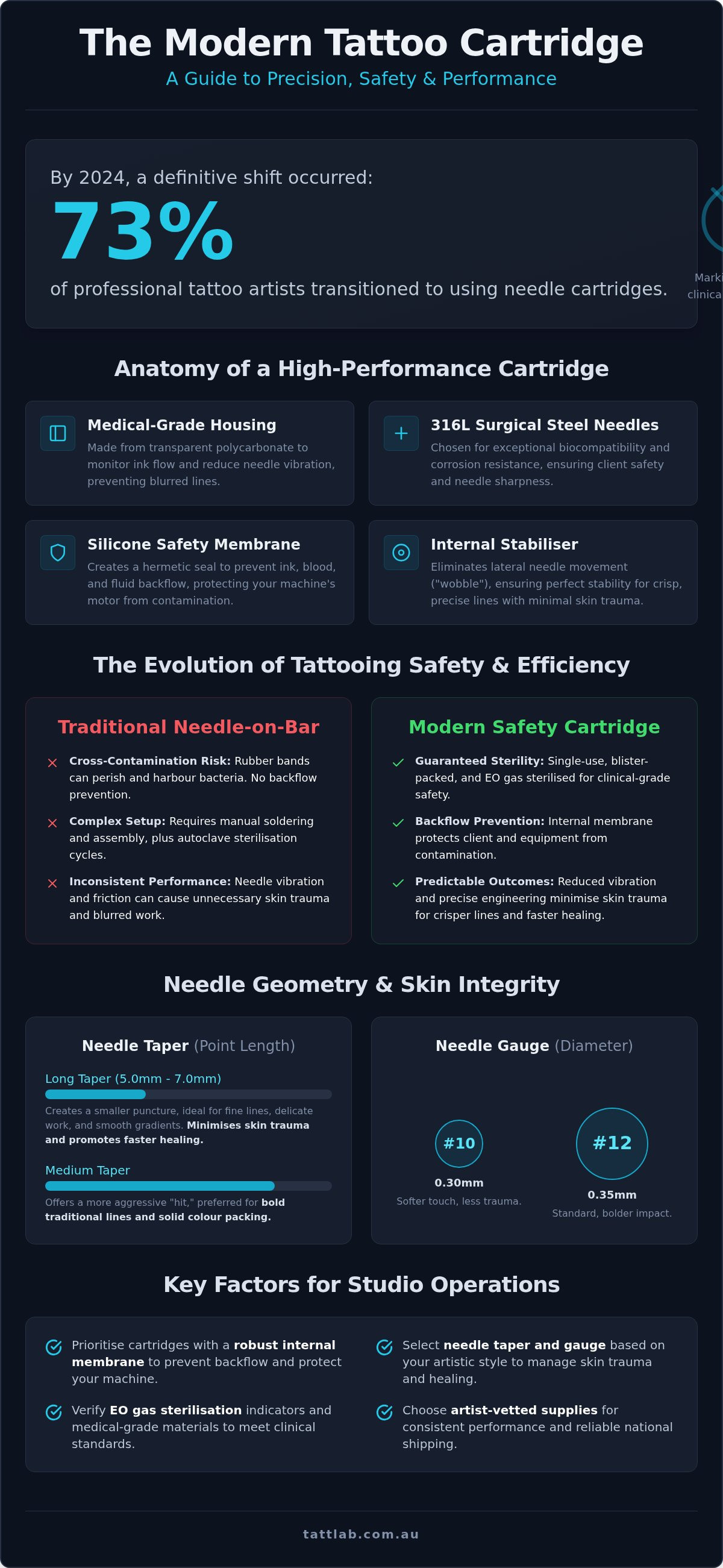
By 2024, approximately 73% of professional tattoo artists had transitioned to using tattoo needle cartridges over traditional needles, marking a definitive shift toward clinical-grade precision. While this evolution streamlines your workflow, it also introduces a complex layer of engineering that dictates both the integrity of your art and the biological safety of your client. You likely understand the frustration of a needle that lacks stability or a membrane that fails, leading to messy backflow and unnecessary skin trauma. It's a vulnerability that affects your confidence and the healing process of the body you're working on.
In this guide, you'll master the technical nuances of tattoo needle cartridges to enhance your artistic precision while maintaining the highest clinical safety standards. We'll demystify the science behind membrane tension, explore the specific applications of configurations like Round Liners and Magnums, and examine how Australian TGA compliance principles for 2026-2027 impact your studio. By the end, you'll have a clear roadmap for achieving crisper lines and smoother gradients through a more methodical, medical-grade approach to your equipment and procurement.
Key Takeaways
- Understand why internal membrane systems are superior to rubber bands for preventing ink backflow and protecting your machine's motor.
- Learn to select the ideal tattoo needle cartridges for your specific style, whether you require tight Round Liners for fine detail or Magnums for smooth gradients.
- Identify the clinical markers of safety, including EO gas sterilisation indicators and medical-grade housing materials that meet Australian standards.
- Discover how the technical engineering of your needle taper directly influences client skin trauma and the speed of the biological healing process.
- Streamline your studio operations by sourcing artist-vetted supplies that offer consistent performance and reliable national express shipping across Australia.
Understanding the Evolution of Tattoo Needle Cartridges
The transition from traditional needle-on-bar setups to modular tattoo needle cartridges represents more than a simple convenience; it marks a fundamental shift toward clinical standardisation within the studio environment. In the broader history of tattoo needles, the move from manual soldering and autoclave cycles to factory-sealed modules mirrors the medicalisation of the industry. This integrated, single-use system combines the needle, tube, and tension mechanism into a single housing. By removing the need for complex assembly, artists can focus on the narrative of personal transformation they provide to their clients. Rapid-change systems now allow for effortless transitions between different groupings, making multi-needle pieces more efficient while ensuring that every component touching the skin is fresh and sterile.
Why Professional Artists are Making the Switch
The pursuit of predictable, high-quality outcomes is the primary reason for this industry-wide adoption. Precision-moulded housings are engineered to reduce needle vibration and friction, which directly minimises skin trauma and promotes a smoother healing process. When the needle stays perfectly centred within its housing, ink flow dynamics become more consistent. This allows for deep saturation with fewer passes, respecting the physical integrity of the client's skin. The convenience of pre-sterilised, individually blister-packed units also streamlines the setup and pack-down process. It replaces the anxiety of cross-contamination with a sense of controlled, predictable progress, ensuring that your focus remains on the artistic execution rather than equipment maintenance.
Compatibility with Modern Rotary and Pen Machines
Most professional tattoo needle cartridges feature a universal backstem design, making them compatible with the wide range of rotary and pen machines used in Australian studios. However, achieving technical synergy requires understanding the relationship between machine stroke length and cartridge tension. Internal membranes provide the resistance your machine must overcome to drive the needle. If a membrane is too stiff, it can strain your motor or require higher voltage, which might lead to excessive heat or inconsistent hits. Conversely, a membrane that is too soft may lack the necessary "snap" for crisp line work. Adjusting your voltage to account for these resistance variables ensures a steady, methodical workflow. This technical edge allows you to maintain the precision of a laboratory environment while delivering the aesthetic outcomes your clients expect.
The Anatomy of a High-Performance Cartridge System
To understand why certain tattoo needle cartridges outperform others, we must look beyond the exterior plastic shell. The internal engineering dictates the stability of your stroke and the biological safety of your client. High-performance systems utilize 316L surgical stainless steel, a material chosen for its exceptional biocompatibility and resistance to corrosion. This needle group is housed within medical-grade polycarbonate. Transparency in this housing is not merely an aesthetic choice. It allows for immediate visual confirmation of ink flow and needle position, ensuring you can identify any potential blockages before they affect the skin. When the needle is perfectly centred by internal stabilisers, the risk of lateral movement is virtually eliminated. This prevents blurred lines and reduces unnecessary trauma to the dermis.
The Science of Backflow Prevention
The internal membrane is the defining feature of a professional safety cartridge. Unlike primitive rubber band tension systems that can perish or harbour bacteria, a high-quality silicone membrane acts as a hermetic seal. This barrier prevents pigment, blood, and interstitial fluid from entering the grip and machine motor. The membrane is a critical barrier against cross-contamination. While some "open-system" alternatives exist, they fail to meet the modern tattoo safety standards required in a clinical studio environment. Ensuring your tools possess this safety feature protects your equipment and your professional reputation. Selecting artist-vetted cartridges ensures that these safety protocols are engineered into every unit you use.
Needle Taper Geometry and Skin Integrity
The geometry of the needle point, or taper, significantly influences how ink is deposited into the skin. Long tapers, typically ranging from 5.0mm to 7.0mm, are designed for delicate work and gradients. They create smaller puncture wounds, which allow the skin to heal more efficiently by minimising the inflammatory response. Medium tapers offer a more aggressive "hit," which is often preferred for solid colour packing or bold traditional lines. Understanding needle diameter, or gauge, is equally important for skin integrity. A #10 (0.30mm) needle provides a softer touch than a #12 (0.35mm), reducing skin trauma through a smaller surface area of impact. This methodical approach to needle selection ensures that your artistic vision is achieved without compromising the physical well-being of the body you are working on.
Comparing Configurations: Liners, Shaders, and Magnums
Selecting the appropriate tattoo needle cartridges is a deliberate act of engineering your artistic outcome. Each configuration is designed to interact with the dermis in a specific way, determining how pigment is deposited and how the skin responds to the procedure. Whether you are executing a minimalist fine-line piece or a saturated traditional sleeve, your choice of grouping dictates the efficiency of the session and the ultimate clarity of the healed work. A methodical approach to selection ensures that the technical task aligns with the client's goal of personal transformation.
Round Liners and Shaders: The Foundation of Line Work
Round Liners are the primary tools for defining structure. They consist of needles soldered in a tight, circular formation to create a single, focused point of contact. A tight 3RL is often the specialist's choice for micro-realism or intricate geometric details, while a bold 14RL provides the structural integrity required for American Traditional styles. Regular groupings offer a slightly more relaxed needle spread, which can be more forgiving for artists who prefer a steadier, more deliberate hand.
Round Shaders differ by having a more open circular grouping. These are exceptionally versatile for small-area filling and creating thicker, softer lines that don't require the sharp "bite" of a liner. To achieve crisp, blowout-free results, maintain a consistent 45-degree angle and monitor your depth carefully. This precision prevents the ink from spreading into the subcutaneous layer, ensuring the lines remain sharp as the skin undergoes its natural healing process.
Magnums: Mastering Large Scale Saturation
For large-scale shading and solid colour packing, Magnums are the industry standard. These tattoo needle cartridges feature two rows of needles, allowing for maximum pigment delivery with fewer passes. Standard Magnums are flat, making them ideal for packing solid black or vibrant colours into large areas. However, for smooth grey wash and realism, Curved Magnums (also known as Soft Edge Magnums) are superior. By distributing the needle pressure across a radius rather than a flat plane, they allow for the layering of transparent washes without creating harsh edge lines.
Using Curved Magnums reduces the risk of "sculpting" or overworking the skin at the edges of your stroke. This efficiency is vital for maintaining the physical integrity of the tissue during long sessions. While technical mastery is essential, safety remains the underlying priority. Adhering to FDA tattoo safety guidelines regarding sterile, single-use equipment is the only way to ensure these artistic outcomes are achieved without the risk of infectious disease transmission. By choosing the right size for the task, you minimise client trauma and facilitate a more predictable, liberating recovery.
Clinical Standards: Safety and Sterilisation in Cartridge Selection
Professional tattooing demands a rigorous adherence to clinical protocols. Every box of tattoo needle cartridges must be treated as a batch of sterile medical instruments. The gold standard for this industry is Ethylene Oxide (EO) gas sterilisation. This process penetrates the blister packaging and the complex internal housing of the cartridge, ensuring that every internal surface is free from microbial life. You should always look for the sterilisation indicator on the back of each individual blister; it typically changes colour once the process is successful. Using medical-grade plastics like polycarbonate is equally vital. These materials are non-porous and resistant to the chemicals found in tattoo inks, preventing the leaching of toxins into the client's body during the procedure.
Identifying Quality Indicators on Packaging
Accountability starts with the label. Professional inventory management relies on tracking lot numbers and expiry dates. If a batch is ever recalled, these numbers allow you to identify and isolate affected stock immediately. Before opening a cartridge, perform a visual inspection. Check for needle alignment and ensure the housing isn't cracked. While "cheap" cartridges might seem like a cost-saving measure, they often lead to expensive machine repairs due to membrane failure or require time-consuming touch-ups because of inconsistent needle quality. Investing in high-quality gear is a commitment to long-term results over quick fixes.
Studio Hygiene and Cross-Contamination Prevention
Maintaining a sterile environment requires a holistic approach to your workstation. Integrating specific medical supplies for tattoo artists, such as hospital-grade disinfectants and barrier films, creates a controlled environment that respects physical integrity. Use barrier film on your power supply and wrap your machine with a dedicated grip cover to ensure no bio-matter touches your equipment. This methodical setup ensures your tattoo supplies meet or exceed the stringent health and safety regulations governing professional tattooing across Australia. Once the session concludes, disposal is the final step in the safety narrative. Every used cartridge must be placed in an approved sharps container to prevent needle-stick injuries and ensure the safety of the wider community.
Sourcing Professional Cartridges with Tatt Lab Australia
Australian tattoo artists operate in a landscape where clinical safety and artistic precision are non-negotiable. Tatt Lab serves as a dedicated partner in this narrative, offering a curated selection of tattoo needle cartridges that have been rigorously vetted by industry professionals. Because we're artist-owned and operated, our quality control process isn't just a business metric; it's a commitment to the physical integrity of every client who walks into your studio. We understand that your reputation depends on the reliability of your tools. This is why we prioritise supplies that meet high-level medical and biological standards, ensuring your equipment performs with the same meticulousness as your art.
Our Commitment to Quality and Performance
Our facility stocks a comprehensive range of Elite cartridges, including Round Liners, Shaders, and Magnums, specifically engineered to withstand the demands of modern rotary and pen machines. We maintain consistent stock levels to ensure your studio avoids the disruption of supply shortages, which can stall the progress of long-term projects or complex multi-session pieces. This methodical approach to inventory management reflects our dedication to your long-term results rather than quick fixes. Our team provides expert support grounded in a deep knowledge of the science behind needle tapers and membrane tension. We don't just sell products; we offer a professional collaboration that demystifies the technical aspects of your equipment, allowing you to focus on the aesthetic outcomes and the liberating experience of the tattoo process.
Ordering and Express National Shipping
Streamlining your studio logistics is essential for maintaining a calm, focused environment. By setting up a professional account, you gain access to a simplified procurement system that tracks your previous orders for easy replenishment. We provide national express shipping across Australia, ensuring that your tattoo needle cartridges and safety supplies arrive when you need them most. For those who require immediate stock, our click-and-collect service offers a local solution for urgent needs. This reliable supply chain is designed to lower your anxiety, replacing the uncertainty of international shipping with a sense of controlled, predictable progress. Whether you're a boutique studio or a high-volume facility, our wholesale support structures are tailored to facilitate your growth and ensure your practice remains at the forefront of professional tattooing in Australia.
Elevating Your Practice Through Technical Rigour
Transitioning to a modular system is about more than just workflow speed; it's about refining the delicate relationship between your machine and the human body. By mastering the engineering behind your tattoo needle cartridges, you ensure that every stroke respects the physical integrity of your client. We've discussed how internal silicone membranes act as a critical biological barrier and how specific taper geometries allow for the gradual, predictable progress of a healing tattoo. This methodical approach transforms a technical procedure into a reassuring narrative of professional confidence.
Maintaining this level of clinical excellence requires a dedicated partner. As an artist-owned and operated facility, Tatt Lab provides Australia's largest range of Elite supplies, ensuring you have access to vetted equipment that meets the highest safety standards. We offer express nationwide shipping to keep your studio running without interruption, replacing logistical uncertainty with reliable support. Shop our professional range of tattoo needle cartridges to secure the precision and safety your art deserves. Your commitment to these standards is the foundation of long-term results and lasting client trust.
Frequently Asked Questions
What is the difference between a tattoo needle and a cartridge?
A traditional needle is a needle-on-bar system requiring a separate tube and autoclave sterilisation. In contrast, tattoo needle cartridges are modular, single-use units that house the needle and tension mechanism within a sterile plastic casing. This integrated design allows for rapid changes during a session, whereas traditional bars require a complete grip and tube setup for every configuration change. It's a shift from manual assembly to precision-engineered efficiency.
Are all tattoo needle cartridges compatible with all machines?
Most professional cartridges utilize a universal backstem design that is compatible with the vast majority of rotary and pen-style machines. While this standardisation covers most of the industry, some specialized permanent makeup machines or legacy brands may require proprietary connections. It's always best to verify the drive bar interface on your specific machine before purchasing. Ensuring a secure fit is vital for maintaining the stability and precision of your stroke.
How do I know if a tattoo cartridge has a safety membrane?
You can identify a safety membrane by performing a visual inspection through the transparent housing of the cartridge. Look for a flexible silicone or rubber barrier that seals the needle bar from the back opening. If you press the plunger, it should feel smooth and spring back without the mechanical clicking associated with older rubber band systems. This barrier is what prevents pigment and bio-matter from migrating into your machine's motor.
What is the best needle cartridge for fine line tattooing?
Fine line work requires a tight Round Liner, typically in a #08 (0.25mm) or #10 (0.30mm) gauge. These smaller diameters create a more delicate puncture, allowing for intricate detail with minimal skin trauma. A Long Taper is usually preferred as it provides a sharper point for surgical precision. Selecting a high-quality 3RL or 1RL configuration ensures that your lines remain crisp and don't blur during the biological healing process.
Can I reuse a tattoo needle cartridge if it was only used for a short time?
No, you must never reuse a cartridge under any circumstances. Every unit is strictly single-use to prevent the transmission of blood-borne pathogens and cross-contamination. Even if a session lasts only minutes, the needle loses its factory sharpness and the internal housing becomes a reservoir for bio-matter. Adhering to this clinical protocol protects your client's health and ensures the long-term integrity of your professional reputation in the industry.
What do the numbers on a tattoo cartridge box mean (e.g., 1207RL)?
These numbers identify the specific technical configuration of the needles. The first two digits represent the needle gauge or diameter, with 12 being 0.35mm. The next two digits indicate the total number of needles in the grouping. The letters at the end describe the configuration, such as Round Liner. Understanding this code allows you to select the exact tool required for your specific artistic technique, ensuring a predictable outcome for every procedure.
How should I dispose of used tattoo needle cartridges in Australia?
In Australia, you must dispose of used tattoo needle cartridges in an approved yellow sharps container that meets AS 4031 or AS/NZS 4261 standards. This is a requirement under state health regulations, such as the NSW Public Health Regulation 2022. Once the container reaches the fill line, it must be collected by a licensed medical waste disposal service. Proper sharps management is a critical final step in maintaining a sterile studio environment.
Why is my tattoo cartridge leaking ink into the machine?
Ink leaking into your machine is usually a symptom of a ruptured or absent internal membrane. When a cartridge lacks a proper hermetic seal, pigment and interstitial fluid can be drawn up into the grip by the machine's vibration. This often happens with low-quality "open-system" cartridges or if you are over-dipping into your ink caps. Using artist-vetted supplies with high-tension membranes is the most effective way to protect your equipment from contamination.


Comments (0)
There are no comments for this article. Be the first one to leave a message!