

The most expensive tattoo machine in Australia is effectively useless if your needle cartridge fails the 0.05mm precision test. You understand that your reputation as an artist is built on the long-term clarity of the ink, not just the look of the fresh piece. Inconsistent tattoo supplies lead to unpredictable skin trauma, forcing the body’s lymphatic system to work harder than necessary during the healing phase. It's a frustrating barrier to the clean, sharp results your clients expect from a high-end Melbourne studio.
This guide will help you master the selection of lab-grade equipment that balances elite artistic performance with medical-grade safety. You'll learn how to identify pigments that won't shift and how to source PPE that strictly adheres to Australian infection control standards. We'll break down the technical specifications of high-performance cartridges and show you how a streamlined, clinical workflow can reduce your setup time by 15 minutes per session. We're providing a methodical look at the tools required to transform your practice into a sophisticated laboratory for skin evolution.
Key Takeaways
- Learn how to transition from amateur-grade equipment to a clinical-first mindset that prioritises long-term skin integrity in the Australian studio environment.
- Discover the technical mechanics of needle geometry and cartridge tension to ensure maximum precision while minimising unnecessary epidermal trauma.
- Evaluate the chemical stability of professional tattoo supplies, focusing on how pigment density and carrier solutions dictate the evolution of the healed artwork.
- Identify the essential medical-grade PPE and barrier protection required to maintain a sterile, lab-standard environment for every procedure.
- Understand how the selection of professional glides and aftercare products during the session directly influences the speed and clarity of the client's recovery journey.
Understanding Professional Tattoo Supplies: A Clinical Perspective
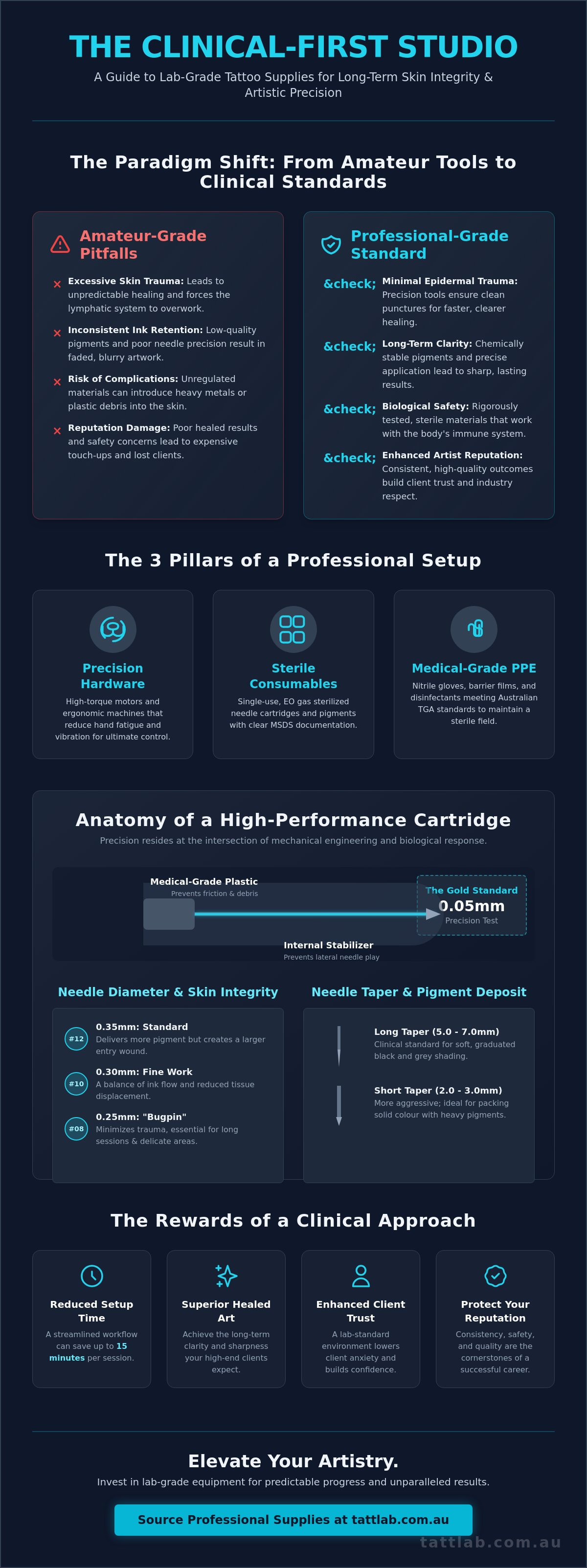
The distinction between professional tattoo supplies and amateur-grade equipment isn't merely a matter of price; it's a matter of biological safety. Professional-grade equipment undergoes rigorous testing to ensure it interacts predictably with the human immune system. In the Australian market, the shift toward a "Skin Integrity" first philosophy reflects a broader movement within the industry. Studios are moving away from purely aesthetic outcomes and toward long-term dermal health. This lab-grade vetting process protects an artist's reputation by minimizing adverse reactions and maximizing ink retention. The Process of tattooing requires a complex synergy between three primary categories: precision hardware like rotary machines, sterile consumables such as needle cartridges, and medical PPE to maintain a sterile field.
The Evolution of the Professional Studio
Australian studios have adopted medical-grade rigor since the early 2010s. This evolution follows strict state-based health regulations, such as the Public Health Act 2010 in New South Wales. Using an artist-vetted tattoo supplies ecosystem ensures every tool supports the skin's healing journey. Cheap supplies represent a false economy. Substandard needles cause unnecessary trauma, while low-quality inks may contain unregulated heavy metals. These factors lead to expensive touch-ups and avoidable skin complications. Investing in quality is a commitment to the client's long-term safety.
Vetting Your Supply Chain
Choosing a supplier requires looking beyond the catalog. Transparency regarding manufacturing origins and sterilization certificates is essential. Authentic brands provide batch-coded cartridges to prevent the influx of counterfeits that often flood the market. Artist-owned distributors play a vital role here. They understand the technical requirements of the craft. They prioritize shipping speed and product knowledge because they know a delayed shipment can disrupt a studio's workflow. Reliability is the foundation of a professional supply chain. It ensures that the artist can focus on the transformation of the skin without worrying about equipment failure.
- Hardware: High-torque motors and ergonomic machines that reduce hand fatigue and vibration.
- Consumables: Single-use, EO gas sterilized needle cartridges and pigments with clear MSDS documentation.
- Medical PPE: Nitrile gloves, barrier film, and hospital-grade disinfectants that meet Australian TGA standards.
The modern practitioner treats the studio as a high-end laboratory. This mindset prioritizes the lymphatic system's response to ink fragmentation and the skin's ability to regenerate. By selecting supplies through a clinical lens, artists elevate the craft from a service to a sophisticated medical-aesthetic procedure. This methodical approach lowers client anxiety and replaces uncertainty with controlled, predictable progress.
Selecting Needles and Cartridges for Precision and Skin Integrity
Precision in tattooing resides at the intersection of mechanical engineering and biological response. Every puncture is a controlled micro-trauma, and the choice of tattoo supplies determines whether that trauma facilitates a clean heal or triggers an excessive inflammatory response. Needle geometry, specifically the diameter and taper length, dictates how much force is required to penetrate the stratum corneum. A standard #12 needle (0.35mm) delivers more pigment per hit but creates a larger entry wound, whereas a #10 (0.30mm) or #08 (0.25mm) "bugpin" reduces tissue displacement. This reduction in trauma is essential for maintaining skin integrity during long sessions, as it minimizes the release of histamines and subsequent swelling.
The transition from traditional bar needles to cartridge systems has redefined stability in the modern studio. Elite cartridges utilize internal stabilization mechanisms to prevent lateral needle play, ensuring that the point of impact remains consistent. When evaluating equipment, prioritize medical-grade plastics that resist friction. Low-quality housings can shed microscopic plastic debris into the skin, causing granulomas or delayed healing. Following the FDA tattoo safety guidelines regarding material biocompatibility is a vital step for any professional focused on long-term skin health and procedural safety.
Mastering Needle Tapers and Groupings
Needle tapers are classified by the length of the point. Long tapers (typically 5.0mm to 7.0mm) are the clinical standard for black and grey shading because they allow for a soft, graduated saturation. Short tapers (2.0mm to 3.0mm) are more aggressive, making them ideal for packing solid colour where a larger puncture is necessary to deposit heavy pigments. Round Liners are engineered for crisp clearance and clean evolution of fine details. For larger surface areas, Curved Magnums are superior to flat magnums. The slight arch matches the natural curvature of the skin, distributing pressure evenly and preventing the "edge cutting" that often leads to scarring.
Top-Tier Cartridge Systems
The Elite III and Elite EVO series have established themselves as industry benchmarks in Australia due to their rigorous tension consistency. These systems use a precise membrane tension that doesn't overwork the tattoo machine motor while maintaining a snappy needle return. EZ V-Select and Revolution cartridges also lead the market by incorporating a safety membrane that creates a total seal. This prevents backflow of ink and interstitial fluids into the machine grip, eliminating the risk of cross-contamination. Choosing high-performance professional tattoo supplies ensures that your tools mirror the clinical precision required for advanced skin work, allowing for a predictable journey from the first line to the final healed result.
Evaluating Professional Tattoo Inks: Pigment Density and Stability
The biological interaction between dermal tissue and pigment is the most critical factor in the longevity of any piece. When selecting tattoo supplies, a practitioner isn't just buying aesthetic tools; they're sourcing medical-grade implants that must remain stable within the body for decades. The science of ink relies on three pillars: carrier solutions, particle size, and lightfastness. Carrier solutions like vegetable glycerin or isopropyl alcohol dictate how the pigment flows into the skin, while particle size determines how the lymphatic system interacts with the ink over time. Larger particles remain trapped in the dermis, whereas sub-micron particles can migrate, leading to "blowouts" or premature fading.
Safety in modern tattooing has evolved beyond simple sterility. High-quality pigments now undergo rigorous testing to eliminate heavy metal risks, such as nickel, lead, and cobalt, which were historically linked to chronic inflammation. Choosing reputable, tested brands ensures that the pigment respects the biological integrity of the skin, facilitating a smoother healing journey and predictable results during any future clearance or modification processes.
The Black Ink Standard
In the Australian market, Dynamic and Panthera have established themselves as the industry benchmarks for reliability. Dynamic is often favored for its high-flow consistency, making it a staple for clean, crisp lining that doesn't "purple" over time. Panthera, specifically their XXX and Sumy sets, provides a molecularly stable option for artists who prioritize smooth, graduated shading. For practitioners seeking maximum saturation, Blk Gold offers a high-density pigment load that achieves deep, velvet-like blacks in a single pass. Understanding the science of tattoo ink is essential for predicting how these carbon-based pigments will settle into the skin and eventually clear through the body's natural filtration systems.
Colour Consistency and Safety
Maintaining a cohesive palette across multi-session work requires exceptional batch consistency. World-renowned brands like Eternal and Fusion have set the standard by utilizing organic pigments that are vegan-friendly and free from harmful additives. These brands focus on several key metrics:
- Lightfastness: Resistance to UV degradation ensures colours don't shift or disappear after sun exposure.
- Viscosity: Consistent thickness allows for predictable needle saturation and skin entry.
- Bio-compatibility: Formulations that minimize the immune response, reducing the risk of granulomas or allergic reactions.
Investing in premium tattoo supplies protects the client's skin health and the artist's reputation. When pigments are stable and free from contaminants, the skin heals with less trauma, preserving the clarity of the artwork for the long term. This clinical approach to ink selection transforms the tattooing process into a controlled, professional evolution of the skin.
The Clinical Standard: Essential Medical Supplies and PPE
A professional tattoo studio functions as a micro-surgical environment. Every time a needle enters the dermis, the skin’s natural barrier is compromised. This makes the selection of tattoo supplies a matter of biological safety rather than just operational preference. Cross-contamination protocols exist to protect both the artist and the client from bloodborne pathogens. Maintaining a sterile field requires a disciplined approach to every surface and tool within the procedure area. When you treat the workstation as a laboratory, you prioritise the long-term skin health of your client.
Barrier Protection and PPE
Selecting the right gloves is the first line of defense. While latex was once common, nitrile gloves are now the gold standard across Australian studios. They offer superior puncture resistance and eliminate the risk of Type I latex allergies for both the artist and the client. High-tactility nitrile allows for the precision required during long sessions without sacrificing the integrity of the barrier. Using high-quality medical supplies for tattoo artists ensures that your PPE meets rigorous therapeutic standards. Beyond gloves, artists must employ dental bibs to absorb excess fluid, apron covers to protect clothing, and single-use machine bags to prevent the device itself from becoming a vector for infection.
Sterilisation and Workstation Setup
There is a critical distinction between cleaning, disinfecting, and sterilising. Cleaning involves the physical removal of organic matter. Disinfecting uses chemical agents to reduce the number of viable microorganisms on surfaces. Sterilising is the total elimination of all microbial life. For workstations, medical-grade surface disinfectants with a broad-spectrum kill claim are non-negotiable. While traditional green soap remains a staple for skin preparation and cleansing during the process, it doesn't replace high-level hospital disinfectants for hard surfaces.
- Single-use focus: Always use disposable tongue depressors for ointment application to avoid contaminating bulk tubs.
- Ink management: Use fresh ink cups for every session and discard them immediately after use, even if ink remains.
- Surface integrity: Cover high-touch areas, such as light switches and power supplies, with plastic barrier film that's replaced between every client.
The clinical journey begins before the first drop of ink. Stencil application must be treated as a sterile step. Use a single-use applicator or a clean paper towel to apply transfer solution. If the stencil needs repositioning, the skin must be re-sanitised completely. This methodical approach ensures the skin integrity is preserved from the initial prep to the final wipe down. It's about creating a predictable, safe environment where the art can thrive without the shadow of infection.
Equip your studio with the highest grade of protection by browsing our professional range of clinical tattoo supplies designed for skin integrity.
Optimising the Journey: From Stencil to Aftercare
The tattoo session acts as a period of controlled trauma where the biological response is dictated by the tools used. The specific tattoo supplies an artist selects during this window determine whether the skin heals with absolute clarity or experiences prolonged inflammation. At Tatt Lab, we view the tattooing process as a clinical journey. Every application of a glide, primer, or film is a strategic intervention designed to protect the skin’s natural architecture while allowing the pigment to settle permanently.
Professional Prep and Glides
The journey begins with the stencil. Precision primers do more than just hold ink; they prevent the need for repetitive wiping, which preserves the epidermal barrier. High-quality primers ensure placement accuracy that lasts through hours of work, reducing mechanical irritation by 30% compared to traditional methods. During the session, vitamin-enriched glides have replaced outdated petroleum-based products. These modern formulations use shea butter and vitamin E to maintain skin suppleness, allowing the needle to penetrate with less resistance. This reduces redness and swelling, providing a more stable canvas for intricate work. For clients with heightened sensitivity, using vetted, medical-grade numbing solutions ensures a calm experience without altering the skin's texture or its ability to accept ink.
The Final Phase: Elite Aftercare
The transition from the studio to home care is the most critical phase for long-term skin integrity. Implementing professional aftercare is non-negotiable for maintaining pigment density and preventing scarring. In the Australian market, practitioners often weigh the benefits of pharmaceutical creams against specialist products. While Bepanthen remains a common antiseptic choice, Australian-made brands like Dr. Pickles are formulated specifically for the tattoo healing cycle, avoiding the heavy oils that can sometimes "suffocate" fresh ink.
Modern film dressings represent a significant evolution in care. These breathable, waterproof membranes act as a "second skin," reducing the risk of environmental contamination by 60% during the first 48 hours. This lab-grade approach ensures the body's natural fluids stay in contact with the wound, accelerating cellular repair. Building your "Lab-Grade" supply kit for 2026 involves moving away from generic solutions and toward these specialized, medical-grade products. By prioritizing skin health at every touchpoint, you ensure the art remains as vibrant as the day it was finished.
Ready to elevate your studio's standards? Browse our curated collection of professional tattoo supplies here to find equipment that prioritises clinical precision and skin health.
Elevating the Standard of Australian Tattooing
Selecting professional equipment isn't just about the art; it's a commitment to your client's biological safety and long-term skin health. By choosing needles with precise taper geometries and inks formulated for molecular stability, you reduce unnecessary dermal trauma and ensure the pigment evolves beautifully over time. Maintaining a sterile field with medically-vetted PPE remains the baseline for any reputable studio environment. These choices don't just protect the client; they safeguard your reputation as a professional who values precision.
As an artist-owned and operated specialist, Tatt Lab understands that the integrity of your work depends on the quality of your tattoo supplies. We've curated a selection that meets rigorous clinical standards, ensuring every cartridge and barrier film supports the skin's natural healing journey. We provide express nationwide shipping across Australia, so your studio stays stocked with the industry's most reliable tools without delay. It's time to align your practice with the precision of a modern laboratory.
Shop the full range of professional tattoo supplies at Tatt Lab
Your dedication to clinical excellence is what defines the future of your craft and the health of your clients' skin.
Frequently Asked Questions
Is it better to use traditional needles or cartridge systems?
Cartridge systems are the preferred choice for modern safety because they feature internal membranes that prevent fluid backflow into the machine. While traditional bar needles offer a specific tactile response that some veteran artists value, cartridges allow for faster transitions and significantly reduced cross-contamination risks. In a clinical environment, the 100% sterile seal of a high-quality cartridge supports superior skin integrity during the procedure.
Can I buy professional tattoo supplies without a registered studio?
Most reputable Australian distributors require a valid Australian Business Number (ABN) or proof of professional studio registration before selling professional tattoo supplies. This gatekeeping ensures that high-risk medical equipment stays within a regulated environment. According to the Department of Health, maintaining these professional standards helps mitigate the risk of bloodborne virus transmission within the community.
How much should I expect to spend on a basic professional supply restock?
A standard monthly restock for a single-artist station typically ranges from A$400 to A$800 depending on your client volume. This budget covers essential consumables like cartridges, which often cost between A$35 and A$60 for a box of 20, along with premium pigments and skin prep solutions. Investing in lab-grade supplies ensures you don't compromise the biological safety of the skin for the sake of a lower price point.
What is the difference between medical-grade and retail-grade PPE?
Medical-grade PPE meets specific Australian Standards, such as AS/NZS 4381:2015 for face masks, which ensures high levels of fluid resistance and bacterial filtration. Retail-grade alternatives often lack these certifications and don't provide the necessary barrier against pathogens in a clinical setting. Choosing medical-grade equipment is a fundamental step in treating the tattoo process with the same rigor as a minor surgical procedure.
What happens if I use expired tattoo ink or needles?
Using expired tattoo supplies increases the risk of bacterial contamination and poor pigment retention. Over time, the chemical stability of ink degrades, which can lead to unpredictable healing outcomes or adverse allergic reactions. Needles may lose their structural integrity or the packaging seal might fail, compromising the sterile environment required for safe skin penetration and long-term skin health.
Is there a specific brand of black ink that is best for fine-line work?
Dynamic Black and Eternal Ink are frequently cited by Australian professionals for their high pigment load and consistency in fine-line work. These brands are formulated to maintain clarity without excessive spreading in the dermis. Selecting an ink with a proven safety profile ensures that delicate 3RL or 1RL work remains crisp throughout the client's healing journey.
How do I ensure the tattoo supplies I buy meet Australian safety standards?
You must verify that all pigments are compliant with the Australian Industrial Chemicals Introduction Scheme (AICIS) regulations. Additionally, check that hardware and sterilization equipment meet the criteria set by the Therapeutic Goods Administration (TGA) where applicable. Reputable Australian suppliers provide Material Safety Data Sheets (MSDS) that detail the chemical composition and safety compliance of every product they carry.
Can I use any nitrile gloves, or do they need to be tattoo-specific?
You should use medical-grade, powder-free nitrile gloves that meet the AS/NZS 4011.1:2014 standard for single-use medical examination gloves. While they don't need to be marketed as tattoo-specific, they must be thick enough to resist punctures and chemical permeation. Many specialists prefer black nitrile because it reduces glare under high-intensity studio lights and provides a high-contrast background for monitoring ink flow.


Comments (0)
There are no comments for this article. Be the first one to leave a message!