

What if the most vital piece of equipment in your sterile field isn't the machine in your hand, but the humble wooden tool resting on your tray? You already know that maintaining a pristine workstation is non-negotiable in an industry where skin health is the ultimate priority. You've likely dealt with the frustration of a low-quality tongue depressor splintering mid-procedure or the anxiety of potentially contaminating a 500g bulk tub of aftercare ointment. These small failures don't just interrupt your flow; they compromise the clinical standards your clients expect in a modern Australian studio.
This guide reveals how mastering the use of this clinical staple serves as a critical barrier against cross-contamination while elevating your studio's operational efficiency. We'll show you how to maintain a truly sterile environment and ensure smooth pigment blending with every setup. From understanding TGA-aligned safety standards to selecting the right dimensions for ink mixing, we provide the technical roadmap to ensure your workstation remains a controlled, high-performance lab.
Key Takeaways
- Learn how the medical-grade tongue depressor functions as a primary aseptic barrier, ensuring sterile ointment transfer and workstation hygiene.
- Understand the clinical risks associated with low-tier "craft sticks" and how to identify professional-grade wood through visual and tactile inspection.
- Master advanced applications for pigment manipulation and custom ink blending to achieve greater precision and efficiency in your daily workflow.
- Explore the heat treatment protocols and manufacturing standards required to maintain pathogen-free surfaces in a professional Australian studio environment.
- Discover the logic behind Tatt Lab’s bulk supply tiers, designed to help high-volume studios maintain rigorous safety standards and skin integrity.
The Role of the Tongue Depressor in the Modern Tattoo Studio
In the high-stakes environment of a professional tattoo studio, the tongue depressor has transcended its origins in general medicine to become a foundational tool for skin safety. Originally designed as a single-use clinical spatula for oral examinations, this simple piece of equipment now serves as the primary instrument for aseptic transfer. It bridges the gap between bulk supplies and the sterile field of the client’s skin. Choosing medical-grade wood over generic craft sticks isn't just a preference; it's a commitment to professional standards that modern Australian studios prioritize to ensure absolute hygiene. This evolution from a diagnostic aid to a tattoo essential reflects the industry's growing focus on clinical rigor.
The visual of a technician setting up their station is a powerful moment for client psychology. When a client sees a fresh, organized tray, it lowers their baseline anxiety and replaces it with a sense of controlled, predictable progress. These small tools build a bridge of trust. They signal that the artist views the procedure through a clinical lens, valuing the client's long-term skin health as much as the artistic outcome. It’s a silent dialogue about safety that happens before the first drop of ink is even placed.
Aseptic Technique and Cross-Contamination
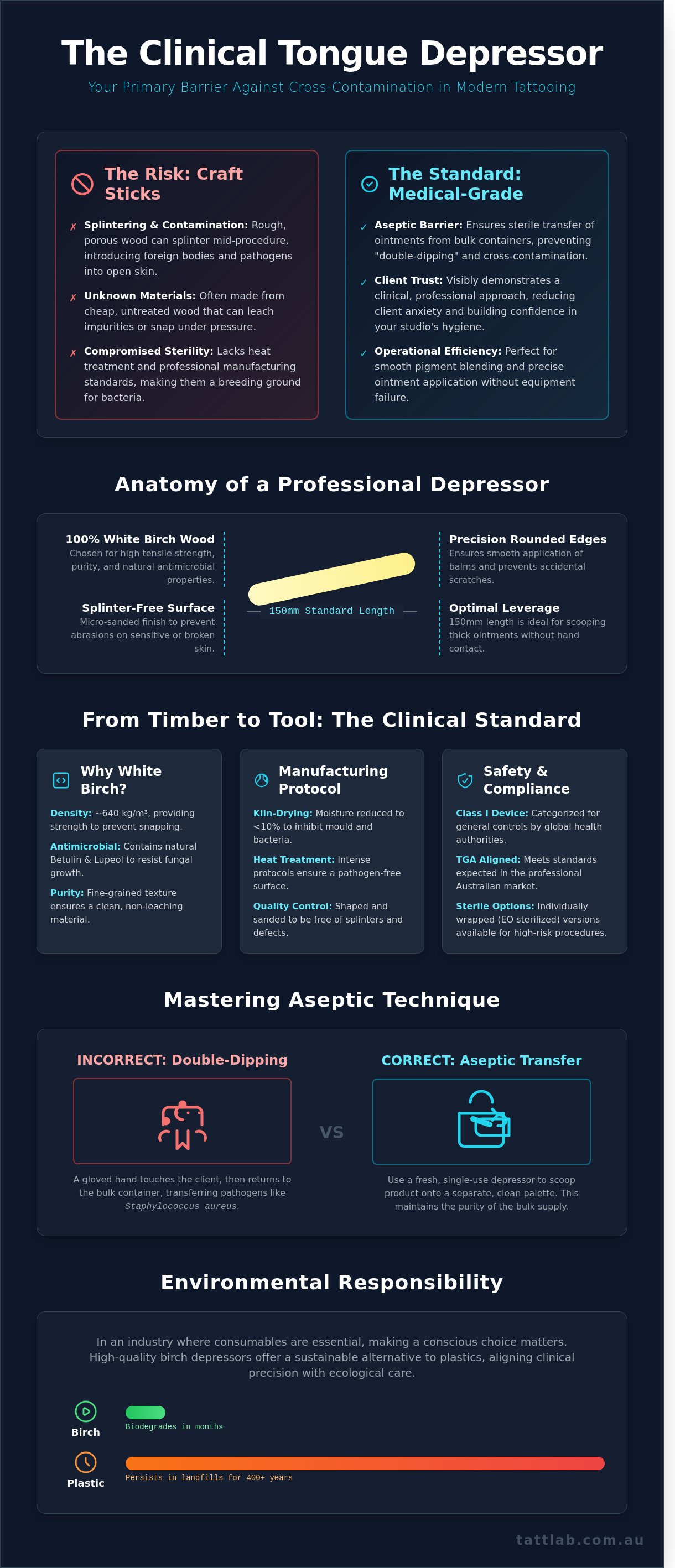
Professional artists use these tools to prevent the dangerous practice of "double-dipping" into large containers of petroleum jelly or aftercare balms. When a gloved hand touches a client and then returns to a shared supply, the risk of cross-contamination spikes significantly. This practice can introduce pathogens like Staphylococcus aureus into a fresh wound. The aseptic transfer process is the primary defense against bloodborne pathogens. By using a disposable spatula to move product onto a clean palette, the artist maintains the purity of the entire workstation. This methodical approach protects the skin’s integrity during the most vulnerable hours of the tattooing process.
The Anatomy of a Professional Depressor
The standard 150mm length of a professional tongue depressor provides the ideal leverage for scooping and spreading thick ointments without the artist's hand coming into contact with the transfer surface. Precision matters in a boutique-studio environment. High-quality depressors feature rounded, splinter-free edges to ensure no micro-abrasions occur during the application of topical balms. Most professional-grade tools are crafted from 100% white birch. This specific material is chosen for its high tensile strength and purity, ensuring the wood won't snap or leach impurities into sensitive, broken skin. In the Australian market, adhering to these material standards is a hallmark of a specialist who respects the biological complexity of the tattooing journey.
Clinical Integrity: Material Science and Sterility Standards
The transition from a raw timber log to a medical-grade tongue depressor involves rigorous industrial protocols designed to protect skin health. At the Lab, we view these wooden consumables as more than just spatulas; they're the primary barrier between a professional's gloved hand and a client's open wound. The manufacturing process begins with the selection of high-grade timber that undergoes kiln-drying to reduce moisture content to below 10%. This dehydration phase is critical because it inhibits the growth of mould and bacteria within the wood fibres. Following the shaping process, these tools are subjected to intense heat treatment protocols. These standards ensure a pathogen-free surface, meeting the requirements for a device officially categorised under Class I (general controls) by global health authorities.
Choosing the right consumable also means acknowledging the environmental footprint of the tattoo industry. In Australia, where waste management in clinical settings is increasingly scrutinized, the shift toward biodegradable birch is a conscious step toward sustainability. Unlike plastic alternatives that persist in landfills for 400 years, a high-quality wooden tongue depressor breaks down naturally within months. This choice supports the evolution of a studio that values both clinical precision and ecological responsibility.
Why White Birch is Non-Negotiable
White Birch (Betula papyrifera) is the gold standard for wooden consumables due to its unique biological profile. It possesses a natural density of approximately 640 kg/m³, providing the structural integrity needed to spread thick balms without snapping. This timber species is naturally antimicrobial, containing betulin and lupeol, compounds known for their resistance to fungal growth. The fine-grained texture is sanded to a microscopic finish, ensuring a splinter-free surface. This is vital when the wood makes contact with sensitive, inflamed skin during a long session. It's this commitment to material science that maintains the skin integrity we prioritise in every procedure.
Deciphering Sterility Labels
Practitioners must distinguish between individually wrapped sterile depressors and bulk-packaged options. For procedures involving direct contact with broken skin or mucosal membranes, individually wrapped items sterilized via Ethylene Oxide (EO) gas are often a clinical requirement. These are marked with a clear expiry date and a sterility indicator. If you use bulk supplies for workstation prep, storage is the most critical factor. They should be kept in a closed, dust-proof dispenser away from moisture. When setting up your station, ensure you've followed our professional guide to rubbing alcohol for surface disinfection before placing any consumables. Maintaining this level of meticulousness ensures the safety of your client’s journey from the first touch to the final clearance. For those looking to upgrade their clinical toolkit, you can explore our range of professional supplies designed for the modern studio.
Advanced Applications: Integrating Depressors into the Tattoo Workflow
Precision in the studio mirrors the meticulous nature of a clinical laboratory. While often overlooked, the humble tongue depressor serves as a foundational tool for maintaining the sterile field and ensuring the exact delivery of topical agents. It isn't just a piece of wood; it's a primary barrier against cross-contamination and a vital instrument for workstation ergonomics. At Tatt Lab, we view every stage of the process, from the first drop of ink to the final wipe, as a journey in skin integrity.
Dispensing and Setup Efficiency
Professional setup begins with "buttering" the workstation. This involves using a sterile tongue depressor to transfer precise amounts of petroleum jelly or specialized glide from bulk containers onto a clean, barrier-protected surface. This method eliminates the risk of "double-dipping," which is a critical violation of modern health protocols. By controlling the volume of product removed, artists can reduce aftercare waste by approximately 15% to 20% per session. This practice aligns with global safety standards, including the rigorous requirements outlined in Vermont's official tattoo safety rules, which mandate single-use applicators for all topical substances. The flat, wide surface of the depressor allows for a tidy, accessible palette, ensuring the artist’s focus remains on the skin rather than fumbling with bulk packaging.
Pigment Mixing and Customisation
When it's time to blend bespoke shades, the material of the tool matters. Many senior artists in Melbourne’s boutique studios prefer wooden depressors over plastic stirrers because wood provides superior tactile feedback. When mixing heavy pigments with diluents, the slight resistance of the wood allows the artist to feel the viscosity of the tattoo ink as it changes. This ensures a homogenous blend without the risk of chemical leaching that some low-grade plastics might present. The result is a consistent saturation that behaves predictably once it enters the dermis.
Beyond the palette, these tools offer mechanical advantages during the procedure. In difficult areas like the ribs or inner bicep, a clean depressor can act as a temporary tension aid to flatten the skin surface without the artist’s fingers obstructing the light. For the transfer stage, the edge of the tool helps in applying tattoo stencils with even pressure. This prevents air bubbles and ensures the carbon bond is uniform across the entire design, providing a crisp roadmap for the needle to follow. This level of meticulousness ensures the skin is respected and the art is preserved.
Evaluating Quality: Professional Grade vs. Craft Alternatives
Choosing a tongue depressor might seem trivial, but the difference between a medical-grade tool and a craft-store alternative is significant for skin health. Craft sticks, often sold in bulk for under A$10 at local discount retailers, aren't designed for clinical environments. These budget options frequently contain chemical preservatives or residual industrial dyes that can leach into open skin when they come into contact with moisture or ointments. In a professional studio, every tool must support the integrity of the procedure. Using untreated, medical-grade Northern Birch ensures that no toxic substances interfere with the client's healing process.
Visual inspection is your first line of defence. Hold the stick up to the light. You're looking for consistent grain and a total lack of 'fuzz' along the edges. Tactile testing is equally vital. Run a gloved finger along the surface; any catch indicates a failure in the manufacturing process. Industry data suggests that non-medical wood products have a 15% higher rate of surface defects compared to those manufactured for clinical use.
The Splinter-Free Guarantee
A single splinter can derail a session and introduce bacteria directly into the dermis. Unlike craft wood that's roughly tumbled in large batches, precision-cut tools are manufactured to exact specifications. Professional-grade depressors undergo rigorous polishing to eliminate surface irregularities. This smooth finish allows you to apply firm pressure during skin stretching without causing micro-abrasions. It's about protecting the client's skin from unnecessary trauma while you work, ensuring the canvas remains pristine for the ink or the laser.
Durability and Snap-Resistance
Reliability is paramount when you're applying thick ointments or using the tool for structural support during a procedure. A standard professional tongue depressor maintains a consistent thickness, typically around 1.6mm, to ensure it doesn't snap under tension. Testing the flexural strength before you begin is a smart habit; a tool that breaks mid-procedure compromises your sterile field and forces a full reset of your station. You'll need high-quality nitrile gloves to maintain a secure, slip-free grip on the wood during these high-tension tasks. If a tool feels flimsy or shows visible knots in the wood grain, discard it immediately. Quality control in the Lab means never settling for 'good enough' when it affects the final result.
The Tatt Lab Standard: Sourcing Reliable Medical Consumables
At Tatt Lab, we don't just supply products; we curate the essential infrastructure of a safe, professional studio. Every item in our inventory undergoes a rigorous vetting process to ensure it meets the specific demands of the Australian tattoo industry. We bridge the gap between clinical science and artistic reality by selecting tools that prioritize skin health without compromising the artist's workflow. This means every tongue depressor we stock is guaranteed to be splinter-free, medical-grade, and ethically sourced to maintain the highest hygiene standards.
Our commitment to the Lab motif means we treat your studio like a controlled environment where science meets art. We understand that a breakdown in the supply chain can halt your creative momentum. By sourcing through a specialized provider, you ensure that every consumable reflects the professional reputation you've built. It's about creating a predictable, high-quality result for every client who walks through your door. We focus on the technical edge so you can focus on the transformation.
Studio Supply Management
Managing a high-volume studio requires precision in both art and logistics. Our bulk supply tiers are designed to support this efficiency. By ordering in larger volumes, studios often reduce their overheads by up to 18% compared to fragmented, small-batch purchasing. A "one-stop-shop" approach maintains consistent safety standards across your entire team, ensuring everyone uses the same high-quality tongue depressor and barrier film. You can easily bundle these basics with other medical supplies for tattoo artists to streamline your monthly inventory. We offer express nationwide shipping across Australia; orders placed before 2 PM AEST typically leave our warehouse the same day to eliminate the risk of running out of essentials.
A Partner in Your Artistic Journey
We view even the most basic tool as a partner in your mission to protect skin integrity. Meticulous attention to detail defines the elite artist; it is the difference between a standard procedure and a premium clinical experience. We invite you to join our wholesale community to access specialized pricing and technical support tailored for growing studios. This partnership allows you to focus on the evolution of your craft while we handle the scientific rigor of your supply chain. Your journey toward excellence is a shared one, and we are dedicated to providing the clarity and care your clients deserve. Meticulous sourcing isn't just about safety; it is about the long-term health of the skin you work on every day.
Secure Your Clinical Workflow Today
Precision in the tattoo studio isn't just about the ink; it's about the integrity of every consumable used during the procedure. Choosing a medical-grade tongue depressor over a standard craft stick ensures a non-porous, splinter-free surface that maintains sterile boundaries. This choice directly impacts skin health by eliminating the risks associated with industrial-grade wood fibers. At Tatt Lab, we've vetted our supplies to meet rigorous clinical standards, ensuring that 100% of our consumables support a safe, professional environment.
As an artist-owned and operated specialist, we understand that high-performance results require high-performance tools. We provide express nationwide shipping across Australia, ensuring your studio stays stocked with medical-grade quality that's been tested in professional environments. By prioritizing these clinical details, you're investing in the safety of your clients and the evolution of your craft. It's a commitment to excellence that starts with the smallest tool in your kit. We're here to support your journey toward a more refined and sterile practice.
Shop Professional Tongue Depressors and Medical Supplies at Tatt Lab
Frequently Asked Questions
Are wooden tongue depressors sterile by default?
No, most bulk-purchased wooden tongue depressors aren't sterile by default. They're typically categorized as "clean" or "non-sterile" medical supplies under ISO 13485 guidelines. For procedures involving broken skin, artists should source individually wrapped, ethylene oxide (EO) gas-sterilised versions. These sterile options usually cost around A$15 to A$25 per box of 100, ensuring every application maintains the highest level of skin integrity and safety.
Can I use plastic tongue depressors instead of wooden ones for tattooing?
You can use plastic tongue depressors, but they're less common in Australian studios due to environmental concerns and higher price points. Plastic variants are often smoother and non-porous, which some artists prefer for high-viscosity balms. However, birchwood remains the industry standard because it's cost-effective and sturdy. A pack of 500 wooden sticks typically retails for roughly A$12, making them a more sustainable choice for high-volume clinical environments.
How should I store bulk tongue depressors to prevent contamination?
Store your bulk tongue depressors in a dedicated, non-porous container with a tight-fitting lid to shield them from airborne contaminants. Australian NHMRC infection control guidelines suggest keeping all single-use disposables in a clean, dry environment away from the "splash zone" of the tattoo station. Using a stainless steel or medical-grade acrylic dispenser reduces the risk of dust accumulation. It's a simple step that protects the client's healing journey.
What is the best way to use a tongue depressor to apply ointment during a tattoo?
The most hygienic method is to use a fresh tongue depressor to scoop ointment out of its container and onto a clean barrier film. Never dip the same stick back into the original tub after it has touched a gloved hand or the client's skin. This "single-dip" rule prevents cross-contamination. By transferring the required amount of product to a secondary surface, you maintain a controlled, clinical environment throughout the entire session.
Are tongue depressors biodegradable and eco-friendly?
Wooden tongue depressors are 100% biodegradable and are considered an eco-friendly option for modern studios. Most are crafted from sustainable birchwood, which naturally decomposes within 90 to 180 days in a commercial composting facility. Choosing timber over plastic aligns with the growing shift toward "green" tattooing practices in Melbourne and across Australia. It's a choice that respects both the client's skin and the local ecosystem.
Why do tattoo artists use tongue depressors instead of just using gloved fingers?
Artists use a tongue depressor to eliminate the risk of "double-dipping" into bulk ointment jars. Even with fresh gloves, reaching into a communal tub after touching a client's skin can introduce pathogens into the entire supply. Using a disposable applicator ensures the primary product remains pristine. This methodical approach reflects the precision of a high-end laboratory, prioritizing safety and predictable healing outcomes for every tattoo.
Is there a difference between a tongue depressor and an icypole stick?
There is a significant quality difference between a medical-grade tongue depressor and a standard icypole stick. Medical versions must meet TGA (Therapeutic Goods Administration) standards for smoothness and structural integrity to prevent splinters. An icypole stick isn't manufactured in a controlled environment and may contain wood burrs that compromise skin health. Using TGA-listed supplies ensures you're providing a professional service that meets Australian safety regulations.
Can tongue depressors be autoclaved for reuse?
You shouldn't autoclave wooden tongue depressors for reuse because they're strictly single-use items. The porous nature of wood means it can trap biological material deep within its fibers, which a standard 121-degree Celsius autoclave cycle might not fully eliminate. The high-pressure steam often warps or cracks the wood, making it unsafe for further use. Discarding each stick after one use is the only way to guarantee a sterile, safe environment for your clients.


Comments (0)
There are no comments for this article. Be the first one to leave a message!