

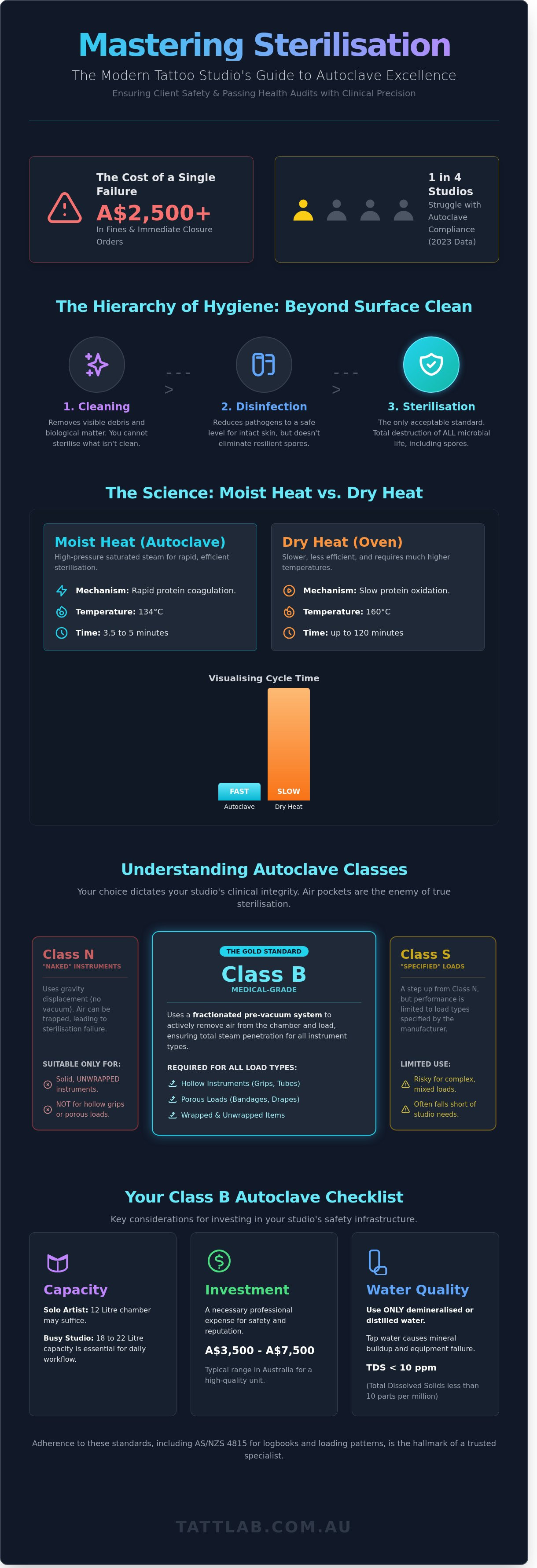
A single failed health department audit in Australia can cost a studio upwards of A$2,500 in fines and immediate closure orders. While most artists prioritise hygiene, data from 2023 health inspections suggests that 1 in 4 studios still struggle with the technical nuances of Class B versus Class S autoclave cycles. It's a frustrating hurdle when your focus is on the art of the tattoo. You already know that your client's safety is non-negotiable; yet, the clinical complexity of validation requirements and daily logging can feel like an administrative burden that distracts from your creative work.
We're here to bridge the gap between creative expression and medical-grade precision. This guide empowers you to master the clinical science of sterilisation to ensure total skin integrity for every client. We'll simplify the Australian standards for validation, clarify the difference between machine classes, and provide a foolproof protocol for your studio. By the end of this journey, you'll have the confidence to pass any inspection and the peace of mind that comes with maintaining a truly sterile environment.
Key Takeaways
- Discover why the Class B autoclave is the non-negotiable gold standard for Australian studios aiming for medical-grade sterilisation and total skin integrity.
- Distinguish between cleaning, disinfecting, and sterilising to ensure your studio operates with the clinical authority required for high-end skin procedures.
- Master the "dirty to clean" workflow protocols, ensuring a seamless transition from the workstation to the final validation of a sterile load.
- Learn how to meet rigorous AS/NZS 4815 standards by implementing precise loading patterns and comprehensive logbook documentation to protect your professional reputation.
What is an Autoclave and Why is it the Gold Standard?
The difference between a successful procedure and a medical complication often rests on a single piece of technology. To understand What is an Autoclave, one must view it as a sophisticated pressure chamber that uses saturated steam to achieve absolute sterility. While a workstation might look 'clean' to the naked eye, or even 'disinfected' after a chemical wipe, true safety in a clinical tattoo environment requires a sterile state. This means the total destruction of all microbial life, including highly resilient bacterial spores that standard chemical cleaners fail to eliminate. At Tatt Lab, we view this through the lens of skin health; surface cleaning is insufficient for invasive procedures because the dermal layer deserves the same level of protection as a surgical site.
In a professional studio, the hierarchy of hygiene is clear. Cleanliness removes visible debris. Disinfection reduces the number of pathogens to a level that's generally safe for intact skin. Sterilisation, however, is the only acceptable standard for tools that penetrate the skin barrier. By utilizing an autoclave, studios move beyond basic shop hygiene into the realm of clinical excellence, ensuring that every client journey is protected by rigorous scientific protocols.
The Science of Moist Heat vs. Dry Heat
Steam acts as a far more efficient energy carrier than hot air. While dry heat ovens require temperatures of 160°C for up to 120 minutes to be effective, an autoclave achieves the same result at 134°C in just 3.5 to 5 minutes. This efficiency relies on the sterilisation triangle: the precise relationship between pressure, temperature, and time. Under high pressure, steam causes the rapid coagulation and fragmentation of proteins within pathogens. This process shatters the cellular structure of viruses and bacteria, ensuring they cannot replicate or cause infection. It's a methodical destruction that dry air simply cannot match at lower, tool-safe temperatures.
Essential Role in Modern Tattooing
Modern Australian studios often face a choice between single-use plastics and the sustainability of reusable medical-grade steel. While many needles are now disposable, high-quality steel grips, tubes, and specialized body jewellery require rigorous processing to remain safe. Adhering to AS/NZS 4815 standards is a hallmark of a Trusted Specialist. It demonstrates a commitment to both environmental responsibility and meticulous safety. This approach builds immediate trust with a client base that values skin integrity. By investing in autoclave technology, a studio transforms safety from a background task into a premium brand differentiator that respects both the art and the individual.
Understanding Autoclave Classes: B, S, and N
In the Australian tattoo industry, your choice of sterilisation equipment dictates your studio's clinical integrity. Not every autoclave provides the same level of security. Selecting the wrong class can leave microscopic pockets of air trapped inside hollow grips or porous bandages, preventing steam from reaching every surface. This isn't just a technical oversight; it's a risk to the skin health of every client who walks through your door.
Class B: The Laboratory Standard
Class B units represent the highest tier of sterilisation technology available. These machines use a fractionated vacuum process, which pulses to extract air from the chamber before introducing steam. This is critical because air acts as a barrier to heat. If air remains inside a hollow tube, the internal temperature won't reach the 134 degrees Celsius required for complete microbial destruction. Class B units handle wrapped and unwrapped loads with equal precision, ensuring your tools emerge dry and sterile. This meticulous process mirrors the scientific rigor we apply at the Tatt Lab when preparing skin for transformation.
Distinguishing Class N and S Limitations
Class N (Naked) units rely on simple gravity displacement. They're designed for solid, unwrapped instruments only. They lack the vacuum power to penetrate hollow items or porous materials like surgical drapes. Class S (Specified) units are a middle ground, but their performance is limited to the specific load types defined by the manufacturer. For a professional studio handling complex, reusable equipment, these classes often fall short of the rigorous safety standards required for modern body art. Relying on an inferior class disrupts the safety of the client's journey and risks the studio's reputation.
Choosing the Right Unit for Your Studio
Selecting a unit requires a balance between volume and technical specs. A 12-litre chamber might suffice for a solo artist, but a busy Melbourne studio often requires 18 to 22-litre capacities to keep pace with a six-client daily rotation. A high-quality Class B autoclave in Australia typically ranges from A$3,500 to A$7,500, representing a significant but necessary investment in your professional infrastructure.
Water quality is another non-negotiable factor. Using tap water leads to mineral buildup and equipment failure within 12 months. You must use demineralised or distilled water with a Total Dissolved Solids (TDS) reading of less than 10 parts per million. Adopting this "Lab" motif in your equipment maintenance ensures your tools remain as precise as your artistry, protecting the longevity of your machine and the health of your clients.
The Pre-Sterilisation Workflow: Cleaning and Packaging
Sterilisation is a journey that begins long before the instrument enters the chamber. The industry's golden rule is absolute: you cannot sterilise what is not clean. Any biological debris left on a grip or tube acts as a shield, protecting pathogens from the high-pressure steam. To maintain skin health and safety, studios must implement a strict "dirty to clean" linear flow. This physical separation prevents cross-contamination, ensuring that soiled equipment never enters the sterile zone where the autoclave resides. It's a methodical progression that mirrors the precision of the tattoo removal process itself.
Ultrasonic Cleaning and Manual Scrubbing
Effective cleaning relies on more than just elbow grease. The ultrasonic cleaner uses cavitation, where high-frequency sound waves create millions of microscopic bubbles that implode against the equipment. This process scrubs surfaces at a scale manual brushing cannot reach, removing 99% of organic matter when used correctly. We use enzymatic detergents specifically designed to break down complex proteins and lipids. Australian standards suggest a 5 to 10 minute cycle at temperatures between 40°C and 50°C for optimal results. Once the cycle finishes, rinsing with demineralised water and thorough drying are vital. Residual moisture can cause corrosion or compromise the autoclave cycle's effectiveness by creating "wet packs" that harbor bacteria.
Bagging and Indicator Tapes
Proper packaging ensures instruments remain sterile until the moment they touch the skin. Always place items using the paper-to-plastic rule, allowing steam to penetrate the porous paper side while keeping the contents visible through the film. It's essential to understand your indicators to ensure clinical transparency. Type 1 process indicators only show the package was exposed to heat, which isn't enough to guarantee safety. For true peace of mind, Tatt Lab recommends using Type 4, 5, or 6 integrators, which measure the critical variables of time, temperature, and steam penetration. A chemical indicator is a visual cue that changes colour to confirm the specific parameters of a sterilisation cycle were met. This level of meticulousness ensures that every tool used in the studio meets the highest standard of medical-grade clearance.
How to Use an Autoclave: A Step-by-Step Practical Guide
Precision defines the professional studio environment. Operating an autoclave requires a disciplined sequence to ensure every tool meets clinical standards for skin integrity. It's a methodical process that mirrors the accuracy we demand in laser technology, requiring focus from the moment you power on the unit to the final validation of the load.
Loading and Cycle Selection
Overcrowding is the most frequent cause of sterilisation failure. You must never overlap pouches or stack items tightly; steam needs space to circulate and penetrate the paper backing of every pack. If the steam cannot reach the surface, the "Picosecond" of peak pressure becomes meaningless. Select your cycle based on the load's vulnerability. Use 134°C at 2.1 bar for stainless steel instruments to achieve rapid results. For heat-sensitive plastics or rubbers, a 121°C cycle for 15 minutes provides a gentler but equally effective transformation. Monitor the display throughout the process to ensure the pressure readings align with the selected temperature parameters.
Unloading and Storage Protocols
The drying cycle is not optional. Moisture acts as a biological bridge, allowing contaminants to wick through the paper and compromise the tools. We call these "wet packs," and they are considered non-sterile regardless of the temperature reached. Once the cycle concludes, use heat-resistant gloves to handle the trays. This prevents steam burns and protects the skin. Inspect the Class 4 or 5 chemical indicators immediately. A successful cycle shows a distinct, uniform color change. Store your validated items in a dedicated, dust-free cabinet away from moisture. In Australia, following AS/NZS 4815 standards ensures your storage protocols maintain the evolution of your sterile chain.
Daily and Weekly Maintenance
Maintaining the autoclave is a ritual that protects both your equipment and your clients. Every morning, wipe the door seal with a damp, lint-free cloth to ensure the vacuum remains airtight. Biofilm buildup in the water reservoir can lead to cycle errors and "E01" codes, so replace the distilled water daily. Once a week, remove and clean the chamber filters to prevent debris from clogging the drainage system. This steady, educational approach to maintenance reduces the risk of unexpected downtime. It reflects a commitment to safety that goes beyond simple compliance, positioning your studio as a specialist environment where science meets skin health.
Compliance and Validation: Meeting Australian Standards
Adhering to AS/NZS 4815:2006 isn't just a regulatory hurdle; it's the clinical backbone of a safe studio. This standard governs a wide range of office-based healthcare facilities, from tattoo studios to surgical centres like Australia Cosmetic Clinics, ensuring every autoclave cycle reaches the precise temperature and pressure needed for absolute sterility. In Australia, local health authorities use these benchmarks to assess your studio's safety profile during inspections. Failing to meet these requirements risks more than just a fine; it compromises the biological integrity of your client's skin and your professional reputation.
Logging and Documentation
Your logbook serves as the legal evidence of your commitment to safety. You'll need to record the date, time, and operator for every single load processed. Each entry must capture the cycle number and the specific parameters achieved, such as holding a temperature of 134 degrees Celsius for at least 3.5 minutes. In Australia, you must retain these records for at least 7 years to satisfy medical audit requirements. While physical books are traditional, digital logging systems offer 40% faster retrieval during audits and reduce the risk of data loss compared to paper records.
Validation Tests: Helix and Bowie-Dick
Mechanical readouts tell you what the machine did, but validation tests prove what actually happened inside the chamber. The Bowie-Dick test, performed daily before the first load in a Class B machine, verifies that the vacuum pump successfully removes air. This prevents air pockets that could insulate bacteria from the steam. For studios using hollow needles or complex grips, the Helix test is non-negotiable. It simulates a long, narrow instrument to ensure steam penetrates the most difficult areas. Establishing this routine creates a meticulous and calm environment where science replaces guesswork.
Biological monitoring remains the ultimate clearance for any high-end studio. By using spore strips containing Geobacillus stearothermophilus, you gain empirical proof that even the most resilient microorganisms have been destroyed. Tatt Lab supports this high-standard journey by providing medical-grade consumables and PPE that align with these rigorous protocols. We view ourselves as a dedicated partner in your studio's evolution, ensuring your practice remains a sanctuary of skin health and clinical excellence. Our commitment to quality helps you maintain a transparent, results-oriented approach that builds immediate trust with every client who walks through your door.
Setting the Standard for Skin Integrity
Mastering the autoclave process is more than a regulatory requirement; it's a commitment to the 25% of Australians who trust artists with their skin health. By implementing a rigid Class B cycle and adhering to AS/NZS 4815 standards, you ensure every procedure is a safe journey of transformation. This precision reflects the scientific rigor required in a modern studio environment. Success relies on this marriage of technical excellence and artistic vision. When you perform daily steam penetration tests and maintain strict pre-sterilisation workflows, you protect both your reputation and your clients.
At Tatt Lab, we bridge the gap between clinical science and tattoo culture. Our team provides artist-vetted medical supplies designed to meet the highest hygiene benchmarks. Whether you're in a Melbourne boutique or a regional studio, we support your evolution with express nationwide shipping across Australia. We focus on skin integrity so you can focus on the art. It's about refining your practice with meticulous care and professional results.
Secure your studio's safety with medical-grade supplies from Tatt Lab
Your dedication to safety defines the future of your craft. We're proud to be part of your journey toward excellence.
Frequently Asked Questions
How often does an autoclave need to be serviced in Australia?
In Australia, your autoclave must undergo professional servicing and validation every 12 months to comply with AS/NZS 4815 or AS/NZS 4187 standards. This annual check ensures the pressure vessel and seals maintain their mechanical integrity. Beyond the yearly service, you're required to perform daily biological or chemical indicator tests. Skipping these 365-day intervals risks both client safety and your studio's legal compliance with local health department regulations.
Can I use an autoclave for plastic or rubber tattoo grips?
You can only sterilise plastic or rubber grips if they're explicitly rated as autoclavable by the manufacturer, typically made from high-grade silicone or heat-resistant polymers. Standard single-use plastic grips will melt or release toxic fumes at the 134-degree Celsius temperatures required for sterilisation. Always check the packaging for the heat-tolerance symbol. If a grip isn't rated for 2.1 bar of pressure, it belongs in the clinical waste bin, not the machine.
What happens if the autoclave cycle fails mid-way?
If a cycle fails mid-way, the entire load is considered non-sterile and you must restart the process from the beginning. You'll need to repackage the tools in fresh sterilisation pouches as the original bags may have been compromised by moisture or partial heating. Common causes include power fluctuations or door seal errors. Always record the failure in your logbook to maintain a transparent 100% audit trail for health inspectors and ensure skin health is never compromised.
Is a pressure cooker the same as a medical autoclave?
A pressure cooker is not a substitute for a medical autoclave because it cannot guarantee the precise 134-degree temperature and 2.1 bar pressure required to kill spores. While a kitchen appliance might reach 100 degrees, it lacks the vacuum pulse technology found in a Class B autoclave to remove air from hollow tubes. Using uncertified equipment violates the Health Guidelines for Personal Care Services and puts your clients at a 100% avoidable risk of cross-contamination.
How do I know if my autoclave is actually killing all bacteria?
You verify sterilisation success by using a combination of Class 5 or 6 chemical indicators in every load and performing a biological spore test at least monthly. The chemical strip changes colour only when specific time, steam, and temperature parameters are met. This rigorous verification mirrors the precision we demand at the Lab, ensuring that even the most resistant microorganisms are eradicated for total skin health and safety.
Do I need an autoclave if I only use 100% disposable cartridges?
Even if you use 100% disposable cartridges, you'll still need an autoclave if you use reusable stainless steel grips or traditional bars. Many Australian jurisdictions require studios to have a validated sterilisation path for any non-disposable equipment that enters the sterile field. If your entire setup is 100% single-use and pre-sterilised, you might bypass the machine, but you must keep all batch-numbered receipts for 7 years to prove compliance during inspections.
What is the difference between a Class B and a Class N autoclave for tattooing?
The primary difference lies in air removal; a Class B autoclave uses a vacuum pump to extract air, making it the only choice for hollow tattoo grips and bagged tools. Class N machines rely on gravity displacement and are only suitable for solid, unwrapped instruments. Because tattooists almost always use bagged tools to maintain sterility, a Class B machine is the industry standard for ensuring steam reaches 100% of every surface inside a pouch.
How long are autoclaved tools considered sterile once bagged?
Autoclaved tools remain sterile for up to 12 months provided the sterilisation pouch remains dry, sealed, and physically intact. In high-humidity environments, many professionals opt for a 180-day re-sterilisation cycle to ensure absolute safety. If a bag becomes damp or develops a 1mm tear, the contents are instantly compromised. It's a meticulous journey that prioritises the long-term health of your client's skin over convenience or speed.


Comments (0)
There are no comments for this article. Be the first one to leave a message!