
The difference between a successful healing process and a compromised result often begins with a single, emerald-hued liquid. While many see it as a simple cleanser, green soap is actually a specialized medical-grade surfactant designed to maintain the biological integrity of the skin during the tattooing process. It's the cornerstone of effective tattoo skin prep solutions, ensuring the canvas remains calm and receptive as you work. You likely already know that maintaining a sterile environment is the baseline for any professional studio, yet the nuances of fluid dynamics and skin chemistry can still feel unpredictable.
This guide will show you why green soap remains the gold standard for studio safety, skin integrity, and procedural precision in the professional industry. We'll demystify the complexities of dilution ratios and aseptic techniques to help you avoid common pitfalls like skin irritation or accidental cross-contamination. By understanding the methodical application of this essential tool, you can ensure optimal ink visibility during your sessions while upholding the high safety standards expected in the modern Australian tattoo industry. We're here to help you bridge the gap between technical expertise and the clinical rigor required for long-term results.
Key Takeaways
- Understand the chemical composition of green soap as a potassium-based vegetable oil tincture and why its natural tint serves as a marker of purity.
- Learn how to integrate green soap into every stage of your workflow, utilizing it as one of the most reliable tattoo skin prep solutions for both stencil adhesion and active pigment removal.
- Master the science of emulsification to lift hydrophobic ink particles efficiently without causing procedural redness or compromising the client's epidermal integrity.
- Follow professional aseptic delivery protocols, including the precise 1:9 dilution ratio with distilled water to ensure a sterile, mineral-free environment for every session.
- Identify the clinical risks associated with inconsistent pH levels in off-brand soaps and why sourcing high-performance consumables is vital for maintaining studio safety standards.
What is Green Soap? The Clinical Foundation of Skin Preparation
In the clinical environment of a modern studio, every fluid used serves a specific biological purpose. A traditional tincture of green soap is far more than a simple detergent; it's a precisely engineered surfactant that forms The Clinical Foundation of Skin Preparation in professional studios across Australia. Unlike the synthetic cleaners found in domestic settings, this solution is a potassium-based vegetable oil soap designed specifically for use on compromised skin. The "green" in its name is often misunderstood. It doesn't refer to an artificial dye or a marketing claim; it refers to the natural yellowish-green tint of the vegetable oils used in its production. This lack of added pigment is intentional, ensuring that no unnecessary chemicals interfere with the skin's healing response or the clarity of the tattoo ink.
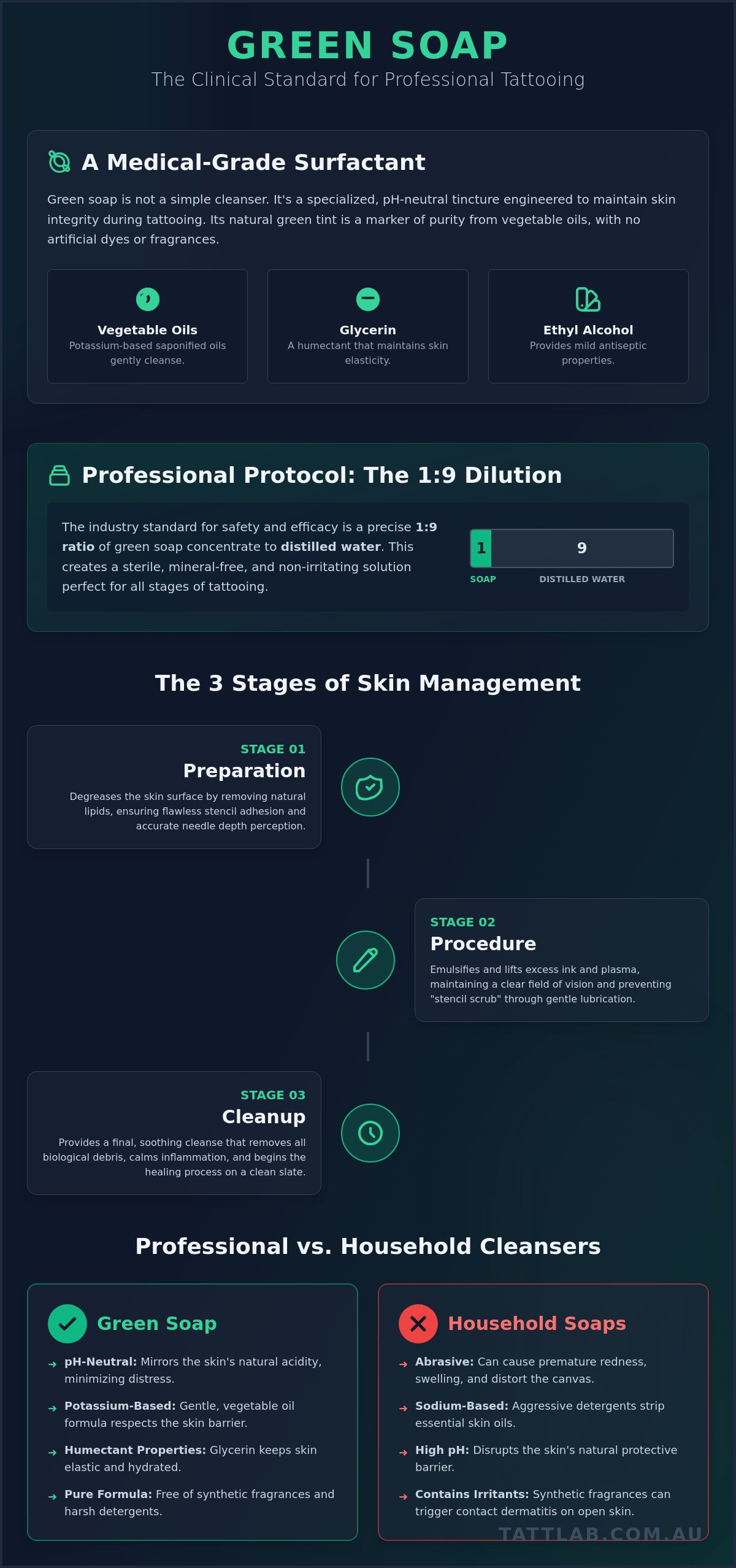
The formula typically includes saponified vegetable oils, a small percentage of ethyl alcohol for its antiseptic properties, and a high concentration of glycerin. This specific combination results in a pH level that remains near-neutral. By mirroring the skin’s natural acidity, green soap minimizes epidermal distress during the repeated wiping required in a session. It's a foundational element among tattoo skin prep solutions because it balances effective cleansing with biological respect, allowing the artist to maintain a clean field without causing unnecessary trauma.
The Composition of Professional Green Soap
The lipid-based nature of professional green soap allows it to interact with the skin without stripping away the essential oils that maintain the barrier's integrity. Glycerin plays a vital role here. It acts as a humectant, drawing moisture into the tissue to ensure the skin remains elastic and supple even during multi-hour sittings. When you use a medical-grade tincture, you're choosing a product refined for purity, free from the industrial contaminants often found in generic cosmetic alternatives. Using specialized tattoo skin prep solutions ensures that the artist isn't fighting against the body's inflammatory response from the moment the first line is pulled.
Green Soap vs. Household Cleansers
Generic household cleansers rely on aggressive sodium-based detergents that are far too abrasive for the delicate process of tattooing. These harsh chemicals often lead to premature swelling and localized redness, which can distort the canvas and make fine detail work difficult. Additionally, the synthetic fragrances common in domestic soaps are frequent triggers for contact dermatitis when applied to open skin. Because it lacks these irritants, professional green soap is the only appropriate choice for maintaining the health and clarity of skin during the tattoo process.
The Three Stages of Skin Management: Prep, Procedure, and Cleanup
Professional tattooing requires a methodical approach to skin interaction. It's a three-phase narrative: preparation, the procedure itself, and the final cleanup. Each stage demands specific performance from your tattoo skin prep solutions to ensure the biological canvas remains stable and receptive. By viewing these stages as a continuous cycle of care, you protect the client's physical integrity while ensuring the technical precision of your work.
Preparing the Canvas: Pre-Tattoo Sanitisation
The initial phase focuses on degreasing. Natural lipids on the skin surface can interfere with needle depth perception and prevent the stencil from bonding correctly. By applying a diluted green soap solution, you remove these oils without compromising the skin's moisture. This creates a high-fidelity surface where medical supplies for tattoo artists can perform at their peak. A clean, degreased surface ensures the stencil remains crisp throughout the session, reducing the need for reapplication and limiting unnecessary skin trauma. This foundational step is what separates a standard procedure from a professional clinical practice.
Maintaining Visibility: Managing Ink and Exudate
During the procedure, the soap's role shifts to emulsification. It must lift excess pigment and plasma from the surface without stripping the epidermis of its natural defenses. This is where the Professional Protocol: Dilution Ratios and Aseptic Delivery becomes critical for maintaining a clear field of vision. The soap molecules surround hydrophobic ink particles, allowing them to be wiped away with minimal friction. This lubrication prevents the "stencil scrub" effect, where aggressive wiping irritates the skin and blurs your guide lines. Managing client comfort through the soothing properties of plant-derived oils helps lower the body's natural stress response during long sittings.
Once the session concludes, the final cleanup removes biological debris and begins the process of calming the inflammatory response. The plant-derived oils in the soap provide a soothing finish, leaving the skin prepared for the application of high-quality studio essentials and aftercare. Beyond the skin, the non-corrosive properties of green soap make it an excellent choice for the pre-sterilization soaking of instruments, ensuring that your tools are free from organic matter before they enter the autoclave. This holistic approach to management protects both the client's transformation and the longevity of the artistic result.
The Technical Advantage: Emulsification and Epidermal Integrity
The technical superiority of green soap lies in its sophisticated chemical interaction with both the skin and the pigment. Unlike standard detergents that merely sit on the surface, green soap functions as a high-performance surfactant. This means its molecules possess a dual nature, with one end attracted to water and the other to oils and pigments. This specific molecular structure allows the soap to surround hydrophobic ink particles and biological fluids like plasma, lifting them away from the epidermis with minimal physical force. It's a level of biological compatibility that generic soaps simply cannot match, especially when managing wounded skin.
The Science of Surfactants in Tattooing
By breaking the surface tension of fluids on the skin, green soap prevents "Ink Drift," where excess pigment spreads uncontrollably across the workspace. This containment is essential for maintaining the high-precision linework required in modern fine-line or micro-tattooing. In the context of tattoo pigment removal, emulsification is the chemical process of suspending hydrophobic ink particles within the soap solution so they can be lifted from the skin without abrasive scrubbing. This mechanism ensures that the artist can clear the field of vision repeatedly without causing the localized trauma often seen with inferior tattoo skin prep solutions.
Preserving Skin Integrity for Better Healing
Maintaining epidermal integrity during a session is a direct predictor of the final aesthetic outcome. When an artist uses harsh cleansers, the skin often develops an "over-wiped" appearance, characterized by significant redness and inflammation. This vasodilation doesn't just cause client discomfort; it can actually push pigment back out of the skin, leading to patchy saturation. By utilizing oil-based tattoo skin prep solutions, you keep the skin calm and the pores receptive, ensuring the ink stays exactly where it's intended.
A session managed with clinical precision leads to significantly better tattoo aftercare results. When the skin barrier isn't unnecessarily compromised by friction or chemical burns, the body can focus its energy on the restorative phase rather than fighting procedural irritation. This reduction in secondary inflammation lowers the risk of infection and ensures that the long-term colour saturation remains vibrant. For the professional, this methodical approach to cleanliness isn't just about safety; it's a commitment to the physical transformation and long-term satisfaction of the client. It's about moving through the procedure with a sense of controlled, predictable progress.
Professional Protocol: Dilution Ratios and Aseptic Delivery
Precision in dilution is what transforms a raw concentrate into a functional clinical tool. The industry standard for professional tattoo skin prep solutions remains a 1:9 ratio; that's one part green soap concentrate to nine parts distilled water. This specific balance ensures the surfactant action is powerful enough to emulsify lipids and pigment, yet gentle enough to avoid osmotic stress on open skin. Using tap water is a significant breach of professional standards. The minerals, fluoride, and chlorine found in municipal water supplies can cause unpredictable chemical reactions or lead to microbial growth within the wash bottle over time.
Delivery methods are just as vital as the solution itself for maintaining a sterile environment. Professional artists generally favor wash bottles over spray bottles because sprays create fine aerosols. These tiny droplets can carry biological contaminants across the studio, settling on clean surfaces or equipment. A wash bottle allows for a controlled, downward stream directly onto a single-use wipe, maintaining a tighter aseptic field. This practice works in tandem with the "dirty hand, clean hand" protocol. By ensuring the hand holding the bottle never makes contact with the client or the contaminated workspace, you effectively eliminate the primary route for cross-contamination.
Mastering the Mix: Precision Ratios
Preparing your daily solution should be a ritual of accuracy. Start by measuring your distilled water into a sanitized container before adding the soap concentrate to prevent excessive foaming. While the 1:9 ratio is the baseline, some specialists adjust this for specific scenarios. You might increase the water ratio for clients with hyper-sensitive skin or slightly decrease it for heavy saturated colour sessions where pigment buildup is more intense. Adhering to these tattoo supplies standards ensures that your tattoo skin prep solutions remain consistent every time you set up your station.
Environmental and Safety Considerations
The plant-based origin of professional green soap makes it a biodegradable choice, aligning with a modern shift toward sustainable studio practices. However, clinical safety must always take precedence. Every studio in Australia should maintain up-to-date Safety Data Sheets (SDS) for all consumables to ensure compliance with workplace health and safety regulations. While rare, always monitor the client for signs of sensitivity, such as excessive hives or localized heat, which may indicate a reaction to the glycerin or essential oil components. Ensuring your solutions remain potent and sterile through proper storage is the final step in a truly professional protocol.
For artists who value methodical precision, sourcing medical-grade concentrates is the first step toward a safer studio. Secure your professional studio essentials to ensure every session meets the highest clinical standards.
Sourcing Clinical Grade: Why Quality Consumables Define Your Craft
The integrity of your final result depends heavily on the purity of your consumables. While some online forums might suggest DIY alternatives or generic baby soaps, these off-brand options carry significant risks for the professional artist. Impurities and inconsistent pH levels in unvetted formulas can lead to unpredictable skin reactions, potentially compromising the very work you've spent hours perfecting. Choosing clinical-grade tattoo skin prep solutions ensures that every wipe is a calculated, safe interaction with the client's body. By utilizing products specifically formulated for the tattoo environment, you maintain a stable field that allows your tattoo ink to remain vibrant and undisturbed by chemical irritants during the restorative phase.
A specialist supplier plays a vital role in maintaining the high standards expected in the modern Australian tattoo industry. When you source from a dedicated provider, you're not just buying a product; you're investing in a vetted chain of quality control. This level of rigor is essential for preventing the inflammatory "over-wiped" look discussed earlier, ensuring that the skin remains calm from the first pass to the final cleanup. It's a commitment to the science of the procedure that separates a high-end boutique studio from a high-pressure retail environment.
The Tatt Lab Commitment to Excellence
Tatt Lab provides a curated selection of medical-grade supplies, vetted from an artist-owned perspective. We understand that a studio's reputation is built on the consistency of its outcomes, which is why we prioritize clinical performance above all else. Our role as a specialist supplier in Australia is to ensure that foundational consumables are always available when you need them. With national express shipping, we help you maintain a consistent inventory, preventing the need for last-minute substitutions that could put your clients at risk. Professional studios across the country trust this methodical approach to sourcing because it mirrors the precision of their own craft.
Elevating Your Studio Standards
Beyond the biological benefits, there is a powerful psychological impact to a clean, professional setup. When a client enters a studio environment that feels like a high-end laboratory, their anxiety lowers. They see a specialist who values physical integrity and meticulousness above all else. Investing in high-quality tattoo skin prep solutions is a visible commitment to your craft and your client's long-term health. It transforms the procedure into a reassuring narrative of safety and self-assurance. If you're ready to restock your station with the gold standard of industry consumables, explore our range of professional medical supplies here and ensure your studio standards remain uncompromising.
Elevate Your Studio Standards with Clinical Precision
Mastering the biological and technical nuances of green soap transforms your workflow from a standard procedure into a high-precision clinical practice. By adhering to precise dilution ratios and understanding the science of emulsification, you ensure that your canvas remains calm and your guide lines stay crisp throughout the session. These methodical approaches to tattoo skin prep solutions do more than just clean; they protect the physical integrity of your client while ensuring the long-term vibrancy of your art. Professionalism in the modern industry is defined by this commitment to safety and technical excellence.
Tatt Lab is an artist-owned and operated specialist facility dedicated to upholding medical-grade safety standards for professional studios across the country. We meticulously vet every consumable for performance so you can focus entirely on the creative narrative of transformation. With express nationwide shipping available across Australia, maintaining a consistent, high-quality inventory for your studio has never been more accessible. It's time to replace uncertainty with controlled, predictable progress in every session.
Shop Professional Green Soap & Medical Supplies
Frequently Asked Questions
Can I use green soap as a daily tattoo aftercare wash?
No, you should avoid using green soap for daily aftercare as its high surfactant concentration is too aggressive for repeated home use. While it's perfect for removing heavy pigment during a session, frequent application on a healing tattoo can strip the skin of essential lipids and lead to excessive dryness. We recommend using specialized tattoo aftercare products designed specifically for gentle, long-term recovery instead.
What is the correct dilution ratio for green soap?
The industry standard for professional tattoo skin prep solutions is a 1:9 ratio, consisting of one part soap concentrate to nine parts distilled water. This specific balance ensures the solution is effective enough to emulsify ink and biological fluids while remaining gentle on the client's skin. Maintaining this precise ratio is essential for consistent results and minimizing unnecessary procedural redness during long sessions.
Can I use tap water to dilute my green soap?
No, you must never use tap water because it contains minerals, chlorine, and potential microorganisms that can compromise the sterility of your solution. Distilled water is the only appropriate choice for professional studios in Australia. Using tap water can lead to mineral buildup in your wash bottles and significantly increases the risk of introducing biological contaminants to the open skin.
Are there any alternatives to green soap if a client is allergic?
If a client has a rare sensitivity to the glycerin or vegetable oils in green soap, you can use plain distilled water or specialized hypoallergenic foam cleansers. It's vital to identify these sensitivities during your initial consultation. Always keep a secondary, fragrance-free option available to ensure you can maintain a clean workspace without triggering an adverse inflammatory response in sensitive individuals.
Is green soap a disinfectant or just a cleanser?
Green soap is primarily a medical-grade cleanser and surfactant, not a high-level disinfectant. While the alcohol content provides minor antiseptic properties, its main role is to emulsify oils and lift pigment from the skin surface. You must still follow a complete aseptic protocol, including the use of hospital-grade disinfectants for your work surfaces and equipment to ensure a truly sterile environment.
Why does green soap sometimes sting during a tattoo session?
The stinging sensation occurs because green soap contains a low percentage of alcohol, which can irritate nerve endings when applied to open skin. As the session progresses and the skin becomes more inflamed, this sensitivity typically increases. To minimize discomfort, ensure you're using the correct 1:9 dilution and avoid aggressive wiping, which can further compromise the epidermal integrity and heighten the client's pain.
How should I store diluted green soap to prevent contamination?
You should store your diluted solution in sanitized, airtight wash bottles in a cool, dark environment away from direct sunlight. It's best practice to mix only what you need for a few days of work to ensure the solution remains potent and fresh. Always discard any leftover solution if the bottle has been sitting for an extended period to maintain the highest studio safety standards.
Can green soap be used to clean tattoo machines or needles?
No, green soap is specifically formulated for tattoo skin prep solutions and is not suitable for sterilizing or disinfecting tattoo machines or needles. Using it on equipment can lead to corrosion and fails to eliminate the pathogens required for professional safety. Always use dedicated hospital-grade disinfectants and an autoclave for your reusable tools to ensure your studio remains compliant with Australian health regulations.


Comments (0)
There are no comments for this article. Be the first one to leave a message!