
A polished portfolio can open the door; a trustworthy attitude helps keep it open. What tattoo studio owners look for in an apprentice is more than drawing skill: they value original work, patience, reliability and a genuine willingness to learn. In Australia, a useful preparation target is 20 to 50 finished portfolio pieces, presented with care.
It’s natural to wonder whether your art is good enough. Studio owners also look at how you respond to feedback, treat people and handle the less visible responsibilities that keep a studio running. These qualities show whether you’re ready to learn steadily, not just eager to tattoo.
This guide explains how to present your portfolio, what work and responsibilities an apprenticeship may involve, and which warning signs to watch for when an offer comes your way. You’ll get a clearer idea of how to make a professional first impression while protecting your time, effort and development as an artist.
Key Takeaways
- Show that you can develop designs thoughtfully and communicate clearly, not just draw well.
- Curate your portfolio around consistent, original work, and present it so a studio can review it quickly.
- Prepare for the everyday responsibilities of an apprenticeship, including reliability, studio support and a willingness to learn.
- Recognise warning signs such as copied artwork, unsafe practice or an offer that prioritises upfront payment over genuine training.
1. Additional drawing and client communication work
Drawing skill shows a studio owner how you observe, plan and refine an image. Strong designs have clear structure, balanced composition and confident linework, rather than detail for its own sake. For example, a floral design should have readable petal shapes and outlines that stay controlled at different sizes. These choices help an owner judge whether your drawings could translate into tattoos.
Line control shows in steady contours, smooth curves and consistent spacing. Practise simple forms, such as circles, leaves and lettering, before combining them into detailed designs. Sketch the main shape, check the proportions, then refine the lines. This process shows patience and the ability to self-edit. Include different styles only when each piece feels deliberate and finished.
Apprentices may also support client communication and design preparation. A tattoo artist may spend 2-4 hours at home drawing a client’s design after working in the shop. This illustrates why an applicant should understand that drawing can continue beyond appointment time. Listening carefully, recording a client’s preferences and making clear revisions all help prevent misunderstandings before a design is finalised.
In Australia, tattoo hygiene and infection-control requirements vary by state and territory. Apprentices need to follow the applicable local rules and studio procedures before handling equipment or taking part in client-facing work.
When discussing a design, practise describing its size, placement and key features in plain language. For example, explain how a fine-line leaf differs from a bold, filled version, then confirm which details matter most to the client. A measured conversation demonstrates care and attention. It also shows how you respond to direction, an essential part of developing reliable drawing and linework skills.
2. Portfolio presentation for studio applications
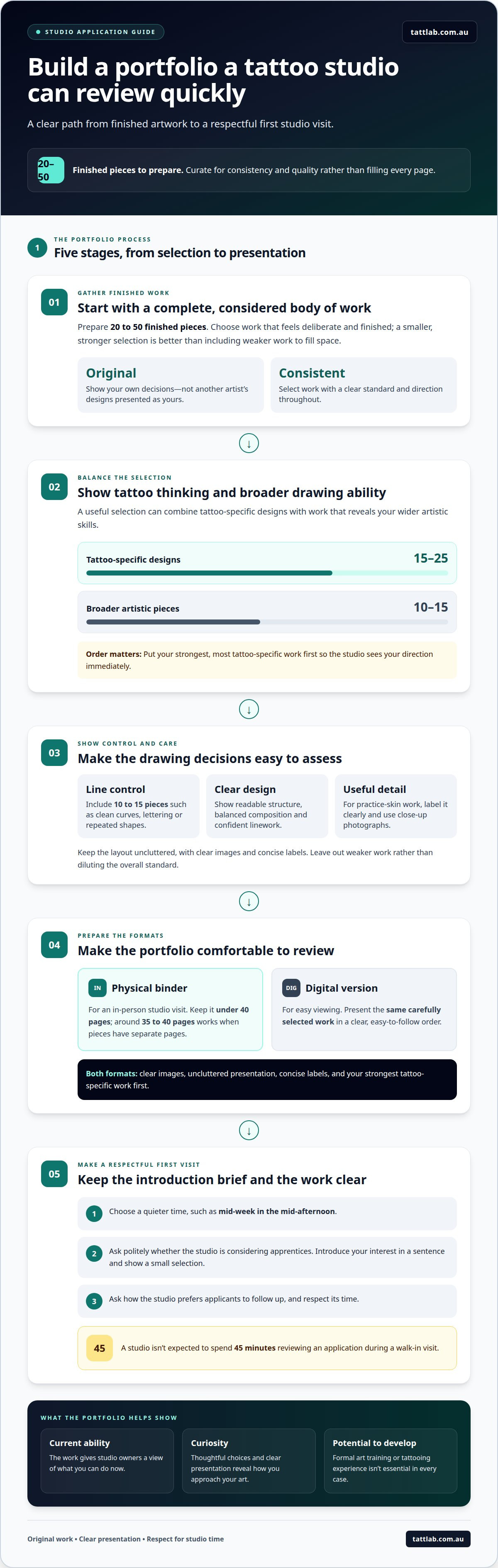
Prepare 20 to 50 finished pieces, then edit for consistency rather than volume. A strong selection can include 15 to 25 tattoo-specific designs and 10 to 15 pieces showing broader artistic ability. This range helps artists assess both your understanding of tattoo imagery and the drawing skills behind it. Put your strongest, most tattoo-specific work first, so the studio sees your direction immediately.
Quality matters more than filling every page. A physical binder can stay under 40 pages; around 35 to 40 pages works when pieces have separate pages. Keep the layout uncluttered, with clear images and concise labels. Include 10 to 15 line-control pieces, such as clean curves, lettering or repeated shapes. If you show practice-skin work, label it clearly and use close-up photographs. Leave out weaker work rather than diluting the overall standard.
Use a physical portfolio for an in-person studio visit and a digital version for easy viewing. Both should present the same carefully selected work, with clear images and an easy-to-follow order. Formal art training or tattooing experience isn’t essential in every case. A portfolio lets studio owners assess your current ability, curiosity and potential to develop. Originality matters too: show your own decisions, not another artist’s designs presented as yours.
To approach a studio, choose a quieter time, such as mid-week in the mid-afternoon, and ask politely whether they’re considering apprentices. Keep the visit brief and let the portfolio speak first. A studio isn’t expected to spend 45 minutes reviewing an application during a walk-in visit. Introduce your interest in a sentence, show a small selection, and ask how they prefer applicants to follow up. This respectful approach recognises the studio’s time while giving its artists a clear view of your work and commitment to a tattoo career.
3. Apprentice responsibilities
An apprenticeship involves more than watching tattoo artists work. In a shop running from 9 to 5, an apprentice may help keep the workspace organised, prepare for appointments and support the daily flow. Arriving 15 minutes early gives you time to settle in and be ready when the day begins. Reliability is visible in these small, repeated actions.
Studio support may include cleaning work areas, replenishing supplies and helping with client-facing tasks. Follow the artist’s instructions closely, especially around hygiene and equipment. If you’re unsure how to handle something, pause and ask for an explanation rather than guessing. That protects the workflow and shows you understand the limits of your experience.
Expect to learn gradually. You might observe an artist preparing a station, watch how they speak with a client, then practise a task under supervision. Treat every drawing, observation and piece of feedback as part of your training. Keep notes on techniques and questions, then use them to guide practice between studio days. Eagerness alone doesn’t mean you’re ready to tattoo independently.
In Australia, tattoo apprenticeships are usually unpaid during the first 6 months. Costs depend on the arrangement, including whether the studio supplies materials or expects the apprentice to provide them. Before accepting, make sure the terms explain pay, any material costs, expected hours and responsibilities in plain language.
Consistency matters more than one impressive day. If a studio expects you from 9 to 5, punctuality, respectful communication and careful follow-through all count. Explain honestly what you can do, what you’re still learning and how you respond to feedback. A dependable apprentice listens, completes assigned tasks and respects the artist’s decisions around client work. Those habits help build trust while your technical ability develops step by step.
4. Red flags in apprenticeship offers
A genuine apprenticeship should centre on learning, not pressure or promises. Rick Shaw identifies copying another artist’s work and presenting it as your own as a clear warning sign. It misrepresents your ability and disregards the original artist’s effort. Build your application around work you created yourself, and be ready to explain your choices, references and process.
An offer that encourages you to tattoo friends at home is another red flag. Rick Shaw identifies this as a concern for apprentice applicants. An offer focused on getting a machine into your hands quickly may overlook the gradual learning and studio guidance an apprenticeship should involve. Don’t mistake early access to equipment for quality training. Ask what you’ll learn before practical work begins.
Look closely at upfront charges. The amount alone doesn’t explain the whole offer, so ask for a written breakdown of what the payment covers, who provides instruction and what responsibilities you’ll have. Clear answers matter more than a confident sales pitch.
Before accepting, ask the mentor to explain the expected schedule, training stages, costs and feedback process. A credible conversation should distinguish observation, studio support and supervised practice, rather than promising you’ll eventually tattoo clients without explaining the steps. Compare the written terms with what you were told. If the offer changes under questioning, pressures you to pay immediately or avoids explaining who will teach you, pause before committing. A sound opportunity respects careful questions and gives you time to understand the commitment. Trust the process, not just the title “apprentice”.
Tatt Lab
Tatt Lab supplies professional tattoo equipment and products to artists and studios. As you learn what an apprenticeship demands, Tatt Lab can be a practical source for supplies used in a professional tattoo setting.
The range includes Tattoo Aftercare, Traditional Needles, Tattoo Cartridges and Tattoo Inks. These products support the equipment and aftercare side of the industry, not the search for a mentor or apprenticeship. As an applicant, focus on developing original artwork, learning studio expectations and assessing any offer carefully.
If you’re looking for tattoo supplies as your professional practice develops, contact Tatt Lab to discuss your needs.
Build your next step with purpose
Understanding what tattoo studio owners look for in an apprentice is a starting point, not a finish line. Keep developing your professional practice: make time for deliberate drawing, reflect on feedback and approach studio conversations with respect. Small, consistent actions give you room to grow and show that you take the craft seriously.
Be patient with your progress. A thoughtful application and a clear understanding of an offer can help you choose a path that suits your goals. As your work develops, Tatt Lab can support your professional practice with tattoo equipment and aftercare supplies. For questions about supplies, contact Tatt Lab.
Keep learning, be honest about what you’re ready to do, and let your work demonstrate your commitment. The next opportunity begins with the standards you build today.
Frequently Asked Questions
What Makes Someone Worth Apprenticing?
A strong apprentice candidate shows curiosity, accountability and the ability to learn from correction. If a mentor asks you to simplify a design, for example, test the change instead of defending every detail. Respect for clients matters too: listen without interrupting, keep personal information private and recognise when a question needs the artist’s answer.
Does it matter which studio I apply to?
Yes, the studio’s approach should fit the kind of artist you hope to become. Look at the work it displays and consider whether its visual direction interests you, then notice how staff interact with clients. The studio’s atmosphere, teaching approach and capacity to guide an apprentice can shape your experience as much as its artistic style.
What does a tattoo apprenticeship portfolio look like?
A portfolio shows how you think visually, not just how you finish a drawing. Include original concepts that demonstrate your use of shape, contrast and composition, and arrange them in an easy-to-follow sequence. A brief note beside a piece can explain its inspiration or design decision, helping an artist understand your creative process.
What should I bring to a tattoo apprenticeship interview?
Bring your portfolio and a sketchbook showing how ideas develop from rough concepts into finished designs. Prepare a few thoughtful questions about learning expectations, feedback and day-to-day studio culture. A notebook helps you record answers accurately. Dress neatly, be ready to introduce yourself, and listen carefully before responding to the artist’s comments.
What qualities do tattoo studio owners look for in an apprentice?
A useful answer to what tattoo studio owners look for in an apprentice is a combination of artistic potential and professional judgement. Owners want to see that you accept direction, communicate respectfully and take responsibility for your choices. For instance, crediting references honestly and explaining how you developed an idea into your own design signals integrity.
What personal qualities and work habits do tattoo studio owners value in apprentices?
Consistency, discretion and thoughtful organisation help an apprentice contribute to a studio’s daily rhythm. Name design files clearly, track feedback between revisions and follow through on agreed tasks. If a deadline becomes difficult, communicate early rather than disappearing. These habits prevent avoidable confusion and show respect for artists’ and clients’ time.


Comments (0)
There are no comments for this article. Be the first one to leave a message!