

What if the most critical skill in your studio isn't your linework, but your ability to manage a biological anomaly? When a fresh piece begins to swell or itch beyond the norm, the immediate pressure of professional liability can feel overwhelming. You aren't just an artist; you're a guardian of your client's physical integrity. Understanding exactly what to do if a client has a reaction to ink is the difference between a minor setback and a compromised reputation. It's a situation that requires a calm, clinical approach to distinguish between a standard healing phase and a true inflammatory response.
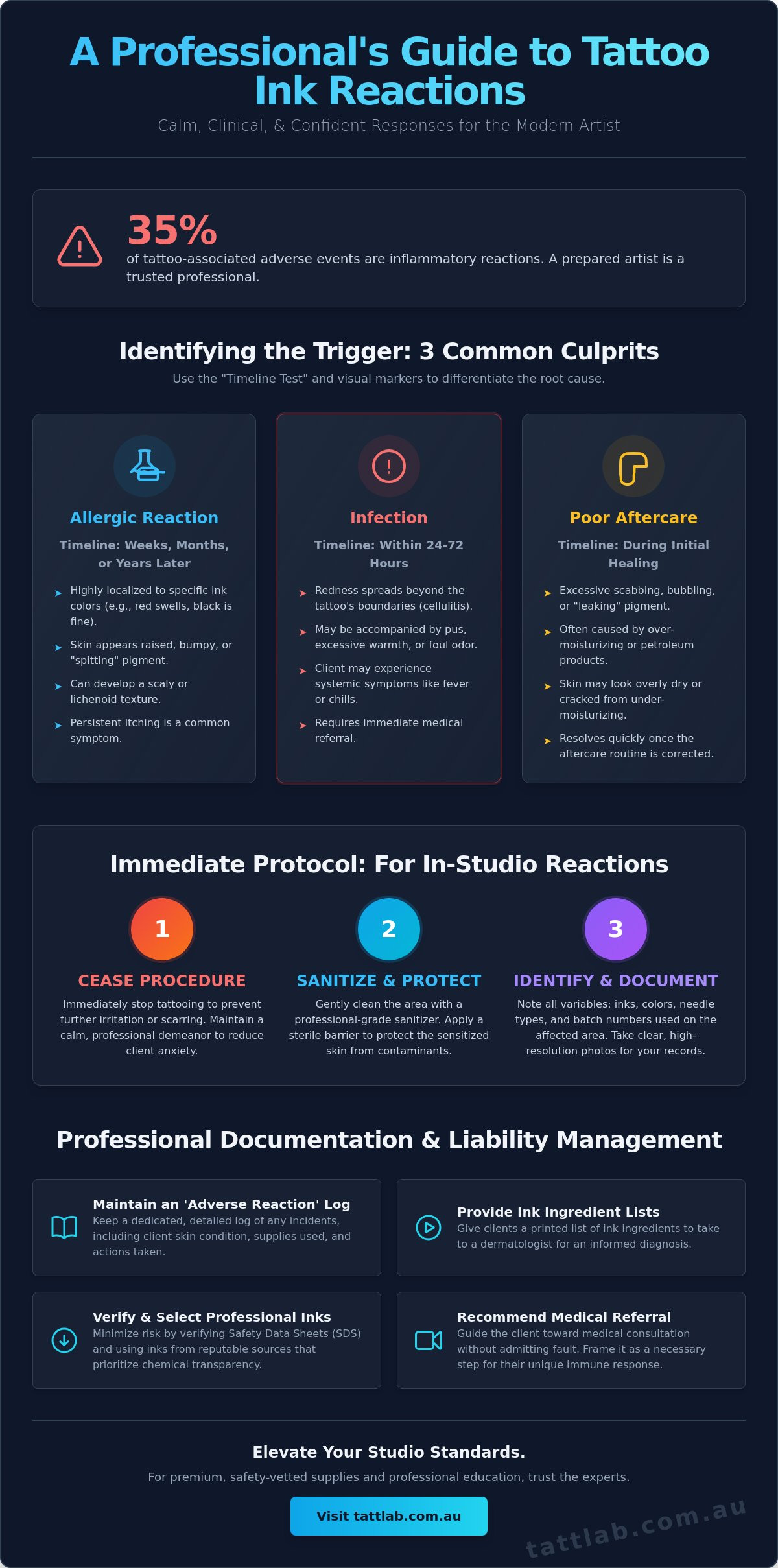
Recent data indicates that roughly 35% of tattoo-associated adverse events are classified as inflammatory reactions. This reality underscores the need for a methodical protocol that prioritizes safety without panic. We'll demystify the science of dermal sensitivity and provide a step-by-step management strategy. You'll gain the knowledge to educate your clients with transparency, identify the criteria for professional-grade inks that align with international safety standards, and master a protocol that ensures every narrative of transformation remains a positive, healthy progression.
Key Takeaways
- Establish a calm, clinical environment by following a professional hygiene protocol that reduces client anxiety during an active reaction.
- Use the "Timeline Test" to differentiate between common pigment allergies and infections, ensuring your response is appropriate for the specific biological trigger.
- Learn exactly what to do if a client has a reaction to ink by implementing immediate management steps that protect both the artwork and the client's physical health.
- Minimize future risks by verifying Safety Data Sheets (SDS) and selecting professional inks from reputable Australian sources that prioritize chemical transparency.
- Identify the clinical markers that signal when a client requires specialized hypoallergenic aftercare balms or a referral to a medical professional for advanced treatment.
Immediate Protocol: How to Professionally Manage an Active Ink Reaction
In the high-precision environment of a professional studio, an unexpected skin response isn't a crisis; it's a biological variable that requires a clinical, protocol-driven response. Knowing what to do if a client has a reaction to ink while they are still in your chair is essential for maintaining both physical safety and professional trust. Your first priority is the 'Initial Assessment'. This involves a calm, methodical observation of the area to determine the severity of the response without projecting alarm. By maintaining a composed demeanor, you lower the client's cortisol levels, which helps prevent further physiological stress that can exacerbate skin inflammation.
Professional communication during this phase is delicate. You must guide the client toward a medical consultation without inadvertently admitting fault or speculating on a diagnosis you aren't qualified to give. Frame the conversation around the body's unique immune response. Explain that while you follow every safety standard, the skin can occasionally react to external pigments. This transparent, results-oriented approach builds immediate trust, positioning you as a dedicated partner in their health rather than just a service provider.
Step-by-Step Response for In-Studio Reactions
If you suspect hypersensitivity during a session, you must act with precision to mitigate further irritation. Follow these steps immediately:
- Cease the procedure: Stop tattooing as soon as you notice abnormal swelling, localized hives, or excessive redness that doesn't align with standard trauma. Continuing to work on compromised tissue increases the risk of scarring.
- Sanitize and protect: Clean the area gently using professional-grade sanitizers. Avoid harsh scrubbing. Apply a sterile barrier to protect the sensitized dermis from environmental contaminants.
- Identify the variables: Note the specific tattoo inks and pigment colors used in the affected area. Record whether you were using round liners for detail or magnums for shading, as needle depth and density can influence the skin's reaction profile.
Professional Documentation and Liability Management
Meticulous documentation is your studio's strongest shield against professional liability. Maintain a dedicated 'Adverse Reaction' log that records every detail of the incident, including the client's skin condition prior to the session and the specific batch numbers of all supplies used. Capturing high-resolution photographs at the time of the incident provides an objective clinical record for your insurance and future reference. This level of detail mirrors the rigor of a scientific facility, reinforcing your status as a trusted specialist.
To support the client's recovery, provide them with a printed 'Ink Ingredient List' to take to their dermatologist. Understanding The Science of Ink Hypersensitivity helps you explain that certain pigments can trigger the body's immune system. By providing this information, you empower the medical professional to make an informed diagnosis, ensuring the client's journey toward healing is controlled and predictable.
Identifying the Trigger: Allergic Reaction vs. Infection vs. Poor Aftercare
Distinguishing between a routine healing phase and a pathological response is the cornerstone of professional practice. When determining what to do if a client has a reaction to ink, you must first act as a clinical observer. The most effective diagnostic tool at your disposal is the 'Timeline Test'. While standard inflammatory responses peak within the first 48 hours, a bacterial infection typically gains momentum during this same window. Conversely, hypersensitivity can be a slow-burn issue. It's common for an allergic reaction to manifest weeks, months, or even years after the initial procedure, long after the skin appears to have reached a state of physical integrity.
Visual markers provide the next layer of evidence. Localized pigment rejection often looks like the skin is "spitting" a specific color, appearing as raised, bumpy tissue strictly within the boundaries of a certain pigment. Spreading redness that crosses the boundaries of the tattoo is a red flag for cellulitis or other bacterial complications. Poor aftercare often mimics these symptoms but lacks the systemic indicators of infection. Excessive scabbing or "leaking" pigment usually stems from over-moisturizing or the use of petroleum-based products that suffocate the dermis. Unlike an allergy, which is persistent, aftercare issues usually resolve quickly once the routine is corrected. Understanding these Tattoo risks and precautions ensures you can provide accurate, reassuring guidance to your client.
Signs of a Pigment Allergy
Allergic reactions are often highly localized and pigment-specific. You might see the red sections of a piece raised and swollen while the black linework remains perfectly flat. This is a classic indicator of hypersensitivity to specific metal salts or organic pigments. In some cases, the skin develops a lichenoid texture, becoming scaly, thick, or excessively itchy. This isn't a failure of technique; it's a unique biological interaction between the client's immune system and the pigment chemistry. Using professional tattoo inks with transparent ingredient lists helps you narrow down these triggers more effectively if a reaction occurs.
Recognising Bacterial Infection
Infections present a more immediate risk to the client's holistic wellness and require a different management protocol. Look for spreading redness that feels hot to the touch or red streaks moving away from the site. If the client reports fever, chills, or notices a foul odor accompanied by yellow or green discharge, these are definitive markers of a bacterial presence. Pain should naturally subside after the first two days. If the intensity increases instead of fading, professional medical intervention is required immediately to prevent further complications.
The Science of Ink Hypersensitivity: Understanding Pigment Chemistry
To master what to do if a client has a reaction to ink, you must first understand the molecular interactions occurring beneath the epidermal barrier. Most adverse responses are classified as delayed-type hypersensitivity, or Type IV hypersensitivity. Unlike an immediate prick-test reaction, this is a T-cell mediated immune response that can take days, weeks, or even years to manifest. The body doesn't react to the pigment upon initial contact; instead, it slowly develops a sensitivity as the immune system identifies the pigment particles as persistent foreign invaders. This biological delay is why a tattoo can remain dormant for months before suddenly becoming inflamed or textured.
Red pigments remain the most frequent culprits in these clinical scenarios. Historically, this was due to heavy metals like mercury (cinnabar), but modern reactions are typically triggered by organic azo dyes. These pigments can be particularly volatile when exposed to UV light. Photosensitivity occurs when sunlight breaks down the pigment's chemical bonds, releasing smaller, more allergenic byproducts into the surrounding tissue. Understanding these chemical profiles is a core component of professional training, as adhering to FDA tattoo safety guidelines empowers artists to vet their supplies with clinical rigor.
Common Pigment Triggers
While red is the primary offender, purple and chrome green pigments also carry higher risk profiles due to their complex chemical structures. Modern organic pigments have largely replaced heavy-metal bases, yet they aren't without risk. Trace elements of Nickel and Cobalt are often present as unintentional contaminants from the manufacturing process. For a sensitive client, even microscopic amounts of these metals can trigger a persistent inflammatory response. A January 2026 study of 15 commercially available inks in Australia found that every sample tested contained toxic metals exceeding European safety limits, highlighting the need for meticulous pigment selection.
The Impact of Ink Quality on Skin Integrity
The distinction between professional-grade tattoo inks and unverified online imports is found in the manufacturing environment. Reputable brands utilize sterile, laboratory-grade facilities to ensure their carriers and preservatives, such as glycerin or specific alcohols, are free from microbial life. Contaminated ink is a leading cause of non-allergic inflammatory reactions that mimic hypersensitivity but are actually low-grade infections. Ink stability refers to the chemical resistance of a pigment to degradation or migration within the dermis, ensuring the tattoo remains inert and visually consistent over time. By sourcing pigments with documented safety data, you ensure the body's narrative of transformation remains one of health and physical integrity.
Risk Mitigation: Selecting Professional, Safe Supplies in Australia
In Australia, the absence of a binding national regulatory framework for ink composition places a significant burden on the individual artist. You are the final gatekeeper for your client's health. While the Industrial Chemicals Act 2019 governs importation, the day-to-day safety of the pigments rests on your selection process. Sourcing from a professional Australian supplier is your primary defense against unverified and potentially hazardous materials. These suppliers act as a bridge between international safety standards, like the EU REACH regulations, and your local practice, providing a level of accountability that international marketplaces cannot match.
Knowing what to do if a client has a reaction to ink starts long before the procedure begins. It begins with the verification of Manufacturer Safety Data Sheets (SDS). Every bottle in your inventory should have an accessible SDS that details its chemical composition, potential irritants, and batch tracking information. If a supplier cannot provide this documentation, the pigment shouldn't enter your studio. This methodical approach mirrors the precision of a laboratory, ensuring that every variable is accounted for before the skin's physical integrity is challenged.
Client screening is equally vital. Using medical-grade intake forms helps identify pre-existing sensitivities to metals or preservatives before you open a single tattoo cartridge. Ask specific questions about history with jewelry, hair dyes, or cosmetics. This proactive dialogue transforms the process from a simple transaction into a liberating narrative of self-assurance, where safety is the foundation of the aesthetic outcome. By mastering the selection of safe supplies, you rarely have to worry about what to do if a client has a reaction to ink because the biological risks have been clinically minimized.
Vetting Your Ink Inventory
Selecting the right pigments requires a commitment to transparency. Only utilize brands that offer full ingredient disclosure and clear batch tracking. Avoid bargain pigments found on third-party marketplaces; these often lack the clinical backing necessary for professional work. For a deeper dive into the technical requirements of safe pigments, refer to The Professional Guide to Tattoo Ink. Ink stability is defined as the chemical resistance of a pigment to degradation or migration within the dermis, which is essential for preventing long-term inflammatory responses.
Medical-Grade Studio Standards
A sterile environment is non-negotiable for preventing non-allergic inflammatory responses. Utilizing high-quality medical supplies for tattoo artists ensures that every barrier and piece of PPE meets Australian safety standards. For clients with a history of hypersensitivity, consider implementing a patch test protocol 48 hours prior to the full session. This controlled, predictable progress allows you to observe the skin's response in a localized area, significantly reducing the likelihood of a major adverse event.
Maintaining a studio that prioritizes safety builds immediate trust and protects your professional reputation. To ensure your studio is equipped with the highest standard of pigments and barriers, browse our curated range of professional tattoo inks and medical-grade supplies.
Long-Term Client Care and Studio Safety Solutions
The resolution of an adverse event is just as critical as the initial response. When you're determining what to do if a client has a reaction to ink, the focus must eventually shift from acute management to long-term dermal recovery. This phase is defined by a "healing partnership" between the artist and the client. You are no longer just a service provider; you are a consultant guiding the skin back to a state of physical integrity. This process requires patience and a methodical transition in aftercare routines to ensure the immune system returns to a baseline of calm.
Persistent reactions that don't respond to standard care require professional medical intervention. If the tissue remains raised, itchy, or develops a scaly texture after several weeks, recommend a consultation with a dermatologist. Medical professionals can prescribe topical steroid treatments or intralesional injections to dampen the T-cell mediated response. As an artist, your role is to provide the dermatologist with the full clinical history you documented during the initial protocol, including pigment batch numbers and needle types used. This transparency ensures the medical treatment is as precise as your original linework.
Handling future touch-ups for a reactive client requires a conservative strategy. Never use the offending pigment color or brand again on that individual. Even if the skin appears healed, the immune system may remain "primed" for that specific chemical trigger. If a touch-up is essential for the aesthetic outcome, perform a localized patch test with an alternative, high-stability pigment at least 48 hours prior to the session. This controlled, predictable progress protects the client's wellness and your studio's professional reputation.
Professional Aftercare Recommendation
Mastering tattoo aftercare becomes a clinical necessity when dealing with hypersensitivity. Standard commercial lotions often contain fragrances or parabens that can exacerbate an existing reaction. Instead, transition the client to specialized, hypoallergenic balms that support the skin barrier without occluding the pores. Educate the client on the role of environmental triggers; UV radiation is a known catalyst for pigment volatility. Advise strict sun avoidance and the use of pH-balanced, medical-grade cleansers to prevent secondary irritation during the recovery period.
The Tatt Lab Commitment to Safety
We believe that studio safety is a continuous narrative of improvement and rigor. Tatt Lab acts as your dedicated partner by curating only the highest-standard professional inks and needles that align with global safety benchmarks. Our role is to provide the specialized tools you need to maintain a minimalist, boutique environment where science meets health. Whether you need to restock on sterile barriers or source pigments with transparent SDS documentation, our express nationwide shipping ensures your studio remains a laboratory of safety. We prioritize physical integrity above all else, supporting your commitment to long-term results and client trust.
Advancing Your Practice Through Clinical Precision
Professionalism in the modern studio is defined by how you handle the unexpected. By implementing a methodical protocol, you transform a potential crisis into a controlled, predictable narrative of care. You've learned to distinguish between the slow-burn of hypersensitivity and the immediate threat of infection, ensuring your response is always grounded in biological evidence rather than guesswork. Mastering what to do if a client has a reaction to ink is not just about liability; it's about honoring the physical integrity of every individual who trusts you with their skin.
As your dedicated partner, Tatt Lab provides the specialized tools necessary to maintain these high standards. We are artist-owned and operated, offering expert support and high-quality medical-grade PPE to ensure your studio operates with laboratory-level rigor. With express nationwide shipping across Australia, you can access sterile consumables and vetted pigments whenever you need them. Secure your studio with professional-grade, artist-vetted supplies at Tatt Lab and continue your journey of artistic excellence with absolute confidence.
Frequently Asked Questions
Can a client be allergic to black tattoo ink?
Yes, although black ink is generally considered the most stable and inert pigment. While carbon is the primary base, some black formulations contain trace elements of nickel or specific preservatives that can trigger a response in sensitive individuals. These reactions typically manifest as localized swelling or persistent itching within the black linework rather than a systemic inflammatory event.
What should I do if a client calls me a week later with a rash?
Request high-resolution photographs and invite the client into the studio for a professional assessment. Use the "Timeline Test" to determine if the rash is a localized allergic response or a sign of bacterial presence. Knowing what to do if a client has a reaction to ink involves providing them with your pigment batch numbers and a clear ingredient list to take to a dermatologist if the irritation doesn't subside.
Is it my fault if a client has an allergic reaction to red ink?
An allergic reaction is an unpredictable biological immune response, not a failure of your artistic technique. If you've used professional-grade pigments and followed sterile protocols, the reaction is a variable of the client's unique physiology. Maintain your role as a trusted specialist by providing empathetic support and clinical documentation rather than assuming professional fault for a biological anomaly.
How can I tell the difference between an ink allergy and a staph infection?
Infections usually present with systemic indicators like throbbing heat, spreading redness, and yellow or green discharge. You might also notice the client feels generally unwell with fever or chills. An ink allergy is typically confined to a specific color and is characterized by intense itching or a scaly, raised texture without the foul odor or heat associated with a staph infection.
Should I offer a refund if a client has an ink reaction?
Refund policies are at the studio's discretion, but an allergic reaction isn't a reflection of poor service or defective products. Instead of a refund, offer professional value through specialized aftercare guidance or a referral to a dermatologist. This approach maintains your professional integrity while showing the client that you're a dedicated partner in their long-term skin health and recovery.
Can a tattoo reaction happen years after the tattoo was done?
Yes, delayed-type hypersensitivity can manifest years after the initial procedure. The immune system can become sensitized to the pigment over time, or a reaction can be triggered by external catalysts like intense UV exposure. In these cases, a previously flat tattoo may suddenly become raised, itchy, or textured, requiring a clinical approach to manage the newly active immune response.
What ingredients in tattoo ink are most likely to cause a reaction?
Azo dyes, which are commonly found in red, orange, and purple pigments, are the most frequent triggers for hypersensitivity. Trace metals like nickel, cobalt, and chromium also carry higher risk profiles. Even modern organic pigments can cause issues if the client is sensitive to specific carriers or preservatives used to maintain the ink's sterility and stability within the bottle.
Does using numbing cream increase the risk of an ink reaction?
Numbing creams introduce additional chemical variables that can complicate the skin's response. While they don't change the ink's chemistry, some clients are sensitive to lidocaine or the preservatives found in these topicals. This can cause localized dermatitis that mimics an ink allergy, making it more difficult to determine what to do if a client has a reaction to ink during or after the session.


Comments (0)
There are no comments for this article. Be the first one to leave a message!