

A tattoo touch-up is often perceived as a minor correction, but it's actually a sophisticated clinical refinement that demands even more precision than the initial session. Successfully revisiting healed tissue requires a deep understanding of how the dermis has changed and what it needs to accept new pigment without unnecessary trauma. You likely recognize the challenge of matching original shades or the anxiety that comes with ensuring consistent saturation during a second pass. It's a delicate balance that separates a standard procedure from a liberating narrative of personal transformation.
This guide will help you master the clinical requirements and professional supplies needed for a tattoo touch up to ensure flawless results and long-term pigment integrity. We'll break down the essential medical-grade consumables and specific tattoo cartridges, such as round liners and curved magnums, that prioritize skin health throughout the process. You'll learn how to approach the second session with a methodical, results-oriented strategy that replaces uncertainty with predictable progress. From REACH-compliant tattoo inks to specialized tattoo aftercare, we provide the scientific roadmap for a successful aesthetic outcome that respects the biological integrity of your canvas.
Key Takeaways
- Distinguish between natural pigment settling and procedural ink fallout to accurately assess the clinical needs of your client's skin.
- Identify the specialized supplies needed for a tattoo touch up, including high-precision cartridges and medical-grade consumables that minimize secondary skin trauma.
- Master the science of pigment management to effectively match fresh tattoo inks with previously healed and settled tones for a seamless finish.
- Implement a sterile procedural workflow that prioritizes meticulous skin preparation and workstation organization specifically for refinement sessions.
- Understand the critical role of professional tattoo aftercare in preserving pigment integrity and ensuring the success of the secondary healing phase.
Understanding the Clinical Need for a Tattoo Touch-Up
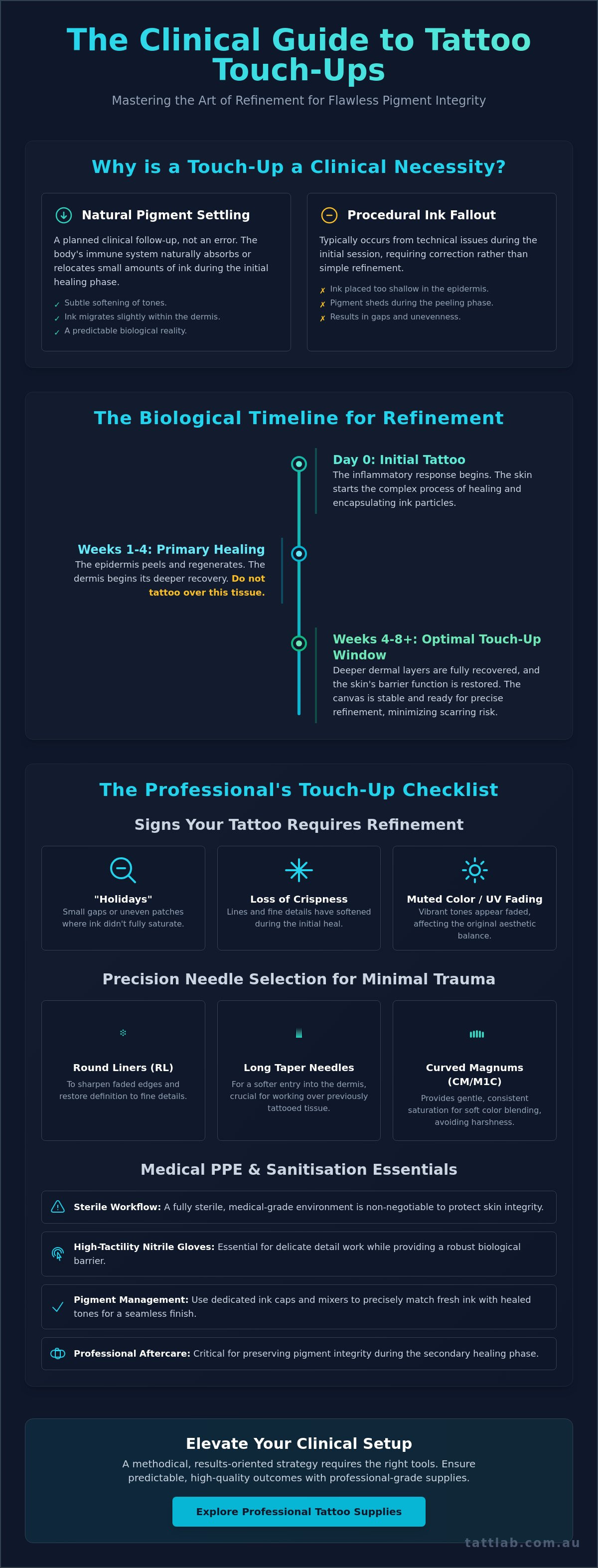
A professional touch-up isn't an admission of error. It's a calculated phase in the lifecycle of a permanent aesthetic investment. During the tattooing process, the skin acts as a living filter. It doesn't always retain 100% of the pigment in a single pass. This refinement session allows an artist to account for natural pigment settling, where the body's immune system relocates or absorbs small amounts of ink during the initial inflammatory response. By approaching the touch-up as a planned clinical follow-up, we ensure the final result achieves the precise saturation and longevity intended.
Distinguishing between natural settling and procedural fallout is vital for long-term success. Fallout often occurs when ink is placed too shallow in the epidermis, causing it to shed during the peeling phase. In contrast, settling refers to the subtle softening of tones as the ink migrates slightly within the dermis. This biological reality means that even the most skilled application may require a secondary pass. Understanding the specific supplies needed for a tattoo touch up is the first step in preparing for this essential maintenance. It turns a technical necessity into a narrative of progression toward the perfect final image.
Signs Your Tattoo Requires Professional Refinement
Identifying the need for a touch-up requires a keen eye for detail. Look for "holidays," which are small gaps or uneven patches where the ink didn't fully saturate the tissue. You might also notice a loss of line crispness or areas where the color appears muted compared to the rest of the design. UV exposure can also affect how ink settles, sometimes necessitating a refresh of vibrant tones to maintain the original aesthetic balance. Evaluating these factors helps determine the exact scope of the refinement needed.
The Biological Timeline: When to Schedule a Touch-Up
Patience is a technical requirement in the studio. You must wait at least 4 to 8 weeks before scheduling a refinement session. This window allows the deeper layers of the dermis to fully recover and the skin’s barrier function to return to its baseline state. Tattooing over compromised tissue that hasn't reached full integrity increases the risk of scarring and poor ink retention. By respecting this biological timeline, you ensure the skin is a stable canvas, ready for the precise supplies needed for a tattoo touch up to be applied effectively. This methodical approach guarantees that the final heal is both predictable and resilient.
Essential Supplies Needed for a Tattoo Touch Up: The Pro Checklist
Executing a successful touch-up requires a shift in mindset from broad application to surgical precision. Since you're working with tissue that has already undergone the inflammatory and healing process, the supplies needed for a tattoo touch up must prioritize minimal trauma. High-quality tattoo cartridges are the industry standard for this task because they offer superior stability and ink flow control compared to traditional needle setups. Maintaining a fully sterile, medical-grade environment is non-negotiable to protect the skin's integrity during this second pass.
A professional workstation should follow a logical, cause-and-effect setup. You'll need dedicated ink caps and pigment mixers to ensure the new ink matches the original saturation levels perfectly. Cross-contamination is prevented through the rigorous use of professional-grade barriers. In Australia, studios must adhere to strict health and safety standards, ensuring every consumable is single-use and every surface is protected. This methodical preparation creates a sense of controlled progress, allowing you to focus entirely on the artistic refinement. If you are looking to elevate your clinical setup, exploring professional tattoo supplies is a proactive step toward ensuring predictable, high-quality results.
Precision Needle Selection: Liners and Shaders
Precision is the cornerstone of any refinement session. Using Round Liners allows an artist to sharpen faded edges and restore the definition of fine details that may have softened during the initial heal. For smooth gradients and subtle transitions, the advantage of Long Taper needles cannot be overstated. They allow for a softer entry into the dermis, which is crucial when working over previously tattooed tissue. When soft color blending is required over existing ink, curved magnums provide a consistent, gentle saturation that avoids the harshness of standard flat configurations.
Medical PPE and Sanitisation Essentials
The safety of the procedure is as important as the aesthetic result. High-tactility nitrile gloves are essential for maintaining the delicate touch required for detail work while providing a robust biological barrier. Adhering to FDA tattoo safety guidelines ensures that your pigments and equipment remain free from contaminants. Every station must be prepped with medical-grade surface disinfectants before any supplies needed for a tattoo touch up are laid out. Disposable barrier films should cover machines, power supplies, and clip cords to maintain a sterile field throughout the session. This disciplined approach demystifies the science of safety and builds immediate trust with the client.
Pigment Management: Matching and Saturating Tattoo Ink
Achieving a seamless transition between fresh pigment and healed ink is one of the most technically demanding aspects of a refinement session. Healed ink is viewed through several layers of regenerated epidermis, which acts as a natural filter, softening the original vibrancy. When you apply new tattoo ink, you're placing it into a different biological environment than the first session. This discrepancy requires a sophisticated understanding of color theory and skin optics to prevent the touch-up from looking like an obvious patch. When considering the supplies needed for a tattoo touch up, the selection of high-pigment load inks is vital for ensuring that the new saturation matches the density of the existing work.
Different pigment brands utilize varied carrier fluids and particle sizes, which can influence how they interact during a second application. If the original artist used a specific brand, it's often best to stick with that same formulation to ensure chemical compatibility. Managing opacity becomes particularly challenging when working over thickened or slightly scarred tissue. Scarred dermis is less receptive to pigment, often requiring a more deliberate, slower hand speed to achieve the desired saturation without causing further trauma. High-quality supplies needed for a tattoo touch up should include a range of mixing solutions that allow you to adjust the ink's viscosity for these specific skin conditions.
The Science of Ink Saturation and Depth
Precise depth control is the primary safeguard against secondary scarring. Because the tissue has already been compromised once, the second pass must be executed with meticulous care. This is where the "Tyndall effect" comes into play; it's the physical phenomenon where light scatters as it passes through the skin, making pigments appear cooler or more blue than they are in the bottle. To account for this, you might choose a slightly warmer tone than the healed result to achieve a perfect visual match. Layering ink softly, rather than forcing it into the tissue, preserves the skin's integrity while building the necessary saturation.
Grey Wash and Colour Gradient Consistency
Consistency in grey wash work depends on matching the original healed value exactly. It's often necessary to mix custom grey wash sets during the session, as pre-made sets may not align with the specific way the original ink has settled in the client's skin. Evaluating the undertone of the existing ink, whether it's shifted toward a cool blue or a warm brown, is a prerequisite for choosing your new bottles. Using distilled water or professional mixing solutions for dilution ensures that the ink remains sterile and predictable as you blend fresh gradients into the established design.
The Procedural Workflow: Executing the Refinement Session
The execution of a refinement session is a disciplined progression where the artist and client work together to finalize a piece of art. Unlike the initial session, the workflow here is highly targeted. You aren't building a foundation; you're perfecting the structure. This requires a focused sterile field where every tool, from the specific supplies needed for a tattoo touch up to the placement of the green soap, is positioned to allow for uninterrupted concentration. This methodical approach mirrors the precision of the work itself, transforming a technical task into a calm, controlled process of improvement.
Skin preparation is the first critical step in this clinical narrative. Because the tissue has already experienced trauma, it's often more reactive than untouched skin. Using professional cleansers and green soap removes surface oils and debris without stripping the skin's natural defenses. If the touch-up involves extending lines or adding detail, the application of tattoo stencils is essential for precise alignment. Aligning a new stencil over a healed design requires a steady hand and a keen eye for anatomical flow. Managing client comfort is equally important since previously worked areas often have heightened sensitivity. This makes a gentle touch and controlled machine speed necessary to maintain physical integrity. To ensure your studio is equipped for this level of precision, you can shop professional tattoo supplies to find high-performance tools for every refinement.
Skin Preparation and Numbing Protocols
Professional skin prep begins with alcohol-free cleansers. These solutions sanitize the area while preserving the skin's moisture barrier, which is vital for the upcoming healing phase. Shaving the site with a fresh, disposable razor ensures a smooth surface for both the stencil and the needle entry. In some jurisdictions, such as Michigan, regulations updated in September 2023 prohibit the use of over-the-counter numbing products by artists. It's essential to check local clinical standards before using secondary numbing agents to manage sensitivity. When permitted, these agents ensure the client remains still, allowing for the meticulousness required for a perfect result. This disciplined approach replaces uncertainty with a sense of predictable progress.
Post-Procedure Protection and Barrier Films
The clinical "seal" is the final act of the session. Once the refinement is complete, the area must be cleaned and protected immediately to preserve the new pigment. Modern medical-grade dressings, such as breathable adhesive bandages, are often preferred over traditional plastic wraps. These films create a controlled environment that allows the skin to breathe while blocking external contaminants. Securing the bandage properly ensures that moisture doesn't become trapped, which could compromise the new saturation. This final step is part of a dedicated partnership between the artist and client, ensuring the supplies needed for a tattoo touch up lead to a successful, long-term outcome.
Professional Aftercare: Ensuring the Final Heal Sticks
The final stage of the refinement session is the most vulnerable phase of the entire process. While the procedural work is complete, the biological integration of the pigment has only just begun. Professional tattoo aftercare is not merely a recommendation; it's a technical requirement for long-term pigment retention. Without a disciplined approach to the healing phase, the meticulous work done with round liners and curved magnums can be compromised by poor environmental control. This period is a dedicated partnership between the specialist and the client, ensuring the skin transitions from a state of trauma to one of healed transformation.
Educating clients on the "dry healing" versus "wet healing" debate is a core responsibility of the modern practitioner. While dry healing relies on the skin's natural scabbing process, wet healing—utilizing medical-grade barrier films—often provides a more stable environment for touch-ups. This method prevents the formation of thick scabs that could potentially pull out the fresh, precisely placed ink during the peeling phase. When considering the supplies needed for a tattoo touch up, the inclusion of high-quality adhesive dressings and dedicated cleansers is paramount. Monitoring the area for adverse reactions, such as excessive redness or prolonged heat, ensures that any issues are identified before they impact the final aesthetic outcome. This methodical oversight replaces uncertainty with a sense of controlled progress.
The Role of Specialised Balms and Lotions
Petroleum-free products are essential because they allow the dermis to breathe, facilitating the necessary oxygen flow for cellular repair. Many conventional ointments can trap heat and bacteria, which is counterproductive to the healing of refined tissue. Vitamin-enriched balms provide the micronutrients required for rapid skin regeneration, helping the new pigment settle into the tissue efficiently. The key is balance. You should apply aftercare products sparingly to avoid over-saturating the skin, which can clog pores and lead to breakouts or ink migration. This precision in application mirrors the precision of the tattoo session itself.
Long-Term Maintenance and UV Protection
Long-term maintenance is where the narrative of personal transformation becomes permanent. In the harsh Australian climate, UV exposure is the primary cause of premature fading and pigment degradation. Educating clients on the impact of the sun is a vital part of the post-procedure consultation. Recommending high-SPF sunscreens specifically formulated for tattoos prevents the photo-degradation of the pigment and maintains line crispness. This "Trusted Specialist" approach to lifelong integrity ensures that the supplies needed for a tattoo touch up contribute to a lifetime of visual vibrancy and physical health. By prioritizing holistic wellness, we ensure the art remains as resilient as the individual wearing it.
Mastering the Art of Clinical Refinement
A successful touch-up is the final chapter in a client's journey of self-assurance. By prioritizing meticulous pigment matching and maintaining a sterile field, you elevate the procedure from a simple correction to a sophisticated clinical refinement. The specialized supplies needed for a tattoo touch up, including high-precision cartridges and medical-grade barriers, are the essential tools that allow your expertise to shine while protecting the body's physical integrity.
Choosing high-performance consumables replaces the uncertainty of the healing process with a sense of controlled, predictable progress. As an artist-owned and operated facility, Tatt Lab understands the scientific rigor required for these delicate sessions. We provide the technical edge you need to ensure every refinement results in long-term vibrancy and holistic wellness. Your commitment to excellence deserves the industry's most reliable equipment.
Shop Professional Tattoo & Medical Supplies at Tatt Lab for a comprehensive range of medical-grade PPE and aftercare with express nationwide shipping across Australia.
Frequently Asked Questions
Do I need a different type of needle for a tattoo touch-up?
You often need more specialized needles for a touch-up to prioritize precision over broad coverage. Using round liners for sharpening edges or curved magnums for soft blending helps minimize trauma on previously worked tissue. Long tapers are particularly effective because they allow for a smoother, less invasive entry into the dermis, which is essential when the skin has already undergone an initial healing cycle.
What medical supplies are essential for a sterile touch-up workstation?
A sterile station requires high-tactility nitrile gloves, medical-grade surface disinfectants, and disposable barrier films for all equipment including power supplies and clip cords. You also need sterile ink caps and professional cleansers like green soap to maintain a clinical environment throughout the procedure. These are standard supplies needed for a tattoo touch up that ensure the safety of both the artist and the client while promoting predictable healing results.
How long should I wait before performing a touch-up on a new tattoo?
You must wait a minimum of 4 to 8 weeks before revisiting the skin for a refinement session. This timeline allows the deeper dermal layers to fully recover and the skin’s barrier function to return to its baseline state of health. Attempting a touch-up before this biological window closes increases the risk of permanent scarring and poor pigment retention because the tissue is still in an active inflammatory phase.
Can I use the same ink brand for the touch-up as the original session?
Using the same ink brand is highly recommended to ensure chemical compatibility and a perfect visual match with the existing work. Different brands use varied carrier fluids and pigment loads, which can cause inconsistent settling or even adverse reactions if mixed within the tissue. If the original brand isn't available, you'll need to carefully evaluate the healed undertones under clinical lighting before selecting a suitable substitute.
Is it necessary to use numbing cream for a touch-up session?
Numbing cream isn't strictly necessary, but it can improve client comfort in sensitive areas that have been worked before. It's vital to check local health regulations before application to ensure compliance with professional standards. For instance, Michigan’s 2023 rules prohibit artists from using over-the-counter numbing agents during the procedure. When permitted, secondary numbing can help the client remain still for the meticulous precision work required for a successful touch-up.
What are the best aftercare products for a tattoo touch-up in Australia?
The best aftercare for the Australian climate involves petroleum-free, vitamin-enriched balms that allow for proper oxygen flow during the secondary heal. Once the skin has closed, high-SPF sunscreen formulated specifically for tattoos is essential to prevent UV-induced fading and pigment degradation. These products are critical supplies needed for a tattoo touch up to preserve the new saturation and maintain the long-term integrity of the artistic vision.
How much ink is typically used during a standard touch-up?
A standard touch-up typically requires a very small volume of ink compared to the initial session because the goal is refinement rather than foundation. You might only use a few drops of each specific pigment to fill "holidays," sharpen edges, or refresh muted tones. Meticulous pigment management ensures you don't waste premium supplies while still achieving the deep saturation needed for a flawless, professional finish.
What happens if I touch up a tattoo too early?
Tattooing too early can cause significant skin trauma and permanent scarring because the tissue is still vulnerable. If the dermis hasn't reached full integrity, the new pigment is likely to migrate or be rejected by the body's natural immune response. This often leads to a "muddy" appearance and can compromise the clarity of the original piece, requiring even more extensive corrections in the future.


Comments (0)
There are no comments for this article. Be the first one to leave a message!