

With 13% of tattoo complications resulting in emergency department visits according to Poli International data from July 2026, the margin for error during your first 72 hours of healing is remarkably slim. You've invested time and physical endurance into your new ink, so it's natural to feel a surge of anxiety the moment you leave the studio. The fear of trapped moisture, persistent redness, or accidentally suffocating the skin is a common burden for anyone pursuing high-quality body art. Using aquaphor for tattoos remains a gold standard for clinical recovery, but its effectiveness depends entirely on a precise, micro-dosed application protocol.
In this guide, you'll discover how to leverage Aquaphor's 41% petrolatum formulation to support cellular repair without risking epidermal maceration. We'll provide a clinical schedule for the initial three to five days of recovery, explaining the exact physical thickness required for a healthy protective barrier. You'll also learn the physiological markers that signal it's time to transition from a semi-occlusive ointment to a daily hydrating lotion. By following this professional framework, you can replace uncertainty with a controlled, predictable path toward lasting skin integrity and vibrant aesthetic results.
Key Takeaways
- Understand the physiological role of a semi-occlusive barrier in protecting new ink during the critical initial fluid exudation phase.
- Master the precise application of aquaphor for tattoos by applying a faint micro-sheen that allows the skin to breathe while preventing dehydration.
- Establish a clinical cleaning routine using lukewarm water and sanitized hands to maintain skin integrity before applying any aftercare product.
- Identify the exact biological markers, such as peeling or flaking, that signal the necessary shift from protective ointments to lightweight daily lotions.
- Recognize early signs of over-application, such as skin bubbling or localized maceration, to prevent long-term damage to your artwork's clarity.
What Is Aquaphor and Why Do Tattoo Artists Recommend It?
When assessing options for professional What is Aquaphor reveals a complex, multi-functional formulation designed for advanced dermal repair. Unlike standard cosmetic moisturizers that merely sit on the surface, Aquaphor Healing Ointment functions as an advanced semi-occlusive therapeutic barrier. It is specifically engineered to shield compromised skin while actively supporting the body's natural regenerative cycles. This makes the strategic use of aquaphor for tattoos a preferred choice for the initial stages of post-session recovery.
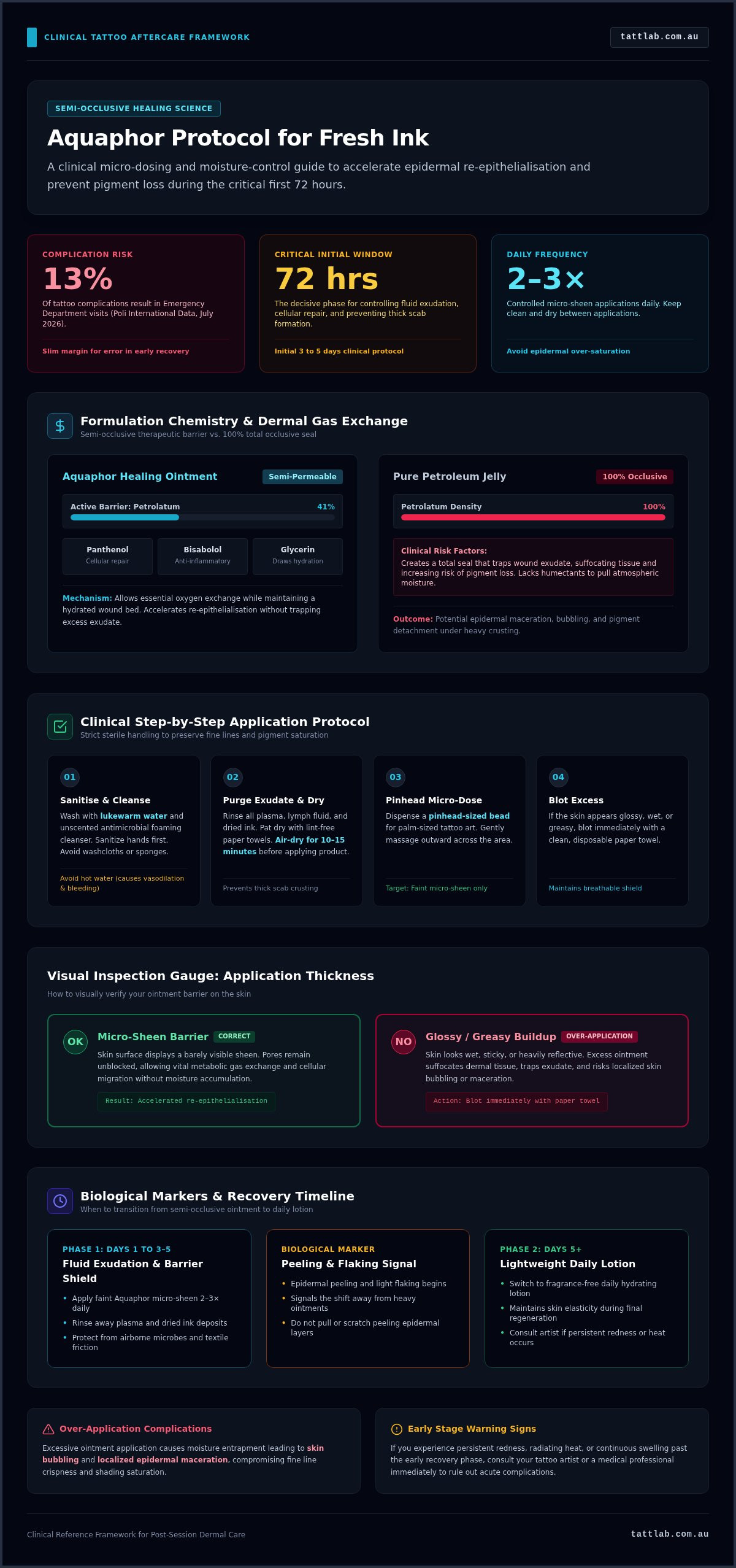
The efficacy of this ointment lies in its precise chemical composition. The formulation contains 41 percent petrolatum enriched with panthenol, bisabolol, and glycerin. This specific arrangement allows essential oxygen exchange while maintaining a sterile, hydrated wound bed. By establishing this controlled environment, the ointment forms a protective shield against airborne microbes and abrasive textile friction, minimizing external stress during the critical early hours of healing.
The Science of Semi-Occlusive Healing
Clinical skin recovery relies heavily on maintaining a balance between moisture and breathability. Research shows that moisture retention accelerates re-epithelialisation compared to traditional dry healing methods, allowing new skin layers to form efficiently. Because Aquaphor establishes a semi-permeable barrier, it allows metabolic gas exchange without drying the dermis. This controlled moisture transfer minimizes thick scab formation, safeguarding fine line details and shading saturation from being pulled out by heavy crusting.
Aquaphor vs. Pure Petroleum Jelly
A common misconception in early aftercare is treating all petroleum products equally. Pure petroleum jelly creates a total seal that traps excess wound exudate, which can suffocate the area and lead to pigment loss. In contrast, Aquaphor incorporates humectants like glycerin that draw atmospheric hydration into healing skin layers rather than blocking it out entirely. Additionally, the inclusion of added bisabolol provides natural anti-inflammatory soothing to traumatised epidermal tissue, reducing the immediate discomfort that follows intensive needle work.
The Clinical Application Protocol: How to Use Aquaphor on Fresh Tattoos
Achieving a successful heal requires more than just high-quality pigments and needles; it demands a disciplined post-session routine. When utilizing aquaphor for tattoos, your application technique dictates whether the skin recovers with clarity or suffers from moisture-related complications. The process begins long before the ointment touches the skin. You must prioritize sterile handling to prevent introducing pathogens into the open dermal layer. Following professional guidelines for Caring for tattooed skin ensures that you treat the area as a medical wound rather than a simple cosmetic change.
Preparation requires sanitising hands and cleansing ink with lukewarm running water. Avoid hot water, as it can cause unnecessary vasodilation and increased bleeding. Always follow your artist's explicit instructions regarding initial bandage or second-skin removal timing. Some artists prefer a two-hour window, while others utilize medical-grade films that stay in place for several days. Once the barrier is removed, the clinical protocol must be followed with precision to maintain skin integrity.
Step-by-Step Cleansing and Preparation
Wash the area using an unscented, antimicrobial foaming cleanser and clean hands. Avoid using washcloths or sponges, which can harbour bacteria and cause mechanical trauma to the site. Rinse away remaining plasma, lymphatic fluid, and dried ink deposits completely. These biological byproducts, if left to dry, form the thick scabs that can pull pigment from the dermis. After rinsing, pat the skin gently dry with clean, lint-free paper towels without scrubbing. Allow the tattoo to air-dry for 10 to 15 minutes before applying any product.
Mastering the Micro-Layer Technique
The most frequent error in aftercare is over-saturation. To avoid this, dispense a pinhead-sized bead of ointment for smaller, palm-sized tattoo pieces. Gently massage the ointment outward until the surface displays a slight sheen. If the skin appears glossy, wet, or greasy, you've applied too much. Use a sterile disposable paper towel to blot excess ointment immediately after application. This ensures the aquaphor for tattoos provides a breathable shield rather than a suffocating seal.
Frequency should be limited to two to three controlled applications daily. Between these sessions, the skin should be kept clean and dry. For those seeking professional-grade tattoo aftercare solutions, maintaining a kit of sterile consumables is vital for long-term skin integrity. If you notice any persistent redness or heat, consult your artist or a medical professional immediately to rule out early-stage complications.
The Critical Transition: When to Stop Using Aquaphor
Managing the recovery of a new tattoo is a narrative of progression. While the initial protection phase is vital, knowing when to cease the use of aquaphor for tattoos is just as critical for long-term skin integrity. You should limit ointment application strictly to the initial acute healing window, which typically lasts between two to four days. During this timeframe, the skin is an open wound requiring a semi-occlusive barrier to prevent dehydration and external contamination. However, continuing this heavy application beyond the necessary window can lead to complications like blocked pores or localized heat rashes.
The transition isn't just about a calendar date; it's about observing biological signals. You must cease ointment use immediately once the tattoo begins peeling, flaking, or feeling excessively tight. At this stage, the skin's requirements shift from external shielding to deep, breathable hydration. Following dermatologist-recommended aftercare protocols ensures you don't suffocate the area, as prolonged petrolatum use can trap dead cells and bacteria. Instead, you'll move toward a gentle, fragrance-free water-based lotion that supports the final stages of epidermal reconstruction.
Identifying the Peeling Stage
The first sign that your skin is ready for a change is a visible transformation in texture. You'll notice the area moving from a weeping, sensitive state to a dry, papery consistency. This flaking indicates that new basal cells have successfully sealed the upper dermis, creating a fresh but delicate protective layer. Don't be tempted to pick at these flakes or apply more ointment to flatten them. Continuing thick ointments during this phase traps dead stratum corneum cells underneath, which can lead to irritation or even minor infections. Let the skin breathe as it sheds the old layers naturally.
Selecting a Secondary Hydrating Lotion
Once you've moved past the ointment phase, your choice of moisturizer determines the vibrancy of the final result. Select a water-based moisturiser that's free from synthetic perfumes, dyes, and parabens. Modern formulations, such as the professional-grade options released in August 2026, often feature a 6% blend of hyaluronic acid and three essential ceramides to reconstruct the depleted lipid matrix. These ingredients draw moisture into the deeper layers of the skin rather than just sealing the surface. Apply your chosen lotion sparingly two to three times daily. This frequency provides enough relief to soothe post-tattoo itchiness without overloading the pores or causing the skin to feel greasy.
Aquaphor vs. Alternative Aftercare Solutions
While utilizing aquaphor for tattoos is a clinically proven method for managing early stage recovery, the modern aftercare landscape offers several specialized alternatives. Aquaphor provides unmatched structural protection during the initial intense fluid exudation phases, which typically occur in the first 48 hours. However, other products like Bepanthen remain popular in the community, though users should be aware that recent formulation updates vary significantly across international markets. This inconsistency often leads specialists to recommend more stable, dedicated solutions that prioritize skin integrity without the risk of unexpected ingredient shifts.
Modern advancements have also introduced second skin adhesive bandages. These polyurethane films eliminate the need for ointments during the early days of healing by creating a self contained environment. The choice between a traditional ointment protocol and a medical film often depends on the size of the piece and the artist's specific technique. Each method aims for the same result: a controlled healing environment that preserves the artist's work.
Evaluating Specialised Tattoo Balms
Specialized balms are formulated specifically for compromised tattooed skin using high grade cosmetic ingredients. Unlike thick hydrocarbon bases, these products leverage lightweight botanical nourishment. Natural plant oils, such as shea butter or jojoba, tend to absorb faster than petrolatum, significantly reducing the risk of accidental textile transfer to clothing or bedding. You can explore dedicated tattoo aftercare methods to preserve long term saturation and prevent the premature fading often caused by improper hydration.
Medical Films and Breathable Barriers
Polyurethane adhesive films seal the wound completely while allowing for essential water vapour transmission. This technology keeps the wound bed moist with the body's own natural fluids, which can accelerate the early stages of repair. It is a critical safety rule that you never apply aquaphor for tattoos beneath these medical barrier films. The adhesive requires clean, dry skin to bond correctly; placing an ointment underneath traps bacteria and prevents the film from sealing. Use ointments only after the adhesive film has been removed if the subsequent dry healing phase causes significant discomfort.
Selecting the right supplies is the final step in your transformation. To ensure your recovery follows a professional grade protocol, you can browse our professional tattoo aftercare range to find studio tested solutions for every stage of the healing process.
Troubleshooting Complications: Common Risks and Corrective Actions
Even when using a high-quality product like aquaphor for tattoos, the success of your recovery depends on meticulous adherence to dosage. The most frequent complication is localized epidermal maceration. This occurs when an excessively thick layer of ointment prevents moisture from evaporating, causing the skin to become softened, cloudy, or even appear to bubble. If you notice this texture, it's a sign that the tissue is oversaturated. You must immediately reduce your application frequency and allow the area to air-dry for several hours to restore the skin's natural barrier function.
Individual biological responses can also lead to allergic contact dermatitis. While Aquaphor is formulated for sensitive skin, some individuals may react to specific components under the stress of a fresh wound. If you experience intense itching, hives, or a raised red rash that extends beyond the tattooed area, you should cease ointment use immediately. Gently cleanse the site with a sterile saline solution or lukewarm water to remove any remaining residue. This prevents further irritation while you transition to a simpler, hypoallergenic aftercare routine.
Managing Ointment-Induced Folliculitis
Folliculitis develops when trapped sebum and bacteria inflame hair follicles beneath a heavy layer of ointment. You'll identify this by the appearance of small red bumps or white-headed pustules appearing within the tattoo perimeter. It's often mistaken for an ink reaction, but it's typically a mechanical blockage of the pores. To remediate this condition, follow these steps:
- Stop using aquaphor for tattoos immediately to allow the pores to clear naturally.
- Wash the skin gently twice daily with clean water and a mild antimicrobial soap.
- Allow the tattoo to dry completely, switching to a very light, fragrance-free lotion only if the skin feels painfully tight.
Recognising Critical Infection Warnings
It's vital to distinguish normal inflammatory healing from systemic bacterial infection. During the first 48 to 72 hours, some redness and swelling are expected as the body responds to the needle trauma. However, escalating pain signals potential complications. Monitor the site for spreading erythema, which is redness that moves outward from the tattoo, increasing local warmth, persistent throbbing, or foul-smelling discharge. While normal healing pain subsides within three days, an infection will feel progressively worse. Consult a healthcare professional promptly if you observe red streaking extending from the site or if you develop a fever. Early intervention is the best way to safeguard both your physical health and the long-term integrity of your artwork.
Securing Your Skin Integrity and Artistry
Navigating the recovery of fresh ink requires a balanced combination of discipline and biological understanding. Using aquaphor for tattoos provides a reliable, semi-occlusive layer that protects your skin during the critical initial fluid exudation phase. The key to success lies in applying a precise micro-layer and transitioning to a water-based lotion as soon as flaking begins. By avoiding over-saturation, you protect the fine details of your design and prevent complications like folliculitis or skin bubbling.
Every step of the healing process is an investment in your personal transformation. To support your recovery with the right tools, Explore professional studio supplies and aftercare at Tatt Lab. Our artist-curated aftercare selection and medical-grade studio disposables provide the clinical support your skin needs. With fast nationwide Australian delivery, you can trust our team to deliver high-quality solutions directly to your door. Approach your recovery with confidence, knowing your artwork is backed by professional-grade care.
Frequently Asked Questions
Can I put Aquaphor on my tattoo immediately after getting inked?
You should not apply any ointment immediately after your session. Wait until you have removed the initial bandage and cleaned the area with lukewarm water and a mild, unscented cleanser. Most artists recommend a window of two to four hours before the first application. Applying it too early can trap blood and plasma against the skin, which may lead to premature scabbing or irritation.
How much Aquaphor should I actually put on my tattoo?
Precision is vital during the early stages of healing. You should only use a pinhead-sized amount for a palm-sized tattoo, spreading it until it creates a faint, barely visible sheen. If the skin looks glossy, wet, or greasy, you've applied too much. The skin needs to breathe to regenerate properly, and a heavy layer will block the essential oxygen exchange required for healthy tissue repair.
What happens if I accidentally put too much Aquaphor on my tattoo?
Over-application leads to epidermal maceration, where the skin becomes soggy, cloudy, or develops small bubbles. This suffocates the area and can lead to folliculitis or ink loss. If you notice a thick layer, blot the excess with a sterile paper towel immediately. The goal is a breathable sheen, not a total seal. Maintaining this balance ensures your skin recovers its integrity without trapping harmful bacteria against the wound.
Can Aquaphor pull the ink out of a fresh tattoo?
Aquaphor itself doesn't pull ink out, but improper use can damage your results. When you use too much aquaphor for tattoos, the resulting moisture trap can cause heavy scabbing or skin bubbling. If these scabs are pulled off prematurely, they can take the underlying pigment with them. Using a micro-dose helps the skin heal smoothly, which actually preserves the saturation and clarity of your artist's work.
How many days should I use Aquaphor before switching to lotion?
Limit your use of heavy ointments to the initial acute healing window, typically the first two to four days. Once your tattoo begins to peel or flake, your skin's needs change. At this stage, you should switch to a fragrance-free, water-based lotion. This transition prevents your pores from clogging while providing the deep hydration necessary to soothe the itching and tightness that defines the secondary healing phase.
Is Aquaphor better than Bepanthen for healing tattoos in Australia?
Both products are common in the Australian industry, but they serve different clinical roles. Aquaphor is a semi-occlusive barrier ideal for the first 72 hours of intense fluid exudation. While Bepanthen is a traditional choice, recent formulation changes have led many specialists to prefer aquaphor for tattoos for its consistency. For the best results, many collectors now choose professional-grade aftercare solutions specifically formulated for tattooed skin integrity.
Can I use Aquaphor over an adhesive second-skin barrier?
You should never apply any ointment over or under an adhesive medical film. These films are designed to bond directly to clean, dry skin to create a sterile environment. Applying an ointment underneath will prevent the adhesive from sealing, while applying it on top is redundant since the film is already a complete barrier. Only use ointments after the film is professionally removed and the skin has been cleaned.


Comments (0)
There are no comments for this article. Be the first one to leave a message!