

What if the most widely recommended aftercare product in the world wasn't actually formulated for your tattoo, but for a baby's nursery? You've likely spent hours researching how to protect your new investment, only to find yourself caught between the convenience of a local chemist and the specialized, often conflicting advice of your artist. It's natural to feel protective of your skin's integrity. The fear of heavy scabbing or permanent ink fallout is a valid concern that many collectors face during those first critical days of dermal recovery.
We understand that choosing the right topical treatment feels like a high-stakes decision for your health and your art's longevity. This guide explores the clinical science behind a bepanthen tattoo routine, examining how its Pro-vitamin B5 formulation supports cellular regeneration while addressing the risks of its occlusive nature. You'll gain a clear, evidence-based understanding of how pharmaceutical ointments interact with fresh pigment compared to modern, professional-grade specialist balms. We provide a methodical application guide to help you navigate the healing process with a sense of controlled, predictable progress and total confidence in your aftercare choice.
Key Takeaways
- Understand how Dexpanthenol (Pro-vitamin B5) supports cellular regeneration to facilitate a smoother, more predictable healing process for your skin.
- Learn the clinical differences between a standard bepanthen tattoo routine and using professional-grade specialist balms that offer higher absorption rates.
- Master the "less is more" application technique to prevent skin suffocation and ensure your new ink remains vibrant without the risk of heavy scabbing.
- Identify why a fragrance-free and preservative-free formula is essential for maintaining skin integrity during the initial inflammatory phase of a fresh wound.
- Discover how professional studio hygiene and medical-grade supplies create the necessary foundation for successful, long-term aftercare results.
What is Bepanthen Tattoo Ointment and How Does it Work?
Bepanthen has long been a staple in the Australian tattoo community, yet its transition from the nursery to the studio is often misunderstood. While many dismiss it as a simple nappy rash remedy, the specialized bepanthen tattoo ointment is a pharmaceutical-grade topical designed to address the specific needs of compromised skin. It functions by creating a protective layer that safeguards the fresh wound from external contaminants while actively facilitating the body's natural repair systems. This isn't just about keeping the skin oily; it's about providing a stable, sterile environment where the dermis can recover without the interference of harsh chemicals or environmental stressors.
The Biological Mechanism of Pro-Vitamin B5
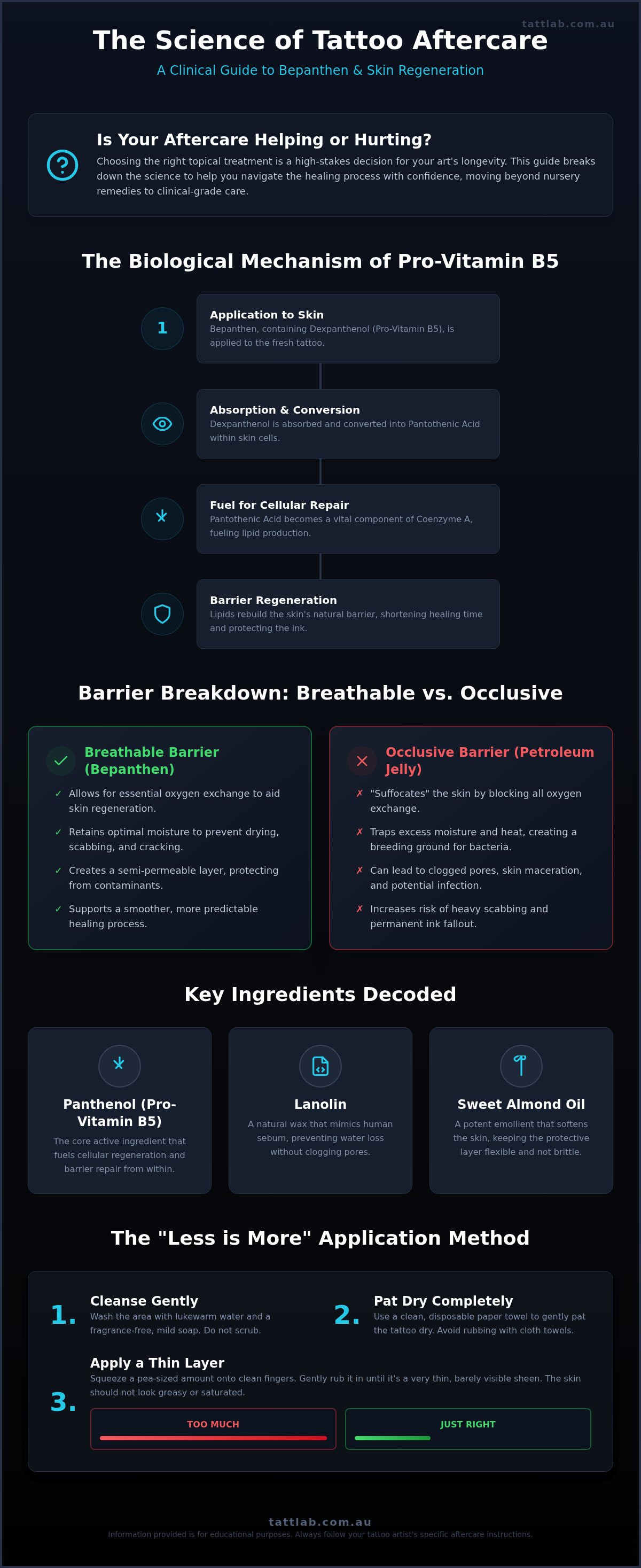
The efficacy of this ointment centers on its active ingredient, Dexpanthenol. Once applied, this pro-vitamin is absorbed into the skin and converted into pantothenic acid, a vital component of Coenzyme A. This biochemical conversion is essential because it fuels the production of lipids, which are the building blocks of the skin's natural barrier repair. By supporting lipid synthesis, the ointment helps the migration of new cells to the surface, effectively shortening the time your skin remains vulnerable. Bepanthen supports the inflammatory phase of healing by providing the necessary precursors for cellular energy and structural repair.
Breathable vs. Occlusive Barriers
A significant concern for any new collector is the risk of "suffocating" the skin. A 100% occlusive barrier, such as heavy petroleum jelly, can trap body heat and moisture, creating a breeding ground for bacteria and potentially leading to ink fallout or infection. Bepanthen utilizes a semi-permeable "breathable barrier" technology. This allows for essential oxygen exchange, which is critical for the aerobic processes involved in skin regeneration, while simultaneously retaining enough moisture to prevent the tattoo from drying out and cracking.
Distinguishing between moisturising and suffocating is vital for long-term aesthetic outcomes. High-performance aftercare ensures that the skin remains supple without becoming macerated. This clinical precision mirrors the standards required in a professional setting, where the use of specialized medical supplies for tattoo artists ensures that the healing process begins in an optimized environment before you ever reach for a tube at home. By choosing a formula that respects the skin's need to breathe, you ensure a smoother progression from a fresh wound to a settled, vibrant piece of art.
The Ingredients of Bepanthen: Evaluating Skin Integrity
Understanding the chemical composition of your aftercare is the first step toward successful ink retention. A standard tube used for a bepanthen tattoo routine relies on a minimalist ingredient list designed to minimize the risk of adverse reactions. The formula centers on three primary pillars: Lanolin, Panthenol, and Prunus Amygdalus Dulcis Oil. These components work in synergy to mimic the skin's natural defenses while providing the hydration necessary for cellular movement. Prunus Amygdalus Dulcis Oil, commonly known as sweet almond oil, acts as a potent emollient, softening the skin and ensuring the protective layer remains flexible rather than brittle.
Lanolin and the Moisture Balance
Lanolin, a natural wax secreted by wool-bearing animals, has been a cornerstone of dermatological care for decades. Its molecular structure is remarkably similar to human sebum, allowing it to integrate seamlessly with the skin’s lipid bilayer. This mimicry is why it excels at preventing transepidermal water loss without completely blocking the pores. While a small percentage of individuals may experience sensitivity to lanolin, it remains a gold standard for creating a resilient, non-cracking shield over fresh work. This ingredient scrutiny is a core part of mastering tattoo aftercare for long-term vibrancy and skin health.
Why "Free-From" Formulas Matter
The absence of synthetic fragrances and preservatives is not a marketing choice; it's a clinical necessity. Fresh tattoos are open wounds. Introducing alcohols or artificial scents into a fresh wound can lead to significant irritation, stinging, or contact dermatitis. In a compromised dermal state, the skin's immune response is heightened. Preservatives often found in standard body lotions can trigger an inflammatory flare-up that disrupts the natural healing timeline. Clinical purity is the standard for tattoo recovery because it removes variables that could compromise your artist's precision.
Following Tattoo Aftercare Tips From a Dermatologist, we see that the focus should always be on gentle, non-reactive hydration. Australian dermatological testing standards for these products are rigorous, ensuring that the ointment is safe for use on broken skin. This methodical approach to ingredient selection ensures that the recovery process remains steady and predictable. While Bepanthen offers a reliable baseline for many, exploring specialized tattoo aftercare solutions can provide even more tailored support for those with highly sensitive skin or specific lifestyle needs.
Bepanthen vs. Professional Tattoo Balms: A Comparison
While a bepanthen tattoo routine provides a reliable pharmaceutical baseline, the modern collector often seeks a more specialized experience. Choosing between a chemist staple and a professional-grade balm requires evaluating three key metrics: absorption rate, ingredient purity, and ease of application. Pharmaceutical ointments are designed for broad dermatological use, whereas professional balms are engineered specifically for the unique environment of a fresh tattoo. This distinction becomes critical when you consider how different formulations interact with the skin's surface during the first 72 hours of recovery.
One persistent concern in the community is the myth of "ink pulling." It's often suggested that heavy ointments can physically lift pigment from the dermis. In reality, pigment loss is usually the result of excessive scabbing or deep trauma rather than the topical itself. However, using products that are too thick can lead to over-hydration. This softens the skin excessively and may indirectly affect how the pigment settles. Following dermatologist tips for tattoo care ensures you maintain the delicate balance between moisture and skin integrity without compromising the work's clarity.
Pharmaceutical vs. Botanical Approaches
The primary difference lies in the source of the active ingredients. Bepanthen relies on a synthetic, clinical approach centered on Dexpanthenol to drive repair. In contrast, professional brands like Dr. Pickles often utilize botanical extracts such as tea tree oil or papaya. These natural alternatives offer mild antiseptic properties and enzymes that can help break down dead tissue more gently. Understanding the professional guide to tattoo ink helps clarify why certain pigments might respond better to these lighter, nutrient-dense botanical formulas, especially in large-scale color work where skin trauma is more extensive.
Texture and Application Practicality
Texture plays a significant role in the daily reality of aftercare. Bepanthen has a heavy, viscous consistency that can be difficult to spread over large areas, such as a full back piece or a sleeve. This thickness often leads to "tugging" on the skin, which can be painful and disruptive to the healing dermal layers. Professional balms are typically formulated for a high-slip, "melt-in" application. They transition from a solid to an oil-like state upon contact with body heat. This ensures you can achieve a thin, even layer without the risk of over-application, which is a common error with thicker, more occlusive pharmaceutical ointments.
How to Correctly Apply Bepanthen to a Fresh Tattoo
Precision in your aftercare routine is just as vital as the artist's technique during the session. Executing a successful bepanthen tattoo application requires a disciplined approach to both hygiene and volume. Before touching your healing skin, you must wash your hands thoroughly with a pH-neutral, fragrance-free soap. Cross-contamination is a primary cause of secondary infections, so treat your new ink like a surgical site. The "Less is More" rule is your guiding principle here; you want to facilitate recovery, not suffocate the dermis.
The First 48 Hours: The Critical Window
During the initial inflammatory phase, your skin is highly reactive. After removing your artist's bandage, gently wash the area with lukewarm water to remove excess plasma and ink. Pat the area dry with a clean, single-use paper towel. It's essential to let the skin "air out" for 15 to 20 minutes before applying any ointment. This pause ensures you don't trap residual moisture against the wound. When you do apply the ointment, use only a pea-sized amount for a medium-sized piece. A properly moisturised tattoo should exhibit a faint, satin-like sheen that reflects light without appearing greasy or wet to the touch. If you see white "bubbles" or maceration, you've applied too much and need to gently blot the excess away.
Days 3 to 14: Managing the Peeling Phase
As the skin begins to flake and peel, the temptation to over-apply ointment increases. You might feel a persistent itch, which is a sign of the nerves regenerating and the skin tightening. Instead of scratching or slathering on more product, maintain a steady frequency of two to three light applications per day. Over-moisturising at this stage can lead to "tattoo bubbling" or small white pimples known as folliculitis, caused by clogged pores. Once the heavy flaking has subsided and the "silver skin" appears, you can transition from Bepanthen to a lighter, water-based lotion. To maintain the highest standards of skin integrity, browse our selection of specialist tattoo aftercare solutions designed for every stage of the healing narrative.
Optimising Your Healing: The Professional Perspective
High-performance results require a seamless transition from the artist's chair to the client's home. The success of a bepanthen tattoo routine is fundamentally tethered to the sterile standards maintained during the initial application. There's a direct synergy between the medical supplies for tattoo artists used in the studio and the integrity of your home care. If the initial session isn't conducted in a controlled, aseptic environment, even the most meticulous aftercare can't fully compensate for compromised safety foundations. Professional artists use medical-grade barriers and cleansers to ensure the healing narrative begins with a clean slate.
You should consult your artist or a medical professional if you observe signs that deviate from the standard healing path. These red flags include spreading redness that feels hot to the touch, persistent throbbing, or the onset of a fever. While minor swelling and tenderness are expected in the first 48 hours, these systemic symptoms indicate that the body's immune response requires external intervention. Early identification of these issues ensures that your skin's physical integrity remains intact.
The final verdict for 2026 remains nuanced. Bepanthen is a clinically sound, accessible baseline that has supported millions of successful heals. However, as the industry evolves, it's increasingly viewed as a reliable entry-level option. While it provides the necessary Dexpanthenol for repair, it lacks the high-slip texture and specialized botanicals found in modern, professional-grade balms. It remains a safe, effective choice for those who prefer pharmaceutical consistency over boutique formulations.
Beyond the Ointment: Holistic Skin Recovery
Skin recovery is a systemic process that goes beyond topical treatments. Your body requires adequate hydration, restorative sleep, and nutrient-dense fuel to synthesize the new tissue required for long-term ink retention. For those who want to support their dermal health further, Arden Clinic provides professional skincare and aesthetic expertise to ensure your skin remains in peak condition. During the initial bepanthen tattoo phase, you must avoid direct sun exposure and swimming. UV rays and pool chemicals can severely degrade fresh pigment before it has settled. Practically, Bepanthen's high lanolin content can leave oily residues on fabrics. Protect your bedding and clothes by wearing loose, dark cotton garments that allow for airflow while acting as a sacrificial layer against ointment stains.
Choosing Your Aftercare Partner
Investing in your skin means sourcing products from specialist tattoo supplies providers who prioritize clinical transparency and artist-led expertise. A dedicated partner provides clear, written protocols that replace post-session anxiety with a sense of controlled, predictable progress. This methodical approach mirrors the precision of the tattoo itself. Ultimately, the meticulous care you provide today leads to a liberating narrative of self-assurance. A well-healed, vibrant tattoo is a permanent testament to the respect you've shown your body throughout its transformation.
Securing the Longevity of Your Body Art
Choosing the right topical treatment is an essential step in protecting your skin's physical integrity and your artist’s meticulous work. We've explored how a bepanthen tattoo routine utilizes Dexpanthenol to fuel cellular regeneration, providing a reliable pharmaceutical baseline for many collectors. The true secret to a vibrant result lies in the balance between maintaining a breathable barrier and avoiding the risks of over-moisturisation. By following a disciplined application protocol and respecting the skin's natural healing timeline, you replace post-session uncertainty with a sense of controlled, predictable progress.
While Bepanthen offers consistent clinical results, many collectors find that specialized, botanical-based formulas provide a more sophisticated texture for large-scale recovery. Your focus should always remain on medical-grade safety and transparent ingredient lists. If you're ready to elevate your recovery process, Explore Professional Tattoo Aftercare Solutions at Tatt Lab. Our artist-vetted aftercare range adheres to strict medical-grade safety standards and is available with express nationwide shipping across Australia. Your journey to a settled masterpiece is a unique narrative of personal transformation. Trust the science behind the healing and enjoy the confidence that comes with a perfectly preserved tattoo.
Frequently Asked Questions
Can Bepanthen cause my tattoo to fade or lose ink?
No, Bepanthen doesn't physically pull pigment from the dermis. Ink loss is usually the result of excessive scabbing, deep trauma during the session, or localized infection. While over-applying a bepanthen tattoo layer can lead to skin maceration and indirect scabbing, the ointment itself doesn't contain ingredients that bleach or extract ink. Maintaining a thin, satin-like sheen ensures the pigment remains stable as the skin recovers its natural barrier.
How many times a day should I apply Bepanthen to my tattoo?
You should apply a minimalist layer 2 to 3 times daily. The exact frequency depends on your skin type and environmental factors like humidity or clothing friction. Always wash your hands and the tattoo before each new application to prevent trapping bacteria. If the area feels tight or looks excessively dry, a small additional application is appropriate. Remember that the goal is a supple surface, not a wet one.
Is the Bepanthen Antiseptic Cream the same as the Tattoo Ointment?
No, these are distinct formulations with different clinical purposes. The Antiseptic Cream contains active anti-bacterial agents and a different base that can be too harsh or drying for fresh ink. The Tattoo Ointment is specifically engineered to be fragrance-free and preservative-free, focusing on Dexpanthenol for cellular repair. Using the wrong version can lead to irritation or contact dermatitis on compromised skin, so always verify the label before application.
What should I do if my tattoo develops small bumps after using Bepanthen?
If you notice small white bumps or "tattoo bubbling," stop using the ointment immediately and let the skin air out. This condition is often folliculitis, caused by an occlusive barrier trapping body heat and sweat in the pores. Wash the area gently with a pH-neutral soap and switch to a lighter, water-based lotion once the irritation subsides. Consult your artist if the bumps become painful or show signs of spreading.
Can I use Bepanthen on an infected tattoo?
No, you shouldn't apply any heavy ointment to a tattoo that shows signs of infection. Ointments create a seal that can trap heat and bacteria, potentially exacerbating the issue. If you notice spreading redness, yellow discharge, or if the area feels hot to the touch, seek professional medical advice. An infected tattoo requires clinical assessment and potentially a prescription treatment rather than a standard over-the-counter aftercare product.
Is Bepanthen better than Aquaphor for tattoo healing?
Both products provide a protective barrier, but they utilize different biological mechanisms. Aquaphor is a petroleum-based emollient that's very effective at preventing water loss. In contrast, a bepanthen tattoo routine benefits from Pro-vitamin B5, which actively supports the skin's internal regeneration processes. Bepanthen is often preferred for its semi-permeable technology that allows for better oxygen exchange, though both require a "less is more" approach to avoid suffocating the skin.
How long should I keep using Bepanthen on my new ink?
You should typically use the ointment for the first 7 to 10 days of the recovery process. This period covers the initial inflammatory phase and the majority of the peeling stage. Once the heavy flaking has finished and the skin takes on a shiny, "silver" appearance, your skin no longer needs a heavy barrier. At this point, transition to a fragrance-free, water-based body lotion to maintain general hydration until the skin is fully settled.
Is it okay to use Bepanthen on a facial or cosmetic tattoo?
Yes, but you must use extreme caution due to the skin's thinness and proximity to the eyes. Cosmetic tattoos are generally shallower than traditional work, meaning they require even less product. Use a tiny, barely visible amount to avoid clogging the delicate pores of the face. Always follow the specific instructions provided by your cosmetic artist, as facial recovery often requires a more specialized, lightweight approach than work on the body.


Comments (0)
There are no comments for this article. Be the first one to leave a message!