

Your tattoo isn't just a piece of art; it's a controlled dermal wound that requires a precise clinical recovery protocol to reach its full aesthetic potential. While researching tattoo aftercare melbourne, you've likely encountered a sea of conflicting advice that often prioritizes studio tradition over biological science. It's natural to feel a sense of vulnerability once the needle stops, especially when the fear of pigment fallout or irritation looms over your new investment.
We believe the transition from the studio to the home environment is the most critical phase of your personal transformation. This guide allows you to master the clinical principles of tattoo healing by providing professional protocols and high-performance supplies designed for predictable results. We'll explore the logical progression of skin repair, from managing the initial inflammatory response to selecting specialized medical-grade soaps and balms that ensure your pigment remains vibrant and your skin stays resilient. By replacing uncertainty with a structured, science-based approach, you can ensure your body's integrity is protected throughout the entire regenerative process.
Key Takeaways
- Understand the biological mechanics of dermal recovery and the critical role the basement membrane plays in securing long-term pigment stability.
- Identify why professional-grade formulas are superior to generic pharmacy creams for tattoo aftercare melbourne, ensuring breathable protection without clogging pores.
- Master a clinical 14-day protocol that utilizes a "less is more" approach to minimize scabbing and maximize physical integrity.
- Learn to differentiate between standard healing symptoms and urgent red flags to maintain a controlled, predictable recovery narrative.
- Access artist-vetted supplies that align with national safety standards, providing the medical-grade support required for high-performance healing.
The Biology of Tattoo Healing: Understanding Dermal Recovery
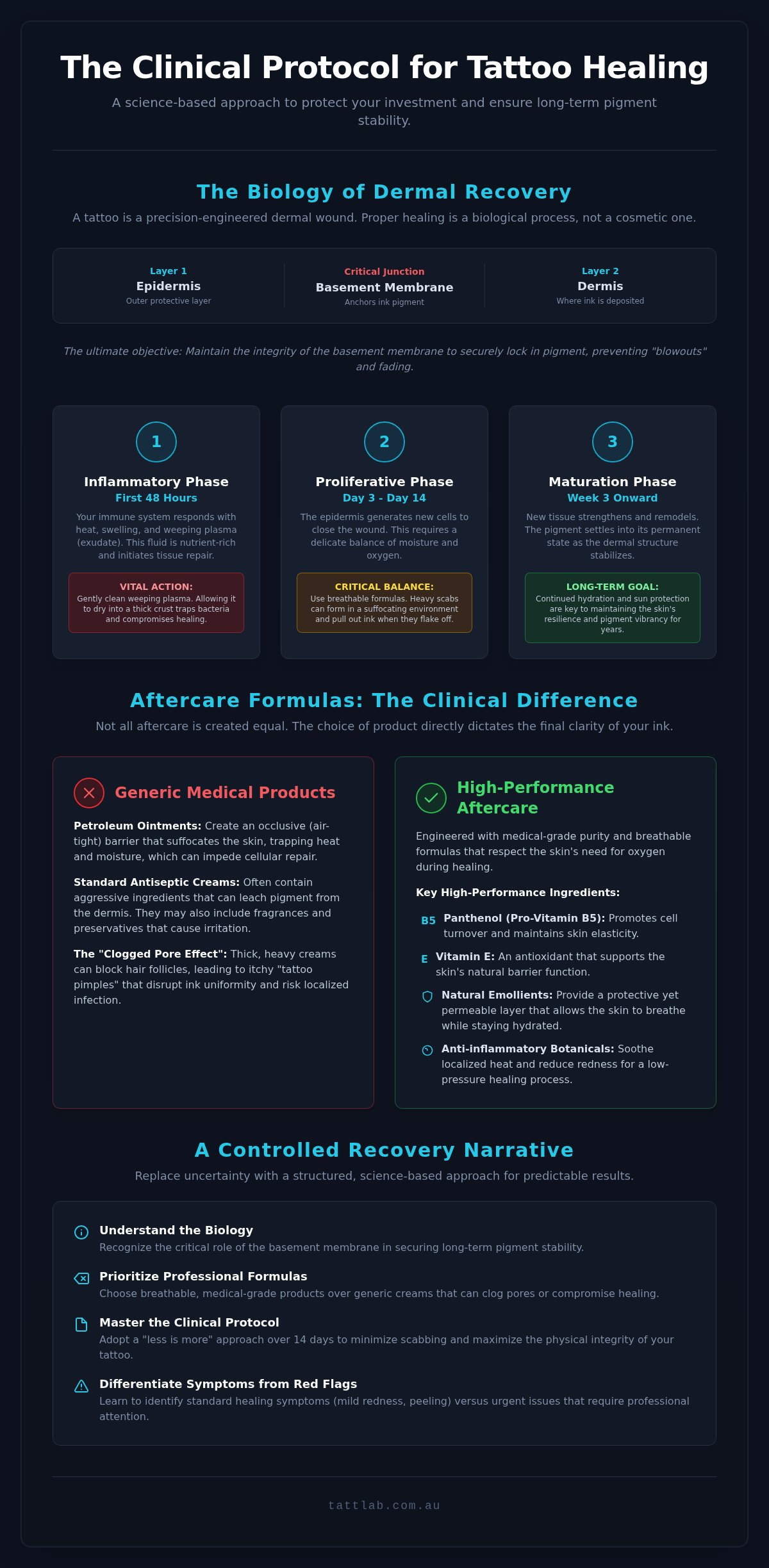
A tattoo is a deliberate, precision-engineered injury. When needles deposit pigment into the dermis, they bypass the epidermis and penetrate the basement membrane, the critical structural junction that keeps the skin layers together. Understanding The Biology of Tattoo Healing is essential because pigment retention relies entirely on how well the body repairs this microscopic damage. If the basement membrane is compromised through poor aftercare, the ink cannot be securely anchored; this leads to the blurry edges or "blowouts" that many collectors fear.
Maintaining dermal integrity is the ultimate objective of any recovery protocol. This isn't just about surface aesthetics; it's about the biological stability of the skin's architecture. When individuals search for tattoo aftercare melbourne, they are often looking for ways to ensure their skin heals as a resilient, healthy canvas rather than a scarred one. This requires a methodical approach to the three distinct stages of recovery: inflammation, proliferation, and maturation.
The Inflammatory Phase: The First 48 Hours
The moment the needle stops, your immune system initiates a high-intensity response. Blood vessels dilate to transport white blood cells to the area, causing the characteristic heat and swelling associated with new work. During this time, you'll notice plasma weeping from the site. Exudate is a nutrient-rich fluid containing proteins and white blood cells that filters out of the circulatory system to initiate the repair of damaged tissue. Managing this fluid is vital; leaving it to dry into a thick crust can trap bacteria and lead to localized complications.
Proliferation and the Formation of New Tissue
As the initial inflammation subsides, the body enters the proliferative phase. The epidermis begins to close the wound by generating new cells that migrate across the surface. During this time, the skin requires a delicate balance of moisture and oxygen. Breathable formulas are superior to heavy, occlusive barriers because they allow for gas exchange, which is necessary for cellular regeneration. If the environment is too suffocating, you risk premature scabbing. Thick scabs act like anchors; when they eventually flake off, they often take the underlying pigment with them, resulting in patchy saturation and a loss of detail. Utilizing professional tattoo aftercare melbourne standards ensures the skin remains supple enough to prevent these aggressive scabs from forming, protecting the intricate work beneath the surface.
Professional Aftercare vs. General Medical Products
Choosing the right topical application is a decision that dictates the final clarity of your ink. For years, the default advice for tattoo aftercare melbourne collectors involved reaching for generic pharmacy ointments. While these products serve a purpose in general first aid, they weren't engineered for the specific complexities of dermal pigment suspension. Modern aftercare has evolved from thick, heavy ointments toward breathable, nutrient-dense formulas that respect the skin's need for oxygen during cellular repair.
Petroleum-based products create an occlusive barrier. This effectively suffocates the site, trapping heat and moisture against the skin. This environment doesn't just feel uncomfortable; it can actively impede the maturation of new tissue. High-performance alternatives prioritize medical-grade purity, ensuring that every ingredient serves a biological purpose without the risk of contamination or pore blockage.
The Problem with Generic Antiseptic Creams
Standard antiseptic creams often contain active ingredients designed to fight surface bacteria, but these can be too aggressive for a fresh tattoo. Some formulations can inadvertently leach pigment from the dermis during the early stages of healing. Additionally, the synthetic fragrances and preservatives found in many retail lotions are common irritants that trigger unnecessary inflammatory responses. When a thick cream blocks a hair follicle, it creates the clogged pore effect, often resulting in small, itchy tattoo pimples that can disrupt the ink's uniformity and lead to localized infection.
Key Ingredients in High-Performance Aftercare
Effective recovery relies on ingredients that support the skin's natural barrier function. Panthenol (Pro-Vitamin B5) and Vitamin E are essential for promoting cell turnover and maintaining elasticity. Natural emollients provide a protective layer that remains permeable, allowing the skin to breathe while staying hydrated. Anti-inflammatory botanicals work to soothe the localized heat and reduce redness, ensuring the healing process remains steady and low-pressure.
These components align with dermatologist-recommended tattoo care standards by prioritizing long-term health over quick surface fixes. You can explore a deeper breakdown of these biological requirements in our guide to Mastering Tattoo Aftercare. To ensure your recovery is supported by clinical-grade science, consider integrating professional aftercare solutions into your daily routine to maintain the physical integrity of your work.
The Professional Aftercare Protocol: A Step-by-Step Guide
The first 14 days of your recovery are the most formative for your skin's future. During this window, the body works tirelessly to close the epidermis and secure the pigment within the dermis. Adhering to clinical-grade tattoo aftercare instructions ensures the dermal structure remains stable and the risk of infection is mitigated. While standards for tattoo aftercare melbourne may vary between individual studios, the core biological principles of wound management remain constant across Australia.
One of the most significant shifts in modern aftercare is the move toward "second skin" or adhesive medical films. Unlike traditional cling film, which should be removed within a few hours, these specialized films are designed to be worn for several days. They facilitate a "wet heal" by trapping the body's natural enzymes and moisture while remaining permeable to oxygen. If your artist uses traditional wrapping, the focus shifts to a more manual cleaning and hydration cycle. Regardless of the method, the golden rule is that less is more; over-handling or over-applying products is the most common cause of healing complications.
The Cleaning Ritual: Sanitisation without Irritation
Cleaning your tattoo is a delicate balance of removing bacteria without stripping away the newly forming skin cells. You should always wash your hands thoroughly before touching the area. Use lukewarm water and a pH-balanced, fragrance-free cleanser to gently massage the site, removing any dried exudate or excess ink. Avoid using washcloths or sponges, as these can be abrasive and harbor bacteria. Once clean, don't rub the skin. Instead, use the "pat dry" method with a clean, sterile paper towel to lift moisture away. It's vital to remember that rubbing alcohol or hydrogen peroxide should never be used on a healing tattoo; these substances are far too caustic and will destroy the regenerative tissue your body is trying to build.
Application Technique: Ensuring Optimal Absorption
Once the skin is dry, apply a very thin layer of professional balm. The "thin layer" rule is essential because a tattoo needs to breathe to regenerate. If you apply a thick coating, you create an occlusive seal that traps heat and moisture, which can lead to "bubbling" or infection. The frequency of application depends on your specific skin type and environment, but generally, two to three times a day is sufficient. You are aiming for a soft, supple feel rather than a greasy appearance. For more information on maintaining a sterile environment during this process, you can explore our guide on Medical Supplies for Tattoo Artists, which details the hygiene standards that should transition from the studio to your home care routine.
Managing Complications and Long-Term Pigment Vibrancy
Even with a perfect protocol, the journey to physical integrity requires ongoing awareness. While most searches for tattoo aftercare melbourne focus on the immediate aftermath, the maturation phase of healing actually lasts for several months. Monitoring your body's response is essential to distinguish between a standard healing curve and a biological complication that requires intervention. Mastering the nuances of tattoo aftercare melbourne involves recognizing that your skin is a living, changing organ that needs protection long after the initial scabbing has cleared.
Troubleshooting Early Stage Healing Issues
It's normal for a new tattoo to feel tender, but extreme redness that spreads beyond the border, localized heat, or a foul odour are significant red flags. These symptoms suggest an infection. While itching or minor ink drift is a standard byproduct of regeneration, a persistent rash may indicate an allergic reaction. A tattoo blowout, where ink spreads like a bruise, is a technical application issue rather than an aftercare failure.
The Sun and Your Ink: Protection Strategies
UV radiation is the primary catalyst for premature tattoo aging. When UV rays penetrate the dermis, they break down pigment particles into smaller fragments that the body's lymphatic system slowly removes. To maintain saturation, integrate a high-SPF sunscreen into your daily routine once the skin has fully closed. Consistent hydration ensures the tissue above the ink remains translucent, allowing colours to remain vivid as the skin ages.
For tattoos that have reached the six-month milestone, a maintenance schedule is vital for preserving the original artist's intent. Apply a nutrient-dense moisturizer daily to support skin elasticity and prevent the dulling effect of dry, dead skin cells. This holistic approach to body wellness ensures that your personal narrative remains as clear and vivid as the day it was created. By treating your skin with the same meticulous care you would a piece of fine art, you protect the investment of your transformation. To secure the long-term vibrancy of your work, explore our range of specialized aftercare solutions designed for every stage of the healing journey.
Sourcing Professional Aftercare Supplies in Australia
Procuring the right supplies is the final, vital step in securing your skin's long-term integrity. Tatt Lab serves as a dedicated partner in this process, positioning itself as the premier Australian destination for artist-vetted tattoo and medical supplies. Because we're artist-owned and operated, our selection isn't based on marketing trends, but on a deep, clinical understanding of skin biology and the regenerative needs of a new tattoo. We recognize that the search for tattoo aftercare melbourne often leads to generic retail options; however, professional-grade results require professional-grade tools.
Buying from a specialist who understands the precision of the work ensures you aren't just applying a cream, but supporting a complex biological recovery. Our role is to bridge the gap between the technical procedure in the studio and the long-term health of your skin, providing a transparent, results-oriented approach that builds immediate trust with the Australian tattoo community. By sourcing your supplies from a facility that values physical integrity above all else, you ensure your personal transformation is protected by science.
The Tatt Lab Selection: Quality and Safety
Every product in our inventory undergoes a rigorous evaluation process before it reaches our shelves. We prioritize formulas that are nutrient-dense and free from common irritants, ensuring they align with the "less is more" philosophy essential for predictable healing. Our range includes industry-leading names like Dr. Pickles, alongside specialized aftercare soaps and medical-grade protective films that facilitate the "wet heal" method mentioned earlier. For professionals, we offer the convenience of wholesale accounts, allowing studios to source bulk quantities of high-performance aftercare and essential medical PPE with ease.
Convenient Fulfillment for the Australian Tattoo Community
We understand that the healing process doesn't wait, which is why our logistical framework is designed for speed and reliability. Operating from our Victoria headquarters, we provide nationwide express shipping to ensure that whether you're a studio in a remote area or a collector in a major hub, you have access to the supplies you need when you need them. For local professionals, our streamlined "click and collect" option provides a minimalist, efficient way to restock essential inventory without the pressure of traditional sales environments. This commitment to accessibility ensures that high-quality tattoo aftercare melbourne is available to everyone dedicated to the art of tattooing.
Explore the full Tatt Lab aftercare range here and secure the medical-grade support your skin deserves.
Securing the Future of Your Dermal Art
Just as you seek the best local care for your skin, you can discover Caffeine Lab to see how the same dedication to quality and precision is applied to the world of specialty coffee roasting.
In the same spirit of protecting what matters most, Pet ID Tags Australia provides durable, personalised identification for pets, ensuring their safety with the same attention to detail you give your new ink.
Just as tattoos are a form of personal expression, Art Therapy provides a space to engage with art as a tool for wellness and creative discovery.
Mastering the transition from a fresh procedure to a settled piece of art requires more than just patience; it demands a commitment to biological precision. By prioritizing dermal integrity through specialized protocols, you ensure that your pigment remains a vibrant, long-lasting narrative of your personal transformation. We've explored how medical-grade ingredients and a "less is more" approach prevent complications and maintain the skin's natural barrier. Whether you are navigating the nuances of tattoo aftercare melbourne or managing an older collection, the clinical principles of healing remain your most reliable guide.
Your body deserves the same level of expertise in aftercare that you sought during the application process. Tatt Lab provides artist-vetted aftercare solutions that are trusted by leading Australian tattoo studios for their safety and efficacy. With express nationwide shipping across Australia, you can access the high-performance supplies needed to secure your skin's health from any location. Shop Professional Tattoo Aftercare at Tatt Lab today to ensure your work heals with the clarity and resilience it was intended to have. You've made the investment in your art; now, let's protect its future together.
Frequently Asked Questions
Is Bepanthen still recommended for tattoo aftercare in Australia?
Bepanthen is no longer the preferred choice for modern professionals. While it was once a standard recommendation, it is an antiseptic cream formulated for nappy rash, not dermal pigment suspension. Many specialists now advise against it because its thick, occlusive nature can suffocate a healing tattoo. Professional tattoo aftercare melbourne standards favor specialized, breathable balms that support the skin's basement membrane without the risk of clogging pores or trapping excessive heat.
How long should I keep my tattoo wrapped after the session?
The duration depends entirely on the specific wrapping method your artist utilized. Traditional cling film is typically removed within 2 to 4 hours to prevent bacteria buildup and allow the skin to breathe. If a "second skin" adhesive medical film was applied, it is often left on for 3 to 5 days. This facilitates a "wet heal" by trapping the body's natural regenerative enzymes. Always follow the precise instructions provided by your specialist to ensure the inflammatory phase is managed correctly.
Can I use normal moisturiser on my new tattoo?
You should avoid standard retail moisturisers during the initial 14-day healing window. Generic lotions often contain synthetic fragrances, alcohols, and preservatives that can irritate a fresh wound and potentially leach pigment from the dermis. High-performance aftercare is specifically formulated to be pH-balanced and nutrient-dense, providing necessary hydration without chemical additives that disrupt dermal integrity. Once the tattoo has fully matured, usually after several months, transitioning to a high-quality daily moisturiser is recommended for long-term vibrancy.
What should I do if my tattoo starts scabbing heavily?
It's vital that you do not pick, scratch, or force the scabs off. Heavy scabbing often indicates that the wound was too dry or that exudate wasn't cleaned away properly during the first 48 hours. Continue to apply a very thin layer of professional balm to keep the area supple and prevent the scabs from cracking. If a scab is forced off prematurely, it can pull anchored ink out of the dermis, leading to patchy saturation and a loss of detail.
Is it normal for a new tattoo to itch and peel?
Itching and peeling are standard milestones in the proliferative phase of healing. As the epidermis regenerates, the old skin cells flake away, which often looks similar to a mild sunburn. This process usually occurs between days 4 and 10 of your recovery. While the sensation can be intense, you must resist the urge to scratch. Lightly tapping the area or applying a small amount of breathable aftercare balm can provide relief without compromising the stability of the pigment.
When can I go swimming or use a sauna after getting a tattoo?
You must wait at least 2 to 4 weeks before submerging your tattoo in water or exposing it to extreme heat. Swimming pools, oceans, and saunas are breeding grounds for bacteria that can lead to serious infection. Additionally, soaking a healing wound can soften scabs prematurely, causing them to fall off and take pigment with them. Wait until the skin has completely closed and the peeling phase has finished before resuming these activities to protect your physical integrity.
How often should I apply tattoo balm?
Most collectors find that applying a professional balm 2 to 3 times daily is sufficient for optimal recovery. The goal is to keep the skin supple and hydrated, not greasy or wet. If the skin feels tight or looks excessively dry, a very thin application is appropriate. Over-application can lead to clogged pores and "tattoo pimples," which disrupt the healing narrative. Always wash your hands thoroughly before touching the site to maintain a sterile environment during every application.
What are the signs of a tattoo infection?
You should monitor the site for red flags that deviate from the normal healing curve. While some redness is expected, an infection often presents as spreading redness, localized heat, persistent swelling, or a foul odour. If you notice yellow or green discharge or feel feverish, these are urgent signs. While tattoo aftercare melbourne protocols help prevent these issues, you should consult a medical professional immediately if these symptoms appear, as they require clinical intervention to prevent further complications.


Comments (0)
There are no comments for this article. Be the first one to leave a message!