

Your high-end rotary machine and premium pigments are only as effective as your ability to clearly see the dermis you're impacting. Many artists treat illumination as a secondary thought, yet poor lighting is often the hidden culprit behind chronic eye fatigue and inconsistent saturation. While high-quality needles and pigments are categorized as essential tattoo station supplies, the light hitting your client's skin is actually a clinical instrument that dictates your technical success. You likely know the frustration of a fine line disappearing in a harsh shadow or a "perfect" grey wash looking muddy once the client steps into natural daylight.
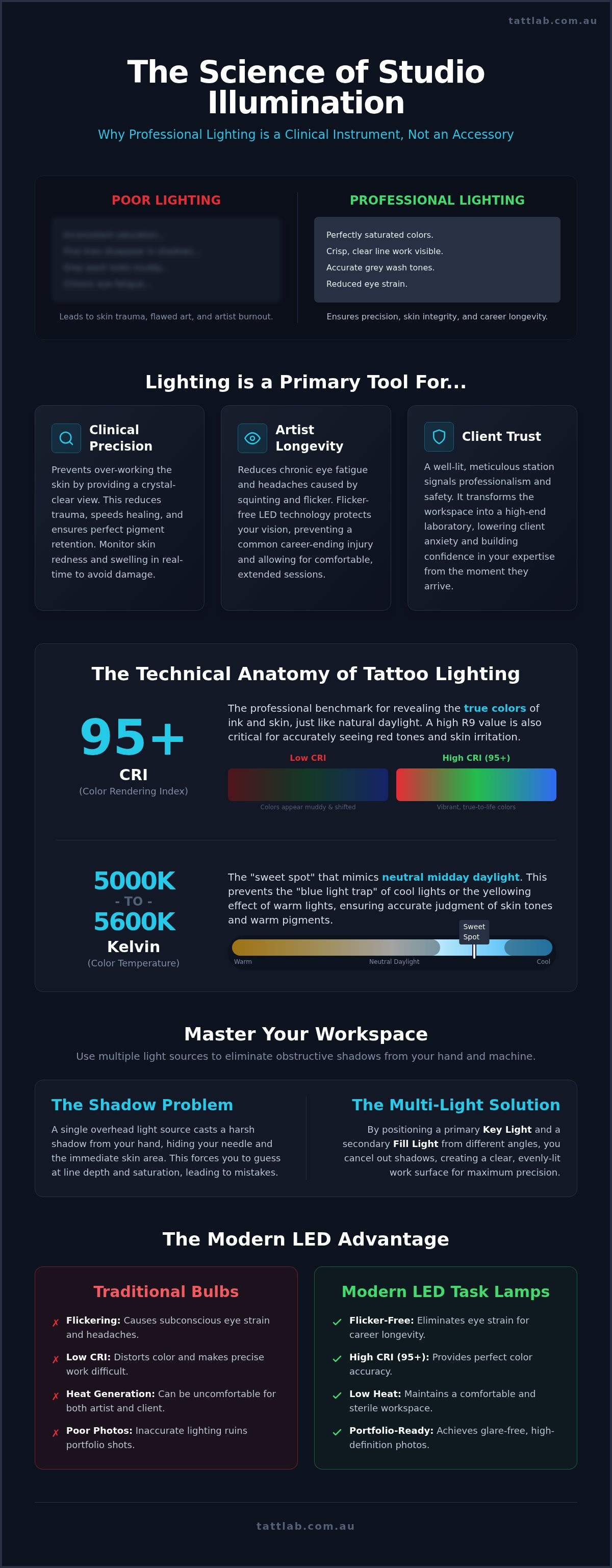
We're here to help you master the science of studio illumination to enhance your technical precision, ensure skin integrity, and capture the perfect portfolio shot. By understanding how to manipulate light, you protect your career longevity and your client's safety. This guide explores the critical benchmarks for professional lighting, including why a Color Rendering Index (CRI) of 95 or higher is non-negotiable for Australian studios. We will examine how to eliminate glare and shadows, ensuring your workspace feels like a sophisticated laboratory where science meets art.
Key Takeaways
- Discover why advanced lighting serves as a clinical instrument to prevent skin trauma and ensure pigment is deposited with absolute technical precision.
- Identify the non-negotiable technical benchmarks, including a CRI of 95+ and neutral Kelvin ranges, required for accurate color representation in the studio.
- Learn how to integrate high-performance illumination into your list of essential tattoo station supplies to protect your career longevity and reduce ocular fatigue.
- Master the "Three-Point Lighting" principle to eliminate obstructive shadows and blind spots created by your hand or machine during intricate line work.
- Evaluate the shift from traditional bulbs to modern LED task lamps to achieve the glare-free, high-definition portfolio shots necessary for a modern Australian tattoo brand.
Why Lighting is a Primary Tool for Professional Tattoo Stations
High-performance lighting is the bedrock of a sterile, professional workstation. While many artists focus on the mechanical specifications of their machines, the quality of light hitting the skin is a primary clinical instrument. In a professional Australian studio, lighting serves as the intersection of artistic precision and biological safety. Without a clear view of the canvas, the risk of over-working the skin increases significantly. This leads to unnecessary trauma, prolonged healing times, and compromised pigment retention. Inadequate visibility often forces an artist to repeat passes, which is the leading cause of skin damage in complex pieces.
Integrating professional illumination into your inventory of medical supplies for tattoo artists changes the narrative of the procedure. It transforms the station from a standard workspace into a high-end laboratory where science meets health. This shift in environment has a profound psychological impact; it builds immediate client trust and reinforces the artist's confidence. When a client sees a well-lit, meticulous setup, their anxiety lowers, replaced by a sense of controlled, predictable progress. It signals that you value their physical integrity above all else.
Monitoring Skin Integrity in Real-Time
Precision task lighting allows for the immediate identification of physiological changes during a session. You need to see subtle shifts in redness and swelling to gauge how the skin is responding to the needle. If your lighting is inadequate, you'll likely miss the early warning signs of over-saturation or incorrect needle depth. Clear visibility helps you identify these issues before they manifest as permanent scarring. Beyond safety, high-clarity light supports the minimalist, boutique aesthetic that modern Australian clients value. It ensures your workspace looks as sterile and professional as the work you produce, maintaining a clinical yet contemporary vibe.
Reducing Artist Fatigue and Eye Strain
The biological cost of poor lighting is often felt years into a career. Squinting under dim or flickering lights causes chronic eye fatigue and can lead to long-term vision deterioration. These aren't just minor inconveniences; they're threats to your career longevity. Utilizing flicker-free LED technology is a vital addition to your list of essential tattoo station supplies. This technology eliminates the micro-stutters in light output that cause headaches during 6+ hour sessions. By prioritising ergonomic light placement, you create a sustainable workflow that protects your physical integrity while maintaining the meticulousness required for every fine line.
The Technical Anatomy of Tattoo Lighting: CRI, Kelvins, and Lux
Effective illumination requires a deeper understanding than simply choosing the brightest bulb available. While high intensity is useful, "bright" light is not always "accurate" light. Luminous Flux, measured in Lux, quantifies the actual intensity of light reaching the skin surface. However, intensity without spectral accuracy can be deceptive. A light can be incredibly bright yet still fail to reveal the subtle nuances of pigment saturation or skin trauma. This technical distinction is why precision lamps are considered essential tattoo station supplies for any artist prioritising clinical excellence.
Demystifying the Color Rendering Index (CRI)
The Color Rendering Index is the measure of a light source's ability to reveal the true colors of objects in comparison to a natural light source. In the tattooing environment, a CRI rating of 95 or higher is the professional benchmark. When you work under a low CRI light, your tattoo ink can appear muddy or shifted, leading to inaccurate color choices and poor blending. A specialized focus on the R9 value is also necessary. This specific metric tracks saturated red tones, which are foundational for viewing human skin and managing the natural redness that occurs during a procedure. High R9 values ensure you aren't guessing about the level of irritation or the true hue of the pigment being deposited.
Finding the Kelvin 'Sweet Spot' for Tattooing
Color temperature, measured in Kelvins (K), determines the visual warmth of your workspace. The industry standard for tattooing is 5000K to 5600K, as this range mimics natural midday daylight. Staying within this window prevents the "blue light trap," where overly cool light distorts skin tones and makes it difficult to judge warm pigment hues accurately. While your general studio lighting might be warmer for client comfort, your station lighting must remain neutral. Many modern systems allow for adjustable temperatures, which is a significant advantage when transitioning from the procedural phase to capturing high-resolution portfolio photos. Ensuring your station meets international OSHA workplace lighting standards helps maintain a safe and predictable environment for every session. You can find a curated selection of high-performance studio gear at Tatt Lab to help you achieve this technical balance.
Comparing Lighting Formats: LED Panels, Ring Lights, and Task Lamps
Selecting hardware requires balancing your studio’s physical footprint with your specific technical requirements. While traditional halogen bulbs were once common, the industry has transitioned to cool-running LED technology to protect both the artist and the client from heat-related discomfort during long sessions. In high-traffic Australian studios, durability is paramount. Your lighting must withstand constant adjustment and rigorous sanitisation protocols without losing structural integrity. These fixtures are more than just furniture; they are essential tattoo station supplies that must remain compatible with medical-grade sterile barriers and cross-contamination workflows. Referencing OSHA illumination standards, which suggest between 10 to 30 foot-candles for detailed work environments, provides a helpful benchmark for ensuring your station meets global safety expectations.
LED Panels and Softboxes: The Shadow-Killers
LED panels and softboxes serve as the primary "shadow-killers" for large-scale work. When executing expansive back or chest pieces, a broad light source is superior to a concentrated beam. These units provide diffused illumination that reveals consistent saturation across the entire dermal surface. This diffusion is particularly critical when applying tattoo aftercare products. Freshly applied ointments or second-skin bandages are highly reflective; softbox lighting minimises this glare, allowing for accurate visual inspection of the finished work without the interference of harsh hot spots. This ensures the integrity of the skin is maintained from the first pass to the final application of a protective barrier.
Ring Lights and Flex-Arm Task Lamps
Ring lights have become ubiquitous, largely due to their dual role in macro detail work and social media content creation. Their circular configuration provides a unique, shadow-less field of view that is excellent for portraiture and intricate shading. However, for sessions requiring constant micro-adjustments, flex-arm task lamps offer unmatched mobility. These units allow you to pivot the light source around your machine and hand, maintaining clarity during fine-line work. When choosing portable units, consider the trade-offs between cold and warm LED configurations. While cold light often feels brighter, it can distort the skin’s natural undertones. A balanced 5600K unit provides the most honest representation of your progress, ensuring that what you see in the studio is exactly what the client sees in natural light.
Ergonomic Positioning: Optimizing Your Station for Clarity and Safety
Geometry determines clarity in a professional tattoo environment. Even the most advanced LED systems fail if they are positioned directly behind your hand, creating a "blind spot" right where the needle meets the dermis. To combat this, professional artists adapt the "Three-Point Lighting" principle. This involves a primary key light to illuminate the work area, a secondary fill light to soften shadows, and a third backlight to provide depth and separation. By triangulating your light sources, you ensure that neither your machine nor your grip obscures your view of fine-line work or complex shading. Integrating these setups with your professional tattoo supplies creates a seamless workflow where technical precision is never compromised by physical obstruction.
Managing Reflections and Glare
Tattooing presents a unique challenge due to the nature of "wet" skin. Blood, plasma, and petroleum-based ointments create a highly reflective surface that can hinder your vision. If your light hits the skin at a direct 90-degree angle, the resulting glare can wash out your stencil or hide subtle saturation levels. Adjusting the angle of incidence is crucial; angling your light source slightly to the side reduces direct bounce-back into your eyes. For high-contrast areas, some specialists use polarized filters or diffusers to manage these hot spots. The goal is to highlight the stencil and the skin’s natural texture without creating a blinding reflection on your sterile plastic barriers.
The Sterile Setup: Lighting and Cross-Contamination
In a high-turnover Australian studio, maintaining a sterile field is the absolute priority. Lighting equipment is a high-touch surface that requires meticulous protection. When wrapping your lamps in plastic barriers, you must ensure that heat vents remain unobstructed to prevent overheating and premature LED failure. Modern boutique studios are increasingly moving toward touchless controls or foot-pedal operated systems to minimise physical contact with the hardware. Between sessions, your lighting rigs should be treated with medical-grade disinfectants, ensuring that every component of your essential tattoo station supplies supports a safe, clinical environment.
You can explore our range of artist-vetted equipment and sterile consumables to upgrade your workstation today.
Investing in Precision: Building a High-Performance Tattoo Environment
Lighting is a legacy investment. While machines and needles are replaced frequently, your illumination infrastructure dictates the quality of every piece you produce for years. It's the foundation of a sustainable practice. By prioritising high-performance light, you're protecting your most valuable asset: your vision. This technical commitment ensures that your workspace remains a high-end laboratory where safety and aesthetics coexist. High-quality lighting works in direct synergy with other tattoo supplies. If you're using premium pigments but viewing them under substandard light, you're essentially working blind to the true depth of your work.
Auditing your current station for technical gaps is the first step toward professional progression. Ask yourself if your current setup allows for the same level of precision at 4:00 PM as it does at 10:00 AM. If the answer is no, your station is likely contributing to cumulative fatigue. Establishing studio-wide lighting standards also helps create a consistent brand aesthetic. This uniformity ensures that every artist in your space is operating at the same clinical standard, reinforcing a narrative of reliability and self-assurance for your clientele.
The ROI of Professional Lighting
The return on investment for superior lighting is measured in both time and reputation. Accurate visibility leads to fewer touch-ups. When you see the saturation correctly during the first session, you eliminate the "muddy" results that often require corrective work later. This efficiency increases client satisfaction and frees up your schedule for new bookings. Professional-grade lighting is also vital for marketing. High-CRI, glare-free portfolio photos are the currency of the modern industry. A studio equipped with elite infrastructure also becomes a magnet for top-tier talent. Artists want to work in environments that respect their craft and their health.
Sourcing Specialist Equipment in Australia
Choosing your essential tattoo station supplies from artist-vetted sources ensures that your gear is fit for purpose. In the Australian market, compliance with local electrical safety standards is non-negotiable. Substandard imports often lack the thermal management required for long sessions, leading to flickering or total failure. Sourcing from specialists who understand the clinical requirements of tattooing ensures your equipment is durable and safe. If you're ready to transition your workspace into a modern, clinical environment, explore the Tatt Lab range of high-performance gear. We provide the tools you need to maintain physical integrity and technical excellence from the initial interaction to the final result.
Illuminating Excellence: The Path to Professional Precision
Mastering the science of studio illumination is a transformative step that separates the hobbyist from the specialist. By adhering to technical benchmarks like a CRI of 95 or higher and neutral Kelvin ranges, you ensure that every pigment choice is backed by clinical accuracy. Proper ergonomic positioning doesn't just eliminate shadows; it protects your physical integrity and extends your career longevity by reducing chronic eye strain. When you view lighting as a primary clinical instrument rather than a studio accessory, you elevate the entire client experience. High-performance lighting is the foundation upon which all other essential tattoo station supplies function.
Upgrade your studio with professional-grade equipment from Tatt Lab. As an artist-owned and operated distributor, we provide industry-leading expertise and medical-grade standards for every professional station. With nationwide express shipping across Australia, your technical progression is only a click away. You've done the work to master your craft; now let your environment reflect that same level of meticulousness and care.
Frequently Asked Questions
What is the best CRI rating for a tattoo station light?
A CRI rating of 95 or higher is the non-negotiable benchmark for professional tattoo stations. This high rating ensures that the light source contains a full spectrum of colours, allowing you to see the true hue of your pigments and the skin's natural undertones. When choosing your essential tattoo station supplies, prioritising high CRI helps prevent color shifting, where a tattoo looks perfect in the studio but appears muddy or off-colour once the client steps into natural daylight.
Should I use warm or cool light when tattooing?
You should aim for neutral daylight, typically between 5000K and 5600K, for the most accurate results. Warm light adds a yellow tint that can make it difficult to judge cool pigments like blues and purples. Conversely, overly cool light creates a blue cast that distorts warm skin tones and reds. A neutral setting provides a clinical, honest environment that ensures your technical work translates perfectly across all viewing conditions, maintaining the integrity of the original design.
How do I prevent my tattoo machine from casting shadows on my work?
Eliminating shadows requires a multi-point lighting strategy rather than relying on a single overhead source. Position your primary light source slightly to the side of your dominant hand to ensure your machine doesn't block the beam. Utilising flexible task lamps or half-moon LED designs allows you to pivot the light around the client's body. This ensures constant visibility of the stencil and the dermis, even during complex sessions involving intricate fine-line work or large-scale shading.
Is a ring light better than an LED panel for tattooing?
Ring lights are excellent for macro detail and social media content because they provide even, circular illumination. However, LED panels are often superior for large-scale work like back pieces because they offer a broader, diffused throw that covers more surface area without harsh hot spots. Many professional studios integrate both into their essential tattoo station supplies to handle different technical requirements. Panels are generally better at reducing glare on wet skin or freshly applied ointments during the procedure.
How many lumens do I need for a professional tattoo workstation?
A professional workstation typically requires a light source providing between 2,000 and 4,000 lumens to ensure high-definition clarity. However, the intensity at the skin surface, measured in Lux, is the more critical metric for technical precision. Following global safety benchmarks, your task lighting should provide enough intensity to reveal subtle skin trauma and redness without being so bright that it causes ocular fatigue. High-quality LED units allow you to dim the intensity while maintaining colour accuracy.
Can I use standard office lamps for my tattoo station?
Standard office lamps are unsuitable for professional tattooing because they lack the technical specifications required for clinical work. Most consumer-grade bulbs have low CRI ratings, which distort pigment appearance and lead to poor colour saturation. Additionally, office lamps often lack the thermal management needed for long sessions and aren't designed to be wrapped in sterile plastic barriers. Professional studio gear is built with medical-grade standards to ensure both artist safety and technical excellence during every procedure.
How do I photograph my tattoos without glare from the light?
Preventing glare in portfolio shots requires managing the angle of incidence. Avoid pointing your light directly at the tattoo; instead, angle the light from the side so the reflection bounces away from your camera lens. Using a diffuser or a polarised filter can also soften the hot spots created by reflective ointments or plasma. This approach ensures your photos capture the true saturation and detail of the work without the distracting white highlights caused by direct, unshielded light.
Why does my tattoo look different under studio lights than in natural sunlight?
This phenomenon, known as metamerism, occurs when a light source lacks a full spectral output. If your studio lighting has a low CRI, it doesn't emit certain wavelengths of light, causing the pigments to look different than they do under the full spectrum of natural sunlight. Upgrading to high-CRI LEDs ensures that the red, blue, and yellow values you see at your station remain consistent when the client views their new tattoo in the real world.


Comments (0)
There are no comments for this article. Be the first one to leave a message!