

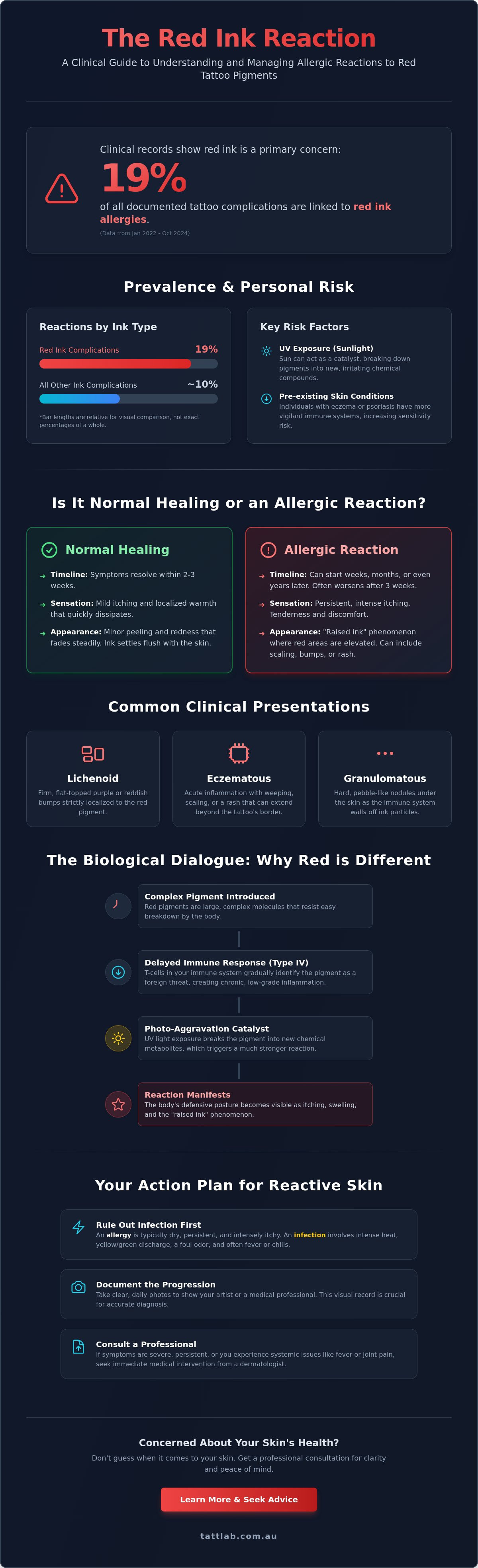
Between January 2022 and October 2024, clinical records showed that allergic reactions to red tattoo ink accounted for 19% of all documented tattoo complications. If you are experiencing localized swelling or persistent itching, you are likely asking: can you be allergic to red tattoo ink even if the rest of your tattoo feels fine? It is a common concern that touches on the delicate balance between aesthetic expression and biological safety.
We understand the anxiety that comes with skin distortion and the fear that your body is rejecting a piece of art you love. You shouldn't have to guess whether your skin is simply healing or if it's reacting to industrial grade pigments. This specialist’s guide explores the science of pigment chemistry under the 2026 MoCRA regulations and provides a clinical framework for identifying symptoms. We will outline the professional protocols required to manage a reaction and help you navigate your journey toward skin health and clarity with total confidence.
Key Takeaways
- Distinguish between normal inflammatory milestones and true delayed hypersensitivity to protect your skin's long-term integrity.
- Learn to identify specific clinical markers, such as the "raised ink" phenomenon, to determine if can you be allergic to red tattoo ink even after the initial healing phase concludes.
- Trace the chemical evolution of red pigments from heavy metals to modern Azo synthetics to understand the biological dialogue between ink and your immune system.
- Implement the professional "Dot Test" protocol to screen for pigment sensitivity, ensuring your journey toward new art is both safe and predictable.
- Focus on moisture barrier repair and advanced aftercare strategies to manage reactive skin and maintain the visual clarity of your tattoo.
Understanding Red Tattoo Ink Sensitivity: Why Red is Different
Red ink is a unique chemical challenge for your skin. While black pigments are primarily carbon based, the complexity of red Tattoo ink composition often triggers what clinicians call a delayed hypersensitivity reaction. This isn't a simple surface irritation that fades in a few days. Instead, it's a Type IV immune response where your body's T-cells gradually identify the pigment particles as foreign threats. You might wonder, can you be allergic to red tattoo ink if the initial healing seemed perfect? The answer is yes. This specific biological dialogue often begins weeks, months, or even years after the needle leaves the skin.
Your lymphatic system plays a critical role in this process. Once ink is deposited, your immune system attempts to transport smaller pigment particles to the lymph nodes for clearance. Red pigments often consist of larger, more complex molecules that resist easy fragmentation. This persistence creates a state of chronic low grade inflammation. Unlike an immediate allergic reaction that happens within minutes, this delayed response is a slow build of immunological tension that eventually manifests as physical discomfort.
The Biological "Why" Behind Red Reactivity
The immune system is a master of pattern recognition. It frequently identifies certain red pigments as biological pathogens. This misidentification is often triggered by "photo aggravation," where UV exposure causes the pigment to break down into secondary chemical metabolites. These new substances are what the body actually reacts to. It's why a red tattoo might stay dormant for three years and then suddenly become raised and itchy after a weekend at the beach. The sun acts as a catalyst, changing the ink's chemistry and forcing your skin into a defensive posture.
Incidence Rates and Risk Factors
Clinical data from October 2024 reveals that while approximately 10% of all tattooed individuals experience some form of skin reaction, red ink is disproportionately represented. In specialized clinical settings, allergic reactions to red ink accounted for 19% of all documented tattoo complications. Your personal risk isn't just about the ink; it's about your skin's baseline integrity. Individuals with pre-existing conditions like eczema or psoriasis often have a more vigilant immune system, making them more susceptible to these reactions. It's also a myth that an allergy is "all or nothing." You might react to a specific warm toned red from one manufacturer while having no issues with a cool toned magenta from another, as the chemical stabilizers vary significantly between brands.
Identifying the Signs: Is it an Allergy or Just Healing?
Distinguishing between a standard recovery and a persistent immunological issue is vital for long term skin health. While most tattoos settle within 14 days, red ink often follows a different timeline. If your tattoo is still significantly raised, itchy, or tender after the three week mark, you're likely asking: can you be allergic to red tattoo ink? Normal healing involves mild peeling and localized warmth that dissipates quickly. In contrast, an allergic reaction often intensifies just as you expect the skin to calm down. The FDA information on tattoo safety highlights that while pigments are classified as cosmetics, their behavior in the dermis is subject to ongoing monitoring due to these adverse events.
The "Raised Ink" phenomenon is a primary hallmark of red sensitivity. While black lines often sit flush with the skin, red ink can remain elevated for months. This elevation is caused by localized edema and the accumulation of inflammatory cells around the pigment. Research indicates that about 6% of people experience these chronic reactions for longer than four months, turning a temporary healing phase into a long term dermatological concern. If you are concerned about the evolution of your pigment, a professional consultation can provide the necessary clarity on your skin health.
Eczematous vs. Lichenoid Reactions
Eczematous reactions present as acute inflammation, often characterized by weeping, scaling, or a rash that extends beyond the tattoo’s border. Lichenoid reactions are more common with red ink; these appear as firm, flat topped purple or reddish bumps localized strictly to the pigment. If you feel hard, pebble like nodules under the skin, you may be experiencing a granulomatous reaction. This occurs when the immune system attempts to wall off the ink particles to prevent them from interacting with the surrounding tissue.
When to Consult a Medical Professional
You must distinguish between an allergy and a secondary infection. An infection usually brings intense heat, yellow discharge, or a foul odor. Allergic reactions are typically dry, persistent, and intensely itchy. If you experience systemic symptoms like fever, chills, or joint pain, seek immediate clinical intervention. Documenting the progression with daily photos helps your specialist determine the best path for your skin's evolution. Always keep a record of the specific ink brand used if your artist provided that information, as it is crucial for a dermatologist referral.
The Chemistry of Red: From Cinnabar to Modern Organic Pigments
Understanding the chemical evolution of red pigment is essential for anyone asking: can you be allergic to red tattoo ink in an era of supposedly safer synthetics? Historically, red ink was notorious for containing mercury sulfide, commonly known as cinnabar. While this toxic heavy metal has been largely phased out of professional studios, the modern alternatives present their own set of biological challenges. Today, most red inks rely on organic pigments, specifically Azo dyes. Despite the "organic" label, these are often industrial grade substances originally developed for textiles or automotive paints. As of October 2024, the FDA has not approved any color additives for injection into the skin, leaving the responsibility for safety largely with manufacturers.
The 2026 Modernization of Cosmetics Regulation Act (MoCRA) has introduced a new layer of accountability. Manufacturers must now register facilities and report serious adverse events within 15 business days. This regulatory shift highlights a critical truth: modern chemistry is complex. Azo pigments can undergo a process of thermal or photodegradation, breaking down into secondary aromatic amines. These smaller chemical fragments are often what the immune system identifies as a threat. Detailed FDA on tattoo ink safety guidelines suggest that while reactions are infrequent, the permanence of the pigment makes management difficult once a sensitivity is established.
The Evolution of Pigment Safety
Modern laboratories have shifted focus toward refining particle size to improve skin health outcomes. Smaller particles are more easily processed by the lymphatic system, while larger, irregular clusters tend to trigger the persistent inflammation discussed in previous sections. For a deeper look at how these substances interact with your biology, consult The Professional Guide to Tattoo Ink: Science, Safety, and Selection. This evolution in manufacturing aims to create a more predictable "journey" for the ink, though the risk of delayed hypersensitivity remains a factor of individual immune chemistry.
Decoding Ink Labels for Artists
Professional artists must be meticulous when reviewing Safety Data Sheets (SDS). A "vegan friendly" label ensures no animal byproducts are used, but it doesn't guarantee a low allergy profile. High pigment loads, designed for maximum saturation, can increase the "inflammatory load" on the dermis. Look for formulations that use high purity carriers like distilled water or medical grade glycerin rather than complex blends of alcohols and surfactants. These additives often act as penetration enhancers, inadvertently making the skin more reactive to the primary red pigment particles.
Proactive Management: Patch Testing and Artist Protocols
Establishing a robust screening process is the most effective way to preserve skin health before a single drop of pigment is permanent. Many clients rely on standard dermatological patch tests, yet these often fail to replicate the specific conditions of a tattoo. Determining if can you be allergic to red tattoo ink before committing to a large scale piece is a hallmark of professional practice. Because red ink reactions are typically Type IV delayed hypersensitivity responses, a simple 24 hour skin prick is insufficient. The immune system requires a longer window to recognize and react to the pigment particles embedded in the dermis.
Professional consultation should include a thorough screening for existing metal or dye sensitivities. While we've discussed the shift toward organic Azo pigments, cross reactivity remains a risk for individuals with known sensitivities to hair dyes or certain textiles. For these high risk clients, suggesting an alternative palette of magentas, burnt oranges, or earth tones can achieve a similar aesthetic without the specific chemical triggers found in bright "true red" inks. If you're unsure about your skin's history, you can consult with our skin health specialists to evaluate your suitability for complex pigments.
How to Perform a Professional Tattoo Patch Test
- Step 1: Select a discreet, low friction area for the test. The skin behind the ear or the inner upper arm provides a reliable site that won't interfere with future placement.
- Step 2: Apply a single needle dot or a three millimeter line using the exact red pigment intended for the final piece. This ensures the carrier solution and pigment load are identical to the actual procedure.
- Step 3: Observe the site for 7 to 14 days. This timeframe is the clinical gold standard for identifying delayed reactions. If the dot remains flat and asymptomatic after two weeks, the risk of a severe reaction is significantly lowered.
Managing an Active Reaction in the Studio
When a client reports discomfort during a multi session project, a "cool but clinical" approach is essential. If localized inflammation, persistent itching, or the "raised ink" phenomenon appears between sessions, the journey must be paused. Continuing to tattoo over reactive skin only increases the inflammatory load and risks permanent scarring. Artists should maintain a dedicated kit of Medical Supplies for Tattoo Artists: The Professional Studio Safety Guide (2026) to manage immediate irritation, but chronic issues require a referral to a specialist. Prioritizing skin integrity over a deadline ensures the final result remains a point of pride rather than a source of chronic physical distress.
Maintaining Skin Integrity: Aftercare and Professional Solutions
The management of reactive skin doesn't end once the initial inflammatory flare subsides. If you've spent weeks wondering can you be allergic to red tattoo ink, the focus must shift from simple diagnosis to long term stabilization. Moisture barrier repair is the foundation of this process. Reactive skin is compromised skin; it lacks the structural lipids necessary to protect the dermis from environmental stressors. By utilizing medical grade occlusives that mimic the skin’s natural lipid structure, you provide the dermis with the resources it needs to sequester pigment particles without constant immunological flares.
Professional aftercare is designed to reduce the inflammatory load, which is the cumulative stress placed on your immune system by foreign pigment and external irritants. At Tatt Lab, we view aftercare as a clinical extension of the tattoo process itself. We serve as a specialized environment where we curate artist vetted consumables that prioritize skin health above all else. Protecting your red ink from UV exposure is also a lifelong commitment. Since sunlight can trigger the photodegradation of Azo pigments into more reactive metabolites, applying a broad spectrum SPF 50+ is a non-negotiable step in preventing delayed hypersensitivity years after your session.
Clinical Aftercare for Sensitive Skin
For individuals with a history of sensitivity, fragrance free and medical grade ingredients are essential. Standard lotions often contain alcohols or preservatives that further agitate a localized immune response. Specialized balms containing ceramides and fatty acids help rebuild the stratum corneum, effectively "calming" the T-cells that respond to red pigment. You can find a detailed breakdown of these protocols in our resource on Mastering Tattoo Aftercare: The Professional Guide to Skin Integrity and Healing. These professional standards ensure that your skin's journey remains one of evolution rather than irritation.
The Future of Tattoo Removal for Allergic Reactions
In cases of chronic hypersensitivity where the skin remains in a state of permanent distress, removal is often the only path to reclaiming your comfort. Modern laser technology has transformed this process. We use picosecond lasers to achieve precise fragmentation of red pigment particles, allowing your lymphatic system to finally clear the substances causing the reaction. This isn't just about aesthetics; it's a medical necessity for restoring skin integrity. Every step of this journey, from the initial consultation to the final clearance, is handled with the meticulous care and scientific rigor that your body deserves. We're here to ensure your skin health remains the priority, turning a difficult reaction into a liberating path toward clarity.
Empowering Your Skin’s Evolution
Understanding the biological dialogue between your immune system and Azo pigments is the first step in managing long term skin health. We've explored how red ink requires a specialized clinical approach, moving beyond surface care to address deep seated immunological responses. By distinguishing between standard healing and true delayed hypersensitivity, you gain the clarity needed to protect your skin's integrity. Determining whether can you be allergic to red tattoo ink doesn't have to be a source of anxiety when you follow professional protocols and prioritize pigment safety.
As an artist owned and operated specialist, Tatt Lab maintains medical grade safety standards across our entire range of consumables. We provide the professional tools and aftercare necessary for a successful healing journey, supported by express nationwide shipping across Australia. Explore Professional Tattoo Inks and Aftercare at Tatt Lab to ensure your next piece meets the highest clinical benchmarks. Your skin's health is the foundation of your art. By choosing vetted solutions, you ensure every transformation is a step toward lasting confidence and clarity. We're here to support you through every stage of that journey.
Frequently Asked Questions
Can I be allergic to red ink but not other tattoo colours?
Yes, it's quite common to react specifically to red while other colors remain asymptomatic. This happens because red pigments often utilize complex Azo dyes or synthetic organic compounds that differ significantly from the carbon based structures found in black or grey inks. Your immune system might identify the specific chemical metabolites of red as a threat while ignoring the simpler molecular profile of other pigments.
What does a red tattoo ink allergy look like?
A red ink allergy typically manifests as localized inflammation where the skin appears raised, firm, and textured. You might notice small, flat topped bumps known as lichenoid reactions or more aggressive, scaly patches that resemble eczema. Unlike a standard infection, these symptoms are usually confined strictly to the red pigment and are characterized by intense, persistent itching rather than yellow discharge or heat.
How long does it take for a red ink allergy to show up?
While some reactions occur within the first 48 hours, most red ink allergies are delayed hypersensitivity responses that emerge weeks or months after the procedure. It is possible for a reaction to appear several years later. This is often triggered by UV exposure breaking down the pigment into new chemical fragments that the body suddenly identifies as foreign pathogens.
Can I still get a tattoo if I am allergic to red dye in food or makeup?
Having a sensitivity to red food dyes or cosmetics increases your risk profile, but it doesn't automatically mean you will react to tattoo ink. The dyes used in food, such as Red 40, are chemically distinct from the Azo pigments used in professional tattooing. However, since your immune system is already vigilant against certain colorants, a professional 14 day patch test is essential to ensure skin integrity before proceeding.
Is there a "safe" red tattoo ink that won’t cause an allergy?
No ink can be guaranteed as 100% hypoallergenic because every immune system reacts uniquely to foreign substances. However, choosing brands that comply with the 2026 MoCRA regulations ensures higher purity and mandatory reporting of adverse events. Modern synthetic organic pigments have replaced toxic mercury based cinnabar, significantly reducing the incidence of severe systemic reactions, though localized sensitivity remains a biological possibility.
What should I do if my red tattoo starts itching years later?
If a dormant tattoo becomes itchy years later, it's likely a delayed reaction to pigment degradation. You should document the changes with photos and consult a skin health specialist to rule out more serious dermatological issues. Maintaining a strong moisture barrier with medical grade aftercare can help soothe the inflammation. If the itching is persistent, it may indicate that your lymphatic system is struggling to process the evolving pigment particles.
Will a red ink allergy ruin the look of my tattoo?
Persistent allergic reactions can lead to pigment loss or localized scarring, which may distort the original artwork. When the skin remains chronically inflamed, the body attempts to eject or "wall off" the ink, resulting in a faded or blurred appearance. Managing the reaction early with professional aftercare or clinical intervention is the best way to preserve the visual clarity and aesthetic evolution of your piece.
Can I get a red tattoo if I have an allergy to nickel?
Individuals with nickel allergies should proceed with caution when asking can you be allergic to red tattoo ink. Although modern pigments are primarily organic, trace amounts of metals can still be present as contaminants from the manufacturing process. A specialized consultation and a long term patch test are vital. This methodical approach ensures that your journey toward new art doesn't compromise your skin's health or long term comfort.


Comments (0)
There are no comments for this article. Be the first one to leave a message!