

What if your ability to regulate a client's nervous system was just as vital to the final result as your needle depth? For the professional artist, managing client pain during tattoo sessions has evolved from a matter of hospitality into a rigorous clinical discipline. You've likely felt the tension when a client begins to twitch or considers tapping out early; every involuntary movement risks the precision of your work and the integrity of the skin.
We recognize the challenge of navigating a landscape where 80% of cosmetic clients demand numbing, yet regulations like the Oregon Health Authority’s March 31, 2026, clarification restrict how you can assist. This guide provides a sophisticated framework for minimizing discomfort without compromising ink saturation. You'll master the psychological framing and clinical awareness required by the June 2025 ASA safety standards to ensure longer, more productive sessions. We'll examine how to foster a calm studio environment that prioritizes skin health and secures client loyalty through every evolution of their journey.
Key Takeaways
- Understand the biological mechanisms of nociceptors to minimize skin trauma and preserve the long-term integrity of your canvas.
- Master the clinical timing for primary and secondary topical anaesthetics to ensure maximum desensitisation without affecting ink saturation.
- Optimise your machine setup and needle selection, specifically long-taper configurations, to reduce skin displacement and the perceived sharpness of each hit.
- Implement psychological framing and rhythmic breath-work as essential protocols for managing client pain during tattoo sessions.
- Adopt a medical-grade studio environment to lower client anxiety and increase the efficiency of your procedural workflow.
The Physiology of Tattoo Pain: A Clinical Perspective for Artists
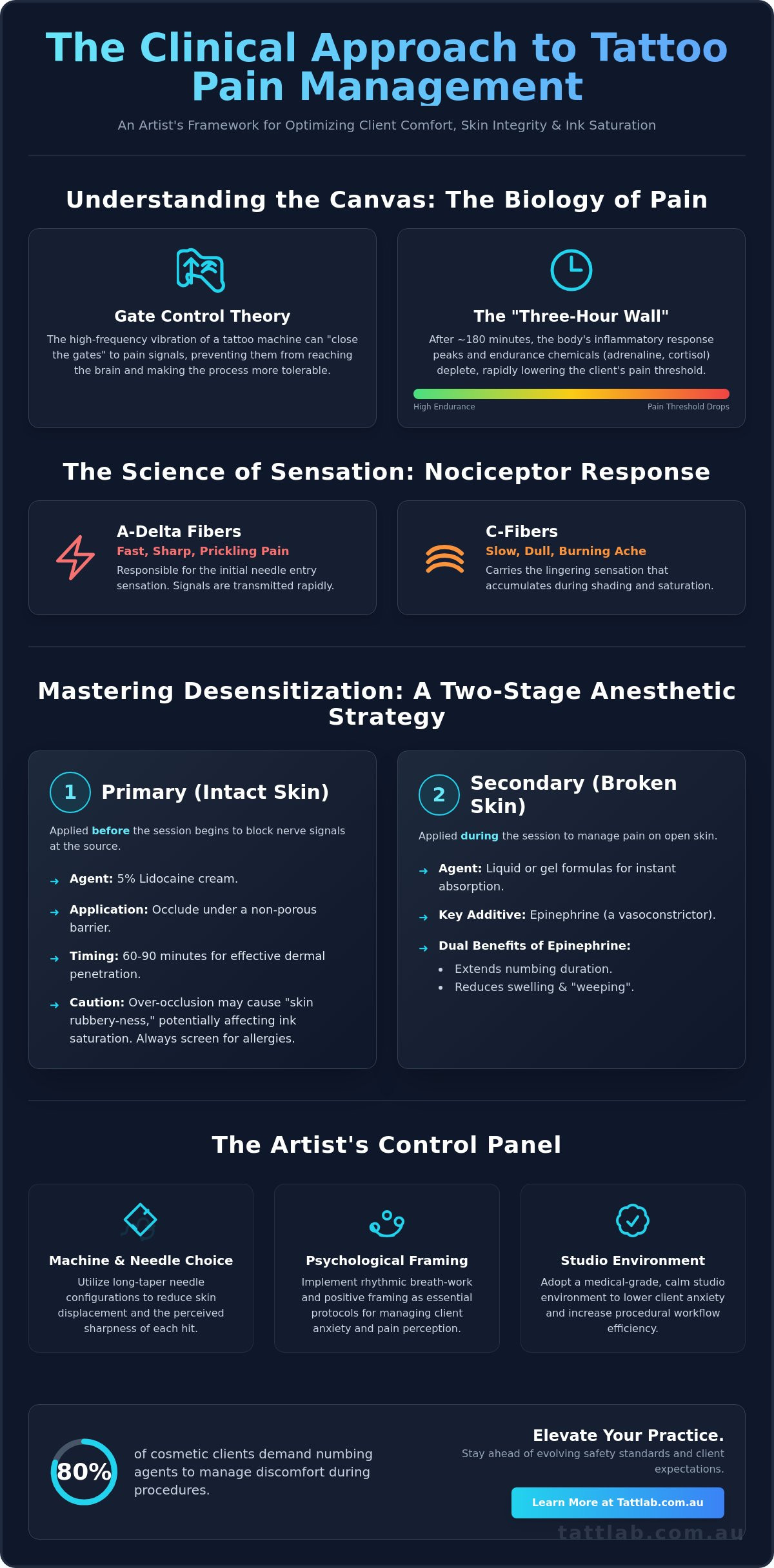
In the Lab, we view the skin not just as a canvas, but as a living, reactive organ. Effective management of a client's experience begins with a deep understanding of the biological dialogue between the needle and the central nervous system. When you're managing client pain during tattoo sessions, you're essentially moderating an electrical storm of signals. This process relies heavily on the Gate Control Theory of pain. This theory suggests that non-painful input, such as the high-frequency vibration of a tattoo machine, can "close the gates" to painful input, preventing pain sensations from reaching the brain. This is why many clients find the steady hum of a rotary machine more tolerable than the intermittent sensation of a hand-poked piece.
Maintaining skin integrity is your primary defense against escalating discomfort. The tattooing process involves the mechanical delivery of pigment into the dermis, which triggers an immediate neurochemical response. During this interaction, the body releases adrenaline and cortisol to help the client endure the procedure. However, these chemicals are finite. As they deplete, the client's threshold for pain lowers, making the final hour of a long session significantly more difficult than the first. This shift in endurance is a biological reality that requires professional foresight.
Understanding Nociceptors and Dermal Trauma
Nociceptors are the primary sensory receptors for tissue damage. They are specialized nerve endings that respond to potentially damaging stimuli by sending "threat" signals to the spinal cord. In tattooing, we deal with two distinct types of fibers: A-delta fibers and C-fibers. A-delta fibers are responsible for that initial, sharp prick sensation because they are myelinated and transmit signals rapidly. In contrast, C-fibers are unmyelinated and carry the slower, duller ache that lingers after a pass. Precision in needle depth is vital; pushing beyond the papillary dermis into deeper layers increases trauma and activates more nociceptors without improving ink retention.
- A-delta Fibers: Fast-acting, sharp pain triggered by the initial needle entry.
- C-Fibers: Slower, burning sensations that accumulate during heavy saturation or shading.
- Dermal Integrity: Over-working a specific area triggers a cascade of signals that can lead to client "tapping out."
The Inflammatory Response and Session Duration
The body treats a tattoo as a controlled injury, triggering an inflammatory response that is both a necessity and a challenge. While this response is vital for the eventual healing and evolution of the art, it leads to localized swelling and increased sensitivity. Most clients hit what we call the "three-hour wall." After approximately 180 minutes of continuous trauma, the body's local inflammatory markers peak, and the "fight or flight" response begins to fatigue. This shift in chemistry is why managing client pain during tattoo work requires a tactical approach to timing. Your lymphatic system works overtime during this period to clear minor trauma, but once the 180-minute threshold is crossed, the skin's ability to remain calm diminishes rapidly.
Topical Anaesthetics and the Science of Skin Desensitisation
In the Lab, we approach chemical desensitisation with the same rigor as a clinical trial. While some traditionalists dismiss numbing agents as a crutch, a scientific perspective reveals they are sophisticated tools for The Physiology of Tattoo Pain management. By understanding how lidocaine, prilocaine, and benzocaine temporarily block sodium channels within the nerve membrane, you can effectively silence nociceptors before the first pass. The goal isn't just comfort; it's the preservation of the artist's focus and the client's composure during lengthy sessions.
Effective managing client pain during tattoo sessions requires a two-stage chemical strategy. Primary anaesthetics are designed for intact skin, relying on high-viscosity delivery systems to penetrate the stratum corneum. Secondary anaesthetics, however, are liquid or gel-based formulas engineered to work instantly once the dermal barrier is breached. These secondary agents often include epinephrine, a powerful vasoconstrictor that serves a dual purpose: it extends the duration of the numbing effect and constricts blood vessels to minimize swelling and "weeping" during the session.
Lidocaine Protocols for Pre-Procedure Prep
For primary numbing, we recommend a 5% lidocaine concentration, which aligns with the maximum permitted levels discussed in the April 14, 2026, FDA safety updates. To reach the dermal layer effectively, the cream requires an occlusion time of 60 to 90 minutes under a non-porous barrier. While pre-numbing provides a calm start, be mindful of "skin rubbery-ness." Over-occlusion can slightly alter the skin's turgor, potentially affecting ink saturation. Always screen for local anaesthetic allergies before application to ensure the client's safety throughout their transformation.
Secondary Anaesthetics: Managing Open Skin
Once the skin is broken, secondary agents become the specialist's best ally. These formulas are typically more potent because they bypass the epidermis entirely. The inclusion of epinephrine is critical here; it reduces localized blood flow, keeping the "canvas" clean and visible for intricate detail work. However, precision is paramount. Over-saturation with secondary gels can cause the skin to become overly firm, which may hinder the natural evolution of the pigment's settling process. Our specialists at Tatt Lab emphasize that maintaining the delicate balance between desensitisation and skin health is what separates a technician from a true professional.
Using these agents correctly ensures the client feels supported rather than overwhelmed. When the chemical intervention is timed with the body's natural 180-minute inflammatory peak, you can extend the session's productivity without compromising the integrity of the final piece. This methodical approach replaces the "tough it out" mentality with a controlled, predictable clinical protocol.
Technical Variables: How Machine Setup and Needle Choice Influence Discomfort
Mechanical precision is the silent partner of chemical desensitisation. While topical agents address the neurochemical side of discomfort, the physical interaction between the needle and the dermis dictates the level of trauma sustained. For the specialist, managing client pain during tattoo sessions involves a meticulous calibration of machine stroke, voltage, and needle geometry. Long taper needles are a critical tool in reducing skin displacement. Because the point is more gradual, it enters the tissue with less resistance than a short taper, creating a smaller puncture and minimizing the activation of A-delta fibers.
Machine stroke length further influences the client's perception of sharpness. A longer stroke (4.0mm or more) provides a more aggressive hit, which is necessary for solid packing but can feel more invasive on sensitive areas. Conversely, a shorter stroke (2.5mm to 3.5mm) offers a softer touch, reducing the perceived sharpness. The tension of the cartridge membrane also plays a role; a softer return reduces the vibration transmitted through the skin, lowering the overall sensory load. Finding the sweet spot between voltage and hand speed is essential to avoid "chewing" the skin, a common mistake that leads to unnecessary inflammation and early "tapping out."
Needle Engineering and Skin Integrity
The geometry of your grouping determines how pressure is distributed across the dermal surface. Round liners concentrate force into a single point, while magnums spread the impact, often resulting in a more tolerable sensation during shading. Using high-quality tattoo cartridges equipped with internal stabilisers is essential to eliminate lateral needle play. This stability prevents micro-tearing. Additionally, selecting a #10 (0.30mm) gauge over a #12 (0.35mm) provides a smoother entry, as the smaller diameter creates less surface friction during the picosecond of impact.
Machine Calibration for Sensitive Areas
Adjusting the "give" on your rotary machine allows you to compensate for the varying elasticity of the skin. On bony areas like the ribs or spine, a machine with more give mimics the natural resilience of softer tissue, preventing the needle from hitting too hard against the bone. This technical nuance is just as effective as psychological distraction. In fact, a VR for Pain Management Study published in 2021 highlights how sensory focus can be shifted; however, as an artist, your focus remains on physical precision. Utilizing high-quality tattoo ink with high pigment density further aids in managing client pain during tattoo procedures by ensuring saturation in fewer passes, which directly limits the duration of the inflammatory response.
The Artist’s Protocol: Psychological Strategies and Procedural Adjustments
Managing client pain during tattoo sessions is as much about cognitive load as it is about dermal trauma. In the Lab, we view every session as a collaborative journey. This partnership requires you to guide the client’s nervous system through the procedure using specific, evidence-based protocols. A clinical approach to communication can significantly reduce the perceived intensity of the experience, transforming a struggle into a manageable evolution of the skin.
The "First 15 Minutes" rule is a foundational protocol for establishing trust. By starting with lower-intensity work or focusing on less sensitive areas, you allow the client to acclimate to the sensory input. This period is vital for the brain to categorize the needle’s vibration as a predictable stimulus rather than an acute threat. Building this baseline prevents early panic and sets the stage for a productive sit, ensuring the client feels in control of their own transformation.
Breath-work serves as your most accessible clinical tool for regulating heart rate and lowering the client's stress response. Encourage clients to utilize rhythmic, diaphragmatic breathing; specifically, a four-second inhale followed by a six-second exhale. This pattern activates the parasympathetic nervous system, counteracting the cortisol spike that typically occurs during the 180-minute inflammatory peak we established earlier. When the breath is steady, the body is less likely to enter a state of hyper-vigilance.
Communication and Verbal Framing
The language you choose directly influences pain perception. You should swap descriptive words like "burning," "stinging," or "scratching" for more neutral terms like "pressure," "vibration," or "texture." This semantic shift helps the brain process the input without the emotional weight of a threat response. Regular check-ins should remain professional and outcome-oriented. Provide the client with clear progress milestones, helping them visualize the finish line rather than focusing on the immediate discomfort.
Environmental Control and Distraction
Optimising the studio Lab environment is essential for nervous system regulation. Maintain a cool, stable temperature and use adjustable, medical-grade lighting to minimize sensory overstimulation. While passive distractions like movies are helpful, active distraction through conversation can be more effective for some, as it requires higher cognitive engagement. Ensure the workstation is ergonomically adjusted for both yourself and the client. Physical discomfort elsewhere in the body often amplifies the perceived pain of the tattoo itself.
If you're ready to elevate your studio's clinical standards and improve your procedural workflow, explore our range of professional resources at Tatt Lab.
Optimising the Lab Environment: Professional Supplies for Pain Management
The physical environment of your studio acts as a silent regulator for the client's nervous system. A sterile, medical-grade setup does more than just ensure safety; it creates a psychological "anchor" of clinical authority that lowers cortisol levels before the needle even touches the skin. When a workspace feels like a precise laboratory rather than a cluttered workshop, the client's anxiety decreases, which directly impacts their pain threshold. Efficiently managing client pain during tattoo sessions involves curated environmental control, where every piece of equipment reinforces a sense of meticulous care.
High-quality medical supplies for tattoo artists are essential for maintaining this professional standard. Using hospital-grade barriers and sterile consumables isn't just about infection control; it's about session efficiency. When your setup is optimized, you spend less time fumbling with supplies and more time focused on the skin's reaction. This streamlined workflow reduces the total time the client is under the needle, preventing the "three-hour wall" of inflammatory fatigue we discussed previously. By prioritizing a clinical atmosphere, you foster an environment where the client feels supported throughout their entire transformation.
The Role of Sterile Consumables
Friction is one of the primary drivers of secondary pain during a session. As the needle moves, heat builds up on the epidermal surface, often leading to a "burning" sensation that persists between passes. Using premium glides and ointments is a technical necessity to reduce this mechanical irritation. These products create a protective lipid barrier that allows the needle to enter the skin with minimal resistance. Additionally, replacing standard green soap with specialized, pH-balanced soothing soaps during the wipe-down process helps "turn off" the acute sting. These formulations often contain botanical extracts that calm the skin's surface, making the process of managing client pain during tattoo work much more effective in real-time.
Post-Session Recovery and Skin Integrity
The moments immediately following the final pass are critical for the client's lasting impression of the experience. Transitioning from the procedure to recovery requires a "Seal and Protect" method. Using specialized soothing foams or gels can immediately dissipate the heat of the inflammatory response, providing instant relief from the post-tattoo burn. This step isn't just about comfort; it's the first stage of a successful tattoo aftercare protocol that ensures the long-term integrity of the artwork.
Professional artists choose our equipment because we prioritize the science of skin health above all else. From medical-grade PPE to advanced procedural supplies, our range is designed to support the specialist at every stage of the journey. To ensure your studio meets the highest clinical standards of 2026, you can explore the full Tatt Lab range and elevate your professional practice today.
Elevating the Clinical Standard of Your Studio
Mastering the intersection of clinical science and artistic precision is the hallmark of the modern specialist. By aligning your technical setup with the body’s natural 180-minute inflammatory peak and utilizing the desensitisation protocols we've explored, you transform the tattooing process into a controlled, predictable evolution. Effective managing client pain during tattoo sessions requires a holistic commitment to skin health, from the first needle entry to the final application of a soothing post-session gel.
As an artist-owned and operated partner, Tatt Lab is dedicated to providing the industry with premium medical-grade consumables that uphold these standards. We facilitate your professional journey with express nationwide shipping across Australia, ensuring your workstation is always equipped for excellence. For studio owners looking to further develop their team’s focus and cohesion, resources like DUX Laser Tag Singapore provide excellent examples of how structured team-building can enhance professional coordination.
Shop Professional Tattoo & Medical Supplies at Tatt Lab and take command of your procedural workflow. Your commitment to meticulous care will define the future of your craft and the loyalty of your clients.
Frequently Asked Questions
Does numbing cream affect the quality of the tattoo or ink saturation?
Numbing cream only impacts quality if it is misused through over-occlusion. If left under a barrier for longer than 120 minutes, the skin can become hyper-hydrated or "rubbery," which may lead to uneven ink saturation or minor edema. When you follow the clinical 60 to 90-minute protocol, the skin integrity remains stable, allowing for precise pigment implantation and a natural evolution of the healed art.
How long should I wait for a numbing cream to take effect before starting?
You should typically wait 60 to 90 minutes for a 5% lidocaine cream to reach the dermal nerves. This duration allows the active ingredients to penetrate the stratum corneum effectively under a non-porous barrier. Starting the session too early often results in an incomplete block, which can increase client anxiety once the procedure begins. Patience during this phase is essential for managing client pain during tattoo sessions effectively.
What is the most painful part of the body to get tattooed according to the pain scale?
Areas with high nerve density and minimal subcutaneous fat, such as the sternum, ribs, and spine, consistently rank as a 9 or 10 on the pain scale. These regions have a high concentration of nociceptors and are in close proximity to bone. The lack of "padding" means the vibration of the machine is felt more acutely, necessitating a more technical approach to voltage and needle depth to maintain comfort.
Can I use lidocaine spray on open skin during the tattoo session?
Yes, liquid or gel-based lidocaine sprays are specifically designed as secondary anaesthetics for use once the skin barrier is broken. These products work almost instantly because they don't have to penetrate the epidermis. Always ensure your chosen product adheres to the April 2026 FDA safety standards, which monitor lidocaine concentrations and labeling to ensure they don't exceed the 4% to 5% safety threshold for over-the-counter applications.
How does machine voltage impact the amount of pain a client feels?
Higher voltage increases the frequency of needle strikes per second, which can pack pigment faster but also increases the "perceived" sharpness and heat. If the voltage is too high for your hand speed, you risk "chewing" the tissue and triggering a more intense inflammatory response. Lowering the voltage slightly on thin-skinned areas is a practical technical adjustment for managing client pain during tattoo procedures without sacrificing artistic precision.
Are there any medical reasons why a client shouldn’t use numbing agents?
The primary contraindication is a known allergy to the "caine" family of local anaesthetics, such as lidocaine or prilocaine. Clients with specific cardiac conditions or those taking blood pressure medication should also exercise caution, as the epinephrine found in many secondary agents is a vasoconstrictor that can temporarily elevate heart rate. Always conduct a thorough pre-session screening to identify these risks before applying any topical agents in the Lab.
What should I do if my client starts to feel faint or lightheaded from pain?
Stop the procedure immediately and have the client lie flat with their legs elevated to manage a vasovagal response. This reaction is a sudden drop in heart rate and blood pressure triggered by the nervous system’s response to stress or trauma. Provide a glucose-rich drink and ensure the studio temperature is cool. Most clients recover within 10 to 15 minutes, but you must prioritize their safety over finishing the session.
How can I explain the science of tattoo pain to a nervous first-timer?
Frame the experience as a partnership between their body and your technical precision. Explain that the first 15 minutes are the most intense because the brain is identifying a new stimulus, but their body will soon release natural endorphins to help them settle. Mention that the machine’s vibration actually helps "mask" the sharp sensations through Gate Control Theory, turning the session into a predictable, manageable journey rather than an overwhelming event.


Comments (0)
There are no comments for this article. Be the first one to leave a message!