

The boundary between a saturated masterpiece and permanent dermal trauma is measured in fractions of a millimeter. When an artist pushes past the skin's natural threshold, the result is no longer just a tattoo; it is a biological violation of skin integrity. You might be looking at your new ink right now, wondering if the heavy scabbing and blurred lines are part of the journey or a sign that something has gone wrong.
It's completely normal to feel a sense of vulnerability when your body's largest organ doesn't respond as expected. This guide provides the clarity you need to identify the critical signs of an overworked tattoo, helping you separate standard healing from clinical trauma. We'll break down the visual markers of damaged tissue, explain the science of why overworking occurs, and provide immediate, professional steps to mitigate scarring. By shifting your focus from aesthetic perfection to proactive skin health, you can navigate this recovery process with confidence and preserve the art you've invested in.
Key Takeaways
- Identify the biological "saturation point" where skin cells lose structural integrity and mechanical trauma begins to compromise ink retention.
- Recognize the early signs of an overworked tattoo, including "hamburger" skin textures and the specific "plastic" sheen of developing scar tissue.
- Learn the diagnostic framework to distinguish between ink blowouts and genuine dermal damage to ensure you're applying the right recovery strategy.
- Master a controlled moisture aftercare protocol designed to protect fragile tissue and prevent heavy scabbing from lifting your pigment.
- Understand the professional "one and done" philosophy and how specific needle tapers preserve skin health while achieving high-saturation results.
What is an Overworked Tattoo? The Biology of Skin Trauma
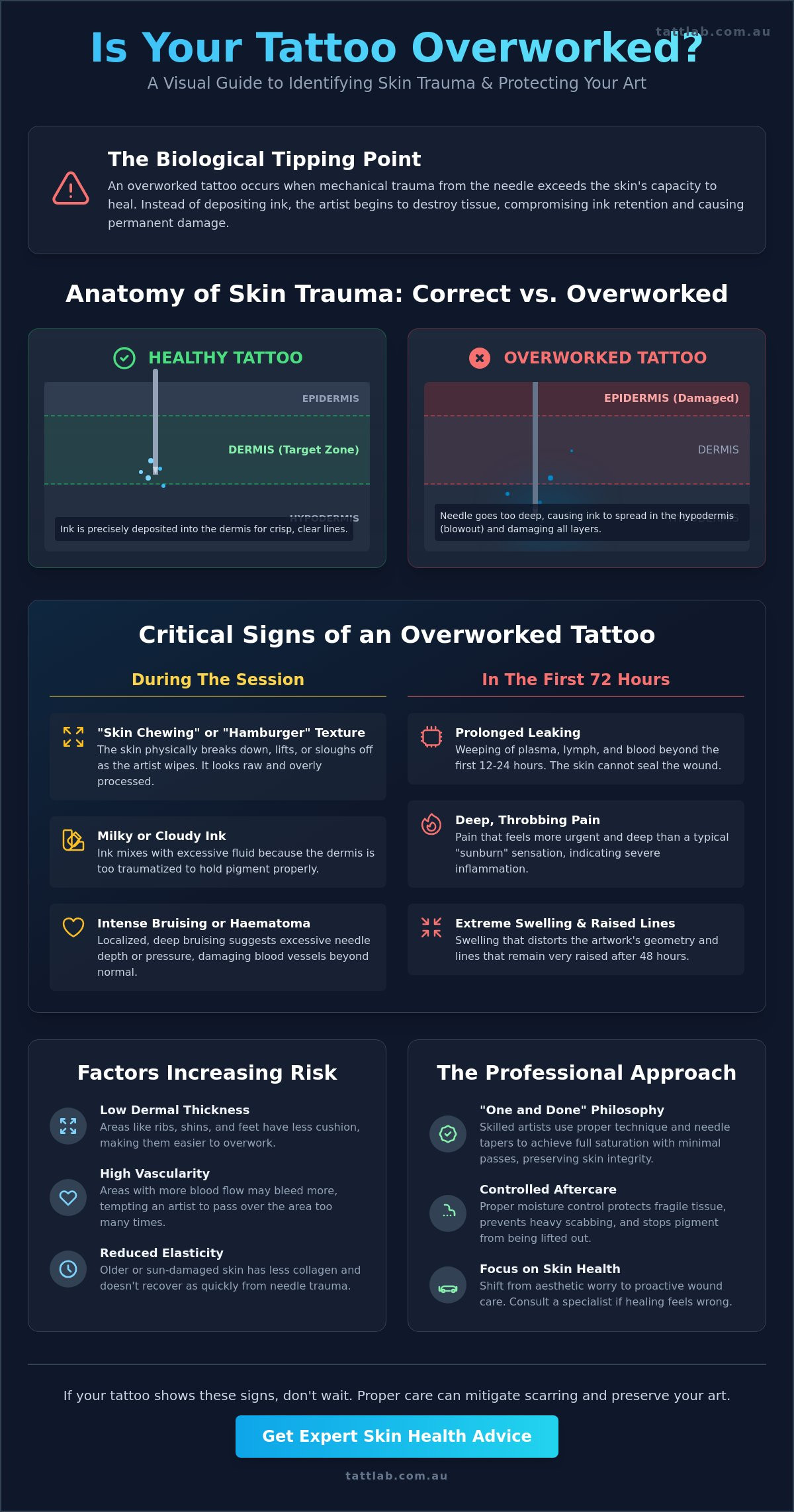
At Tatt Lab, we define an overworked tattoo as mechanical trauma that exceeds the dermis’s biological capacity to heal and retain pigment. While a successful tattoo relies on controlled micro-trauma to deposit ink, overworking occurs when excessive needle passes disrupt the skin cells' structural integrity beyond repair. There's a specific saturation point where the dermal layer can no longer hold ink particles, causing the tissue to break down rather than recover. When this threshold is crossed, the skin's natural regenerative process is replaced by a chaotic inflammatory response.
Healthy tattooing creates precise channels for pigment; however, overworked tissue often takes on a chewed or hamburger appearance. This happens when the basement membrane, the critical layer between the epidermis and dermis, is repeatedly compromised. When this barrier fails, the inherent health risks associated with tattooing, such as prolonged inflammation and permanent scarring, become much more likely. Recognizing the early signs of an overworked tattoo starts with understanding that skin isn't an infinite medium; it's a living barrier with a finite trauma threshold.
The Dermis vs. The Hypodermis: Where the Damage Happens
The goal of every professional artist is to deposit ink into the upper dermis. If the needle penetrates too deeply or strikes the same area excessively, it breaches the dermis and enters the hypodermis, a layer composed of fat and loose connective tissue. Because the hypodermis lacks the dense structure of the dermis, ink spreads uncontrollably. A blowout is a frequent byproduct of overworking where ink migrates horizontally through these deeper layers, resulting in a blurred, blue-tinged halo around the original design.
Why Skin Integrity is the Artist’s True Canvas
Skin thickness varies significantly across the body, meaning the trauma threshold isn't universal. A specialist must adjust their machine speed and hand pressure to respect these biological limits based on several factors:
- Dermal Thickness: Areas like the ribs or shins have less cushion, making them prone to faster overworking than the outer thigh.
- Vascularity: Highly vascular areas may bleed more, which can sometimes lead an artist to over-work the area simply to see their lines through the plasma.
- Elasticity: Older or sun-damaged skin has less structural collagen, reducing its ability to bounce back from the rapid needle strikes of a tattoo machine.
This meticulous approach is central to our Lab philosophy: we prioritize skin health to ensure the long-term clarity of the art. Choosing high-quality pigments, as detailed in our Professional Guide to Tattoo Ink, also plays a role, as a higher pigment load allows for better saturation with fewer needle passes. By respecting these limits, we ensure the journey from fresh ink to fully healed art remains predictable and safe.
Critical Signs of an Overworked Tattoo: What to Look For
Identifying the signs of an overworked tattoo requires a vigilant eye both during the procedure and throughout the initial healing phase. While some degree of inflammation is a standard part of the body's immune response, certain visual and physical markers indicate that the skin’s structural limits have been breached. Recognizing these red flags early allows for a faster transition from aesthetic care to clinical wound management, which is essential for preserving the clarity of your art.
Visual Markers During the Session
The first indicators often appear while you're still in the chair. A primary sign is "skin chewing," where the epidermis begins to slough off or lift away as the artist wipes the area. This isn't just excess ink; it's the physical destruction of the top layer of skin. You may also notice the ink appearing "milky" or cloudy. This happens when the dermis is so traumatized that it can no longer hold the pigment in suspension, causing it to mix with excessive interstitial fluid. While some redness is expected, localized, intense bruising or a haematoma suggests that the needle depth or pressure was excessive for that specific body part.
Post-Session Red Flags in the First 72 Hours
The first three days offer a critical window for assessment. While a light "weeping" of plasma is standard for the first 12 hours, prolonged leaking of lymph fluid and blood beyond the first night is a significant concern. This suggests the basement membrane is struggling to seal the wound. This stage is often characterized by intense, throbbing pain that feels significantly deeper and more urgent than the typical "sunburn" sensation of a healthy tattoo. If the swelling is so extreme that it distorts the geometry of the artwork, the skin is likely in a state of severe distress. During this time, adhering to tattoo safety standards regarding wound hygiene is paramount to prevent secondary complications. If your recovery feels unpredictable, consulting a skin health specialist can help lower your anxiety and provide a clear path forward.
As the tattoo moves into the mid-healing stage, keep a close watch on the texture of the lines. Lines that remain significantly raised and inflamed after the first 48 hours are likely overworked. You may also see the development of thick, "crusty" scabs that feel deeply rooted in the skin rather than sitting on the surface. These are not typical flakes; they are a sign of deep tissue trauma. Eventually, as these scabs fall away, the skin underneath may have a "shiny" or "plastic" appearance. This is fresh scar tissue, a sign that the body has prioritized closing a deep wound over regenerating perfect skin texture.
Overworked vs. Blowout vs. Infection: The Diagnosis Framework
When a healing tattoo doesn't look quite right, the immediate response is often a mixture of anxiety and confusion. Distinguishing between mechanical trauma, depth errors, and biological complications is essential for your recovery journey. While the signs of an overworked tattoo often overlap with other issues, each has a distinct biological signature that dictates how you should respond. Accurate diagnosis is the first step toward reclaiming your skin health and determining if your art requires clinical intervention or simply a change in aftercare.
An overworked tattoo is defined by structural damage; the skin has been physically compromised by excessive needle passes, leading to potential scarring or "pigment fallout" where the skin cannot hold the ink. In contrast, a blowout is a depth-related error where ink is deposited into the fatty hypodermis layer. While both affect the final aesthetic, an overworked tattoo involves a higher risk of secondary infection because the protective barrier is shredded rather than just pierced. Bacterial invasion, or infection, is a separate pathogenic event that requires immediate medical attention to prevent systemic spread.
How to Spot a Blowout
A blowout is often mistaken for overworking, but the cause is entirely different. You'll recognize a blowout by a distinctive "halo" effect or a blueish, blurry shadow radiating outward from a line. This occurs because the ink has migrated into the loose connective tissue of the hypodermis, where it spreads like a drop of dye on a wet paper towel. Unlike the textured, "chewed" appearance of overworked skin, a blowout can happen even if the skin surface looks perfectly smooth. These errors are typically permanent because the ink is trapped too deep for the body's lymphatic system to clear, often requiring laser fragmentation to resolve the blur.
Telling Infection Apart from Heavy Healing
Differentiating between the intense inflammation of an overworked tattoo and a bacterial infection is a matter of clinical observation. Use the following markers to assess your risk:
- The Heat Test: Place your hand near the tattoo without touching it. Overworked skin feels sore and tender, but infected skin radiates distinct heat that you can feel from a distance.
- Spreading Erythema: While redness is normal, "red streaks" or a spreading red cloud that moves away from the tattoo site is a sign of lymphangitis, indicating the infection is moving through your system.
- Discharge and Odour: Healthy tattoos may weep clear plasma. If you notice thick yellow or green pus, or if the area develops a foul odour, pathogens are present.
If you experience a fever, chills, or if the redness expands by more than 2 centimetres in a 24 hour period, you must seek a medical consultation immediately. At Tatt Lab, we view the skin as a sophisticated ecosystem; when that system is breached by overworking, it becomes a gateway for bacteria. Managing the trauma quickly is the best way to ensure your journey leads to clarity rather than complication.
Salvaging the Art: Aftercare for Overworked Skin
Once you recognize the signs of an overworked tattoo, your priority shifts from aesthetic preservation to intensive wound recovery. Standard aftercare protocols often fail when the skin's structural integrity is compromised. Instead of the traditional "dry healing" method, which can lead to thick, rigid scabs that physically pull pigment out of the dermis, we recommend a transition to "controlled moisture." This approach keeps the healing tissue pliable, reducing the risk of deep-seated scarring while the body attempts to repair the basement membrane. Maintaining a sterile environment is paramount, as the shredded epidermis acts as an open gateway for pathogens.
The risk of secondary infection is exponentially higher in traumatized tissue. Using high-quality medical supplies for tattoo artists, such as sterile saline washes or medical-grade antimicrobial cleansers, is non-negotiable. You must resist the urge to pick or peel the area. In overworked skin, scabs are often rooted deeper than usual; removing them prematurely can trigger the formation of hypertrophic or keloid scars. Long-term management involves the use of vitamin-rich, fragrance-free balms that support cellular regeneration and soften the developing scar tissue, ensuring the skin remains as elastic as possible during the remodeling phase.
The Rescue Protocol: Days 1-7
During the first week, focus on gentle stabilization. Cleanse the area twice daily with a fragrance-free, antimicrobial soap, using only your fingertips and lukewarm water. Avoid high-pressure streams which can further damage fragile tissue. Apply a very thin, breathable layer of professional tattoo aftercare products to provide a barrier without suffocating the skin. While adhesive "second skin" bandages are popular, they should be avoided on heavily overworked tissue that is weeping excessively. The adhesive can bond too tightly to the compromised epidermis, causing further trauma when the bandage is eventually removed.
Long-Term Skin Rehabilitation
True dermal recovery is a slow process that extends far beyond the surface healing. You must adhere to the 6-month rule: do not attempt to touch up or "fix" an overworked tattoo until the deep layers have fully matured. Attempting to re-tattoo traumatized skin too early will only lead to further rejection and permanent disfigurement. During this time, strict sun protection is essential. Traumatized tissue is highly susceptible to post-inflammatory hyperpigmentation, where UV exposure causes the scarred area to darken unevenly. If the overworking led to significant blowouts or blurred lines, consider a professional skin health consultation to discuss laser fragmentation options for clearing migrated ink once the skin has stabilized.
The Artist’s Lab: Preventing Overworking with Professional Gear
Prevention in the Lab is a matter of mechanical precision and biological respect. While clients must monitor the signs of an overworked tattoo, the responsibility for maintaining skin integrity begins with the artist's technical configuration. Avoiding trauma isn't just about "being careful"; it's about optimizing the relationship between machine speed, needle geometry, and skin resistance. When these variables are aligned, saturation is achieved without compromising the dermal structure, ensuring the art heals with the clarity intended.
One of the most critical technical choices is needle taper. Long tapers decrease the surface area of the needle's initial contact point, allowing it to glide into the dermis with significantly less resistance than a short taper. This reduction in friction is vital for preventing the "chewed" texture associated with overworking. Adopting a "one and done" philosophy is the most effective way to maintain skin health. By using a high-load tattoo ink, an artist can achieve deep, solid saturation in a single pass, eliminating the need for repetitive strikes that inevitably lead to tissue exhaustion and scarring.
Needle Selection and Skin Trauma
The choice of grouping also dictates the trauma threshold. Tight liners, while excellent for precision, can easily "slice" the epidermis if the hand speed isn't perfectly synchronized with the machine's voltage. This is why we prioritize the use of high-quality cartridges equipped with internal membranes. These membranes ensure a consistent needle depth and prevent the lateral "chatter" that causes unnecessary micro-tearing. Investing in premium tattoo supplies provides the mechanical stability required to keep every strike purposeful and clean.
The Importance of a Three-Point Stretch
Proper skin tension is the unsung hero of skin integrity. Without a firm, three-point stretch, the skin remains elastic and "bouncy," causing the needle to snag or skip across the surface. This lack of tension often leads an artist to increase their pressure or machine voltage to compensate, which is a direct path to overworking. Techniques for stretching vary by anatomy; delicate areas like the inner bicep or the "ditch" of the elbow require a more nuanced touch to avoid bruising. Maintaining an ergonomic workstation allows the artist to apply steady, controlled hand pressure throughout the entire session. This clinical approach to the "canvas" ensures that the journey from the first line to the final heal is a predictable, successful evolution of the skin.
Protecting the Integrity of Your Skin
Navigating the recovery of a compromised tattoo requires a shift from aesthetic concern to clinical precision. By identifying the biological signs of an overworked tattoo early, you can transition from uncertainty to a controlled plan for skin rehabilitation. Whether you're managing deep tissue trauma or refining your professional technique, the focus must remain on respecting the structural limits of the dermis to ensure long-term clarity. Adhering to the 6-month rule for deep tissue maturation is essential before considering any corrective work or laser intervention.
True skin health is a collaborative effort between technical precision and meticulous aftercare. Tatt Lab is an artist-owned and operated specialist center dedicated to this standard, providing clinical-grade medical supplies designed for the modern studio. We offer express nationwide shipping across Australia to ensure you have the tools needed for a predictable healing journey. Take the next step in reclaiming your skin’s health and preserving your art. Explore Professional Tattoo Aftercare & Supplies at Tatt Lab. Your skin is a living canvas; treat it with the meticulous care it deserves.
Frequently Asked Questions
Is an overworked tattoo permanent?
Yes, the structural damage and subsequent scarring caused by overworking are permanent, though their appearance can change over time. While the ink itself might fade or "fall out" because the skin is too damaged to hold it, the resulting hypertrophic scar tissue alters the skin texture forever. These changes usually require specialized dermatological treatments or laser resurfacing to improve the surface smoothness once the initial wound has fully closed.
Can you fix an overworked tattoo with a touch-up?
You can only attempt a touch-up after the skin has reached full biological maturity, which typically takes 6 months. Attempting to re-tattoo compromised tissue during the early stages of healing will trigger further scarring and lead to poor ink retention. You must wait for the 180 day remodeling phase of wound healing to conclude before a specialist can safely introduce new pigment to the site.
How do I know if my tattoo is overworked or just healing?
The primary signs of an overworked tattoo include deep, "crusty" scabbing and intense, throbbing pain that lasts beyond the first 48 hours. While normal healing involves light flaking and a mild sensation similar to a sunburn, overworked skin feels like a significant dermal wound. If the lines remain raised and inflamed after the first 3 days, or if the skin has a "shiny" texture, the area has likely been over-traumatised.
What does "chewed skin" look like on a tattoo?
Chewed skin appears as raw, ragged tissue where the epidermis has visibly sloughed off during the tattoo session. It often resembles "hamburger meat" and is accompanied by excessive weeping of blood and interstitial fluid. This visual marker indicates that the mechanical action of the needle has decimated the basement membrane, leaving the deeper dermal layers exposed and highly vulnerable to secondary infection and pigment loss.
Will an overworked tattoo ever flatten out?
Some minor inflammation will subside, but true hypertrophic scarring from overworking rarely flattens completely without intervention. The body replaces the damaged collagen with dense, disorganized fibers that sit above the natural skin line. Clinical treatments such as silicone gel sheets or laser therapy are often required to improve the texture of these raised lines after the initial 180 day healing window has passed.
Does numbing cream make skin easier to overwork?
Yes, numbing cream can inadvertently lead to overworking because it alters the skin's natural turgor and removes the client's vital pain feedback. High concentrations of epinephrine in some products can cause the skin to become temporarily "rubbery" or tough. This change in texture often leads an artist to increase their machine voltage or hand pressure to achieve saturation, which causes excessive trauma to the dermal layers.
How long should I wait before laser removal on an overworked tattoo?
You should wait a minimum of 8 to 12 weeks before beginning laser removal on a traumatised tattoo. The skin needs sufficient time to close the initial wound and stabilize its inflammatory response. Waiting for this 90 day window allows the lymphatic system to clear the initial cellular debris, which makes the laser fragmentation process much more efficient and reduces the risk of further scarring during removal.
Can I use Bepanthen on an overworked tattoo?
We generally advise against using thick, petroleum-based ointments like Bepanthen on overworked skin. These heavy creams can suffocate the wound and trap heat, which may lead to maceration of the fragile tissue and increased bacterial risk. Instead, use a breathable, clinical-grade aftercare product that supports a controlled moisture environment. This helps the skin heal without clogging pores or causing the scabs to become dangerously soft and prone to tearing.


Comments (0)
There are no comments for this article. Be the first one to leave a message!