

What if the difference between a lifetime of vibrant art and a permanent, raised blemish comes down to a single decision made in the first 72 hours? You have likely invested significant time and hundreds of A$ into your new piece, so the anxiety of seeing a thick scab or feeling a persistent, tight itch is understandable. It's stressful to wonder if your body is healing correctly or if you're witnessing the start of permanent tissue damage. Learning how to prevent tattoo scarring is just as vital as the artist's initial needlework.
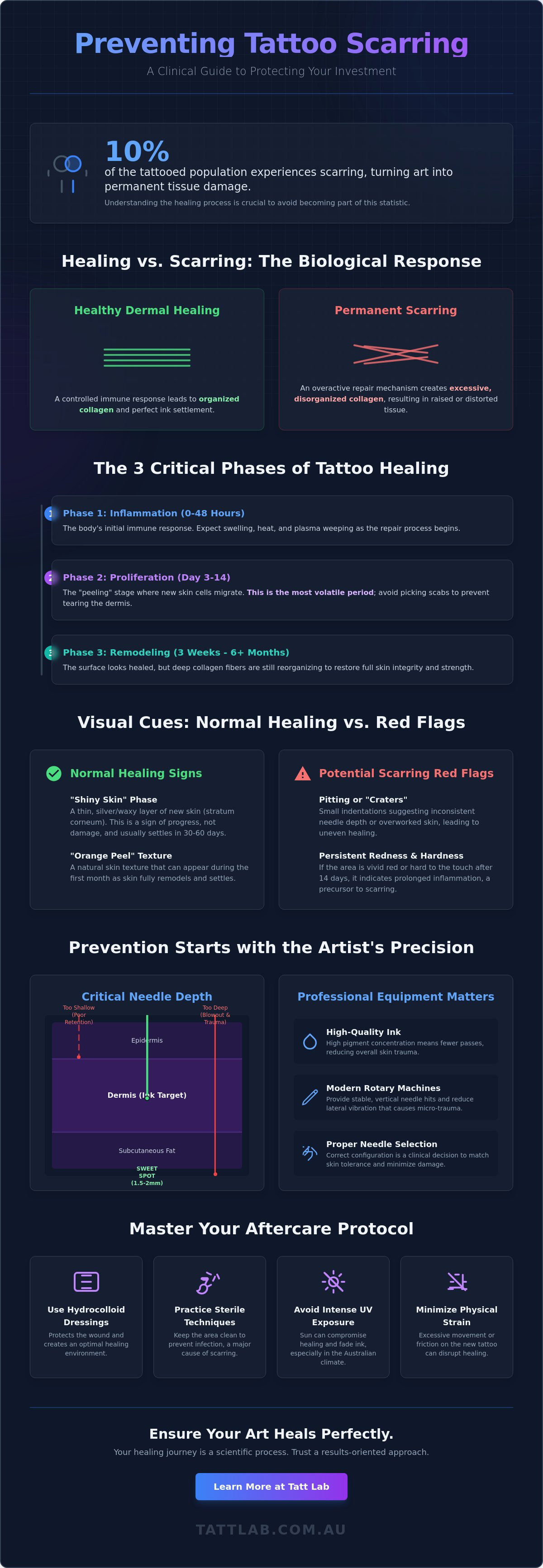
This guide provides a clinical protocol to ensure your ink settles into the dermis without the distortion or keloid development that clinical studies suggest affects roughly 10% of the tattooed population. We'll examine the biological stages of wound repair, identify the critical red flags of hypertrophic scarring, and select the medical-grade products that truly support long-term skin health. You'll gain the clarity needed to manage the peeling phase with confidence, moving beyond the hype of basic lotions toward a sophisticated understanding of skin integrity. From the Lab's perspective, your healing journey is a scientific process that deserves a precise, results-oriented approach.
Key Takeaways
- Understand the biological threshold between healthy dermal healing and the excessive collagen production that results in permanent tissue distortion.
- Discover the clinical steps on how to prevent tattoo scarring by balancing needle depth precision with high-quality ink to minimize unnecessary skin trauma.
- Master a professional aftercare protocol using hydrocolloid dressings and sterile techniques to protect the skin’s integrity during its most vulnerable phase.
- Identify the environmental risks unique to the Australian climate, specifically how intense UV exposure and physical strain can compromise a fresh wound.
- Learn to distinguish when to seek a professional touch-up and how the use of medical-grade supplies ensures a safe, predictable journey toward optimal skin health.
What is Tattoo Scarring? Differentiating Normal Healing from Permanent Damage
Understanding the biological response to ink is the first step in learning how to prevent tattoo scarring. A tattoo is a controlled dermal trauma. During the tattooing process, needles puncture the epidermis to deposit pigment into the dermis, approximately 1.5 to 2 millimetres below the surface. This action triggers an immediate immune response. Scarring happens when the body's repair mechanism becomes overactive. Instead of replacing damaged cells with organized tissue, the body produces excessive, disorganized collagen. This results in a texture that differs from the surrounding skin, potentially blurring the fine lines of your investment.
At Tatt Lab, we view skin health as the foundation of any successful aesthetic journey. While some redness is expected, true scarring is a permanent alteration of the skin's architecture. Certain skin types, particularly those with higher melanin levels or a genetic predisposition, are more susceptible to keloid or hypertrophic scarring. These conditions involve the body over-correcting the wound, leading to raised or thickened tissue that extends beyond the original site. Distinguishing between a standard recovery and the onset of a scar requires a clinical eye and a bit of patience.
The Three Phases of Tattoo Wound Healing
- Phase 1: Inflammation (0-48 hours). Your body treats the ink as a foreign invader. You'll experience swelling, heat, and plasma weeping. This isn't a sign of failure; it's the Lab-level precision of your immune system starting the repair.
- Phase 2: Proliferation (Day 3 to 14). This is the "peeling" stage. New skin cells migrate across the wound. It's the most volatile period for how to prevent tattoo scarring, as premature removal of scabs can tear the underlying dermis.
- Phase 3: Remodeling (3 weeks to 6 months). While the surface looks healed, the deeper structures are still evolving. This is when the collagen fibers reorganize to restore skin integrity.
Visual Red Flags: Is it a Scar or Just Healing?
Pitting is one of the most common concerns. If you notice small indentations or "craters" in the ink, it suggests the needle depth was inconsistent or the skin was overworked. This differs from the natural "orange peel" texture that sometimes appears during the first month. Many clients also worry about the "Shiny Skin" phase. This silver, waxy appearance is actually a thin layer of new skin called the stratum corneum. It's a sign of progress, not damage, and usually settles within 30 to 60 days.
Persistent redness is a more serious indicator. If the area remains vivid red or feels hard to the touch after 14 days, the inflammation hasn't subsided. This prolonged state of irritation is often the precursor to hypertrophic tissue. Monitoring these shifts is vital for maintaining the clarity of your tattoo and the health of your skin. We prioritise a transparent, results-oriented approach to help you navigate these nuances with confidence.
The Artist's Precision: How Technique and Equipment Prevent Trauma
The foundation of skin health begins before the first drop of ink reaches the dermis. While aftercare is a vital stage of the journey, understanding how to prevent tattoo scarring requires a look at the technical execution within the studio. Precision isn't just about the final aesthetic; it's about biological safety and the preservation of tissue integrity. A skilled artist acts as a technician, managing the delicate balance between pigment saturation and skin trauma.
Needle depth is the most critical factor in this equation. A professional artist targets the papillary dermis, which typically sits between 1.5 and 2 millimetres below the surface. If the needle penetrates too deeply into the subcutaneous fat, it causes "blowouts" and significant tissue trauma. Conversely, staying too shallow leads to poor pigment retention and unnecessary surface irritation. Finding this sweet spot ensures the skin can regenerate without forming dense, fibrotic scar tissue.
Equipment quality plays a parallel role in safety. High-quality tattoo ink with a high pigment concentration allows for saturated colour in fewer passes. Each time a needle enters the skin, it creates a controlled wound; limiting these passes is a primary strategy for those wondering how to prevent tattoo scarring during large or complex pieces. Modern rotary machines and professional-grade cartridges further support this by:
- Providing internal membranes that ensure a stable, vertical needle hit.
- Reducing lateral vibration that causes jagged micro-trauma.
- Allowing for precise voltage control to match the artist's hand speed.
Needle Selection and Skin Integrity
Choosing the correct needle configuration is a clinical decision based on the client's skin tolerance. Round liners provide sharp detail but can be aggressive if the artist lacks control. Shaders distribute force over a larger surface area, which is generally gentler on the tissue. Many specialists prefer long taper needles for gradients because they enter the skin with less resistance, reducing mechanical stress. Using blunt or low-quality needles is a frequent cause of micro-tears, which significantly increases the risk of hypertrophic scarring during the healing phase.
Minimising Trauma During the Session
Skin tensioning is a learned skill that involves stretching the area to create a firm, flat surface. This prevents the needle from bouncing or snagging on the skin's natural elasticity. Artists must also recognise the "point of no return" where the tissue becomes too saturated or inflamed to continue safely. Over-working an area leads to excessive weeping and heavy scabbing, which often results in pigment loss and scarring. Following Cleveland Clinic's aftercare instructions is essential once the session ends, but the initial application of medical-grade lubricants during the process reduces friction and heat buildup. This proactive approach preserves the skin's barrier throughout the transformation. If you're concerned about how your existing ink is sitting or the texture of your skin, our team at Tatt Lab can assess your skin integrity during a professional consultation.
The Clinical Aftercare Protocol: 5 Steps to Prevent Scarring
Effective aftercare is a precise biological requirement, not a suggestion. To understand how to prevent tattoo scarring, you must treat your new ink as a controlled medical wound that requires a sterile, stable environment to regenerate. The first 72 hours are the most critical for maintaining skin integrity. Following a structured protocol ensures the dermis heals without the excessive collagen production that leads to raised scars.
- Immediate Protection: Use medical-grade breathable films to seal the area. These films mimic the skin's natural barrier function while blocking external pathogens.
- The Wash and Dry Rule: Cleanse the area twice daily using lukewarm water and a fragrance-free, pH-balanced liquid soap. Pat the skin dry with a clean, single-use paper towel rather than a fabric towel to avoid bacterial transfer.
- Product Precision: Select tattoo aftercare products based on your specific skin physiology. Oily skin types require lighter, water-based lotions, while drier skin benefits from lipid-rich ointments.
- Application Volume: Apply a sheer, translucent layer of moisture. If the tattoo looks shiny or greasy, you've applied too much. Over-application suffocates the skin and can lead to "tattoo bubbling."
- Infection Vigilance: Infection is the primary catalyst for post-session scarring. Monitor for spreading redness, localized heat, or yellow discharge. If these symptoms persist beyond day four, consult a professional immediately.
The Barrier Method: Second Skin vs. Traditional Wrapping
Modern clinical aftercare often utilizes semi-occlusive polyurethane films, commonly known as second skin. These transparent dressings create a moist wound-healing environment that accelerates re-epithelialization. Unlike traditional plastic wrap, these films are breathable, allowing oxygen to reach the wound while trapping the body's natural healing enzymes. You should typically remove the initial wrap after 24 hours. If a significant "ink sac" or plasma buildup occurs, it can cause irritation. Remove the film under warm running water, pulling it gently away from the skin rather than upward, to protect the settling pigment.
Hydration Science: Preventing the Scab
The goal of hydration is to achieve a "thin peel" rather than a "hard scab." Hard scabbing acts as a physical wedge in the tissue; as it pulls away, it can take ink with it and create micro-tears that result in permanent texture changes. Following a professional day-by-day tattoo aftercare routine helps you transition between products at the right time. During the first three days, a light breathable balm protects the site. By day four, as the skin begins to tighten, switching to a fragrance-free lotion prevents the area from becoming brittle. This controlled hydration is the most effective way to manage how to prevent tattoo scarring while maintaining the clarity of the artwork.
Beyond the Studio: Managing Environmental Risks and Lifestyle Factors
The Australian climate presents a unique challenge for skin recovery. In cities like Melbourne or Sydney, the Bureau of Meteorology frequently records UV indices exceeding 11 during summer months. This intense radiation acts as a primary catalyst for tissue damage during the initial inflammatory phase. Understanding how to prevent tattoo scarring involves rigorous control over external variables for at least 14 to 21 days post-procedure. Beyond the sun, physical movement remains a critical factor. Intense exercise within the first 72 hours introduces sweat, which is a cocktail of salts and bacteria, into the healing dermal layer. This can lead to localized infections or textural irregularities that compromise the final aesthetic. For those in the combat sports community, waiting until the skin is stable before using equipment like boxing gloves australia from The Fight Club is essential to prevent friction and ensure the longevity of your art.
Submersion in bodies of water like the ocean or local swimming pools introduces pathogens that can easily penetrate the compromised skin barrier. Professional standards recommend avoiding all pools, saunas, and salt water for a minimum of 14 days. This window allows the basement membrane to reform and the initial epithelialization process to complete, protecting the ink and the underlying tissue from environmental contaminants.
Beyond water safety, consider the mechanical stress of your favorite sports. For enthusiasts of tennis or badminton, using high-performance equipment from Sturdy Racquets involves repetitive arm movements that can pull at healing tissue. Ensuring the proliferation phase is complete before returning to the court is a vital step in maintaining the integrity of your new ink.
UV Protection and Long-term Pigment Stability
Applying sunscreen to a fresh tattoo is a common mistake that can lead to complications. Sunscreen formulas are designed for intact skin; applying these chemicals to an open wound can trigger contact dermatitis or delayed healing. During the first two weeks, you must rely on physical barriers. Loose, breathable fabrics like linen or high-thread-count cotton provide the necessary shield without suffocating the wound. When UV rays penetrate healing skin, they cause the body to perceive the ink particles as foreign threats more aggressively. This triggers the lymphatic system to attempt pigment removal, which results in premature fading and can lead to a "raised" scar texture as the body overproduces collagen to repair the sun-damaged area.
Managing the Itch: Safe Relief Strategies
Itching is a biological signal of cell regeneration and histamine release. While it feels like a nuisance, it indicates your skin is successfully navigating the repair cycle. Learning how to prevent tattoo scarring means resisting the urge to pick or scratch at this stage. Scratching can pull the ink out of the dermis and create permanent pits or hypertrophic scars. For immediate relief, use the "slap method" where you gently pat the area with a clean hand. Alternatively, apply a cold, dry compress for 5 to 10 minutes. This constricts the blood vessels and dampens the inflammatory response without introducing excess moisture that could macerate the delicate new tissue.
Advanced Recovery: Professional Solutions for Optimal Skin Integrity
The journey toward a perfect heal doesn't end when the scabbing stops. True skin integrity is a long-term commitment that requires a balance between biological patience and professional intervention. Understanding how to prevent tattoo scarring means recognizing that the skin remains in a state of flux for months after the initial trauma. While most focus on the first 14 days, the structural remodeling of the dermis continues well beyond the surface level.
Professional safety standards play a foundational role in this outcome. The use of high-quality medical supplies for tattoo artists ensures that the initial environment is sterile, reducing the risk of inflammatory responses that lead to keloids or hypertrophic tissue. At Tatt Lab, we view the tattoo as a living piece of art that requires clinical-grade precision from the first needle strike to the final settled pigment.
Identifying and Treating Early Infection
Distinguishing between normal healing and a clinical infection is vital for preserving your ink. If you notice localized heat, significant swelling, or a thick yellow discharge, these are hallmark signs of a staph infection rather than standard inflammation. You shouldn't attempt to treat these symptoms with extra aftercare cream; doing so creates an anaerobic environment where bacteria thrive. If symptoms persist for more than 24 hours, contact your artist for a visual assessment. However, you should see a GP immediately if you develop a fever or red streaks extending from the site.
Correcting Minor Scarring and Distortion
If you experience textural changes once the skin has closed, don't rush into a touch-up. The skin's collagen matrix needs time to stabilize. We recommend waiting at least 3 to 6 months before considering corrective work. During this window, medical-grade silicone gels can help flatten raised tissue by regulating hydration and oxygen tension at the scar site. Establishing a long-term relationship with your artist ensures they understand your skin's unique healing profile, allowing for precise adjustments that respect the underlying tissue.
Tatt Lab supports your evolution from raw ink to a healed masterpiece by prioritizing skin health at every stage. We focus on the science of the skin, providing the clarity you need to maintain your body art for decades. This methodical approach replaces the anxiety of the healing process with a sense of controlled, predictable progress. Whether you're focused on initial recovery or long-term maintenance, our commitment to skin integrity ensures your tattoos remain as clear and vibrant as the day they were finished.
Prioritising Skin Health for Lasting Artistry
Mastering how to prevent tattoo scarring involves more than just luck; it's a commitment to clinical precision and disciplined aftercare. The 5-step clinical protocol highlights that skin integrity relies on protecting the dermal layer from environmental trauma while supporting the body's natural healing rhythm. By selecting high-performance equipment and maintaining a controlled recovery environment, you ensure your ink transitions into a lifelong asset rather than a source of textural concern. Tatt Lab functions as your specialist partner throughout this evolution, bridging the gap between artistic expression and medical-grade safety. Our 2026 collection features an artist-vetted selection designed to meet the highest clinical-grade safety standards in the industry. We understand that the journey to perfect skin health is personal, which is why our solutions focus on long-term clarity and tissue regeneration. Every product in our lab is chosen for its ability to facilitate a predictable, healthy recovery for all Australian skin types. Secure your skin health with professional-grade aftercare at Tatt Lab and enjoy express nationwide shipping across Australia. You've invested in the art; now invest in the science that keeps it vibrant.
Frequently Asked Questions
How do I know if my tattoo is scarring or just scabbing?
Scabs are temporary crusts that naturally detach within 7 to 14 days, while scars involve permanent changes to the skin's texture or pigment. If you notice thick, yellowish crusts, your skin is simply in the initial healing phase. If the area remains raised, shiny, or discolored after the 28 day skin regeneration cycle, you're likely looking at scar tissue rather than a standard scab.
Can I use Bepanthen to prevent tattoo scarring?
You can use Bepanthen Antiseptic Cream, but many modern Australian artists now recommend specialized hydrogel dressings or fragrance-free clinical ointments instead. Bepanthen contains lanolin, which causes adverse reactions in approximately 1.2 percent of the population. Over-applying any heavy ointment can suffocate the pores, so stick to a thin layer to maintain the skin's essential oxygen flow during recovery.
What should I do if I accidentally picked a scab on my tattoo?
Clean the area immediately with a pH-balanced, fragrance-free cleanser and apply a very thin layer of breathable antiseptic ointment. Picking a scab prematurely can pull ink from the dermis and create a fresh micro-wound. This mistake typically extends your healing timeline by 5 to 10 days and increases the risk of visible textural irregularities once the skin finally settles.
Does tattoo numbing cream increase the risk of scarring?
Numbing creams don't cause scarring directly, but they can alter the skin's local inflammatory response during the procedure. Products containing epinephrine cause vasoconstriction, which might lead to rebound swelling once the effect wears off. Understanding how to prevent tattoo scarring involves recognizing that numbing agents can sometimes mask the skin's distress signals, potentially leading an artist to overwork the delicate tissue.
How long does it take for a tattoo scar to fade?
A tattoo scar generally requires 12 to 18 months to fully mature and lose its initial redness. While the most visible inflammation might subside after 90 days, the internal collagen remodeling process continues for over a year. Clinical interventions like fractional laser therapy can often improve the appearance of mature scars by 50 to 70 percent once the tissue has completely stabilized.
Can an artist fix a tattoo that has already scarred?
An experienced artist can often camouflage existing scars with strategic pigment placement, but they cannot physically smooth out the underlying tissue. If a scar is hypertrophic or raised, you must wait at least 12 months before attempting a cover-up. Tattooing over compromised skin requires specialized technical precision, as the dense scar tissue absorbs ink differently than healthy, undisturbed skin layers.
Is it normal for my tattoo to feel raised even after it's healed?
It's common for tattoos to feel slightly elevated during periods of high humidity or heat due to natural histamine reactions. However, if the lines remain permanently raised 6 months after your appointment, it indicates mild scarring from the needle penetrating too deeply. This textural change affects roughly 1 in 15 clients and is often a result of the skin's unique fibrotic response.
What is the best way to clean a new tattoo to avoid infection?
Wash your tattoo 2 to 3 times daily using lukewarm water and a fragrance-free, antimicrobial cleanser like Cetaphil. Use your clean fingertips only; never use a washcloth or sponge which can harbor bacteria. Pat the area dry with a single-use paper towel to reduce bacterial transfer by 99 percent compared to using a standard bathroom towel, ensuring the skin integrity remains intact.


Comments (0)
There are no comments for this article. Be the first one to leave a message!