

Scratching a healing tattoo isn't just a lapse in willpower; it's a direct threat to the A$550 investment currently sitting under your dermis. You've likely spent hours in the chair and weeks planning your piece, only to be met with a maddening, prickling sensation that keeps you awake at 2:00 AM. It's an exhausting phase where the fear of scabbing or permanent ink loss feels very real, leaving many Australians caught between physical discomfort and the anxiety of ruining their art.
At Tatt Lab, we treat skin integrity as a science. Mastering how to stop tattoo itching requires moving beyond basic lotions toward professional-grade protocols that soothe the nervous system while protecting the lymphatic system's delicate healing process. We're here to replace that uncertainty with clinical clarity, ensuring your ink remains as crisp as the day it was needle-set. Our approach prioritizes long-term results over quick fixes, focusing on the biological needs of your skin during its most vulnerable state.
This specialist guide explores the biological triggers of the "itch phase," provides three clinical methods for immediate relief, and outlines the specific warning signs that indicate your healing journey requires a professional consultation.
Key Takeaways
- Understand the biological timeline of the dermal healing response and why the peak itching phase typically occurs between days 4 and 10.
- Discover the clinical efficacy of professional cold compresses versus traditional DIY methods to protect your ink during the nerve regeneration process.
- Master the Tatt Lab Protocol to learn how to stop tattoo itching while managing the specific risks of sweat and UV exposure in the Australian climate.
- Learn to differentiate between standard histamine reactions and critical red flags that signal a localized infection or ink allergy.
- Identify why specialized tattoo balms are superior to supermarket brands for maintaining skin integrity and long-term pigment clarity.
The Biological Reality of the Tattoo Itch: Why It Happens
The sensation of an itching tattoo is a sophisticated biological signal. It's not a sign of failure; it's a marker of dermal reconstruction. When a needle punctures your skin between 50 and 3,000 times per minute, it creates a controlled wound that triggers an immediate immune response. Understanding how to stop tattoo itching begins with acknowledging that your body is currently engaged in a complex repair mission. This process involves the migration of white blood cells to the site and the eventual regeneration of the skin barrier.
This "itchy phase" typically peaks between days 4 and 10 of the healing journey. During this window, the body is busy managing two distinct processes. First, there is epidermal shedding, where the topmost layer of skin peels away, much like a mild sunburn. Second, there is deeper dermal repair, where the ink particles are being locked into the dermis. While this is a sign of progress, it's also a period of vulnerability. Scientific research into the health effects of tattoos highlights that while itching is standard, the skin's integrity must be protected to prevent secondary infections or allergic reactions. The primary rule of the lab is simple: itching is a sign of healing, but scratching is a direct threat to the longevity of your ink.
The Three Stages of Post-Ink Sensation
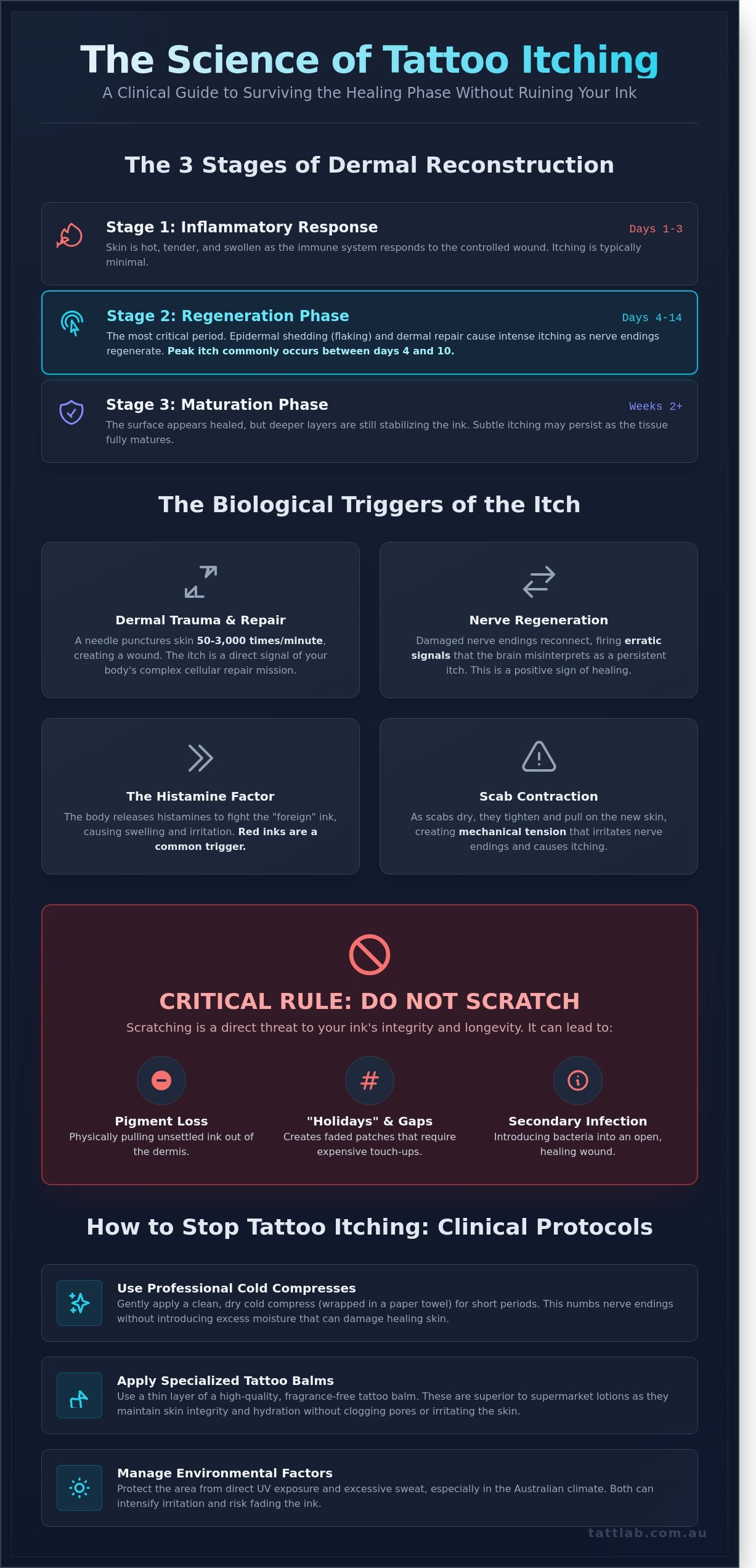
Stage 1 is the inflammatory response, occurring during days 1 to 3. Your skin feels hot, tender, and slightly swollen as the body rushes fluid to the area. Stage 2 is the regeneration phase, typically spanning days 4 to 14. This is when the intense itch arrives as the skin begins to flake and new cells bridge the gaps. Stage 3 is the maturation phase. While the surface looks healed, subtle itching may persist for several weeks as the deeper layers fully seal and the ink stabilizes within the tissue.
Why Scabbing Amplifies the Urge to Scratch
Scabs function as a biological bandage, providing a protective seal over the healing dermis while new cells organize underneath. As these scabs lose moisture, they contract and tighten. This creates significant mechanical tension on the surrounding skin. This tension irritates the delicate nerve endings, which the brain interprets as a persistent itch. It's a natural reaction, but one that requires disciplined restraint to manage effectively.
If you succumb to the urge to scratch or pick at a scab, you risk more than just irritation. You can physically pull the pigment out of the dermis before it has settled. This leads to "holidays," which are visible gaps or faded patches in your tattoo that require expensive touch-ups. At Tatt Lab, we view skin health as the foundation of aesthetic clarity. Learning how to stop tattoo itching through proper hydration and clinical aftercare is the only way to ensure your transformation remains sharp and saturated. Protecting the skin during these critical 14 days determines the final quality of the work for years to come.
After all, a tattoo is a statement of personal expression, and protecting it means protecting that statement. Once it's healed, you can further express that attitude with your style; for some ideas, you can check out Sasshole Clothing.
The Science of Sensation: Histamines and Nerve Regeneration
Your skin isn't just a canvas; it's a sophisticated living organ that has just sustained a precise form of trauma. During a standard session, a tattoo needle pierces your skin between 50 and 3,000 times per minute, depositing pigment into the dermis at a depth of roughly 1.5 to 2 millimetres. This process triggers an immediate inflammatory response. Your immune system views the ink as a foreign invader, prompting your lymphatic system to go into overdrive. Macrophages, which are specialized white blood cells, rush to the site to "eat" the ink particles. Because most pigment particles are too large for these cells to consume, they remain trapped in the dermis, but the internal struggle creates a constant state of low-level irritation. Understanding these biological triggers is the first step in learning how to stop tattoo itching effectively.
As the initial inflammatory phase subsides, your body begins nerve regeneration. The needle inevitably damages tiny peripheral nerve endings located in the dermal layer. As these nerves begin to repair and reconnect, they often fire erratic signals to the brain. In the world of neurology, these signals are frequently misinterpreted. Instead of feeling the sharp sting of the needle, your brain registers a persistent, crawling itch. This is a sign of progress, indicating that your cellular structure is successfully knitting back together. However, when the skin becomes dehydrated, this sensation intensifies. Dry skin lacks the elasticity required to accommodate the swelling and movement of healing tissue. This creates mechanical tension that pulls on those sensitive, regenerating nerves. We often say at the Lab that dry skin is "loud" skin; it screams for attention through an itch that feels impossible to ignore.
The Histamine Factor
The body releases histamines as a primary defense mechanism when it perceives tattoo ink as a foreign biological threat. This chemical release increases blood flow and capillary permeability, which results in the localized heat and swelling typical of a fresh tattoo. While all pigments can cause this, red inks are statistically more likely to trigger a significant response. Research suggests that approximately 40% of all tattoo-related skin reactions involve red pigments, often due to the presence of cinnabar or iron oxide. These reactions can mimic a mild allergic state, making the area feel hot and restless. Following FDA tattoo safety guidelines regarding ink quality can mitigate some risks, but your body's unique chemistry always dictates the final histamine output.
Dermal Integrity and Fluid Balance
The transition from the "weeping" phase to the dry phase is a critical window for skin health. During the first 24 to 48 hours, your tattoo may exude plasma and excess ink. Once this stops, the skin begins to form a protective layer. It's vital to maintain a breathable barrier during this time rather than a suffocating one. Many people make the mistake of over-moisturising, applying thick layers of petroleum-based products that trap bacteria and heat. This can lead to maceration, where the skin becomes soggy and the healing process stalls. While your primary goal is finding how to stop tattoo itching, you must respect the skin's need for oxygen. At Tatt Lab, we prioritize skin health by advocating for a minimalist approach that supports the body's natural recovery rhythm rather than forcing it with heavy topicals.
Immediate Relief: Professional vs. DIY Methods
The urge to scratch a healing tattoo can feel overwhelming, often peaking between day three and day seven of the recovery journey. When you are looking for how to stop tattoo itching, it is vital to distinguish between temporary distractions and clinical solutions that support skin integrity. The traditional "slap" method, a staple of old-school shop culture, works by overstimulating the nerves to mask the itch sensation. While it avoids the trauma of fingernails, it remains a blunt instrument. At Tatt Lab, we advocate for more precise interventions that calm the inflammatory response without risking the fragmentation of your new ink.
A more sophisticated alternative to the slap is the "proximity rub" technique. By gently massaging the skin 2 to 3 centimetres away from the tattooed area, you stimulate the surrounding nerves. This provides a neurological distraction that satisfies the brain's itch signal without making direct contact with the healing dermis. Complementing this with loose, breathable clothing is essential. Synthetic fabrics like polyester can trap heat and increase friction, leading to a 25% increase in mechanical irritation. Stick to high-quality cotton or linen to allow the skin to respire and maintain a stable temperature.
The Cold Compress Protocol
Lowering the skin temperature is one of the most effective ways to provide immediate relief. A 10 minute application of a cold compress causes vasoconstriction, which reduces the flow of histamines to the area and numbs hyperactive nerve endings. This method is a cornerstone of our post-treatment care because it addresses the biological root of the discomfort.
To execute this safely, never place ice or a gel pack directly onto the ink. Wrap the compress in a clean, single-use paper towel to create a sterile barrier. This prevents moisture from "soaking" the tattoo, which can soften scabs and lead to pigment loss. Apply the compress for 10 to 15 minutes, then allow the skin to return to room temperature naturally. This controlled approach maintains the delicate balance of the skin's moisture barrier while providing a necessary reprieve from the itch.
Choosing the Right Topicals
The Australian market offers a variety of aftercare options, ranging from supermarket staples to specialized laboratory-formulated balms. Selecting the right product is a critical step in how to stop tattoo itching effectively. Many clients reach for petroleum-based products, but these can be occlusive. They often trap heat and bacteria against the skin, which may increase the risk of localized infections. Understanding tattoo risks and precautions is essential for anyone experiencing abnormal swelling or persistent redness alongside the itch.
We recommend looking for ingredients like Panthenol (Pro-vitamin B5) and Vitamin E. A 5% concentration of Panthenol is particularly effective at supporting the skin's natural regeneration process and soothing irritation. While many Australians have used Bepanthen for decades, it is important to understand which specific formulation is best for your skin type. You can explore our detailed Bepanthen for Tattoos guide for a deeper dive into how these ingredients interact with healing tissue. Specialized tattoo balms often provide a lighter, more breathable consistency that supports the skin's evolution without clogging pores, ensuring your ink remains clear and vibrant throughout the healing process.
The Tatt Lab Protocol for Itch Management
At Tatt Lab, we treat skin recovery as a clinical science. Managing the itch requires a structured methodology that prioritises the integrity of the epidermal barrier. It isn't just about applying a cream; it's about creating a controlled environment where the skin can regenerate without trauma. We focus on a results-oriented approach that balances moisture levels and internal health to ensure your ink settles perfectly into the dermis.
Your skin's ability to stretch without irritation depends heavily on internal hydration. Increasing your daily water intake to 2.5 or 3 litres helps maintain dermal elasticity from the inside out. Clinical data suggests that well-hydrated skin can heal up to 20 percent faster than dehydrated tissue. This internal moisture reduces the mechanical tension on the healing wound, which is a primary factor in how to stop tattoo itching before it even begins. When the skin is supple, the nerves are less likely to fire the "itch" signal as the new layers form.
Step-by-Step Daily Aftercare
- Morning: Start with a gentle cleansing using a fragrance-free, pH-balanced wash (ideally around pH 5.5). This removes accumulated sweat and lymph fluid without stripping the natural lipid barrier. Pat dry with a clean paper towel; don't use a bath towel that may harbour bacteria.
- Mid-day: Apply a very thin layer of a professional balm like Dr. Pickles. The goal is a slight sheen, not a thick coating. Over-applying blocks oxygen flow and traps heat, which actually increases the itch. This consistent hydration is the most effective way regarding how to stop tattoo itching throughout the afternoon.
- Evening: Inspect the area for signs of over-saturation, such as small white bumps, or extreme dryness. If the skin feels tight, apply a final minimal layer of balm before bed.
Australian Summer Survival
The Australian climate adds a layer of complexity to the healing journey. With the UV index frequently exceeding 11 during summer months in cities like Melbourne or Brisbane, protecting the healing site is paramount. Direct UV exposure causes immediate inflammation and can lead to "sun-induced itching," which is significantly more painful than standard healing. You must avoid direct sunlight entirely during the first 14 days. If you're outdoors, cover the area with loose, 100% cotton clothing. Natural fibres allow the skin to breathe, whereas synthetics like polyester trap heat and sweat, creating a "greenhouse effect" that triggers intense irritation.
Night itching is often the hardest hurdle because your conscious guard is down. To prevent accidental scratching during sleep, ensure your bed sheets are fresh and made of high-thread-count cotton. If the itch is unbearable, apply a cold compress (wrapped in a clean cloth) for 5 to 10 minutes before sleep to dull the nerve endings. Some of our clients find wearing clean cotton gloves to bed provides an essential safety net against subconscious scratching that could lead to scarring or ink loss.
If your skin feels persistently reactive or you're concerned about the healing process, our specialists are here to help. Book a skin health consultation at Tatt Lab to ensure your ink stays sharp and your skin stays healthy.
When the Itch Signals Trouble: Infection vs. Allergy
While a mild itch is a standard biological response to skin trauma, specific symptoms indicate that your body’s immune system is struggling. Distinguishing between a routine healing phase and a clinical complication is vital for maintaining skin integrity. If you’re wondering how to stop tattoo itching that feels aggressive or painful, you must first identify the root cause. Most healing itches subside within 14 days; anything beyond this window requires a closer look at the skin’s inflammatory response and the stability of the pigment.
Identifying Infection
Infections occur in approximately 3% of tattoo procedures across Australia. You need to look for specific red flags that deviate from the standard healing timeline. If redness extends more than 5 millimetres from the tattoo border after the initial 48 hours, or if you notice yellow pustules and foul odours, these are clinical indicators of a bacterial breach. This is the point where searching for how to stop tattoo itching must shift to seeking professional medical intervention rather than topical home remedies.
A feverish tattoo is different from healing heat. While a new tattoo feels warm for the first 24 hours, a persistent, localized heat accompanied by a systemic fever above 38°C requires immediate medical attention. Your artist is a specialist in the application process, but they aren't medical doctors. Contact your artist for advice on pigment settling, but consult an Australian GP immediately if you experience chills or spreading red streaks. Prompt antibiotic treatment can prevent the infection from damaging the ink or your deeper dermis, ensuring your skin health remains the priority.
The "Raised Tattoo" Phenomenon
It’s common for tattoos to itch or become raised years after the initial session. This typically isn't an infection but rather a delayed hypersensitivity reaction. Changes in weather, sudden spikes in blood pressure, or even a mild allergic reaction to specific metal salts in red or yellow inks can cause the site to swell. The lymphatic system remains active around the ink particles indefinitely. When your body is under stress or fighting a seasonal cold, your immune cells may reactivate at the tattoo site. This causes the ink to feel textured or itchy, a phenomenon often triggered by high humidity or intense UV exposure.
For those managing long-term skin health, understanding these triggers is part of the evolution of your skin. You can find more detailed strategies for maintaining your ink in our Tattoo Aftercare Pillar, which focuses on skin longevity and clarity. This resource provides the scientific foundation for keeping your ink sharp and your skin calm throughout the various stages of the healing journey and beyond.
The journey doesn't end once the scabs fall off. Skin health is a continuous process of evolution. If you experience chronic itching, it might be a sign of a low-grade ink allergy. This affects roughly 2% of the population, particularly those with red pigments containing cinnabar or cadmium. Managing this involves consistent hydration and high-SPF sun protection to prevent the ink from fragmenting and causing further irritation. Transitioning your focus from basic aftercare to long-term skin maintenance ensures your tattoo remains a source of confidence rather than a chronic irritation. At Tatt Lab, we view the skin as a living canvas that requires precise, scientific care to maintain its clarity and health over decades.
Mastering the Science of Skin Recovery
Understanding the biological triggers behind dermal healing is the first step toward preserving your art. When histamines and nerve regeneration cause irritation, it's a sign your body is working to integrate the ink into your skin's architecture. Clinical data suggests that roughly 15% of new tattoos experience minor healing complications when the skin barrier is compromised by scratching. Knowing how to stop tattoo itching involves a precise balance of hydration and medical-grade protection rather than relying on unpredictable DIY methods. By adhering to a professional protocol, you ensure your skin health remains the priority during the critical 14-day recovery window.
Our lab provides artist-vetted professional supplies that meet rigorous medical-grade safety standards; this ensures your recovery is steady and predictable. We offer express nationwide shipping across Australia so you can access specialist tools without delay. Your journey toward a fully healed, vibrant tattoo should be a process of transformation, not a test of willpower. We're here to support your skin's evolution with clinical precision and genuine care.
Explore our Specialist Tattoo Aftercare Collection
Frequently Asked Questions
Is it normal for my tattoo to itch like crazy on day 5?
Yes, intense itching around day five is a standard biological response as your skin enters the proliferative phase of healing. During this window, approximately 85% of people experience peeling and itching as the epidermis regenerates. Your body is shedding dead skin cells and repairing the dermal barrier. While it feels extreme, it's a sign of progress. Keep the area hydrated with a fragrance-free balm to manage the sensation without disrupting the ink.
Can I put an ice pack directly on my new tattoo?
You should never apply an ice pack directly to a fresh tattoo because the extreme cold can cause tissue damage or introduce bacteria. Instead, wrap a cold pack in a clean, lint-free paper towel and apply it for 10 to 15 minutes. This method constricts blood vessels and reduces inflammation safely. Clinical studies show that controlled cooling can lower skin temperature by 5 to 8 degrees, providing immediate relief from the heat associated with new ink.
Why is my old tattoo suddenly raised and itchy?
Old tattoos often become raised and itchy due to changes in humidity, temperature, or a systemic immune response. This reaction, known as a delayed hypersensitivity, affects roughly 3% of the tattooed population at some point. The ink particles are foreign bodies; your immune system may react to them years later. If the elevation persists for more than 14 days, consult a specialist to rule out sarcoidosis or specific pigment allergies common in red inks.
What happens if I accidentally scratch my tattoo in my sleep?
Scratching a healing tattoo in your sleep can cause ink fallout or permanent scarring by prematurely removing scabs. If you notice a small scratch, clean the area with a pH-balanced wash and apply a thin layer of antiseptic cream. According to Australian dermatological guidelines, the first 14 days are critical for ink retention. To prevent further damage, wear clean cotton gloves or long sleeves to bed until the peeling phase concludes.
Does slapping a tattoo actually help with itching?
Slapping a tattoo provides temporary relief by overwhelming the nerve endings, but it's not a recommended long-term solution. While it avoids the trauma of a fingernail scratch, the blunt force can still irritate the delicate dermal layer. If you're wondering how to stop tattoo itching safely, try a gentle patting motion instead. This stimulates the Gate Control Theory of pain without risking the structural integrity of your new artwork or causing unnecessary inflammation.
Can I use antihistamines to stop tattoo itching?
Oral antihistamines are an effective way to manage the internal histamine response that triggers itching. Non-drowsy options available at Australian pharmacies, such as cetirizine or loratadine, can reduce the urge to scratch by blocking H1 receptors. Clinical data suggests that these medications can decrease pruritus by 40% within an hour of ingestion. This is a safer alternative to topical creams, which might contain fragrances or chemicals that irritate an open wound.
Is it okay to use coconut oil for tattoo itching?
Coconut oil is safe for itching only after the initial 72-hour healing window and if it's 100% organic, cold-pressed oil. While it has antimicrobial properties, it also has a comedogenic rating of 4; this means it can clog pores and cause ink pimples if applied too heavily. For those looking for how to stop tattoo itching, a specialized medical-grade aftercare lotion is often superior. It provides the necessary hydration without the risk of follicular occlusion.
How do I know if the itch is an infection?
You can distinguish a normal itch from an infection by looking for localized heat, yellow discharge, or red streaks radiating from the site. While itching is normal, a temperature increase of 2 degrees or more in the surrounding skin often indicates a bacterial presence. If you experience a fever or the pain intensifies after the first 48 hours, seek medical attention immediately. Statistics from Australian health clinics show that early intervention prevents 95% of infection-related tattoo distortions.


Comments (0)
There are no comments for this article. Be the first one to leave a message!