
Realistic cover-up expectations start with the tattoo that’s already there: its size, colour, placement and condition all shape what can be designed over it. Managing client expectations for cover-ups means explaining those limits early, then agreeing on a plan that balances the client’s goal with what the existing tattoo allows.
It’s understandable to arrive with a clear image of the result you want, especially when your current tattoo no longer feels like you. A reference can help start the conversation, but it may need thoughtful changes to work as a cover-up. Clear discussion isn’t about lowering expectations. It’s about making the options, trade-offs and next steps easier to understand.
This guide explains how to assess a client’s expectations, discuss design possibilities and risks, agree on communication and updates, and recap the plan before work begins. It also offers practical questions to uncover the client’s priorities, so conversations stay honest, supportive and focused on a considered result.
Key Takeaways
- Agree on a preferred communication channel, reasonable response times and how progress updates will be shared.
- Explain how the existing tattoo shapes the cover-up plan, including design choices, trade-offs and possible risks.
- Set a predictable update rhythm so clients know when they’ll hear from you and what each update will cover.
- Before starting, recap the agreed design direction, process and expectations in clear, accessible language.
- Ask about the client’s priorities, concerns and deadlines to shape a plan around what matters most to them.
Agreeing on communication methods and response times
A clear communication agreement gives a cover-up consultation a practical structure. Choose one main channel, such as email, and agree whether design feedback will happen there or during a scheduled call. Managing client expectations for cover-ups also means explaining when messages are usually answered, so clients know what to expect rather than waiting for an immediate reply.
Set a realistic response window and explain your availability at the outset. For example, tell a client that you’ll acknowledge an email during your next studio day, then offer a phone call if a design decision needs discussion. If you need time to research a question or consult someone else, say so and give a clear next step rather than sending a rushed answer.
Use a proactive update plan, not just replies when a client follows up. Agree whether you’ll share progress daily, weekly or monthly, depending on the project and how often decisions are needed. A cover-up may involve reviewing a reference, refining placement and confirming a design direction. Give the client a specific update at each agreed point, even if work is still in progress.
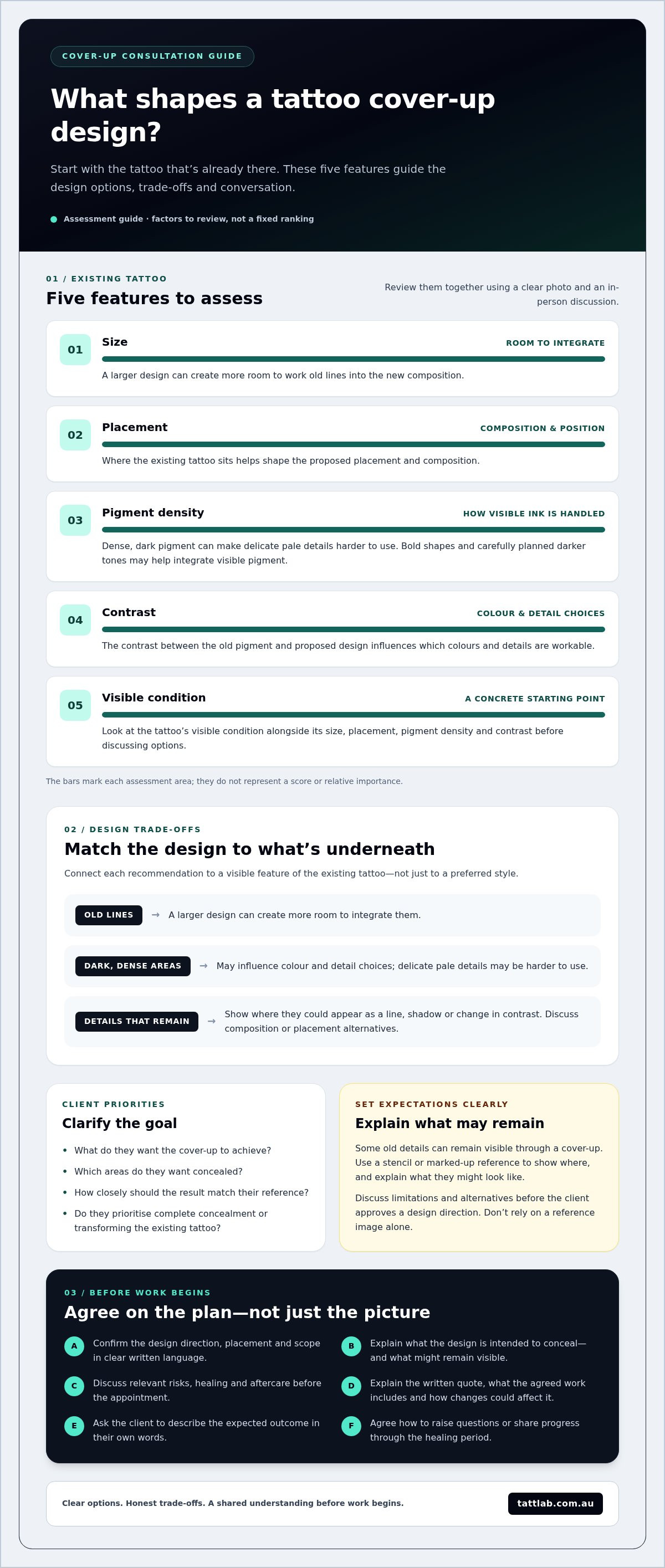
To assess whether an existing tattoo can be covered, review its size, placement, pigment density, contrast and visible condition. Ask the client to share a clear photo and discuss the tattoo in person, then explain how those features influence the design options. This gives the conversation a concrete starting point, rather than relying on a reference image alone.
Styles and colours depend on the existing tattoo and the design being considered. Bold shapes and carefully planned darker tones may help integrate visible pigment, while delicate pale details may be harder to use over a dense, dark area. Show how the proposed design relates to the tattoo beneath it, and explain the visual trade-offs in plain language.
During the consultation, discuss the client’s goal, preferred style, areas they want concealed and how closely they expect the result to match their reference. Clarify whether they prioritise complete concealment or a design that transforms the existing tattoo. Use their answers to explain the proposed approach, possible limitations and what feedback is needed before work begins.
Before the appointment, ask the client to bring reference images and confirm the agreed design direction and practical arrangements. After the appointment, direct them to the artist’s aftercare instructions and agree how to raise questions or share progress. These steps keep communication consistent from the first design conversation through the healing period.
At the beginning of a legal matter, lawyers can agree with clients on preferred communication methods, email response times, phone availability and how often progressive invoices will be issued. For a tattoo project, agree on specific channels and ways to provide feedback or view progress. Be honest about availability and offer a reasonable alternative when you cannot meet a requested time.
Legal clients may expect an immediate response to emails, although responding immediately is not always viable for legal professionals. Unrealistic expectations can add stress and anxiety. In the 2025-26 financial year, 42% of claims notified to Lawcover arose from poor communication with clients. Clear agreements and updates help keep clients informed.
2. Explaining process, strategy and risks
Start with the design logic. Explain how the existing pigment, placement and contrast shape the proposed cover-up, then show how the new design works with those features. A larger design can create more room to integrate old lines, while darker areas may influence the colours and details chosen. Connect each recommendation to a visible feature of the tattoo, not just a preferred style.
Some old details can remain visible through a cover-up. Show the client where this could happen on the proposed design, using a stencil or marked-up reference image. Explain whether the detail is likely to appear as a line, shadow or change in contrast. Then discuss alternatives, such as changing the composition or adjusting the placement, before the client approves a direction.
In Australia, explain the studio’s hygiene procedures and applicable local requirements in plain language. Describe practical steps, such as how the work area is prepared and how equipment is handled. Avoid implying that one checklist applies everywhere. Invite the client to raise concerns, then answer with specific information about the planned appointment.
Laser removal is a separate consideration when existing pigment limits the design. Explain that the session plan depends on factors such as ink colour, density, depth and the individual’s skin response. Don’t promise a particular result or session count. Discuss how the cover-up design would change if the client chooses fading first, and record which path they prefer.
Discuss cover-up risks and healing directly. Explain the risks relevant to the proposed work, the aftercare instructions, and what changes during healing should prompt the client to seek advice. Give the client the aftercare information before the appointment, not only at the end. This lets them consider the commitment and ask questions before agreeing to proceed.
There usually isn’t a legal process within a tattoo consultation, but clear records help prevent misunderstandings. Confirm the agreed design, placement, scope and any limits in writing. Explain the advice and its limitations, including what the design is intended to conceal and what might remain visible. Ask the client to confirm that the written summary reflects their understanding.
Explain costs before work begins, using a written quote that states what the agreed work includes. Clarify how a changed design or additional work would affect the quote, then discuss payment terms directly rather than relying on fine print. Don’t guess at a figure. The client should understand the cost basis and scope before confirming the plan.
Close by checking understanding: ask the client to describe the expected outcome in their own words. If they expect complete concealment but the plan allows for visible traces, pause and explain the difference. That final conversation turns a technical strategy into a shared agreement.
3. Providing regular client updates
Clients need to understand what has progressed, what remains open and whether they need to make a decision. Set an update rhythm at the start, daily, weekly or monthly, depending on the project’s pace. For example, a weekly message can confirm that the design review is complete and identify the next decision. A predictable cadence reduces uncertainty without creating unnecessary messages.
Make each update specific to the cover-up’s current stage. Instead of writing, “Everything is moving along,” say, “The placement review is complete; we’re refining how the darker section meets the new outline.” This gives the client useful context and shows what has been completed. It also prevents a progress note from sounding like a promise about the final appearance.
Proactive communication matters most when a decision, delay or change affects the plan. If a reference image doesn’t translate well to the existing tattoo, explain which feature creates the challenge and what design adjustment is being considered. Share the change before moving forward, then invite focused feedback on the revised direction. This keeps the client involved without asking them to solve technical design questions alone.
Use a consistent format for written updates. Include the current stage, completed work, any decision needed and the next expected contact. A short email might say, “The concept is ready for review. Please comment on the placement and overall style. I’ll send the next update after incorporating your feedback.” Clear structure helps clients distinguish an action request from a general status note.
Progress images can support discussion when they show a meaningful design change. Use a comparable view and explain what the client should examine, such as the balance between the new outline and visible old pigment. A marked-up image can clarify one design adjustment more effectively than a long message. Keep the explanation factual, and don’t present a working image as a guaranteed healed outcome.
If progress pauses, send an update rather than waiting for the client to chase you. State what is pending, why it affects the next step and when you expect to provide another update. For example, if the client’s feedback is needed before a design can be refined, name that decision clearly. If your availability changes, offer a realistic alternative time for communication.
Record key messages in the client’s project notes, including design changes and decisions. This creates a reliable reference if the client later asks why a particular element changed. Before closing each update, check whether the client has a question or needs clarification. Regular, concise contact makes progress visible while preserving space for considered design work.
4. Recapping agreed expectations before starting a service
Before the first tattooing step, pause and restate the agreed plan in plain language. Name the design direction, placement, intended coverage and any details that may remain visible. For example, explain that the new composition will integrate the old outline, while a shadow in one area may still show. This final recap gives both artist and client a chance to correct a misunderstanding before work begins.
Then compare the client’s goal with the agreed design. Ask whether they still prioritise the same outcome, such as disguising a specific symbol or transforming the overall appearance. If the client expected complete concealment but the plan allows some old pigment to show, resolve that difference now. An unrealistic expectation can be difficult to address once the appointment is underway.
Confirm what the client has approved, not just what the artist has prepared. Review the reference, stencil or design mock-up together, and identify any changes made during the consultation. Ask the client to describe the placement and coverage they expect. Their explanation can reveal whether “covered” means the same thing to both people.
Discuss the likely process in stages. Explain which parts are planned for the current appointment and whether the design may need multiple sessions. Don’t present a multi-session possibility as a fixed schedule. Instead, explain what factors could affect the next step, such as the design’s complexity or how the existing tattoo influences the work. This helps the client distinguish the agreed plan from assumptions about timing.
Set out the practical arrangements before starting, including the appointment plan, the agreed design boundaries and how the client can raise a concern during the session. For instance, agree on a simple pause if the client wants to revisit placement before proceeding. This gives both parties a clear way to handle a question without turning it into a rushed design change.
Close with a written summary the client can review. Keep it focused: approved design direction, placement, coverage goal, known limitations and agreed next steps. Ask the client to confirm the summary reflects the conversation. If they raise a new preference, update the plan and discuss its effect before beginning, rather than treating earlier approval as consent to a different design.
A concise recap isn’t a formality. It makes managing client expectations for cover ups actionable by connecting the client’s priorities to the work about to begin at Tatt Lab. When the artist and client can both describe the same intended outcome, the appointment starts with shared expectations, a clear decision path and fewer avoidable surprises. Thorough communication remains essential for ensuring both parties are fully aligned before the needle touches the skin.
5. Asking questions to understand a client’s situation
Ask about the person behind the existing tattoo, not only the design they want now. A calm sequence of open questions helps uncover priorities, concerns and assumptions before they shape the plan. Listen for what the client hopes will change, then repeat the key points in your own words. These conversations work best when curiosity comes before advice.
Begin with the desired outcome: “What would you like this cover-up to achieve?” A client may want a specific image concealed, a different style or a tattoo that feels more personally meaningful. Ask what matters most if those goals compete. Their answer helps distinguish a firm priority from a flexible preference.
Explore the client’s main concern with a focused follow-up. “What worries you most about the process?” might reveal concern about visible old pigment, design size, pain or how the tattoo will look after healing. Don’t assume the reference image tells the whole story. Ask what the client likes about it, then identify which elements matter and which can change.
Budget and deadlines also belong in the discussion. Ask what budget the client has set and whether they have a particular date in mind. For example, a client hoping to complete a cover-up before an event may need to understand how that deadline affects design decisions and planning. Discuss practical constraints directly, without making a rushed commitment to meet a date.
Check how the client defines a successful outcome. “Would you prefer the old tattoo to be difficult to notice, or do you expect every trace to disappear?” makes an important distinction visible. Ask whether they can accept a larger design, darker elements or visible remnants if those features support the plan. Record the answer so it informs later design conversations.
Invite the client to share relevant history, including previous attempts to alter or cover the tattoo and any experience that affects their comfort. Ask what they liked or disliked about those experiences. Keep the conversation respectful: the purpose is to understand preferences and practical needs, not judge earlier choices.
Before closing the consultation, summarise the client’s priorities and ask what you may have missed. Note their desired outcome, main concern, budget, deadline and flexibility around design. This record helps the artist remember why a particular direction was chosen, especially if the client later revisits an earlier preference. It also gives the next discussion a clear starting point.
Use the answers to guide your preparation for the next design conversation. Explore practical supplies for tattoo studios as you organise the tools and materials that support considered work.
Tatt Lab: Tattoo Aftercare
Tatt Lab is a practical next step for tattoo professionals preparing for the aftercare stage of a cover-up. Its Tattoo Aftercare range supports studios sourcing products for clients’ post-appointment routines, while Tattoo Inks, Tattoo Cartridges and Tattoo Stencils relate to the materials artists use in their work. Clear client conversations set expectations; appropriate supplies help artists prepare for the practical stages around the appointment.
Turn to Tatt Lab when your studio is sourcing tattoo equipment or aftercare products to support its workflow. Explore the available offerings at tattlab.com.au, or contact Tatt Lab with your enquiry.
Carry the conversation into your next step
A cover-up consultation can begin a more considered relationship with a tattoo, shaped by shared decisions rather than assumptions. For artists, managing client expectations for cover-ups means treating communication as part of the creative process: listen closely, explain the reasoning behind a design and keep the client involved as the plan develops.
For studio teams, preparation also includes having the right supplies for the work and its care. Tatt Lab offers Tattoo Aftercare, Traditional Needles and Tattoo Cartridges for professionals sourcing tattoo-related products. These offerings support practical studio needs, while each artist remains responsible for setting clear expectations with their client.
If you’re sourcing products for your studio, contact Tatt Lab about tattoo supplies and aftercare. Thoughtful preparation and open conversations can help create a more confident path from initial idea to finished tattoo.


Comments (0)
There are no comments for this article. Be the first one to leave a message!