

Most artists assume a combative person in the chair is simply an ego problem, but procedural friction almost always stems from acute, unmanaged anxiety. When physical discomfort triggers a client's fight-or-flight reflex, communication breaks down quickly. Successfully managing difficult tattoo clients doesn't rely on aggressive confrontation; it requires the steady, structured authority of a clean clinical protocol.
You already know the exhausting toll that micromanagers, chronic latecomers, and combative sitters take on your daily practice. When someone panics mid-line, second-guesses your technical process, or compromises your sterile field, it jeopardises both the procedure's physical integrity and your mental stamina. You shouldn't have to absorb unnecessary studio chaos just to deliver exceptional body art.
With the right operational standards, you can master chairside de-escalation, set firm studio boundaries, and navigate difficult client interactions with clinical professionalism. We examine proven methods to de-escalate acute chairside panic, implement foolproof consultation protocols, and maintain complete control over your workstation from initial stencil to final healing.
Key Takeaways
- Reframe client resistance as physiological apprehension; successful approaches to managing difficult tattoo clients address underlying anxiety rather than treating pushback as personal confrontation.
- Deploy structured pre-session intake screening and enforceable studio policies to filter non-compliant sitters before they ever secure chair time.
- Recognize the early physical indicators of vasovagal syncope and panic to intervene rapidly with calm, chairside stabilizing techniques.
- Establish clear operational thresholds for ethically and legally halting a session when intoxication, harassment, or compromised consent jeopardises procedure safety.
- Project commanding artistic authority through meticulous barrier preparation, visible infection control routines, and structured post-procedure care guidance.
Identifying Difficult Client Archetypes in the Tattoo Studio
Behind almost every disruptive behaviour in the procedural chair lies a physiological or psychological defense mechanism. Dermal pigmentation inherently triggers sympathetic nervous system arousal, elevated cortisol, and involuntary protective reflexes. Successfully managing difficult tattoo clients begins by recognizing that resistance, control-seeking questions, and hyper-fixation are rarely personal insults; they are somatic responses to perceived physical vulnerability.
Across professional studios, challenging client interactions generally fall into distinct behavioural patterns:
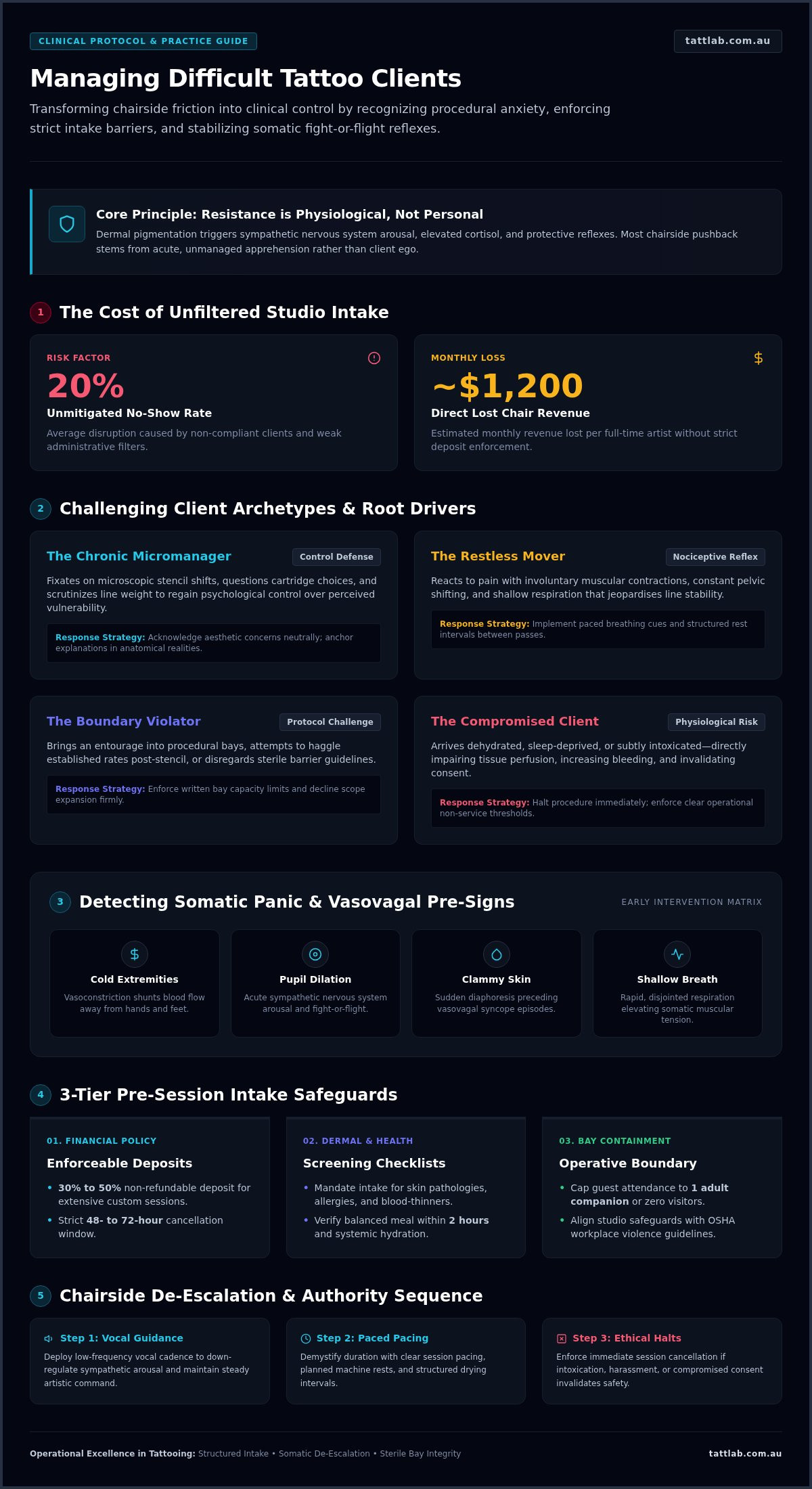
- The Chronic Micromanager: Fixates on microscopic stencil shifts, questions cartridge selections, and scrutinizes line weight to regain a sense of bodily control.
- The Restless Mover: Reacts to nociceptive stimuli with involuntary muscular contractions, constant pelvic shifting, and shallow respiration that directly compromises line precision.
- The Boundary Violator: Brings an entourage into the procedural bay, challenges health protocols, or attempts to haggle established rates after the stencil is placed.
- The Compromised Client: Arrives dehydrated, sleep-deprived, or subtly intoxicated, impairing tissue perfusion, increasing bleeding, and invalidating informed consent.
The Anxious and Somatising Client
Somatic anxiety presents unmistakable physical markers well before the machine touches skin: cold extremities, rapid pupil dilation, clammy skin, and shallow breathing. Differentiating typical nervous chatter from escalating panic requires sharp clinical observation. When a sitter's speech becomes rapid and disjointed or they display extreme physical stiffness, continued procedural prep only heightens distress. Utilizing established interpersonal de-escalation techniques, such as low-frequency vocal guidance and paced breathing exercises, stabilizes the autonomic nervous system and prevents defensive flinching or sudden fainting.
The Entitled and Demanding Personality
Entitlement typically surfaces early in the consultation process. Warning signs include disdain for standard booking protocols, condescending feedback during stencil application, or demanding unpaid compositional additions mid-session. When managing difficult tattoo clients with aggressive or demanding tendencies, maintain calm, unwavering boundaries without mirroring their tension. Acknowledge their aesthetic concerns neutrally, reiterate the anatomical realities of pigment dispersion, and decline unwarranted scope expansion clearly to preserve your professional authority and personal wellbeing.
Pre-Session Consultation Protocols to Filter Red Flags
Preventative screening protects your studio's operational flow before a needle ever touches skin. An unmitigated 20% no-show rate costs an average full-time artist roughly $1,200 per month in lost chair revenue, highlighting how poor intake habits directly erode your livelihood. True mastery in managing difficult tattoo clients lies in establishing structured, upfront administrative filters that deter problematic sitters while cultivating mutual respect with committed ones.
A rigorous consultation protocol relies on clear operational boundaries:
- Enforceable Financial Commitments: Require non-refundable booking deposits, typically 30% to 50% for extensive custom sessions, backed by a strict 48- to 72-hour cancellation window to protect calendar allocation.
- Contained Procedural Bays: Cap guest attendance to a single adult companion or enforce a zero-visitor policy within the sterile field, keeping operative spaces clean and distraction-free.
- Digital Medical Screening: Mandate intake questionnaires covering skin pathologies, allergies, and blood-thinning medications before taking deposits.
Establishing Transparent Studio Policies
Explicit studio guidelines align expectations early and establish professional authority. Publish written terms covering non-refundable deposits, tardiness, and session cancellations directly on booking forms. Incorporating administrative safeguards aligned with OSHA workplace violence prevention guidelines allows you to set clear boundaries against abusive conduct, late cancellations, or aggressive haggling before a client enters your studio.
Comprehensive Health and Skin Integrity Screenings
Thorough dermal evaluations prevent procedural complications and unexpected chairside friction. Screen carefully for active eczema, psoriasis, keloid tendencies, or recent sunburn over the target site. Confirm that clients have eaten a balanced meal within two hours and maintained proper systemic hydration. Verifying physiological readiness ensures tissue responds predictably to needle passes, reducing involuntary twitching and distress.
Setting Expectations on Pain and Procedure Duration
Demystifying the technical procedure helps eliminate anxiety rooted in the unknown. Explain realistic session pacing, factoring in necessary equipment resets, drying intervals, and short rest breaks. Outline the specific sensory demands of the chosen anatomical placement so clients understand what to expect. Using precise placement tools, such as professional-grade tattoo stencils, allows you to lock in accurate positioning collaboratively during consultation, removing ambiguity and ensuring both parties share the exact same vision.
Chairside De-Escalation Techniques for Acute Distress and Pain
Telling an agitated sitter to "just relax" never works. Pain triggers biological defense mechanisms, and when autonomic distress peaks, intellectual reasoning shuts down. Effectively managing difficult tattoo clients during moments of intense sensory overload requires grounding the nervous system through precise, clinical interventions rather than emotional debates.
When physical discomfort threatens procedure stability, execute a structured de-escalation response:
- Needle Off Skin: Stop mechanical trauma instantly the moment you sense erratic movement, hyperventilation, or vocal panic.
- Cadence Anchoring: Speak in an unhurried, low-register tone to slow the client's racing pulse through vocal mirroring.
- Somatic Grounding: Direct the sitter to press their feet flat against the footrest or focus on physical points of contact to pull their focus out of distress loops.
Managing Physiological Stress and Fainting Risks
Vasovagal syncope occurs when pain or blood phobia triggers sudden bradycardia and vasodilation. Watch for early clinical signs: excessive yawning, sudden pallor, clammy skin, or delayed responses. The moment these indicators appear, call "needle off skin." Immediately adjust the procedural chair into a flat, supine posture and elevate their lower extremities above heart level to restore cerebral blood flow. Place cool, moist paper towels over the client's forehead. Never force fluids or sugary snacks while someone is disoriented, as this creates an immediate aspiration hazard.
Verbal Pacing and Box Breathing Techniques
Controlled respiratory cycles break the sympathetic fight-or-flight response. Guide your client through structured box breathing: four seconds inhaling through the nose, four seconds holding, four seconds exhaling through the mouth, and four seconds resting. Synchronize your passes with their exhalations, when biological muscle tension naturally drops. Provide clear, microscopic milestones like completing a single outline pass or a small shaded gradient. Breaking intense sessions into short, tangible goals restores the sitter's perceived internal control.
Structuring Strategic Chairside Pauses
Not all breaks help healing. Prolonged pauses allow localized inflammation to surge, lower endorphin thresholds, and cause surrounding muscular groups to stiffen. Cap procedural recovery breaks at five minutes to maintain tissue readiness. If distress turns into volatile hostility, referencing established OSHA workplace violence prevention guidelines provides an administrative framework for setting non-negotiable safety boundaries. Maintain complete barrier integrity on your machine covers and change gloves before resuming skin contact.
When and How to Refuse Service or Halt a Procedure
Knowing when to stop a session is just as critical as knowing how to pull a clean line. Procedural boundaries exist to protect clinical safety, aesthetic standards, and personal dignity. When managing difficult tattoo clients, terminating a session isn't an admission of failure. It's a decisive, professional measure to safeguard the client's dermal integrity and maintain a secure studio environment.
Immediate work stoppage is mandatory under specific operational thresholds:
- Chemical Impairment: Any detected presence of alcohol, narcotics, or unregulated numbing agents that alter skin turgor and invalidate legal consent.
- Compromised Safety Boundaries: Verbal hostility, sexual harassment, or physical aggression toward studio staff.
- Uncontrollable Somatic Reactions: Severe involuntary spasms or thrashing that make sharp needle insertion hazardous.
Non-Negotiable Safety and Sobriety Violations
Intoxication acts as a peripheral vasodilator, triggering excessive bleeding, diluting pigment saturation, and legally voiding informed consent. You must refuse or halt service immediately if a client displays signs of impairment. Remember that legal grounds for refusal center on direct safety hazards, intoxication, and abusive behavior, whereas universal precautions mandate treating all blood as potentially infectious without discriminating against manageable viral conditions.
Professional Scripts for De-Escalating Confrontation
When delivering a stoppage decision, eliminate emotional arguments and anchor your language entirely in objective safety standards. Deliver your position calmly: "My primary obligation is your physical safety and the long-term integrity of your skin. Because of the level of involuntary movement right now, we can't safely proceed without risking permanent tissue damage." Keep your voice steady, decline debates over design aesthetics, and direct fee discussions to studio management.
Wound Sealing and Post-Incident Documentation
Terminating a session mid-procedure leaves an open epidermal wound that demands prompt clinical care. Irrigate the field with sterile wash, dry the skin, and seal the area immediately. Equip the client with reliable tattoo aftercare and written healing instructions to prevent post-procedure infection on unfinished skin. Once the client departs, log a detailed, timestamped incident report documenting observed behaviors, communication exchanges, and photographic records of the sealed skin barrier.
Building a Controlled Studio Environment to Prevent Conflict
Physical presentation dictates psychological posture. An immaculate, laboratory-grade workstation creates an immediate visual boundary that commands respect. When a client observes disciplined sanitation and methodical barrier preparation, their instinct to micromanage dissolves into quiet confidence. Proactive environmental control transforms managing difficult tattoo clients from an exhausting reactive struggle into an effortless standard of care.
Structuring your workspace around clinical rigor establishes implicit authority through distinct operational cues:
- Visual Asepsis: Unwrapping sterile disposables, cartridges, and barrier films directly in front of the sitter to reinforce safety standards.
- Acoustic and Sensory Regulation: Maintaining balanced background audio and clean procedural lighting to lower sensory overload.
- Standardized Post-Care Handoffs: Providing unambiguous healing instructions that eliminate blame-shifting during the recovery phase.
Clinical Hygiene as an Authority Builder
Opening single-use cartridges from sterile blister packs and wiping down procedural bays with hospital-grade disinfectants projects competence before work starts. Utilizing dedicated medical supplies for tattoo artists demonstrates that client safety is non-negotiable. This visible commitment to infection control reassures vulnerable sitters, anchoring their trust and dismantling defensive skepticism before the machine ever engages.
Standardizing Aftercare to Eliminate Post-Session Disputes
Post-session friction frequently arises when poor client compliance results in patchy healing or localized irritation. Remove ambiguity by walking the sitter through cleansing protocols, weeping phases, and breathable barrier film maintenance. Providing structured guidance anchored by professional tattoo aftercare products ensures clients understand their direct role in preserving the final aesthetic outcome, preventing unwarranted complaints later.
Equipping Your Practice with Professional Studio Infrastructure
High-performance equipment minimizes unnecessary tissue trauma, optimizes pigment saturation, and reduces procedural duration. Sourcing reliable needles, cartridges, and consumables through verified Australian tattoo supplies ensures mechanical precision throughout long sittings. Pair dependable gear with routine studio peer debriefs to discuss challenging client interactions, refine intake policies collaboratively, and sustain professional resilience across your entire team.
Mastering Chairside Authority and Protecting Your Practice
Navigating client friction isn't about winning arguments; it's about structured preparation, clear physiological insight, and unwavering professional boundaries. By identifying somatic distress early, implementing rigid intake protocols, and maintaining composed chairside leadership, managing difficult tattoo clients becomes a predictable, controllable aspect of your practice. Protecting your focus and energy ensures every client receives exceptional technical execution without compromising studio safety.
Your physical environment reinforces this professional authority from the moment a sitter sits down. Equipping your procedural bay with artist-vetted medical PPE, barrier supplies, and premium tattoo needles and cartridges commands immediate trust and compliance. Supported by fast, reliable nationwide shipping across Australia, you can readily access the clinical consumables and dedicated aftercare needed to safeguard skin integrity through every phase of healing. Explore professional studio supplies at Tatt Lab to reinforce your clinical standards and lead every session with total confidence.
Frequently Asked Questions
How do you handle a tattoo client who keeps moving during linework?
Immediately lift the needle from the skin the second involuntary movement begins. Physical shifts compromise line saturation and depth control. Check whether their positioning causes unnecessary strain, then adjust armrests or bolster cushions to stabilize the limb mechanically. Coach the client to synchronize long exhalations with your needle passes, explaining clearly that erratic movement risks permanent scarring and linework blowouts.
Can a tattoo artist legally refuse to finish a tattoo mid-session?
Yes, an artist can halt a procedure when client conduct threatens physical safety, exhibits intoxication, or involves verbal abuse. Informed consent requires cooperative conditions. While anti-discrimination laws protect clients with non-threatening medical conditions, artists retain the legal authority to stop immediately if continuous movement or hostility risks dermal injury. Always document the rationale and seal unfinished skin before discharging the client.
What should you do if a tattoo client shows signs of fainting or hyperventilating?
Cease tattooing immediately and recline the client into a flat, supine position with their legs elevated above heart level. This posture restores cerebral perfusion quickly during a vasovagal reaction. Apply cool towels to their forehead and neck while guiding them through slow, nasal breathing. Never offer water or snacks until they are fully conscious and seated upright to avoid choking risks.
How do you deal with a client who hates their tattoo stencil placement?
Treat stencil repositioning as a standard procedural checkpoint rather than a personal confrontation. Effective protocols for managing difficult tattoo clients emphasize collaborative placement before applying ink. Wipe the skin clean using appropriate preparation fluid, allow the surface to dry completely, and apply a fresh transfer. Have the client inspect the alignment in a full-length mirror while standing in a natural, relaxed posture.
What is the best way to handle a tattoo client who argues about pricing?
Prevent financial friction by requiring signed digital intake forms and upfront deposits before booking studio time. When managing difficult tattoo clients who dispute costs at checkout, remain neutral and reference the signed consent documentation detailing the hourly rate, session minimums, and design scope. Never enter subjective debates mid-checkout; uphold established shop policies calmly and direct unresolved administrative disputes to shop management.
How should a tattoo studio respond to demanding clients bringing large groups?
Enforce a strict, published policy that limits procedural bay access to the client and at most one adult guest. Large entourages increase airborne contamination risks, violate sterile work zones, and create unnecessary sensory noise that disrupts artist focus. Politely direct additional companions to the studio's designated waiting lounge, framing the restriction as an essential infection-control protocol designed to protect the client's safety.


Comments (0)
There are no comments for this article. Be the first one to leave a message!