
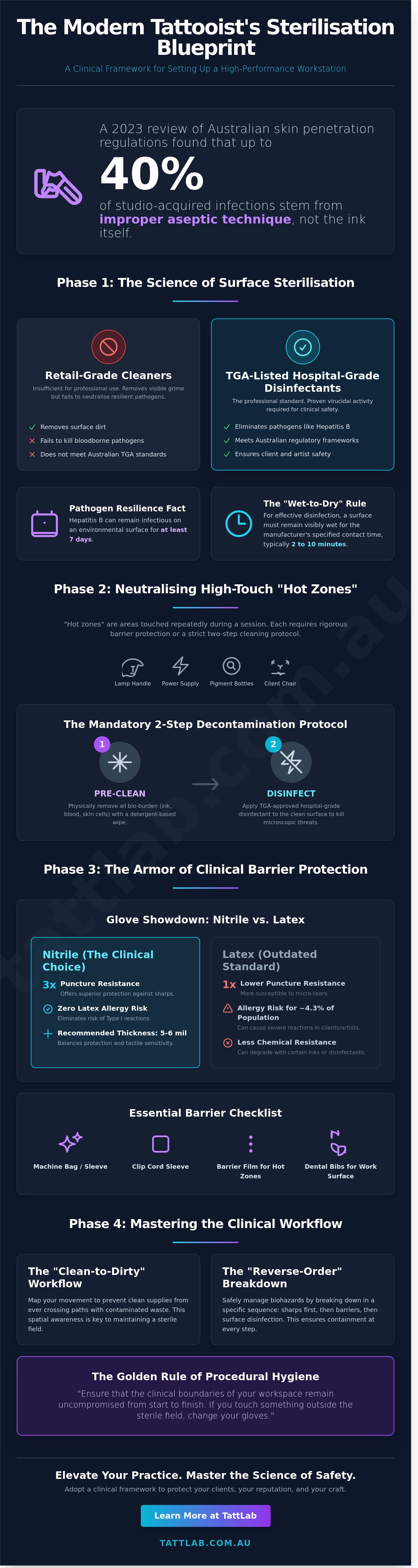
A 2023 review of Australian skin penetration regulations suggests that up to 40% of studio-acquired infections stem from improper aseptic technique rather than the ink itself. This statistic highlights a sobering reality for artists who pride themselves on their craft. You likely already know that a clean space is non-negotiable, but the transition from a standard setup to a truly medical-grade environment can feel like a complex puzzle. Between the confusion of retail-grade sprays versus TGA-approved disinfectants and the frustration of a cluttered tray slowing your pace, setting up a tattoo workstation that prioritises both speed and safety is a delicate science.
We've designed this guide to help you master the art of sterile preparation using a professional, clinical framework specifically for the Australian market. You'll gain the clarity needed to eliminate cross-contamination risks while creating a streamlined, "cool but clinical" workflow that protects your client's skin integrity. We're moving beyond basic surface wipes to explore advanced barrier protocols, ergonomic tray layouts, and the precise sequence of operations that turn your station into a high-performance lab for 2026.
Key Takeaways
- Understand the critical science behind clinical-grade surface sterilisation and why standard cleaners fail to meet Australian professional standards for bloodborne pathogen control.
- Implement a precise hierarchy of barrier protection, ensuring skin integrity is maintained through the strategic use of medical-grade PPE and barrier films.
- Optimise your workflow using the "Lab" layout for setting up a tattoo workstation, a method designed to enhance ergonomic efficiency while strictly isolating the sterile field.
- Master the "golden rule" of procedural hygiene to prevent cross-contamination, ensuring that the clinical boundaries of your workspace remain uncompromised from start to finish.
- Learn the professional "reverse-order" breakdown technique to safely manage biohazards and ensure all clinical waste is disposed of according to strict Australian regulatory frameworks.
The Science of Surface Sterilisation and Area Preparation
A sterile tattoo workstation is a controlled environment designed to eliminate cross-contamination. Establishing this space requires more than a quick wipe down; it involves creating a clinical boundary known as the sterile field. Within this zone, every surface and instrument must be free from viable microorganisms to ensure skin integrity isn't compromised. When setting up a tattoo workstation, you're essentially building a mini-laboratory where the margin for error is zero. This boundary starts at your stainless steel tray and extends to any surface your gloved hands or equipment will touch during the session.
Standard household cleaners are insufficient for modern tattooing procedures because they lack the chemical potency to neutralise resilient bloodborne pathogens. For example, Hepatitis B can remain infectious on an environmental surface for at least 7 days. While a domestic spray might remove visible grime, it won't achieve the log reduction required for clinical safety. Professionals use a clean-to-dirty workflow to manage this risk. This involves mapping your movement so that clean supplies never cross paths with contaminated waste, a logic that mirrors the precision we apply to laser skin treatments.
Choosing Medical-Grade Disinfectants
In Australia, practitioners should look for disinfectants TGA-listed as "Hospital Grade" with proven virucidal activity. Standard 70% rubbing alcohol is often misused; it evaporates too quickly to meet the necessary contact time for many pathogens. Effective clearance requires the "wet-to-dry" rule, where the surface remains visibly wet with the disinfectant for the duration specified by the manufacturer, often between 2 and 10 minutes. Using high-quality pH-neutral detergents prevents the chemical degradation of your studio furniture, ensuring that medical-grade vinyl and stainless steel don't become porous or cracked over time.
Identifying High-Touch Zones
Mapping "hot zones" is a critical step in setting up a tattoo workstation. These are the areas you'll touch repeatedly, such as the power supply dials, lamp handles, and pigment bottles. Every hot zone must be covered with a non-porous barrier or undergo a rigorous two-step cleaning process.
- Step 1: Pre-cleaning. You must physically remove the bio-burden (ink, blood, or skin cells) using a detergent-based wipe.
- Step 2: Disinfecting. Apply the hospital-grade disinfectant to the now-clean surface to kill remaining microscopic threats.
Implementing Clinical Barrier Protection and PPE
Establishing a sterile field is the most critical phase of setting up a tattoo workstation. This process transforms a physical space into a clinical environment where skin integrity is the priority. True protection relies on a hierarchy of controls, starting with hand hygiene and extending to the physical barriers that prevent cross-contamination. According to the NEHA Policy Statement on Body Art, maintaining these rigorous standards is essential for preventing the transmission of bloodborne pathogens like Hepatitis B and C. Professional studios in Australia typically utilise a combination of barrier film, clip cord sleeves, and poly-backed dental bibs to create a fluid-resistant perimeter around the procedure area.
Material choice isn't just about preference; it's a matter of clinical safety. While latex was once the industry standard, nitrile has become the preferred choice in modern Australian labs. Nitrile offers three times the puncture resistance of latex and eliminates the risk of Type I allergic reactions, which affect roughly 4.3% of the global population. When you're setting up a tattoo workstation, every barrier must be applied with intention. If you touch a clean machine with contaminated hands while trying to wrap it, the barrier is already compromised. We treat the setup as a choreographed sequence where clean surfaces stay clean through methodical layering.
Nitrile Gloves and Skin Integrity
Select nitrile gloves with a thickness of at least 5-mil to 6-mil. This specific weight provides a robust chemical barrier against inks and surfactants while maintaining the tactile sensitivity required for precision work. Don't rely on double-gloving as a substitute for hygiene. It's better to change gloves every 60 to 90 minutes or whenever you transition between different tasks. Constant glove use can strip the skin of natural oils, so we recommend using a fragrance-free, water-based moisturiser between sessions to maintain your own skin's defensive barrier. Healthy skin is your first line of personal protection.
Wrapping the Machine and Power Supply
Every piece of equipment requires a tailored approach to sealing. For rotary machines, use a dedicated machine bag or a compostable sleeve, securing it with a small amount of cohesive bandage wrap to prevent slipping. Power supplies with physical dials or touchscreens should be completely covered in adhesive barrier film. Ensure the film is applied without air bubbles, as these can trap contaminants. To manage your leads, slide clip cord sleeves over the entire length of the cable. Secure the ends with medical tape to ensure no part of the cord drags across the floor or the client's skin. This level of meticulousness ensures your tools remain as pristine as the results you aim to achieve. If you're looking to refine your skin's appearance or start a fresh canvas, our specialists can guide your skin evolution journey with the same clinical precision.
Ergonomic Workstation Layout for Professional Efficiency
Efficiency in a professional studio isn't about speed; it's about the economy of motion. When setting up a tattoo workstation, we adopt a "Lab" layout that prioritises biomechanics and sterile integrity. This methodology dictates that every tool has a specific home based on its frequency of use. Items you touch every 60 seconds, like your machine and rinse cup, belong in your primary reach zone. Supplies used once per session, such as stencil primers, remain on the periphery to reduce clutter and cognitive load.
Positioning your tray is a critical safety decision. It should sit on the side of your dominant hand, slightly behind your hip. This placement prevents you from reaching across the client's open skin, which significantly lowers the risk of cross-contamination or accidental needle sticks. Lighting also plays a vital role in clinical clarity. Aim for a 5000K to 6000K colour temperature light source to mimic natural daylight. This ensures you see the true saturation of the pigment and the subtle changes in skin texture without eye strain. Integrating high-quality medical supplies for tattoo artists into this layout ensures your station meets the rigorous standards required for modern skin health procedures.
The Tattoo Tray Architecture
A well-organised tray is divided into distinct functional territories. The "dry zone" houses your unopened needles and spare cartridges, keeping them away from fluid splashes. Conversely, the "wet zone" contains your ink caps, wash bottles, and lubricants. Using dental bibs as a base for your tray is a non-negotiable step. The polyethylene backing prevents fluids from soaking through to the stainless steel surface, providing an absorbent, sterile field that's easy to clear during the post-session breakdown. This systematic approach mirrors the precision of a surgical environment, protecting both the artist and the client.
Organising Inks and Needle Cartridges
The integrity of your pigment is paramount. When pouring, maintain a 2cm gap between the bottle tip and the ink cap to prevent bottle-to-cap contamination. This technique is vital for maintaining a sterile supply chain. Arranging your needle cartridges in a logical sequence, such as liners on the left and shaders on the right, allows for instinctual swaps during complex pieces. Using premium tattoo ink is essential for achieving consistent saturation and predictable healing. When setting up a tattoo workstation with this level of meticulousness, you aren't just preparing for a tattoo; you're managing a clinical procedure that respects the biological complexity of the skin's immune response. This level of care transforms the session into a controlled, professional journey toward a permanent piece of art.
Maintaining the Sterile Field During the Tattoo Process
The integrity of your setup is only as strong as your discipline during the procedure. When setting up a tattoo workstation, you create a controlled environment designed to protect the biological landscape of your client’s skin. The golden rule is absolute: nothing leaves the sterile field once the first drop of ink is placed. If a piece of equipment moves beyond the barrier, it's considered compromised and cannot return without full decontamination. This level of meticulousness mirrors the scientific rigor we apply to skin health in a clinical setting.
Every touch outside the sterile field requires a full glove change. This protocol applies to every minor adjustment, whether you're moving a lamp or reaching for an extra supply that wasn't initially prepared. Cross-contamination occurs in a split second, often through muscle memory. By pausing to re-glove, you respect the client's safety and the professional standards of the Australian tattoo industry. It's a methodical approach that ensures the skin's transformation remains a safe, predictable journey.
Managing Rinse Cups and Squeeze Bottles
Squeeze bottles are frequent vectors for cross-contamination if handled without care. You must apply a physical barrier, such as a plastic sleeve or adhesive film, to the entire bottle to maintain a clinical seal. When cleaning a needle, never let the tip of the squeeze bottle touch the rinse cup or the needle itself. This prevents back-flow contamination, where fluids could potentially migrate toward the nozzle. If you need to refill a rinse cup mid-session, you must break away from the station, perform a full hand hygiene routine, refill, and then re-glove before returning to the procedure. This prevents the bulk supply from being exposed to the active work zone.
Safe Needle Disposal Protocols
Safety doesn't end when the art is finished. In Australian studios, compliance with AS 4031:1992 for sharps containers is a non-negotiable standard for skin penetration procedures. Needles and cartridges should never sit on the tray once their specific use is complete. Immediate disposal is the only way to mitigate the risk of accidental needle sticks. When swapping cartridges during multi-needle sessions, place the used component directly into the sharps container rather than letting it rest on the bib. This keeps the area clear and ensures that biological waste is managed with the same precision used throughout the process of setting up a tattoo workstation. A clean tray is a safe tray, reflecting a specialist's commitment to excellence.
If you're ready to begin the next chapter of your skin's evolution, our team offers expert laser tattoo removal treatments tailored to your unique goals.
Post-Procedure Breakdown and Professional Sanitation
The final phase of setting up a tattoo workstation is actually its systematic dismantling. Precision doesn't end when the machine stops; it simply shifts focus toward the next evolution of the space. A professional breakdown follows a strict reverse-order protocol. This methodical approach ensures that pathogens aren't inadvertently spread across the studio. By removing the most contaminated barriers first, you maintain the integrity of the environment and protect the client's skin health during their departure.
Standardizing this process requires high-quality tattoo supplies that meet Australian clinical standards. Using inferior barriers or low-grade disinfectants introduces unnecessary risk into the Lab. Every wipe and disposal choice should be a deliberate act of care, reinforcing the trust the client has placed in your expertise. It's about maintaining a "cool but clinical" atmosphere where safety is the silent foundation of every creative result.
Sharps Disposal and Biohazard Management
Managing clinical waste in Australia requires adherence to strict safety frameworks, specifically the AS 4031 and AS/NZS 4261 standards for sharps containers. Your sharps bin must be positioned within arm's reach of the procedure area to prevent "traveling" with exposed needles. Never allow the container to fill beyond the 75% mark; overfilling is a primary cause of needle-stick injuries in the studio. Once the needles are secured, focus on the soft biohazard waste. Ink-contaminated paper towels, gloves, and used ink caps don't belong in general council bins. They must be sealed in yellow clinical waste bags for professional collection. This level of hazardous waste management reflects a specialist mindset that values community safety as much as individual skin integrity.
Final Surface Decontamination
Once the physical barriers are removed, the "spray-wipe-spray" technique becomes the gold standard for deep cleaning. The first spray removes organic matter and surface tension. The second application provides the critical contact time required for TGA-listed hospital-grade disinfectants to neutralize bloodborne pathogens. While the surface sits, inspect the equipment for micro-splatter. These invisible droplets can travel further than expected during a long session. Check the undersides of trays and the joints of your lighting rigs. This final inspection ensures the Lab is truly clear for the next client's journey. By treating the workspace with this level of scientific rigor, you transform the act of setting up a tattoo workstation from a routine chore into a predictable, professional system that guarantees long-term results and safety.
Mastering the Clinical Evolution of Your Space
Achieving a superior clinical environment requires more than basic cleanliness; it demands a meticulous integration of ergonomic flow and medical-grade barrier protection. By 2026, industry benchmarks have shifted toward a rigorous sterile field philosophy that protects both the artist's longevity and the client's skin integrity. Professionals must focus on the science of surface fragmentation and cross-contamination prevention during every session. Mastering the technical nuances of setting up a tattoo workstation ensures that your focus remains on the art while the safety protocols operate with rhythmic precision.
Tatt Lab understands this delicate balance because we're artist-owned and operated right here in Australia. We provide the medical-grade quality standards necessary to uphold professional skin health outcomes across all six states and two territories. Wherever your studio is located, our express nationwide shipping ensures your studio stays stocked without delay. It's time to refine your process and prioritize the long-term health of the skin you work on. This commitment to excellence transforms a simple procedure into a professional evolution.
Equip your studio with professional-grade supplies from Tatt Lab. Your dedication to safety is the foundation of every masterpiece.
Frequently Asked Questions
What are the most essential medical supplies for a new tattoo workstation?
The most essential supplies include TGA-approved skin antiseptics like 0.5% chlorhexidine, powder-free nitrile gloves, and hospital-grade surface disinfectants. These items ensure your environment meets the clinical standards required to maintain skin integrity and safety. You'll also need sterile gauze and single-use barrier films to protect your equipment. Maintaining a 100% sterile field is the foundational requirement for any professional practice.
Can I use standard plastic wrap as a barrier for my tattoo machine?
You shouldn't use standard grocery store plastic wrap because it isn't manufactured in a sterile environment and often carries factory contaminants. Professional barrier films are specifically designed to be non-porous and often feature adhesive backing for precise medical application. These specialized films provide a 100% effective microbial barrier that standard kitchen wrap cannot guarantee. Using the right materials is a vital step when setting up a tattoo workstation.
How often should I change my gloves when setting up a workstation?
You must change your gloves immediately after touching any non-sterile surface or at least every 45 minutes during a continuous procedure. Research indicates that glove integrity can degrade by approximately 22% after one hour of active use. Frequent changes prevent cross-contamination and ensure the safety of both the artist and the client. Always perform hand hygiene between every glove change to maintain a high level of clinical safety.
What is the difference between sanitising and sterilising a tattoo tray?
Sanitising reduces the number of pathogens on a surface to a safe level, while sterilising completely eliminates all forms of microbial life, including resilient bacterial spores. Tattoo trays must be cleaned with a TGA-approved disinfectant that meets hospital-grade standards for high-level disinfection. If the tray is reusable stainless steel, it requires processing in an autoclave at 121 degrees Celsius for at least 15 minutes to achieve true sterility.
Is rubbing alcohol sufficient for cleaning a tattoo station between clients?
Rubbing alcohol is insufficient for surface disinfection because it evaporates too quickly to effectively neutralise many blood-borne pathogens. Instead, use a TGA-listed hospital-grade disinfectant with a proven kill time for Hepatitis B and C. These professional products typically require a wet contact time of 2 to 5 minutes to be fully effective. Relying on alcohol alone leaves your studio vulnerable to 90% of common environmental contaminants.
How do I prevent cross-contamination when reaching for ink bottles?
Prevent cross-contamination by wrapping your ink bottles in barrier film and dispensing all required ink into single-use caps before the procedure begins. If you require more ink during a session, you must remove your contaminated gloves and put on a fresh pair before touching the bottle. This methodical approach ensures that 0% of external contaminants enter your ink supply or the client's skin during the process.
What is the safest way to dispose of used tattoo needles in Australia?
The safest method is to use a puncture-resistant yellow sharps container that complies with Australian Standard AS 4031. Once the container reaches the 75% fill line, it must be sealed and collected by a licensed medical waste disposal service. In states like Victoria or New South Wales, businesses must keep disposal records for at least 3 years to remain compliant with local health and safety regulations.
How do I set up a workstation for a mobile or guest spot session?
When setting up a tattoo workstation for a guest spot, prioritize a minimalist kit that includes portable, non-porous surfaces and high-quality barrier protection. Ensure your temporary space allows for a 1.5-metre radius of movement to prevent accidental contact with surrounding surfaces. Even in a mobile setting, you must adhere to the same clinical protocols as a permanent studio to protect skin health and ensure a predictable healing journey.


Comments (0)
There are no comments for this article. Be the first one to leave a message!