

The integrity of a professional tattoo studio is measured by the invisible boundaries drawn between the artist and the equipment. While your skill defines the art, your commitment to infection control defines your reputation. Using high-quality tattoo barrier film is more than a regulatory hurdle; it is a clinical interface that protects your tools from bloodborne pathogens and ink migration. You likely know the frustration of film losing suction mid-session or adhesive residue clinging to an expensive machine. These technical failures do more than slow you down; they compromise the sterile environment you work hard to maintain.
We believe mastery over your consumables leads to a liberating creative process. This guide provides a clinical roadmap for selecting and applying barrier films with precision, ensuring your workstation passes health inspections with ease. You will learn to navigate complex equipment shapes and refine your teardown workflow for maximum efficiency. We will help you transform hygiene protocols into a predictable system that prioritises physical integrity and professional longevity. By understanding the science behind your setup, you replace uncertainty with the confidence required for successful long-term results.
Key Takeaways
- Understand the clinical mechanics of cross-contamination and how non-porous shields prevent the migration of bloodborne pathogens.
- Learn to distinguish between 10x15cm perforated sheets and continuous rolls to choose the most effective tattoo barrier film for your specific machine geometry.
- Master a professional aseptic protocol that prioritises surface sanitisation before film application to ensure a secure, sterile workstation.
- Discover how proper barrier placement prevents internal corrosion and ink ingress, extending the operational lifespan of your rotary and coil machines.
- Identify the essential quality standards for medical-grade consumables to streamline your studio supply chain and ensure consistent clinical results.
The Clinical Necessity of Tattoo Barrier Film in Modern Studios
Tattoo barrier film serves as a critical non-porous interface designed to block the transmission of bloodborne pathogens during the professional tattooing process. Unlike standard food wraps, which are often thin and porous at a microscopic level, professional-grade film is engineered to withstand the rigours of a tattoo session without tearing or losing its adhesive properties. It acts as a sacrificial layer, ensuring that biological fluids and ink never make direct contact with your high-value equipment. This protection is vital for maintaining the physical integrity of non-autoclavable items like power supplies, clip cords, and lamp handles that would otherwise become reservoirs for bacteria.
The Science of Pathogen Migration
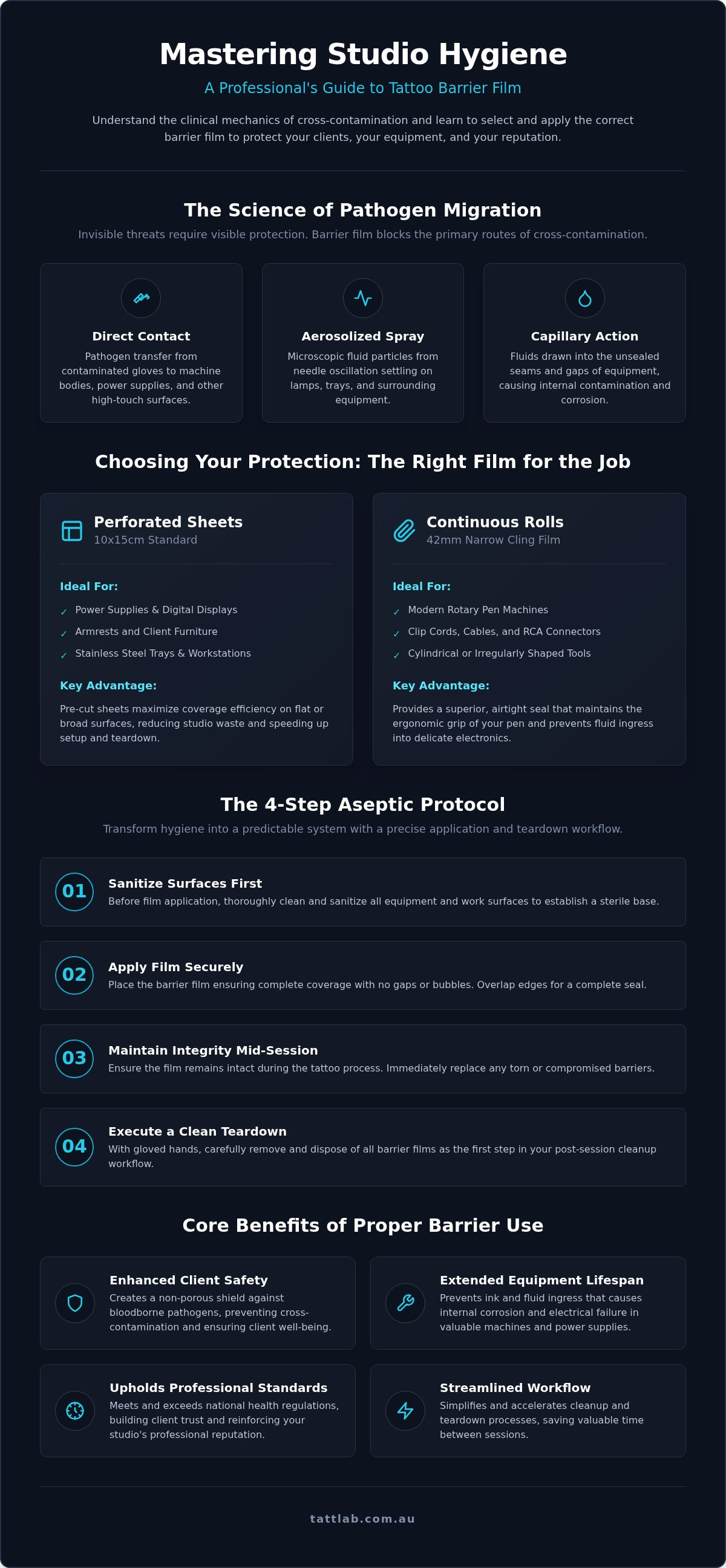
During a session, microscopic fluid particles, including blood, ink, and interstitial fluid, often become aerosolised or migrate through direct contact. These particles settle on high-touch surfaces, creating a significant risk of cross-contamination if those surfaces aren't protected by a reliable shield. Using a dedicated tattoo barrier film reduces the viral load on studio furniture and electronic equipment. Aseptic technique in this context refers to the systematic practice of creating a biological barrier between contaminated gloves and non-sterile surfaces to prevent the transfer of pathogens. Consider these primary migration routes:
- Direct contact transfer from contaminated gloves to machine bodies.
- Aerosolised spray from needle oscillation settling on lamps and trays.
- Capillary action drawing fluids into the seams of non-sealed equipment.
Regulatory Standards for Australian Studios
Maintaining a studio that prioritises safety means aligning your protocols with national health and safety guidelines. In Australia, state-based regulations require the use of single-use plastic covers for equipment to minimise contamination risks. Professional studios should prioritise TGA-aligned medical consumables to ensure their safety standards meet rigorous clinical benchmarks. For a deeper dive into studio safety, our guide on Medical Supplies for Tattoo Artists details the essential PPE required for modern practice.
Protecting your investment is just as important as protecting your client. If ink or biological fluids ingress into sensitive components like rotary motors or digital power displays, it can cause internal corrosion and eventual electrical failure. High-quality tattoo barrier film provides a secure seal that doesn't leave a sticky residue, safeguarding your equipment while upholding the highest hygiene standards. It's about creating a predictable, controlled environment where the technical process feels as clean as the final result.
Choosing Your Protection: Perforated Sheets vs. Continuous Rolls
Selecting the right tattoo barrier film depends entirely on the surface geometry of your workstation and tools. The industry standard remains the 10x15cm perforated sheet, typically provided in rolls of 1200. These sheets are engineered with a specific adhesive tack that ensures they remain secure during high-friction movements without leaving a chemical residue on your equipment. This balance is vital for long-term tattoo safety, as it prevents the buildup of sticky contaminants that can trap bacteria over time.
Colour coding your workstation isn't just an aesthetic choice; it's a tool for clinical organisation. Using blue, black, or clear film helps artists distinguish between different zones of their setup. A clear film allows for easy visibility of digital displays on power supplies, while black or blue can denote specific high-touch areas. This visual system reduces the cognitive load during a session, allowing you to focus on the art while maintaining a controlled environment.
When to Use Perforated Barrier Sheets
These sheets are the primary choice for flat or broad surfaces. Their pre-cut dimensions make them ideal for covering power supplies, armrests, and stainless steel trays. Many professional rolls feature easy-lift edges, which allow gloved hands to peel the film away quickly during teardown without fumbling or tearing. By using these sheets precisely, you maximise coverage efficiency and reduce unnecessary studio waste. If you need to restock, you can explore professional barrier film options designed for the rigours of Australian studios.
The Advantage of Continuous Cling Film
The rise of modern rotary pen machines has popularised the 42mm continuous roll. Unlike wider sheets, these narrow rolls provide a superior, airtight seal for cylindrical equipment. They wrap tightly around the machine body, eliminating the bunching that often occurs with standard sheets. This maintains the ergonomic grip of your pen, ensuring comfort and precision during long sessions. Continuous film is also indispensable for securing cord junctions and RCA connectors. It creates a seamless barrier that prevents ink and biological fluids from seeping into the delicate electrical components of your setup, effectively extending the life of your investment.
Aseptic Application: A Step-by-Step Professional Protocol
The transition from a clean studio to a sterile workstation is a deliberate, methodical process. It's the point where clinical theory meets daily practice, requiring a high level of mindfulness to prevent the silent migration of pathogens. Before the first sheet of tattoo barrier film touches a surface, that surface must be chemically decontaminated. Applying film over a contaminated surface merely traps microorganisms beneath the plastic, creating a false sense of security. Use a hospital-grade sanitiser and allow it to air-dry completely to ensure the adhesive bonds correctly and to prevent trapped moisture from harbouring bacteria.
Setting Up the Sterile Field
When you begin the application process, it's vital to use fresh, non-contaminated gloves. High-touch zones, such as lamp handles, wash bottles, and power supply knobs, require meticulous coverage. For irregular surfaces, overlap each sheet of film by at least two centimetres. This redundancy ensures that as equipment is adjusted or moved during a long session, no gaps emerge in the biological shield. By prioritising this level of precision during setup, you create a predictable environment that allows you to focus entirely on the artistic technicalities of the procedure.
The Aseptic Teardown Process
To Understand risks and precautions associated with bloodborne diseases, an artist must recognise that the teardown is the moment of highest vulnerability. The "Zero-Touch" strategy is essential here to avoid secondary contamination. When removing the tattoo barrier film, peel the edges slowly inward, folding the contaminated exterior surface onto itself. This technique effectively traps ink, blood, and interstitial fluid particles inside a plastic "envelope," preventing them from becoming airborne or touching the underlying equipment.
The removal of barrier film carries a higher risk of secondary contamination than the initial application because the plastic has become a concentrated carrier of biological matter. Once removed, the film must be treated as biohazardous waste. Dispose of all used plastic immediately into a dedicated biohazard bin, ensuring it doesn't come into contact with standard waste receptacles or flooring. This disciplined approach to disposal maintains the clinical integrity of your studio and ensures that your teardown workflow is as professional as your setup.
Protecting Your Investment: Barrier Film and Equipment Longevity
A professional studio setup represents a significant financial investment. Modern rotary pens and digital power supplies are precision instruments with sensitive internal electronics. Without the consistent application of tattoo barrier film, these tools are exposed to the corrosive effects of ink and biological fluids. When fluids bypass external casings, they can cause micro-corrosion on circuit boards and motor assemblies, leading to unpredictable performance or total mechanical failure. Protecting the exterior of your gear is the first step in ensuring its operational life spans years rather than months.
Guarding Against Ink Ingress
The most vulnerable "danger zones" on rotary pens are the adjustment rings and the seams around the motor housing. Even microscopic amounts of fluid ingress can compromise internal lubrication, causing the machine to run hot or lose its stroke consistency. By using high-quality barrier protection, you preserve the internal mechanics and maintain the resale value of your high-end machines. This technical diligence should be paired with a thorough understanding of your hardware, as explored in The Ultimate Guide to Tattoo Needles & Cartridges.
Digital screens and capacitive touch surfaces on power supplies are particularly susceptible to damage from standard cleaning chemicals. Constant exposure to harsh sanitisers can cloud these displays or interfere with touch sensitivity over time. A layer of film prevents the need for aggressive scrubbing, allowing you to maintain a clear interface without compromising the electronic integrity of your gear. It's a simple preventative measure that saves significant costs in repairs and replacements.
Client Reassurance and Aesthetic Professionalism
Beyond the technical benefits, the presence of a meticulously wrapped station offers a profound psychological advantage. A client’s anxiety often stems from the vulnerability of the procedure; seeing a workstation encased in fresh, medical-grade film signals that their safety is your primary concern. This visual cue positions your studio as a leader in clinical safety standards, building immediate trust before the session even begins. It transforms the environment from a simple room into a controlled, professional facility.
Choosing between clear and coloured film allows you to complement your studio’s aesthetic while maintaining a high-end laboratory vibe. Clear film provides a minimalist, clinical look, while black or blue options can define a more modern, boutique persona. Regardless of the colour, the uniformity of your setup reflects a methodical approach to hygiene that clients value. To maintain these standards across every session, you can order medical-grade barrier film to ensure your equipment remains protected and your studio stays compliant.
Sourcing Professional Barrier Film in Australia
Finding a consistent supplier in the Australian market is a strategic necessity for any studio aiming to professionalise its operations. When you source tattoo barrier film, you aren't just buying plastic; you are investing in the biological integrity of your workspace. Consistency in adhesive quality and perforation precision is vital. A roll that fails to tear cleanly or leaves a sticky residue can disrupt your workflow and compromise your aseptic protocols. High-volume studios benefit from establishing wholesale relationships that guarantee a steady stream of medical-grade consumables, ensuring that safety standards never waver due to stock shortages.
The logistics of studio management shouldn't interfere with the creative process. A steady, predictable supply of consumables allows you to maintain a clinical focus without the anxiety of inventory gaps. We prioritise a transparent, results-oriented approach to supply, providing the scientific evidence for our product selections. This methodical precision mirrors the work you perform on the skin, ensuring every session begins with the same high standards of physical integrity and professional care. Relying on a specialist who understands the nuances of cross-contamination control ensures your equipment remains protected and your studio stays compliant with state-based health regulations.
The Tatt Lab Difference
Tatt Lab functions as more than a vendor; we are a dedicated partner in studio safety. As an artist-owned and operated specialist, we understand the practical demands of a busy session. Our products are meticulously vetted for performance, ensuring they meet the clinical rigour required for modern skin penetration procedures. We provide specialised medical-grade supplies that bridge the gap between high-end aesthetics and rigorous health standards. For those looking to refine their entire procurement strategy, our Professional Guide to Tattoo Supplies in Australia offers a comprehensive look at balancing quality, safety, and performance across your entire inventory.
Optimising Your Studio Inventory
Optimising your studio inventory involves more than just reordering when a shelf is empty. It requires a proactive approach to supply chain management, such as setting up a recurring schedule for essential disposables. By bulk purchasing your tattoo barrier film, you reduce the administrative burden and lower the risk of session delays. Integrating high-performance film into your broader safety strategy creates a predictable environment for both the artist and the client. With nationwide express shipping, we ensure that your studio remains equipped with the tools necessary for a sterile, efficient workflow. This commitment to long-term results over quick fixes is what defines a truly professional studio environment. Explore our professional range of barrier films and studio supplies at Tatt Lab to secure your studio’s clinical future.
Elevating Your Clinical Standards
Mastering the application of tattoo barrier film is a fundamental commitment to both your clients' safety and your equipment's operational longevity. By implementing a systematic aseptic protocol, from meticulous pre-application disinfection to the "Zero-Touch" teardown strategy, you remove the uncertainty that often accompanies high-risk procedures. This methodical approach does more than just ensure you pass health inspections; it builds a deep foundation of trust that allows your creative work to flourish within a controlled, predictable environment. Transitioning hygiene from a chore into a precise clinical system is the hallmark of a modern, elite studio.
We believe that your studio deserves consumables that match the rigour of your art. Our artist-owned expertise ensures that every product we offer meets the practical demands of a busy session while upholding the highest medical standards. You can secure your studio with professional barrier film from Tatt Lab and rely on our specialist medical-grade consumables to maintain your workstation's integrity. With express nationwide shipping, we ensure your inventory remains consistent so you can focus on the technical excellence of your craft. Refining your hygiene practices is a significant step toward long-term professional success, and we are proud to be your partner in that progression.
Frequently Asked Questions
Is tattoo barrier film different from regular plastic wrap?
Yes, professional tattoo barrier film is fundamentally different from household plastic wrap. Medical-grade film is non-porous and specifically engineered to prevent the migration of bloodborne pathogens through microscopic gaps. It features a specialized adhesive that provides a secure tack on metal and plastic surfaces without slipping during high-friction sessions. Regular wrap is often too thin and lacks the structural integrity required for clinical infection control, making it an unreliable choice for professional studios.
Does barrier film leave a sticky residue on my tattoo machine?
Professional-grade film is designed for clean, residue-free removal. While some inferior products can leave a sticky buildup, our artist-vetted range balances strong adhesion with technical precision. To prevent residue, ensure your equipment is completely dry after using a sanitiser before applying the film. If residue does occur, it is often a sign of heat-related adhesive breakdown or using a product not specifically rated for the high-friction environment of a modern tattoo studio.
Can I use barrier film on my client’s fresh tattoo?
No, you should never apply equipment barrier film to a fresh tattoo. This film is a non-breathable plastic designed for hard surfaces, not biological tissue. Fresh wounds require specialized tattoo aftercare dressings that are semi-occlusive and breathable, allowing for proper gas exchange during the healing process. Using equipment film on skin can trap bacteria and moisture, significantly increasing the risk of infection and compromising the final aesthetic outcome of the piece.
Why is most tattoo barrier film blue or pink?
The use of blue or pink tints serves a vital clinical purpose: visibility. Coloured tattoo barrier film allows the artist to see exactly where the biological shield begins and ends, reducing the risk of accidentally touching an unprotected surface. It also assists in workstation organisation, helping you distinguish between different zones of your setup. In a fast-paced environment, these visual cues are essential for maintaining a high-end laboratory persona and ensuring meticulous hygiene protocols are followed.
How often should I change the barrier film during a long tattoo session?
Typically, you only need to change the film once per session. However, you must replace it immediately if the physical integrity of the barrier is compromised by a tear or if it begins to peel away. If you accidentally touch a non-sterile surface with contaminated gloves and then touch your wrapped machine, the film is considered cross-contaminated. In these instances, a full teardown and re-application of the barrier are necessary to maintain clinical safety.
What is the best way to remove barrier film without spreading germs?
The most effective method is the "Zero-Touch" removal strategy. Begin by peeling the edges of the film slowly inward, folding the contaminated exterior surface onto itself. This technique effectively traps ink and biological particles inside a small plastic envelope, preventing them from becoming airborne or touching the underlying equipment. Always perform this process while wearing gloves and dispose of the used film immediately into a dedicated biohazard waste bin to ensure studio safety.
Is barrier film recyclable in Australia?
No, used barrier film is not recyclable in Australia. Once it has been used during a skin penetration procedure, the film is classified as biohazardous waste due to contamination with blood and ink. Clinical waste regulations require that all single-use plastics exposed to biological fluids be disposed of in specific biohazard containers. Attempting to recycle these materials would compromise the safety of the waste management stream and violate national health and safety guidelines.
Do I need barrier film if I use a disposable grip?
Yes, barrier protection is still essential even when using disposable grips. While the grip protects the area closest to the needle, the rest of your machine body, power cables, and power supply remain vulnerable to aerosolised spray and cross-contamination from your gloves. A comprehensive setup involves wrapping every high-touch surface to ensure that non-autoclavable equipment remains sterile. Relying solely on a disposable grip leaves the most expensive parts of your setup exposed to pathogens.


Comments (0)
There are no comments for this article. Be the first one to leave a message!