
Your client's trust isn't built on the quality of your linework alone; it's anchored in the invisible protocols that keep them safe long after they leave your chair. While the global tattoo market is projected to reach $6.46 billion by 2035, the sustainable growth of your own studio depends on your ability to maintain a strictly sterile environment. It's a common struggle to feel overwhelmed by the choice between commercial cleaners and medical-grade tattoo hygiene supplies, especially as the costs of essential PPE continue to fluctuate and new regulations like MoCRA redefine industry standards.
We understand that you value physical integrity above all else and view your studio as a space for professional transformation. This guide will help you master the art of studio sanitation by selecting the right medical-grade supplies for a professional, compliant workspace. We'll examine the biological science behind effective barrier protection, the specific chemical requirements for cross-contamination prevention, and the methodical steps you can take to streamline your cleanup processes. By the end, you'll have a clear roadmap to transform your space into a high-end sanctuary where science meets art, ensuring every procedure is as safe as it is meticulous.
Key Takeaways
- Recognize why tattooing requires surgical-grade protocols to protect skin integrity and prevent the transmission of bloodborne pathogens.
- Determine the optimal specifications for nitrile gloves, focusing on mil thickness and puncture resistance to maintain a secure clinical barrier.
- Differentiate between skin antiseptics and surface disinfectants to ensure your tattoo hygiene supplies provide comprehensive chemical protection.
- Streamline your workflow by implementing single-use barrier methods for equipment, effectively neutralizing the risk of cross-contamination.
- Close the safety loop with professional biohazard protocols, ensuring the secure disposal of sharps and contaminated materials.
The Science of Studio Safety: Why Medical-Grade Hygiene Supplies Matter
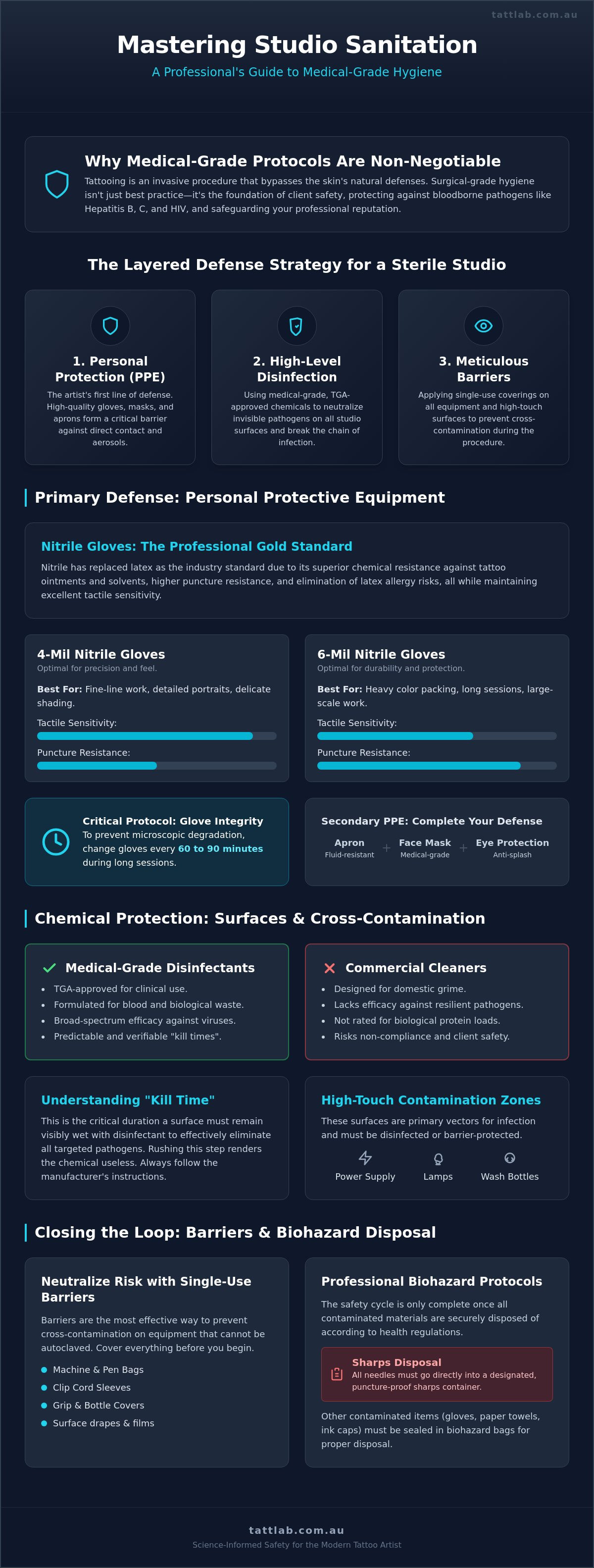
Tattooing is fundamentally an invasive medical procedure. When a needle penetrates the dermis, it bypasses the body's primary defense: the skin. Maintaining skin integrity is the core objective of professional studio safety. Professional tattoo hygiene supplies aren't just cleaning products; they're clinical tools designed to maintain a sterile field and prevent the transmission of bloodborne pathogens like Hepatitis B, C, and HIV. In the context of modern tattooing and studio hygiene, we treat every session with surgical-level precision because the biological stakes are high.
In Australia, artists carry both a legal and ethical weight to uphold strict health standards. It's about protecting the client's physical journey and your own professional reputation. We view studio safety through a "layered defense" strategy. This methodical approach involves three critical pillars: personal protection, high-level chemical disinfection, and meticulous barrier management. When these layers work in unison, they create a predictable, controlled environment that respects the body's biology and ensures long-term safety.
Understanding Cross-Contamination in the Studio
Pathogens are opportunistic. They travel through direct touch, microscopic aerosols, and contaminated equipment surfaces. In a busy studio, "high-touch" zones, like your power supply, lamp handles, and wash bottles, become primary vectors for infection if left unprotected. High-quality tattoo hygiene supplies break this chain of infection by neutralizing invisible threats before they can reach a vulnerable site. It's a proactive science that replaces anxiety with a sense of controlled, predictable progress.
Medical-Grade vs. Commercial Cleaning Products
Household cleaners are designed for domestic grime, not the complex protein loads and pathogens found in a professional tattoo studio. Commercial products often lack the broad-spectrum efficacy required to kill resilient viruses and bacteria. For Australian studios, using TGA-approved disinfectants is essential for surface management because these medical-grade solutions are formulated to handle biological waste effectively. A critical factor to consider is "kill time," which is the specific duration a surface must remain wet with a disinfectant to successfully eliminate targeted pathogens before you can safely transition to your next client. Relying on inferior products doesn't just risk non-compliance; it compromises the physical integrity of your work and the health of your community.
Selecting the Primary Defense: A Guide to Nitrile Gloves and PPE
Your hands are your most critical instruments, yet they also represent the most significant risk for cross-contamination. Establishing a robust primary defense begins with selecting the right Personal Protective Equipment (PPE). While latex was once common, nitrile has emerged as the professional gold standard for modern artists. This shift isn't just about avoiding latex allergies; nitrile offers superior chemical resistance against the petroleum-based ointments and solvents often found in tattoo hygiene supplies. It provides a more durable barrier that doesn't compromise the tactile sensitivity required for intricate work.
Maintaining a sterile field requires a methodical approach to how you wear and change your gear. A common mistake is assuming a single pair of gloves will last an entire six-hour session. Over time, friction, sweat, and exposure to pigments can cause microscopic degradation of the material. We recommend changing your gloves every 60 to 90 minutes during long procedures to ensure the integrity of the barrier remains absolute. This practice, combined with a clean-room mindset, ensures that your studio remains a sanctuary of health and safety.
Nitrile Gloves: Thickness and Texture
Choosing the right glove involves balancing tactile feedback with durability. For fine-line work or detailed portraits, a 4-mil nitrile glove offers excellent sensitivity, allowing you to feel the vibration of the machine and the resistance of the skin. However, for heavy packing or long sessions, a 6-mil glove provides the puncture resistance necessary to prevent accidental needle sticks. Textured fingertips are another essential feature; they provide the necessary grip to manage machine weight and ink flow without slipping. For a deeper dive into the technical specifications of studio consumables, explore our guide on medical supplies for tattoo artists.
Secondary PPE: Beyond the Hands
While gloves are the first line of defense, secondary PPE protects the artist and the studio environment from biological splashes and aerosols. Disposable fluid-resistant aprons are vital for protecting your clothing from ink and fluids, which can act as carriers for pathogens. Similarly, medical-grade face masks have become a staple for close-contact work, preventing the spread of respiratory droplets. According to the FDA tattoo safety advisory, unsterile practices are a primary cause of infection, making these additional layers of protection non-negotiable. Eye protection should also be considered during procedures where splashing is likely, completing your clinical profile as a trusted specialist who values physical integrity above all else.
If you're looking to restock your workstation with artist-vetted quality, you can find our full range of medical-grade PPE and consumables designed for the modern Australian studio.
Chemical Integrity: Comparing Disinfectants and Skin Sanitisers
Chemical integrity is the foundation of a predictable, sterile environment. We must draw a clear line between antiseptics, which are designed for living tissue, and disinfectants, which are formulated for inanimate surfaces. Confusing the two doesn't just risk non-compliance; it can lead to severe skin irritation for your clients or insufficient pathogen neutralization on your equipment. Selecting the right tattoo hygiene supplies requires an understanding of how these chemicals interact with both biology and studio materials.
Green Soap remains a cornerstone of the industry because of its versatility as a surfactant and mild antiseptic. Proper dilution is critical; most artists favor a ratio of one part soap to eight or ten parts distilled water. This solution effectively removes excess pigment and skin oils without stripping the dermis of its natural moisture. When applied with a gentle, blotting technique, it maintains the skin's calm state, which is essential for a successful procedure and an easier healing process.
Skin Preparation and Antiseptics
Creating a sterile canvas begins long before the needle touches the skin. We use 70% isopropyl alcohol to dehydrate the surface and remove transient bacteria, followed by a targeted skin cleanser. This preparation ensures that Tattoo Stencils and transfer gels adhere perfectly without trapping pathogens beneath the film. Because the health of the skin directly impacts how it receives pigment, you might find our professional guide to tattoo ink useful for understanding the biological synergy between prep and pigment. Even though Australian guidelines are our primary focus, looking at international state-level hygiene regulations shows a global consensus on the necessity of these meticulous handwashing and skin-cleansing protocols.
Surface Disinfection Protocols
Your workstation requires a different level of chemical rigor. Pre-soaked medical wipes are often more efficient than sprays, as they ensure a consistent saturation level and reduce the risk of airborne chemical particles. It's important to select non-corrosive chemicals to preserve the life of your expensive tattoo furniture, especially vinyl beds and powder-coated trays. In the Australian context, a "hospital-grade" label is a non-negotiable requirement because it guarantees the solution has been tested against the specific bloodborne pathogens encountered in a clinical setting. While alcohol-based solutions are excellent for stainless steel, alcohol-free disinfectants are preferred for sensitive upholstery to prevent cracking and premature wear. This methodical approach to choosing your tattoo hygiene supplies ensures that your studio remains a high-end laboratory where science meets art.
The Barrier Method: Essential Disposables for a Sterile Workstation
While chemical disinfection creates the foundation, physical barriers provide the secondary shield that ensures a truly sterile field. The industry has moved decisively away from reusable equipment toward a single-use standard. This shift isn't just about convenience; it's a methodical effort to eliminate the risks associated with human error in sterilization. Integrating high-quality tattoo hygiene supplies into your setup routine creates a predictable environment where the focus remains on the artistic transformation rather than the fear of cross-contamination.
Essential barrier products act as a protective skin for your tools. Clip cord covers, machine bags, and bottle covers are non-negotiable components of a modern workstation. These disposables prevent blood and ink from settling on equipment that cannot be autoclaved. We also use medical-grade barrier film for power supplies and adjustable furniture handles. This ensures that even the most frequently touched surfaces remain isolated from biological materials throughout the session.
Step-by-Step: Setting Up a Sterile Workstation
Establishing a clean field requires a disciplined, step-by-step approach. This ritual lowers anxiety for both the artist and the client, replacing uncertainty with visible evidence of care. It transforms the technical preparation into a reassuring narrative of safety.
- Step 1: Perform a thorough surface disinfection using hospital-grade wipes, ensuring the required kill time is met before proceeding.
- Step 2: Apply barrier film to all high-touch points, including lamps, power units, and any adjustable armrests or furniture handles.
- Step 3: Lay out your sterile disposables, such as ink cups, tongue depressors, and dental bibs, on a protected tray or workstation.
Specialised Equipment Barriers
Modern equipment requires specialised protection. Protecting rotary pens and coil machines is a delicate balance; you must seal the device without obstructing airflow or compromising your grip. Many artists are now transitioning to biodegradable or eco-friendly barrier options to reduce the environmental footprint of their clinical waste. This evolution reflects a broader commitment to holistic wellness and professional integrity. For a comprehensive look at how these choices impact your practice, see the professional guide to tattoo supplies in Australia.
Managing ink spills and biological fluids is equally important. Dental bibs and lap cloths provide a highly absorbent layer that prevents moisture from reaching the client's clothing or your workstation. If you're ready to upgrade your studio's clinical standards, you can find our full range of artist-vetted tattoo hygiene supplies and barriers designed for the Australian professional.
Closing the Loop: Biohazard Disposal and Post-Procedure Protocols
The final phase of a tattoo procedure is often the most critical from a cross-contamination perspective. As the adrenaline of the creative process fades, the discipline of clinical disposal must take over to ensure the safety of your studio environment. Closing the loop on your session requires a methodical breakdown of the workstation, ensuring no trace of biological material remains. This stage is where your investment in high-quality tattoo hygiene supplies proves its worth, facilitating a safe transition from a contaminated field back to a sterile sanctuary.
Stripping a station is a deliberate process of containment. You must work in a logical sequence, removing the most contaminated items first while ensuring your own PPE remains intact until the final step. It's not just about tidying up; it's about neutralizing potential threats before they can leave your immediate workspace. This rigorous approach protects you, your next client, and the professional integrity of your boutique studio, projecting a sense of meticulousness and calm that clients deeply value.
Sharps Management and Disposal
The absolute necessity of sharps containers cannot be overstated. Every needle and cartridge used during the session must be disposed of immediately into a puncture-resistant, Australian-standard sharps container. Selecting the right size for your studio volume is essential to avoid overfilling, which is a primary cause of accidental needle sticks. When removing Tattoo Catridges from your machine, use a focused technique to maintain a safe distance from the point. Australian regulations for professional biohazard waste collection require these containers to be rigid, yellow, and clearly marked, ensuring they're handled by licensed waste disposal services to maintain community safety.
Final Cleanup and Consultation
The "clean-as-you-go" approach is often a myth that leads to compromised barriers; instead, we advocate for a dedicated end-of-session deep clean. Once all sharps and soft biohazardous waste, like contaminated wipes, gloves, and bibs, are secured in appropriate waste streams, the final sanitation begins. This involves a second, medical-grade wipe-down of all surfaces to meet hospital-grade rigor. Choosing the right tattoo hygiene supplies for this final step ensures that your furniture and equipment are ready for the next procedure without delay. As you finish, guide your client through their initial Tattoo Aftercare. This transition from procedure to healing is a vital part of the liberating narrative of personal transformation you provide, and for those seeking to further support their physical recovery, clinics like Body Therapist offer specialized body care.
Equip your studio with professional medical supplies from Tatt Lab to ensure your safety protocols are as precise as your art.
Elevating Your Studio to Clinical Excellence
The transition from a technical procedure to a safe, aesthetic outcome depends entirely on the clinical rigor of your environment. A layered defense strategy, from selecting high-performance nitrile gloves to implementing hospital-grade surface disinfection, creates a predictable shield against cross-contamination. By prioritizing physical integrity and professional tattoo hygiene supplies, you ensure your studio remains a high-end laboratory where science and art coexist. This methodical approach builds the deep trust required for a successful, liberating narrative of personal transformation.
Equipping your workspace with artist-vetted safety consumables shouldn't be a source of anxiety. Whether you're refining your barrier methods or securing specialized medical-grade PPE and disinfectants, having a dedicated partner ensures your focus remains on the work itself. We provide nationwide express shipping across Australia to ensure your studio's progression is never interrupted by supply shortages.
Browse the Professional Medical Supplies Collection at Tatt Lab
Your commitment to safety is the ultimate mark of a trusted specialist. We're here to support your professional journey, ensuring every procedure is as meticulous as the art you create.
Frequently Asked Questions
What are the most essential tattoo hygiene supplies for a new studio?
Essential tattoo hygiene supplies for a new studio include high-mil nitrile gloves, TGA-approved surface disinfectants, and medical-grade barrier films. You'll also need skin antiseptics like Green Soap, single-use ink cups, and Australian-standard sharps containers. Having these clinical tools on hand ensures you can establish a sterile field from your very first procedure, protecting both your professional reputation and your client's health.
Can I use standard household disinfectants to clean my tattoo station?
You shouldn't use standard household disinfectants to clean a professional tattoo station. Domestic cleaners aren't formulated to neutralize the specific bloodborne pathogens encountered during invasive procedures. Professional studios require hospital-grade solutions that are TGA-approved for clinical environments. These medical-grade products provide the broad-spectrum efficacy needed to ensure your workspace remains a safe, predictable sanctuary for every client who enters your chair.
How often should I change my nitrile gloves during a tattoo session?
You should change your nitrile gloves every 60 to 90 minutes during a session or immediately if they become punctured or heavily soiled. Extended wear can cause the material to degrade due to sweat and friction, compromising the barrier's integrity. Frequent changes are a methodical way to maintain a sterile environment and prevent cross-contamination, especially during the long sessions required for complex magnums or large-scale work.
What is the difference between an antiseptic and a disinfectant in tattooing?
The primary difference is the application site: antiseptics are used on living tissue, while disinfectants are for inanimate surfaces. Antiseptics, such as isopropyl alcohol, prepare the skin for Tattoo Stencils by reducing bacterial loads. Disinfectants are stronger chemicals designed to kill pathogens on workstations and equipment. Using the wrong product can result in either ineffective sterilization or severe skin irritation for your client.
Are biodegradable tattoo hygiene supplies as effective as standard plastics?
High-quality biodegradable tattoo hygiene supplies are just as effective as standard plastics when sourced from reputable medical manufacturers. These eco-friendly barriers, such as compostable clip cord covers, provide the same level of moisture resistance and pathogen isolation. Transitioning to sustainable options allows you to maintain clinical rigor while aligning with a more holistic approach to wellness and environmental responsibility in your boutique studio.
How do I safely dispose of used tattoo needles and cartridges in Australia?
In Australia, you must dispose of used Tattoo Catridges and needles in a rigid, yellow sharps container that meets AS 4031 standards. Once the container reaches the fill line, it must be collected by a licensed biohazard waste service. This process is a legal requirement that ensures dangerous materials are neutralized safely, protecting both your studio team and the broader Australian community from accidental needle sticks.
Why is "kill time" important when choosing a studio disinfectant?
Kill time is the specific duration a surface must remain wet with a disinfectant to successfully eliminate pathogens. If you wipe away a solution too early, it won't achieve its full biocidal potential, leaving your station contaminated. Respecting the manufacturer's stated kill time is a critical part of your methodical cleanup process, ensuring that the room is truly prepared for the next phase of your professional workflow.
What PPE is required for tattoo artists beyond just gloves?
Beyond gloves, professional artists require fluid-resistant disposable aprons, medical-grade face masks, and occasionally eye protection. These additional layers shield you from biological aerosols and ink splashes that can occur during high-pressure procedures. Using a comprehensive suite of PPE reflects a meticulous commitment to safety, framing your practice as a high-end laboratory where every detail of physical integrity is carefully managed.


Comments (0)
There are no comments for this article. Be the first one to leave a message!