

What if the most critical decision in your healing process isn't which balm you use, but knowing exactly when the wound officially becomes skin? You've invested significant time and resources into your new ink, so it's natural to feel a sense of hyper-vigilance every time you head to the sink. Between conflicting internet forums and the fear of over-scrubbing, the question of when can i stop washing my tattoo often leads to more anxiety than clarity. Over-cleaning can irritate fragile new cells, while under-cleaning risks infection, making the timing of your transition essential for long-term vibrancy.
We're moving past the guesswork phase of aftercare to provide you with a protocol rooted in modern dermatology and the 2026 MoCRA standards. You'll discover the precise biological markers, such as the completion of the exfoliation phase and the restoration of the natural lipid barrier, that signal your skin is ready to transition from active cleaning to long-term maintenance. This guide breaks down a professional day-by-day healing timeline, identifies the physical milestones of dermal closure, and explains how to safely adjust your routine as your body completes its four-to-six-week recovery journey.
Key Takeaways
- Identify the professional window for active cleansing, which typically spans 14 to 21 days while the skin remains a vulnerable open wound.
- Learn to recognize the "Silver Skin" marker, a shiny new layer of epidermis that indicates your dermal barrier has successfully closed.
- Understand the specific biological cues that help you determine when can i stop washing my tattoo based on the absence of localized heat and inflammation.
- Avoid the common pitfalls of over-washing, such as stripping the skin's acid mantle or causing scabs to swell and pull pigment from the dermis.
- Master the transition from intensive wound management to a sustainable, once-daily routine that prioritizes long-term skin integrity and ink vibrancy.
Understanding the Biological Timeline: When Can You Stop Washing Your Tattoo?
Your body's cellular response to dermal trauma, rather than a fixed calendar date, dictates the timeline for wound closure. Determining when can i stop washing my tattoo requires a shift in perspective. You aren't just cleaning a surface; you're managing a biological transition from pathogen prevention to moisture retention. While most artists suggest a standard window of 14 to 21 days for active washing, this duration is a clinical estimate that depends on how quickly your specific skin barrier repairs itself. As long as the tattoo site is technically an "open wound," the risk of bacterial infiltration remains high, making consistent sanitation a non-negotiable priority for skin integrity.
To understand the biological healing process, one must view the tattoo as a controlled medical injury. Individual healing rates vary significantly based on several factors. A large-scale piece on your back involves more surface area trauma than a small fine-line design on your forearm. Placement also matters; areas with high mobility or friction, such as joints, often require a longer period of active washing because the skin is frequently stretched, potentially reopening micro-fissures in the healing tissue. Your immune health and local circulation further influence how rapidly your body can move through these stages.
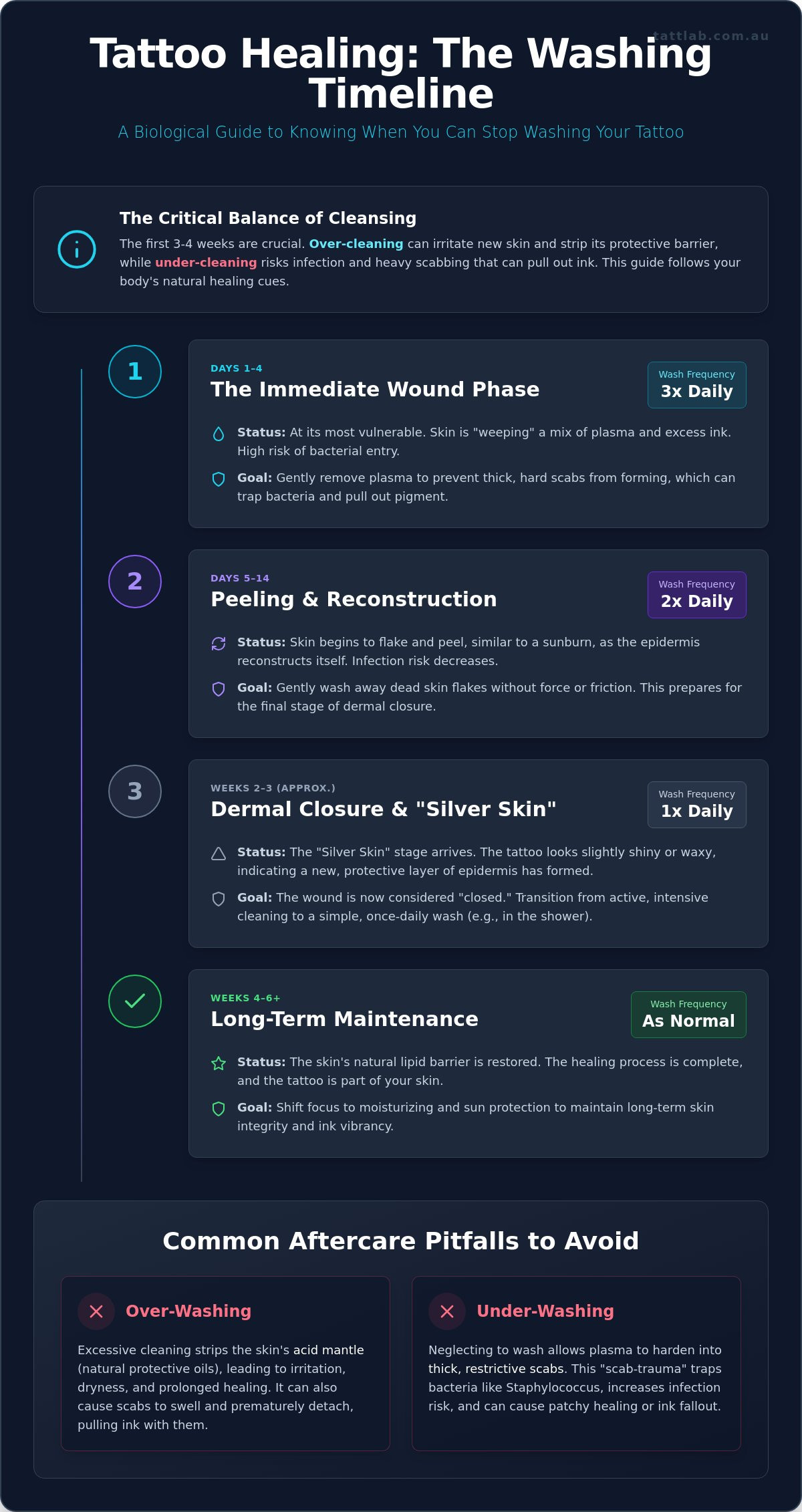
The Immediate Wound Phase (Days 1–4)
During the first 96 hours, your tattoo is at its most vulnerable. This stage is characterized by "weeping," where the skin expels a mixture of excess ink and interstitial fluid. Washing three times a day during this phase is critical to prevent these fluids from drying into thick, heavy scabs that can trap bacteria and eventually pull pigment out of the dermis. Plasma is the body's natural sealant that requires careful management. If left to sit on the skin, it hardens into a crust. By using professional-grade cleansers to gently remove this buildup, you ensure a thin, breathable layer of protection rather than a restrictive scab.
The Peeling and Reconstruction Phase (Days 5–14)
As you enter the second week, you'll notice the skin beginning to flake or peel, similar to a sunburn. This signals that the epidermis is reconstructing itself. Your washing frequency can typically reduce during this stage because the high-risk infection window is closing. It is vital to remove dead skin flakes through gentle, circular washing rather than force or friction. You'll eventually see the "silver skin" stage, where the tattoo looks slightly shiny or waxy. This appearance confirms that a new, albeit thin, layer of protective epidermis has formed, signaling that the most intensive phase of wound management is nearly complete.
The Science of Sanitation: Why Washing Frequency Changes During Healing
The frequency of your cleaning routine is not arbitrary; it's a direct response to your skin's declining bacterial vulnerability. In the initial 72 hours, your immune system is in a state of high alert, and the dermal layer remains exposed. During this window, active cleaning with specialist products is required two to three times daily. As the epidermis begins to knit together, the risk of pathogen infiltration decreases, allowing you to taper your routine. By the second week, most individuals can safely move to twice-daily cleaning, eventually transitioning to a standard daily shower by week three. Understanding when can i stop washing my tattoo depends on recognizing this gradual restoration of your physical defense system.
Environmental variables significantly impact this timeline. In high-humidity regions of Australia, moisture can linger on the skin, potentially creating a breeding ground for bacteria if the area isn't dried properly after cleaning. Conversely, in dusty or arid environments, fine debris can settle into the healing tissue, necessitating more frequent active cleaning rather than just a simple rinse. Distinguishing between "rinsing" and "active cleaning" is vital. A rinse merely moves water over the surface, whereas active cleaning involves using a pH-balanced antimicrobial agent to emulsify and lift away biological waste. Following a structured daily tattoo aftercare plan ensures you don't under-clean during the most critical phases of recovery.
Managing Plasma and Excess Ink
During the first few days, your body produces plasma to initiate the clotting process. If this plasma is trapped under a layer of ointment or not washed away, it hardens into thick scabs. This leads to "scab-trauma," where the scab becomes so heavy it pulls on the underlying dermis, potentially causing ink fallout or patchy healing. Using lukewarm water is essential here; the mild heat helps open the pores slightly, allowing for a deeper and safer removal of sticky surface debris without the need for aggressive scrubbing. This precise management ensures the tissue remains supple and the pigment stays locked in place.
Preventing Bacterial Colonisation
Fresh tattoos are prime targets for environmental pathogens like Staphylococcus aureus. While the tattoo itself requires care, professional tattoo aftercare protocols emphasize that hand hygiene is actually the most critical factor. Most infections are introduced by the user's own fingers during the cleaning process. By standardizing your sanitation routine and using artist-vetted supplies, you create a controlled environment that mimics a clinical facility. If you're looking to upgrade your setup, consider browsing our range of professional-grade tattoo aftercare solutions designed for modern skin integrity.
Visual Indicators: How to Know Your Tattoo No Longer Needs Active Washing
Transitioning away from intensive wound management is a process of observation rather than a strict adherence to a calendar. While the biological timeline provides a framework, your skin's visual profile offers the most accurate data for determining when can i stop washing my tattoo. The most reliable indicator is the "Silver Skin" test. This occurs when the initial peeling has finished, leaving behind a layer of skin that appears slightly shiny, waxy, or translucent. This sheen is a sign that the epidermis has successfully closed, creating a protective barrier that no longer requires the same level of antimicrobial intervention as a fresh wound.
Another critical marker is the complete absence of "heat" in the area. During the first few days, the inflammatory response causes the skin to feel warm to the touch. Once this localized temperature returns to match the rest of your body, it signals that the acute healing phase is over. You should also perform a texture check with clean hands. The tattooed area should feel flat and integrated with the surrounding tissue. If the skin feels raised, bumpy, or significantly different in texture, the deeper layers are likely still in a state of reconstruction. Finally, look for "Ink Settlement." As the new epidermis thickens, your ink may appear slightly more muted or "settled" compared to the high-contrast brightness of day one. This signifies that the pigment is now safely housed beneath a stable layer of skin.
From Open Wound to Integrated Art
It is essential to differentiate between surface healing and deep tissue recovery. You can typically stop antimicrobial washing once the surface transitions from a shiny, vulnerable state to a smooth, matte finish. At this stage, the tattoo is no longer an open channel for bacteria. Your focus shifts from therapeutic cleaning, designed to prevent infection, to cosmetic maintenance. This transition allows the skin to begin restoring its natural lipid barrier without the constant interruption of active surfactants found in cleansers.
Assessing the Peeling Process
Many people make the mistake of halting their cleaning routine as soon as the large flakes of skin have shed. However, a "micro-peeling" stage often follows the initial shedding, where tiny, almost invisible particles of dead skin continue to slough off. You must continue gentle cleaning until this secondary phase is complete to avoid clogging the new pores. Silver skin is a temporary phase of thin, developing tissue. Because this new skin is still delicate, your washing should remain low-pressure and fragrance-free until the texture perfectly matches your natural skin grain.
The Risks of Over-Washing and Improper Cleansing Technique
While vigilance is necessary, there is a point where excessive cleaning becomes detrimental to the recovery process. Your skin possesses a delicate acid mantle, a thin film with a slightly acidic pH that acts as the body's primary defense against pathogens. When you ask yourself, "when can i stop washing my tattoo," you must consider the health of this mantle. Over-washing strips these natural oils and disrupts the pH balance, which can paradoxically delay cellular repair and increase the risk of irritation. A healthy healing environment requires a balance between sanitation and the skin's own restorative biological functions.
Improper technique also carries the risk of "waterlogging." This occurs when the healing tissue is exposed to water for too long, causing the scabs to swell and soften. Saturation weakens the bond between the scab and the new skin underneath. If a waterlogged scab falls off prematurely, it can pull the pigment from the dermis, leading to patchy results and loss of detail. Stinging during your cleaning routine or a persistent, spreading redness often signals that the skin barrier is compromised and needs a more balanced approach. These symptoms suggest that the aggressive removal of surface cells is outpacing the body's ability to regenerate them.
Identifying Over-Washed Skin
Over-cleaned skin typically exhibits a "parched" or waxy appearance. The tattoo may feel excessively tight, or you might notice micro-cracks forming in areas of high movement. Once the initial weeping phase has concluded, usually by day four, the mantra of "less is more" should guide your routine. If you realize you've been over-cleaning, the best rescue strategy is to immediately reduce washing frequency to twice daily and switch to a more emollient-based hydration strategy to restore the lipid barrier and prevent further cracking.
Choosing Professional-Grade Cleansers
The chemical composition of your soap is just as vital as the frequency of the wash. Many supermarket "antibacterial" soaps are formulated with harsh surfactants and have an alkaline pH that is too aggressive for healing tissue. Specialist formulas are pH-balanced to mirror the skin’s natural state, ensuring they remove debris without destroying the acid mantle. It's also helpful to understand how professional tattoo ink interacts with these cleansers, as high-quality pigments require a stable, healthy environment to remain vibrant. To ensure you're using the right tools for the job, explore our range of artist-vetted tattoo aftercare to protect your investment and ensure skin integrity.
Transitioning from Active Cleaning to Long-Term Skin Integrity
Reaching the stage where you can officially reduce your cleaning frequency is a significant milestone in your tattoo’s narrative. Once the "silver skin" has fully matured and the tissue feels integrated with the surrounding area, your biological needs shift from wound management to dermal preservation. This transition typically involves moving from washing three times a day to a single, gentle cleaning during your regular daily shower. While you no longer require a clinical sanitation protocol, maintaining the integrity of the new epidermis is essential for preventing the ink from appearing dull or prematurely aged. Determining when can i stop washing my tattoo with such intensity allows your skin to begin its final phase of deep-tissue reconstruction without the constant disruption of active surfactants.
As you scale back on washing, the introduction of long-term moisturisers becomes the new priority. Unlike the heavy ointments used in the first 72 hours, maintenance products should be lightweight and non-comedogenic to avoid clogging pores. Professional studios often recommend specific tattoo supplies for this phase because regular supermarket lotions frequently contain alcohols or artificial fragrances that can irritate the still-developing skin barrier. UV protection also becomes non-negotiable at this stage. Since you've stopped the protective washing and thin-film barrier phase, the new skin is highly susceptible to solar damage. Applying a broad-spectrum SPF 30 or higher ensures the pigment remains stable and the edges of your art stay crisp.
Integrating Specialist Aftercare Solutions
The distinction between a healing balm and a daily maintenance lotion is rooted in the product's molecular weight and intended function. Healing balms are designed to sit on the surface to manage plasma and prevent scabbing, whereas maintenance lotions are formulated for deep absorption into a "settled" tattoo. To maximize benefits, apply your chosen lotion to slightly damp skin after your daily shower, using a minimalist approach. Tatt Lab vets every recommended product for clinical safety and artist-vetted performance, ensuring that the transition from wound care to lifestyle skincare doesn't compromise the long-term vibrancy of the work.
Long-term Maintenance for Ink Vibrancy
Hydration is the primary driver of ink depth. Dehydrated skin creates a frosted appearance over the pigment, making black ink look grey and colours appear muted. Occasionally, you might notice a "second healing" phase where the skin becomes suddenly itchy or dry after you've stopped active washing. This is usually a reaction to environmental changes or new skincare products rather than a return to an open wound state. Before you officially move your tattoo into your regular skincare routine, consult this final checklist:
- The skin texture is perfectly smooth and no longer reflects light differently than the surrounding area.
- There is zero tenderness when the area is compressed or stretched.
- The "silver skin" sheen has faded into a natural, matte finish.
- All micro-peeling has concluded, and no flakes are visible even after a shower.
Securing Your Ink’s Future
Mastering the transition from active wound management to daily maintenance is the final step in protecting your artistic investment. You've learned that the answer to when can i stop washing my tattoo isn't found on a calendar, but within the biological signals of your own skin. Once the "Silver Skin" phase is complete and localized inflammation has fully subsided, your focus must shift toward long-term hydration and UV protection. This methodical approach ensures that the pigment remains vibrant and the skin barrier stays resilient against environmental stressors.
Consistency in aftercare is what separates a fading piece from a lifelong masterpiece. As an artist-owned and operated facility, we understand the precision required for optimal results. We provide medical-grade safety standards for all our supplies to ensure your skin integrity is never compromised. Explore Professional Tattoo Aftercare at Tatt Lab and benefit from express nationwide shipping across Australia. Your journey from a fresh procedure to a healed narrative of self-assurance is almost complete. Trust the science of your body, stay diligent with your routine, and enjoy the lasting clarity of your new ink.
Frequently Asked Questions
Is it okay to stop washing my tattoo after 3 days?
No, you should not stop active washing after only three days. At this stage, the dermal layer is still expelling plasma and excess ink, and the epidermis has not yet begun to reconstruct its protective barrier. Halting your sanitation routine this early significantly increases the risk of bacterial infiltration and heavy scabbing, which can lead to pigment loss. Most professionals recommend continuing a structured cleaning protocol for at least 14 days to ensure skin integrity.
What happens if I forget to wash my tattoo for a day?
If you miss a scheduled wash, the most important step is to clean the area with a pH-balanced cleanser as soon as you remember. A single missed session rarely leads to infection, but it can allow biological waste to harden on the surface. This buildup might cause the skin to feel tight, itchy, or prone to cracking. Simply resume your routine with extra care, ensuring you don't scrub the area to "make up" for the missed time.
Can I use normal body wash on my tattoo after the first week?
You should avoid standard supermarket body washes even after the first week of healing. Many commercial products contain synthetic fragrances, alcohols, and harsh surfactants that can strip the developing acid mantle. These ingredients often cause stinging or localized redness in the new tissue. It is safer to use a specialist antimicrobial cleanser until the "Silver Skin" phase is fully complete and the texture matches your natural skin grain.
How do I know if I'm over-washing my new tattoo?
Signs of over-washing include excessive skin tightness, a waxy appearance, or micro-cracking in the tattooed area. If you're asking when can i stop washing my tattoo because the skin feels constantly irritated, you may be stripping away the natural lipids required for cellular repair. Over-cleaning can delay the healing process by forcing the body to focus on surface repair rather than deep-tissue integration. Reduce your frequency to twice daily if these symptoms appear.
Should I still wash my tattoo if it has finished peeling?
Yes, you should continue cleaning the area, but you can transition from active wound management to a gentle daily wash. Even after the large flakes have shed, the tattoo often undergoes a "micro-peeling" phase that is less visible but still requires hygiene. Once the peeling has completely stopped and the skin feels integrated, you can officially move the tattoo into your regular, low-pressure shower routine without the need for additional antiseptic sessions.
Can I go swimming once I stop the active washing phase?
No, you must wait until the tattoo is fully healed, typically four to six weeks, before submerged swimming in pools or oceans. While you may have stopped the active washing phase because the surface is closed, the deeper layers of the dermis are still recovering. Chlorine and bacteria in open water can still cause complications or irritation. Wait until the skin texture is completely normal and the "Silver Skin" sheen has vanished before swimming.
Is it normal for my tattoo to look dull after I stop washing it?
It is completely normal for a tattoo to look slightly muted or dull once you transition to maintenance care. This occurs because the new epidermis is thickening over the pigment, creating a temporary "frosted" effect. This is a sign of successful healing rather than ink loss. Once the skin is fully mature, regular hydration with a quality lotion will restore the clarity and depth of the black and colored inks.
Does the location of the tattoo change when I can stop washing it?
Yes, the location significantly influences the timeline for when can i stop washing my tattoo. Areas with high mobility, such as elbows, knees, or hands, often require a longer active washing window because the skin is frequently stretched and stressed. This movement can create micro-fissures that remain vulnerable to bacteria longer than a tattoo on a flat, stable surface like the outer thigh. Always prioritize the visual markers of closure over a generic timeframe.


Comments (0)
There are no comments for this article. Be the first one to leave a message!