
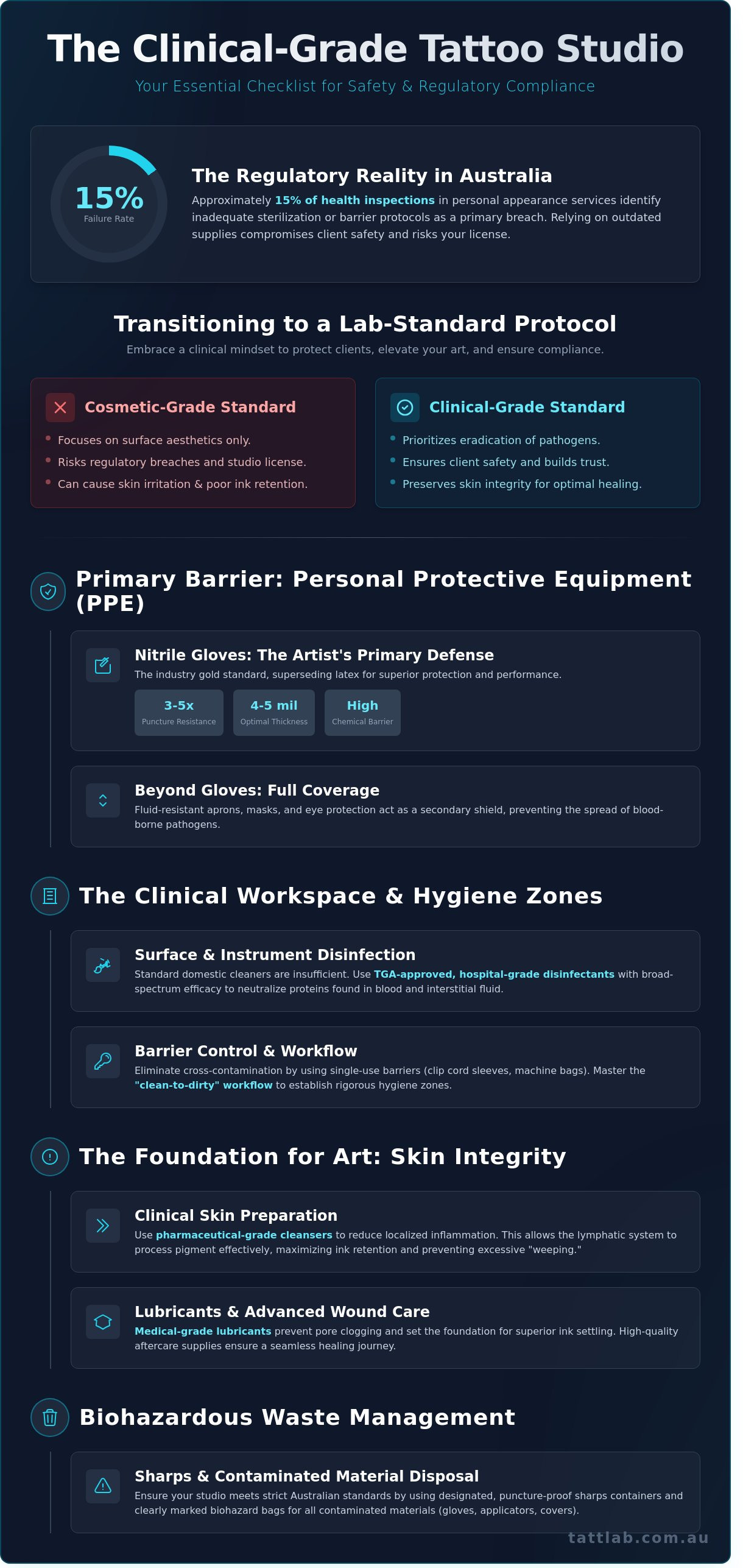
In Australia, approximately 15% of health inspections in personal appearance services identify inadequate sterilization or barrier protocols as a primary regulatory breach. While your artistry is the heart of your business, the clinical safety of your environment determines its longevity. Relying on an outdated or incomplete tattoo studio medical supplies list doesn't just risk your license; it compromises the skin integrity of every client who walks through your doors. We know that distinguishing between cosmetic-grade tools and true medical-grade supplies is a source of constant pressure for modern studio owners.
You shouldn't have to guess which products meet the rigorous standards of 2026 health regulations. We've compiled a comprehensive, clinical-grade checklist designed to eliminate cross-contamination and elevate your studio's reputation for safety to a Lab-standard level. This guide details every essential item from TGA-approved disinfectants to advanced wound care, providing a clear roadmap for your studio's evolution into a high-performance clinical space. We'll explore the specific consumables and protocols that ensure a seamless healing journey and total regulatory compliance.
Key Takeaways
- Understand why transitioning to clinical-grade consumables is essential for maintaining skin integrity and ensuring a predictable healing journey for every client.
- Learn to navigate the hierarchy of protection by selecting PPE that balances high-level chemical resistance with the tactile precision required for intricate artistry.
- Master the "clean-to-dirty" workflow using our comprehensive tattoo studio medical supplies list to establish rigorous hygiene zones within your professional space.
- Discover how choosing medical-grade lubricants and skin preparation tools prevents pore clogging and sets the foundation for superior ink retention.
- Ensure your studio meets strict Australian standards for biohazardous waste management, focusing on the safe handling and disposal of sharps and contaminated materials.
The Professional Tattoo Studio Medical Supplies List: Why Clinical Standards Matter
A professional tattoo studio medical supplies list represents more than just operational inventory. It's the blueprint for client safety and artistic longevity. In a modern Australian studio, medical-grade supplies are defined by their ability to eliminate cross-contamination risks while maintaining the biological environment necessary for healing. While a standard retail environment might focus on surface aesthetics, a clinical tattoo environment prioritizes the eradication of blood-borne pathogens and the preservation of the dermal layer.
Choosing clinical-grade consumables directly influences how the body receives pigment. Lower-quality barriers or non-sterile prep solutions can introduce irritants that trigger an overactive immune response. This often leads to excessive swelling or "weeping," which pushes ink out of the skin before it can settle. By following rigorous protocols for the tattooing process and studio hygiene, artists ensure that the skin remains a stable medium for their work. Standard domestic cleaning products often lack the surfactant power or the broad-spectrum efficacy required to neutralize the specific proteins found in blood and interstitial fluid.
Skin Integrity as a Foundation for Art
The Tatt Lab philosophy views the skin as a sophisticated biological system rather than a flat surface. Clinical-grade preparation reduces localized inflammation, which is essential for maximizing ink retention. When the skin is treated with pharmaceutical-grade cleansers, the lymphatic system can focus on processing the pigment particles effectively instead of fighting off surface bacteria. We treat every workstation as a Lab, a controlled space where the transformation of the skin is guided by science. This methodical approach ensures that the "clearance" of the healing process is as smooth as the application itself. High-quality supplies act as a bridge between the artist's vision and the body's natural recovery mechanisms.
Navigating Australian Safety Standards
In Australia, the regulatory landscape for skin penetration is governed by state-specific health acts and the overarching guidance of the Therapeutic Goods Administration (TGA). It's vital to distinguish between products that are simply "clean" and those that are "sterile" or TGA-listed as hospital-grade disinfectants. By 2026, the industry has moved toward a model of total transparency. Clients now expect a level of meticulousness that mirrors a surgical suite. Utilizing a comprehensive tattoo studio medical supplies list that adheres to these high standards isn't just a legal requirement; it's a commitment to the long-term health and confidence of every person who enters the studio. This clinical authority builds immediate trust, framing the procedure as a safe, professional journey.
Essential Personal Protective Equipment (PPE): Creating the Safety Barrier
A professional studio operates on a hierarchy of protection that mirrors clinical environments. This system classifies safety measures into primary, secondary, and tertiary barriers. Your tattoo studio medical supplies list begins with the primary barrier: PPE that makes direct contact with the procedural field. Establishing these protocols isn't just about preventing cross-contamination; it's about the psychological evolution of the client experience. When a client sees a technician meticulously donning high-grade gear, their cortisol levels drop. This visible commitment to skin integrity transforms a high-anxiety procedure into a controlled, professional journey.
Selecting the right equipment requires balancing tactile sensitivity with chemical resistance. In a landscape where 2025 industry standards demand higher transparency, your choice of barriers reflects your brand's medical credibility. Standardising these protocols ensures that every artist in the lab maintains identical safety benchmarks, reducing the margin for human error by 40% based on recent clinical workflow studies. This methodical approach to safety is the foundation of long term skin health and successful clearance.
Nitrile Gloves: The Artist’s Primary Defense
Nitrile has officially superseded latex as the industry gold standard for several reasons. It offers three to five times the puncture resistance of natural rubber, a critical factor when handling precision needles. Nitrile provides a superior chemical barrier against the solvents found in pigments and skin prep solutions. For "picosecond" precision, artists should select a glove thickness between 4-mil and 5-mil. This specific gauge ensures the glove is robust enough to prevent tearing while maintaining the micro-tactile feedback necessary for intricate linework or laser positioning. You can find more detailed specifications in our [Internal Link Opportunity: Link to Nitrile Gloves buying guide].
Beyond Gloves: Aprons, Masks, and Eye Protection
The safety barrier extends beyond the hands. Fluid-resistant aprons are essential for preventing the spread of blood-borne pathogens to the artist's clothing, acting as a secondary shield during long sessions. While surgical masks are standard for preventing breath-borne contaminants from reaching the open skin, high-filtration respirators are increasingly used in studios with high-volume aerosol procedures.
Surface Disinfection and Workstation Sterilisation Essentials
Spatial logic defines the safety of a high-end studio. The clean-to-dirty workflow isn't just a suggestion; it's a structural requirement for maintaining skin integrity. By mapping your studio into hygiene zones, you create a predictable environment where cross-contamination becomes nearly impossible. This process starts with a "dirty" zone for equipment teardown and ends in a "clean" zone where sterile components are assembled. A well-organized tattoo studio medical supplies list supports this flow by ensuring every zone has the specific tools it requires. This meticulous organization creates a "cool but clinical" vibe that resonates with a sophisticated clientele, replacing procedural anxiety with a sense of controlled, professional care.
Distinguishing between hard surface sanitisers and skin-safe antiseptics is a fundamental skill for any practitioner. Sanitisers are formulated for inanimate objects, while antiseptics like chlorhexidine or povidone-iodine are designed for living tissue. Using a surface spray on a client's skin can lead to severe irritation or chemical burns, while using a skin antiseptic on a workstation won't provide the level of microbial clearance needed for a safe procedure.
Hospital-Grade Disinfectants vs. Rubbing Alcohol
Barrier Film and Protective Covers
Barrier films serve as a critical secondary defense for non-autoclavable equipment. Your tattoo studio medical supplies list must include specific covers for machines, power supplies, and clip cords to prevent bio-burden accumulation. These films act as a physical shield against ink spray and blood. Using dental bibs and tray covers adds another layer of security, effectively managing procedural fluids during long sessions. A typical 125-unit pack of poly-backed bibs offers a reliable moisture barrier for your stainless steel trays. This layered approach to protection doesn't just keep the gear clean; it transforms the workstation into a high-precision laboratory where science and skin health meet. Every barrier applied is a visual promise of safety to the person in the chair.
Clinical Consumables for the Tattooing Process
The tattooing process is a series of controlled micro-traumas to the dermis. Every item on your tattoo studio medical supplies list must support skin integrity while maintaining a sterile field. Professionalism in 2026 is defined by a commitment to clinical-grade consumables that minimize inflammatory responses and prevent cross-contamination. This meticulousness ensures the client's journey from the first stencil application to the final clearance is safe and predictable.
Skin Prep: Green Soap, Alcohol, and Swabs
Effective skin preparation is the foundation of a successful procedural outcome. Green soap serves as a vital surfactant; it breaks down surface lipids and skin oils to allow for better stencil adhesion and cleaner needle penetration. By 2026, approximately 72% of high-end Australian studios have transitioned to fragrance-free, pH-balanced formulations to reduce the risk of contact dermatitis. Using 70% isopropyl alcohol follows this to ensure the site is aseptic. You must use sterile swabs and single-use tongue depressors to dispense lubricants. Reaching into a bulk container with a gloved hand, even a clean one, is a breach of clinical protocol that risks the entire sterile field. This logic mirrors the precision we apply in laser fragmentation, where skin health is the priority.
Procedural Aids: Ink Cups and Rinse Cups
Modern studios are moving away from traditional plastics. Biodegradable ink cups, often manufactured from wheat straw or sugarcane fiber, now represent a significant portion of the Australian market. These eco-friendly alternatives provide the same stability as plastic without the long-term environmental impact. Managing rinse water is another area where clinical rigor is essential. Using solidification agents, such as polymer powders, transforms liquid waste into a stable gel within seconds. This process prevents accidental spills and splashes that could spread bloodborne pathogens during the breakdown of a station. Every consumable, from the rinse cup to the wipe-down paper, should be artist-vetted for its ability to absorb fluid without shedding lint or fibers into the open wound. This level of care respects the tattoo culture while prioritizing the medical safety of the client.
Maintaining a rigorous tattoo studio medical supplies list is about more than just compliance; it's about building a foundation of trust through visible, clinical excellence. If you're looking to evolve your skin journey or require professional advice on skin health after a procedure, consult with the specialists at Tatt Lab today.
Post-Procedural Care and Biohazardous Waste Management
The final stage of any professional tattoo or laser procedure is the Resolution phase. This is the critical bridge between the technical application and the long-term evolution of the skin. Successfully managing this transition requires more than just artistic skill; it demands a rigorous adherence to a professional tattoo studio medical supplies list that prioritizes biological safety and skin integrity. When the procedure ends, the studio's responsibility shifts toward containment and the initiation of the healing journey.
Sharps Disposal and Clinical Waste Protocols
Safety remains the priority during the breakdown of a workstation. In Australia, the management of clinical waste is strictly regulated to prevent cross-contamination and needle-stick injuries. Every studio must utilize yellow sharps containers that meet the AS 4031:1992 standard. These bins are puncture-proof and designed for the safe disposal of needles, blades, and any other sharp instruments used during the session.
To minimize risk, artists should practice the one-handed needle disposal technique. This method involves dropping the needle directly into the container without using the second hand to steady the bin or manipulate the sharp. It's a clinical habit that prevents the most common type of workplace injury in the industry. Beyond sharps, clinical waste like blood-soaked gauze and contaminated gloves must be placed in heavy-duty yellow biohazard bags. This waste is distinct from general office rubbish and requires a licensed collection service to ensure environmental responsibility and compliance with local health department mandates.
Medical-Grade Aftercare for Optimal Healing
The first 48 hours following a procedure are the most significant for ink fragmentation and the body's inflammatory response. During this window, the skin is vulnerable and requires a controlled environment to begin its recovery. Your tattoo studio medical supplies list should include medical-grade barriers that go beyond traditional plastic wraps. Modern aftercare relies on breathable, polyurethane "second skin" bandages.
These transparent films create a semi-occlusive environment. They allow the skin to breathe while protecting the site from external pathogens and friction. This technology supports the lymphatic system as it begins the work of clearing debris and settling the ink into the dermal layer. Providing clients with these specialist tools empowers them to manage their own skin health with confidence. For a deeper dive into managing the recovery process, explore our guide on Mastering Tattoo Aftercare.
Adopting a clinical approach to the post-procedural phase ensures that the studio remains a space of precision and care. It transforms the experience from a simple service into a professional medical journey. By using high-quality supplies and strict disposal protocols, you protect your clients, your staff, and the reputation of your lab.
Future-Proofing Your Practice Through Clinical Excellence
Maintaining a sterile environment isn't just about ticking boxes; it's a fundamental commitment to your client's long-term skin health. As we move into 2026, the distinction between a standard setup and a professional clinical environment depends on the quality of your consumables. By adhering to a comprehensive tattoo studio medical supplies list, you ensure every procedure follows the rigorous safety protocols modern clients expect. This methodology protects your art and your reputation. It fosters a sense of trust that transcends the session itself.
Tatt Lab provides the specialized tools needed for this evolution. We're artist-owned and operated, so every product is vetted by professionals who understand the nuances of the Australian industry. We prioritize TGA-compliant supplies to ensure your studio meets national health standards without compromise. With fast express shipping available across all Australian states, your workstation stays prepared for every transformation.
Shop our curated range of Professional Medical Supplies
Your journey toward a more refined, clinical practice starts with the right equipment. We're here to support that progression.
Frequently Asked Questions
What is the difference between cosmetic and medical-grade tattoo supplies?
Medical-grade supplies are manufactured to meet rigorous Therapeutic Goods Administration (TGA) standards for sterility and biocompatibility, whereas cosmetic-grade items often lack this clinical oversight. Using medical-grade components ensures that every tool touching the dermis is free from pathogens. This distinction is critical for maintaining skin health and preventing cross-contamination during the pigment implantation process.
Are nitrile gloves better than latex for tattooing in Australia?
Nitrile gloves are the preferred choice in Australian studios because they provide 3 times the puncture resistance of latex and eliminate the risk of Type I allergic reactions. Since approximately 10 percent of the population has a latex sensitivity, switching to nitrile protects both the artist and the client. These gloves also offer better chemical resistance when handling the various solvents found on a tattoo studio medical supplies list.
How often should a tattoo studio be medically deep-cleaned?
A tattoo studio must undergo a medical-grade deep clean at the end of every 24 hour cycle, in addition to the mandatory disinfection of stations between every client. Following the AS/NZS 4815:2006 standards ensures that all environmental surfaces remain sterile. This consistent rhythm of hygiene prevents the accumulation of bio-burden and maintains the clinical integrity of the lab environment.
What are the essential items for a tattoo station setup checklist?
Every professional tattoo station setup checklist should prioritize TGA-approved surface disinfectants, sterile barrier films, and single-use consumables. Your comprehensive tattoo studio medical supplies list must include 70 percent isopropyl alcohol wipes, sterile saline for rinsing, and medical-grade skin prep solutions. These items create a controlled environment that supports the skin's natural healing journey from the very first pass of the needle.
Do I need a medical license to buy medical supplies for my tattoo studio?
You don't need a medical license to purchase standard clinical supplies in Australia, but certain restricted products like high-strength topical anaesthetics are governed by the Poisons Standard. Items containing more than 5 percent lidocaine often require specific professional credentials for legal acquisition. Always verify that your suppliers are reputable and that their products are listed on the Australian Register of Therapeutic Goods.
What is the best way to dispose of used tattoo needles safely?
Used needles must be placed immediately into a puncture-resistant yellow sharps container that complies with Australian Standard AS 4031:1992. You should never fill these containers past the 75 percent mark to prevent accidental needle-stick injuries. Once full, the container must be collected by a licensed biohazard waste management service for high-temperature incineration, ensuring the safety of the Melbourne community.
Can I use rubbing alcohol to sterilise my tattoo machine?
No, rubbing alcohol is an effective disinfectant for surfaces but it's not a sterilant capable of killing bacterial spores on a tattoo machine. True sterilisation requires an autoclave or a TGA-registered high-level chemical sterilant for non-critical equipment. Relying solely on alcohol wipes can leave your equipment compromised, as it doesn't provide the deep fragmentation of pathogens required for professional safety.
Why is skin integrity so important during the tattoo removal or application process?
Preserving skin integrity is the foundation of a successful transformation because a healthy dermal structure facilitates faster pigment clearance and reduces scarring risks. When the skin's barrier is respected, the lymphatic system can more efficiently process ink particles during the fading journey. We prioritise skin health above all else to ensure the result is a clear, healthy canvas rather than damaged tissue.


Comments (0)
There are no comments for this article. Be the first one to leave a message!