

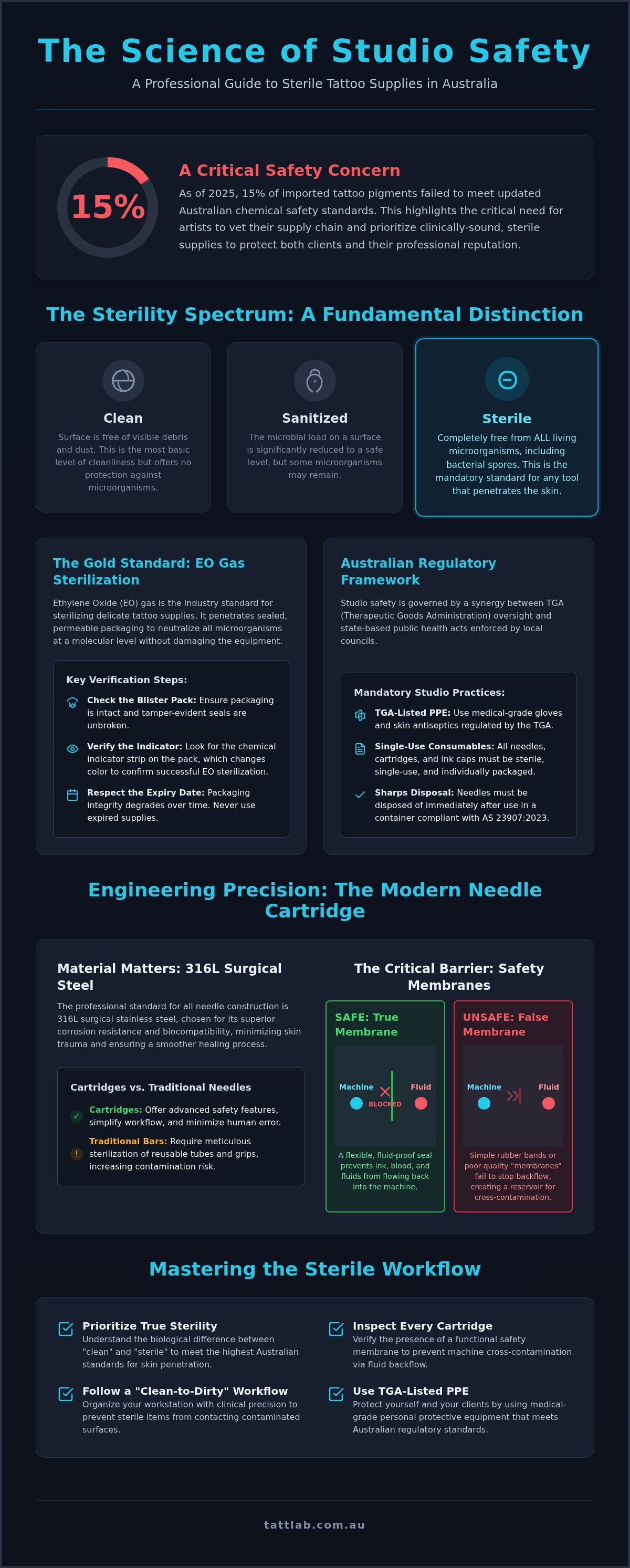
Did you know that as of 2025, 15% of imported tattoo pigments failed to meet updated Australian chemical safety standards? This data point serves as a sobering reminder that the distance between a flawless heal and a professional setback often depends on the clinical integrity of your sterile tattoo supplies. You've worked hard to cultivate a boutique studio environment that prioritizes safety, yet the persistent confusion between industry marketing and actual TGA requirements can make procurement feel like an unnecessary gamble.
We understand that your reputation is built on more than just your artistic vision; it's rooted in the trust your clients place in you to protect their physical integrity. This guide will empower you to master the science of studio safety, ensuring you can distinguish between high-pressure sales and genuine medical-grade quality. We will provide a methodical breakdown of the 2026 regulatory landscape, covering everything from AICIS ink compliance to the technical precision of modern needle cartridges. By the end, you'll have the knowledge to secure a streamlined supply chain that guarantees superior healing results and a zero-infection track record for every client who enters your space.
Key Takeaways
- Learn the biological distinction between "clean" and "sterile" to ensure your studio meets the highest Australian standards for skin penetration procedures.
- Discover how the internal architecture of needle cartridges, specifically safety membranes, acts as a critical barrier against machine cross-contamination.
- Master the "clean-to-dirty" workflow to organize your workstation with the methodical precision and rhythm of a clinical facility.
- Identify the specific TGA-listed requirements for medical-grade PPE that protect both your professional reputation and your clients' long-term skin health.
- Understand the logistical advantage of sourcing artist-vetted sterile tattoo supplies through a specialized supply chain designed for the Australian market.
Defining Sterile Tattoo Supplies: More Than Just Packaging
In the specialized environment of a professional studio, the distinction between aesthetic cleanliness and clinical sterility is the foundation of client safety. While a "clean" surface is free of visible debris and a "sanitized" surface has a significantly reduced microbial load, only sterile tattoo supplies are completely free from all living microorganisms including spores. This level of precision is essential because the tattooing process bypasses the skin’s primary defense, creating a direct pathway for potential bloodborne pathogens. By maintaining a strictly sterile field, you transform a technical procedure into a safe, reassuring narrative of personal transformation.
Adhering to modern sanitary procedures ensures that every interaction with the dermis is protected from cross-contamination. This requires a "sterile chain of custody" where the integrity of the tool is preserved from the point of manufacture until it makes contact with the client's skin. If a blister pack is compromised or an expiration date is ignored, that chain is broken. This rupture in the process increases the risk to the client’s physical integrity and your professional reputation.
The Science of EO Gas Sterilization
Ethylene Oxide (EO) gas is the industry standard for sterilizing delicate instruments that cannot withstand the high heat of an autoclave. This gas is highly effective because it penetrates permeable packaging, such as medical-grade paper or Tyvek, to neutralize bacteria and viruses at a molecular level. Every professional blister pack features a sterilization indicator strip. This small chemical marker changes color to provide visual confirmation that the contents have successfully undergone the EO process.
We emphasize the importance of shelf-life because the sterility of a product is only as reliable as its packaging. Over time, the porous materials that allow gas to enter can degrade, potentially allowing microscopic contaminants to breach the barrier. Using expired supplies isn't just a regulatory risk; it's a compromise on the predictable, superior healing results your clients expect.
Australian Regulatory Standards for Studio Safety
Navigating Australian standards requires understanding the synergy between local health department regulations and TGA-aligned equipment. While the TGA regulates specific items like skin antiseptics and medical-grade gloves, local councils oversee the registration and inspection of studios under state-based public health acts. Choosing medical-grade sterile tattoo supplies ensures your studio exceeds these baseline requirements, positioning your practice as a leader in clinical safety.
In Australia, all single-use sterile consumables must be provided in individual, tamper-evident packaging that has undergone a validated sterilization process and must be disposed of in a sharps container complying with AS 23907:2023 immediately after use.
Engineering Precision: Sterile Needle Cartridges and Traditional Needles
The needle is the most critical interface between your artistic intent and the client's biology. Choosing high-quality sterile tattoo supplies means looking beyond the tip of the needle to the engineering that supports it. Professional standards in 2026 dictate the use of 316L surgical stainless steel for all needle construction. This specific grade of steel is preferred for its exceptional corrosion resistance and biocompatibility, ensuring that the skin's integrity is respected throughout the procedure and the healing process.
While traditional needles on bar remain a staple for specific techniques, the Australian industry has seen a decisive shift toward disposable cartridges. Traditional needles require meticulous sterilization of reusable tubes and grips, which introduces more variables for potential human error. Cartridges simplify the studio workflow while offering advanced safety features that traditional bars cannot match. This evolution reflects a broader commitment to minimizing risk and maximizing the predictability of every session.
Safety Membranes and Backflow Prevention
The defining feature of a professional cartridge is the internal safety membrane. This flexible barrier serves a dual purpose: it provides the tension required for precise needle retraction and, more importantly, it creates a fluid-proof seal. This seal prevents ink, blood, and interstitial fluid from migrating into the grip and the machine’s internal motor. Without a functional membrane, your machine becomes a reservoir for cross-contamination, regardless of how well you clean the exterior.
Be wary of low-quality cartridges that use simple rubber bands or "false" membranes. These components often lack the structural integrity to prevent fluid backflow, compromising the sterile field. To understand the full technical specifications of these tools, you can explore The Ultimate Guide to Tattoo Needles & Cartridges. Selecting artist-vetted equipment is the most effective way to protect your machine and your clients from invisible risks.
Blister Packaging and Integrity Checks
Sterility is a fragile state that depends entirely on the physical barrier of the packaging. Before opening any needle, perform a tactile and visual inspection of the blister pack. Look for microscopic punctures, crushed corners, or lifting seals. Any breach in the sterile barrier, no matter how microscopic, immediately voids the needle's sterility and necessitates its disposal.
Professional studios maintain a high level of accountability by recording lot numbers in their session logs. These numbers allow you to track specific sterilization batches from the manufacturer, providing a transparent record of safety for every procedure. This methodical approach mirrors the rigor of a clinical facility and builds immediate trust with your audience. If you are looking to refine your inventory with reliable, high-performance tools, you might consider browsing our range of professional tattoo cartridges.
Clinical-Grade Barrier Protection and PPE Essentials
Personal Protective Equipment (PPE) serves as the primary defense against cross-contamination in the high-traffic environment of a modern studio. It isn't merely a set of consumables; it's a critical layer of security that protects your physical integrity and your client's health. While the needles discussed earlier penetrate the dermis, your PPE ensures that the surrounding environment remains a controlled, clinical space. High-quality sterile tattoo supplies extend beyond the cartridge to include every barrier used during a session.
The shift toward black nitrile gloves in the Australian industry isn't just about the sophisticated urban aesthetic. Nitrile offers superior puncture resistance compared to latex, which is vital when handling sharps. It also provides high chemical integrity, ensuring that petroleum-based ointments or green soap don't degrade the material during long sessions. In a professional clinical environment, managing latex allergies is a priority. Using powder-free, TGA-listed medical-grade nitrile gloves, which meet AS/NZS 4011:2014 standards, eliminates this risk while maintaining the tactile sensitivity required for intricate linework.
Barrier Protection for Machines and Workstations
Protecting your equipment from bio-aerosols and fluid runoff is equally vital. Items like clip cord sleeves and machine bags are essential sterile tattoo supplies for every setup. These barriers prevent the migration of pathogens into areas of your machine that are difficult to sterilize. You can find more detailed protocols in our guide on Medical Supplies for Tattoo Artists: The Professional Studio Safety Guide (2026).
Station organization also requires the use of dental bibs and lap cloths. These highly absorbent barriers manage fluid runoff and prevent pigments from contaminating your work surfaces. When combined with TGA-approved skin antiseptics and hospital-grade surface disinfectants, these tools create a comprehensive safety framework. This methodical approach mirrors the precision of your art, replacing uncertainty with a sense of controlled, predictable progress.
Distinguishing between surface disinfectants and skin antiseptics is a hallmark of the trusted specialist. Surface disinfectants are engineered to neutralize pathogens on non-porous studio furniture, while skin antiseptics must be TGA-approved for use on human tissue. Using the wrong product can lead to skin trauma or ineffective sterilization. By selecting supplies with laboratory-level rigor, you ensure that every step of the process supports long-term healing and client assurance.
Building a Sterile Workstation: A Professional Framework
Organizing your workspace is a methodical exercise in risk mitigation. A professional studio operates on a "Clean-to-Dirty" workflow, a logical progression that dictates how you move within your station to prevent cross-contamination. By establishing a clear physical boundary between your sterile tattoo supplies and contaminated waste, you create a controlled environment that mirrors the rigor of a clinical facility. This methodical approach doesn't just satisfy regulatory requirements; it replaces the anxiety of potential infection with a sense of predictable, professional progress.
The modern shift toward 100% single-use disposable equipment has transformed studio logistics. By utilizing pre-sterilized grips, tubes, and cartridges, you eliminate the variables associated with autoclave maintenance and chemical indicators. This transition minimizes human error and ensures that every client receives tools that have never touched another surface. It's a commitment to physical integrity that prioritizes long-term health over traditional, more labor-intensive methods.
The Aseptic Setup Procedure
Maintaining a sterile chain of custody requires a disciplined setup routine. Following a consistent sequence ensures that your equipment remains uncontaminated from the moment you break the seal on your blister packs.
- Step 1: Perform thorough hand hygiene using a TGA-approved antimicrobial wash before donning your first pair of medical-grade nitrile gloves.
- Step 2: Apply hospital-grade surface disinfectants to all non-porous surfaces, followed by the application of barrier films and clip cord sleeves to create a protective layer against bio-aerosols.
- Step 3: Stage your sterile consumables by opening packaging in a way that allows the contents to drop onto your prepared field without your gloves touching the internal surfaces of the blister pack.
Managing Sharps and Biohazardous Waste
The conclusion of a session is as critical as the commencement. Once the procedure is finished, your focus shifts to the safe containment of biohazardous materials. Contaminated barrier films, dental bibs, and used PPE must be handled with care to avoid spreading pathogens during the breakdown process. Every movement should be deliberate, ensuring that used materials are folded inward and disposed of in designated clinical waste bags.
In professional Australian studios, all used needles and sharps must be disposed of in a puncture-resistant container that complies with AS 23907:2023 immediately after the procedure is completed. This is a non-negotiable legal requirement that protects you, your staff, and waste management professionals from accidental needle-stick injuries. To ensure your studio is equipped with the highest standard of safety equipment, you can source your professional sterile supplies through our specialized fulfillment center.
Why Professional Studios Partner with Tatt Lab for Sterile Supplies
Choosing a supply partner in 2026 is a strategic decision that affects your studio’s resilience and your clients' safety. At Tatt Lab, we recognize that your work is a specialized service involving high levels of vulnerability. We don't view ourselves as a generic warehouse; instead, we operate as a dedicated facility for sterile tattoo supplies, where every product in our inventory is artist-vetted and selected for its clinical performance. This commitment to laboratory-level rigor ensures that when you break a seal, you are using equipment that respects the biological complexity of the skin.
Our curation process is exhaustive. We analyze the engineering of every needle cartridge and the chemical composition of our inks to ensure they meet Australian standards. This technical edge is designed to support your professional reputation by providing the foundation for superior pigment retention. There is a profound synergy between the use of high-quality sterile tattoo supplies and the final aesthetic outcome. This relationship is further explored in our guide on Mastering Tattoo Aftercare, which illustrates how the right tools facilitate a seamless healing journey from the first pass to the final result.
Curated Selection for the Modern Artist
Seamless Supply Chain and Support
A streamlined supply chain is essential for maintaining a consistent standard of care. Relying on international brands often leads to unpredictable shipping delays and customs complications that can leave your studio vulnerable. Tatt Lab eliminates these uncertainties through our Australian-based fulfillment center, offering express nationwide shipping to every state and territory. Whether you are in a sophisticated urban boutique or a regional studio, we ensure your medical-grade consumables arrive exactly when you need them.
We offer wholesale accounts for professional studios looking to build a long-term safety partnership based on transparency and results. This collaborative approach allows you to focus on your artistry while we manage the technical complexities of your supply chain. Our goal is to replace the stress of procurement with a sense of controlled, predictable progress. Elevate your studio standards with Tatt Lab's sterile supplies today.
Securing the Future of Your Professional Practice
Mastering the science of studio safety is a continuous progression toward excellence. By integrating high-performance needle cartridges with a disciplined aseptic workflow, you protect the physical integrity of every client who trusts you with their skin. You've learned that true sterile tattoo supplies require more than just a label; they demand a validated chain of custody and medical-grade precision. This methodical approach to safety is what separates a standard studio from a clinical-grade facility.
Tatt Lab stands as your dedicated partner in this mission, providing artist-vetted equipment and medical-grade PPE with express nationwide shipping to ensure your studio remains resilient and stocked. We're specialists in medical-grade studio safety, ensuring that the tools you use are as precise as the art you create. Shop our curated range of sterile tattoo and medical supplies to align your artistry with laboratory-level rigor. Your commitment to these standards doesn't just prevent complications; it elevates the entire tattooing experience into a safe, transformative journey. We're here to support that progress every step of the way.
Frequently Asked Questions
What makes tattoo supplies 'sterile' compared to just 'clean'?
Sterility implies the total absence of all viable microorganisms, including spores, whereas "clean" only refers to the removal of visible debris. In a clinical tattooing context, sterile tattoo supplies must undergo a validated process like EO gas treatment. This ensures that tools entering the dermis do not introduce pathogens that could compromise the client's physical integrity or the final healing result. It is the fundamental difference between basic hygiene and medical-grade safety.
How do I check if my needle cartridges are properly sterilized?
Every professional needle cartridge should feature a chemical indicator strip on its individual blister packaging that changes color upon successful sterilization. You must also verify the presence of a lot number and an expiration date to ensure the sterile chain of custody remains intact. If the indicator strip is missing or the color does not match the manufacturer’s specification for EO gas exposure, the item must be discarded immediately to maintain studio standards.
Are all nitrile gloves suitable for tattooing?
No, you must specifically use powder-free, medical-grade nitrile gloves that are TGA-listed and meet the AS/NZS 4011:2014 certification. Generic industrial gloves often lack the puncture resistance and chemical integrity required to withstand long sessions involving petroleum-based ointments. Choosing medical-grade options ensures you maintain a high-end laboratory vibe while protecting both yourself and your client from cross-contamination and potential allergic reactions during the procedure.
Why is EO Gas sterilization the industry standard for tattoo needles?
Ethylene Oxide (EO) gas is preferred because it can penetrate permeable packaging to neutralize microorganisms without the high-heat requirements of an autoclave. This makes it ideal for delicate components like needle cartridges and plastic housings that might warp or degrade under steam pressure. It provides a reliable, high-level sterilization that preserves the mechanical precision of your tools while guaranteeing a zero-infection track record for your professional practice.
Do I still need an autoclave if I use single-use sterile supplies?
If your studio has transitioned to 100% single-use disposable equipment, such as pre-sterilized cartridges, grips, and tubes, you no longer require a benchtop autoclave. This shift simplifies your workflow and eliminates the complex testing requirements of AS/NZS 4815:2006. However, you must still maintain rigorous surface disinfection protocols and use TGA-registered hospital-grade disinfectants to keep your non-disposable furniture and machines in a cool but clinical state that respects the body.
What should I do if the sterile packaging of a needle is damaged?
You must immediately dispose of any needle if its blister packaging shows signs of punctures, tears, or lifting seals. Sterility is a binary state; once the physical barrier is breached, the contents are considered contaminated. Attempting to use a compromised needle risks skin trauma and infection, which can lead to poor healing. Maintaining this level of meticulousness protects your professional reputation and reflects the patience required for successful, long-term results.
How often should I change my gloves during a long tattoo session?
You should change your gloves whenever you leave the workstation, touch a non-sterile surface, or if the material becomes compromised by sweat or chemical degradation. For extended sessions, many specialists recommend a fresh pair every 60 to 90 minutes to maintain tactile sensitivity and ensure the barrier remains effective. This steady, low-pressure rhythm of hygiene keeps the environment controlled and reduces the cumulative risk of cross-contamination throughout the session.
Where can I buy TGA-aligned medical supplies for tattoo artists in Australia?
Professional artists should source their sterile tattoo supplies from specialized providers like Tatt Lab, which focuses on artist-vetted quality and clinical safety. We offer a one-stop-shop for both needles and TGA-listed medical PPE, supported by national express fulfillment. By partnering with an Australian-based specialist, you ensure your supply chain is resilient and fully compliant with local state and territory public health regulations, replacing uncertainty with predictable progress.


Comments (0)
There are no comments for this article. Be the first one to leave a message!