

The difference between a vibrant, lifetime masterpiece and a faded, scarred regret often comes down to the first forty-eight hours of dermal repair. You've invested significant time and resources into your new ink, so it's natural to feel a sense of hyper-vigilance as your skin begins its complex recovery process. Many collectors worry about the risks of infection or the frustration of losing pigment to heavy scabbing, but the solution isn't just "keeping it clean." It's about managing the biological micro-environment using professional tattoo bandages.
We understand that the transition from the studio to your daily life can feel vulnerable, especially when navigating the diverse Australian climate. This guide explores the clinical science behind modern barrier protection, helping you choose the optimal medical-grade film to ensure superior healing and long-term vibrancy. You'll learn how to distinguish between specialized aftercare films and simple grip wraps, ensuring your skin remains calm and your ink stays saturated. We'll examine the mechanics of moist wound healing and provide a clear, evidence-based protocol for maintaining skin integrity from the moment you leave the chair until the final reveal of your healed art.
Key Takeaways
- Understand how moist wound healing prevents heavy scabbing and preserves ink by maintaining a controlled biological environment.
- Identify the differences between medical-grade tattoo bandages like Saniderm and Derm Shield to select the most effective barrier for your skin type and project size.
- Learn why cohesive wraps are essential for ergonomic grip management and how they differ from adhesive aftercare films.
- Master the selection framework for choosing between professional rolls and pre-cut sheets based on the placement and scale of your tattoo.
- Adopt a clinical protocol for bandage application and removal to eliminate air bubbles and prevent unnecessary skin tension during the recovery phase.
The Science of Dermal Protection: Why Tattoo Bandages are Essential
The tattooing procedure is more than an aesthetic choice; it's a clinical event that triggers a complex immune response. When needles deposit pigment into the dermis during the tattooing process, the skin is left in a state of acute trauma. Professional tattoo bandages serve as a specialized medical-grade barrier, transitioning the area from a vulnerable wound into a controlled healing environment. These aren't simple covers. They're active tools designed for modern wound management that prioritize the preservation of skin integrity and the vibrancy of the ink beneath.
The primary mechanism at work here is moist wound healing. Historically, artists advised clients to let their tattoos "air out," which led to the formation of thick, oxygen-starved scabs. These scabs often act like anchors, pulling pigment out of the skin as they harden and eventually flake away. Modern tattoo bandages prevent this by maintaining a humid micro-environment. This humidity allows the body's natural enzymes to break down dead tissue more efficiently. It promotes faster cellular regeneration without the destructive scabbing phase that often leads to patchy results.
How Breathable Films Support Skin Recovery
Professional healing films are engineered with semi-permeable membranes. This technology allows for essential gas exchange, meaning oxygen can reach the skin while metabolic water vapor can escape. Healing skin cells require oxygen to fuel the repair process. If a bandage is too occlusive, the skin can't breathe; if it's too porous, it dries out. These films find the perfect equilibrium. By providing a flexible second skin, they also drastically reduce friction. During the first 48 hours, even the slight rub of a shirt sleeve can cause inflammation. A secure film acts as a shield, absorbing that kinetic energy so your skin doesn't have to.
The Shift from Cling Wrap to Engineered Barriers
For years, the industry relied on kitchen-grade cling wrap, but this practice carries significant biological risks. Non-breathable plastic wraps trap body heat and sweat against the fresh wound. This creates an ideal breeding ground for pathogens, often referred to as a "petri dish" effect. It increases the likelihood of heat rashes and localized infections. In contrast, engineered barriers are sterile and hypoallergenic. They provide a predictable, safe recovery path that respects the body's natural limits. At Tatt Lab, we're dedicated to providing the highest quality medical supplies for tattoo artists across Australia, ensuring that every studio has access to the tools needed for superior client outcomes.
Protective Healing Films: Comparing Saniderm, Derm Shield, and Hustle Butter
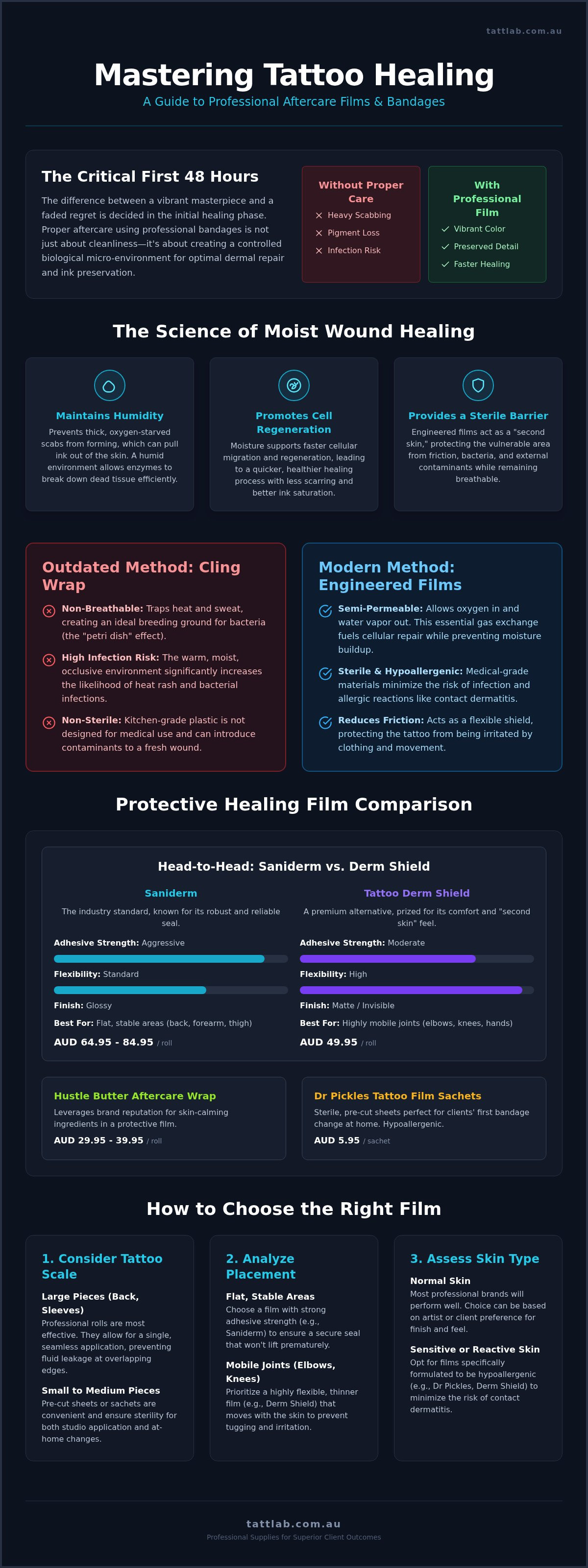
Selecting the correct barrier is a clinical decision that directly impacts the longevity of your pigment. While the market for tattoo bandages has expanded, a few key brands have established themselves as the benchmarks for professional use in Australia. Saniderm remains the industry standard, with its Original Tattoo Bandage Roll (AUD 64.95-84.95) offering a reliable, medical-grade seal. For artists handling extensive work, the 10.2 inch wide roll provides the necessary coverage for full backpieces or large thigh panels without the need for overlapping seams, which can sometimes trap excess fluid.
As a premium alternative, Tattoo Derm Shield Rolls (AUD 49.95) have gained a dedicated following for their matte finish and high flexibility. This film is often preferred for its "second skin" feel, making it less noticeable during the multi-day wear period. For those looking for newer innovations, the Hustle Butter Tattoo Aftercare Wrap (AUD 29.95-39.95) has entered the space, leveraging the brand's reputation for skin-calming ingredients. While rolls are ideal for studio application, providing clients with Dr Pickles Tattoo Film Sachets (AUD 5.95) is an excellent retail strategy. These individual sheets allow clients to perform their first bandage change at home with a sterile, pre-cut professional product.
Saniderm vs. Derm Shield: Key Differences
The choice between Saniderm and Derm Shield often comes down to the specific anatomical location of the tattoo. Saniderm is renowned for its aggressive adhesive strength, which is vital for flat areas where a secure seal is paramount. However, for tattoos placed on highly mobile joints like elbows or knees, Derm Shield’s thinner profile often provides superior comfort. It stretches more naturally with the skin's movement, reducing the risk of adhesive "tugging" that can lead to redness. Aesthetic preference also plays a role; Saniderm typically has a glossier finish, while Derm Shield is almost invisible once applied. When making these selections, it's helpful to consult FDA tattoo safety guidelines to understand how barrier protection fits into the broader context of skin health and pigment safety.
Specialised Wraps for Sensitive Skin
For clients with reactive skin, hypoallergenic properties are the priority. Both Dr Pickles and Derm Shield are formulated to minimize the risk of contact dermatitis, a common concern with traditional medical tapes. If you're working on a small, precise icon, using pre-cut sheets rather than cutting from a roll can ensure cleaner edges and less waste. Regardless of the brand you choose, these films should be integrated into a comprehensive tattoo aftercare protocol that includes gentle cleansing and moisture management. If you're ready to upgrade your studio's setup, you can browse our curated selection of professional films to find the right fit for your next project.
Cohesive Wraps and Coflex Tape: Performance in the Studio
While healing films act as the client's primary defense, the immediate clinical environment requires a different category of tattoo bandages. Cohesive wraps, commonly known as Coflex, are essential tools for equipment management and initial dressing security. Unlike adhesive films, these wraps are self-adhering, meaning they bond to themselves without leaving a sticky residue on skin, hair, or expensive machinery. This non-sticky property makes them indispensable for wrapping machine grips, ensuring a sterile and stable surface throughout the procedure.
Beyond the technical utility, there's a psychological benefit to the "finishing touch" of a clean, professional wrap. Using patterned options like Jungle Camo or Snake Print Coflex Tape (AUD 1.49) allows an artist to maintain studio branding while signaling meticulous attention to detail. It's a small but powerful gesture of care. When considering tattoo risks and precautions, maintaining a barrier between the artist's hands and the equipment is just as vital as the aftercare film itself for preventing cross-contamination.
Ergonomics and Grip Customisation
Hand fatigue is a significant concern for artists during multi-hour sessions. Coflex tape allows for precise grip customisation, increasing the diameter of the machine to fit the artist's specific hand morphology. This adjustment drastically reduces the tension required to hold the machine, preventing long-term strain. Additionally, the layered structure of the wrap provides critical vibration dampening. By absorbing the micro-oscillations of the motor, it enables cleaner linework and more consistent saturation. For clients, these wraps are often used to secure traditional absorbent pads immediately after the session, providing a soft, breathable hold that doesn't pull at the surrounding skin upon removal.
Style and Professionalism: Patterned vs. Plain
Modern boutique studios increasingly use patterned wraps to differentiate their aesthetic. The rise of Leopard and Tiger Print Coflex Tape reflects a shift toward a more curated, lifestyle-centric studio persona. Whether you choose Snow Camo for a minimalist vibe or Desert Camo to match a warmer studio palette, these choices contribute to a sense of composed professionalism. For high-volume environments, efficiency is key. Opting for bulk solutions, such as 24-packs of Tiger Print Coflex (AUD 19.95), ensures the studio remains stocked with high-performance materials without frequent reordering. This methodical approach to supply management mirrors the precision of the tattooing itself, valuing both physical integrity and aesthetic consistency.
Selection Framework: Choosing the Right Bandage for Your Project
Choosing the right barrier is a methodical process that balances the scale of the artwork with the physiological needs of the client's skin. Professional tattoo bandages aren't one-size-fits-all solutions. For a small, fine-line icon on a forearm, a pre-cut sheet provides enough coverage without excess waste. However, for a full-scale backpiece, the logistics change. You'll need the continuous coverage of a professional roll to avoid the overlaps that can lead to fluid leaks or skin irritation. Every project requires a tailored approach to ensure the barrier remains intact and effective.
Placement is equally critical. Tattoos on "the ditch," elbows, or knees require a film with high elasticity to prevent the adhesive from pulling during movement. If the client has a history of adhesive sensitivity, identifying this before application is vital. A hypoallergenic option is often the safer clinical choice for reactive skin types. The duration of the wear also dictates the selection. The initial 24-hour window is often characterized by heavy weeping or plasma buildup. Managing this fluid is essential to prevent the "ink bubble" from compromising the adhesive seal during the transition to the long-term 6-day heal.
Large Scale Pieces and Professional Rolls
For studios specializing in large-scale work, the Hustle Butter Tattoo Aftercare Wrap Pro (AUD 45.47) is a station essential. It provides the surface area needed to protect extensive saturation in a single application, reducing the trauma of multiple overlapping sheets. Efficiency is another factor for the busy artist. A single Saniderm roll typically covers approximately 40+ tattoos, making it a cost-effective choice for daily studio operations. During the first day, it's normal to see fluid buildup under the film. If this accumulation becomes excessive or leaks, the bandage must be replaced immediately to maintain a sterile environment and protect the dermal integrity.
Client Retail and Aftercare Kits
Transitioning from the studio to home care is where many healing processes fail. Providing a Saniderm 3-Pack (AUD 14.95-24.95) for client take-home care ensures they have the exact medical-grade tools needed for a successful recovery. This is also an ideal time to bundle film sales with education on professional tattoo ink and how it interacts with the healing dermis. Using easy-to-use sachets and pre-cut sheets simplifies the process for the client, which significantly increases compliance. When the process is easy to follow, the results are predictably superior. You can shop our professional range of tattoo bandages to ensure your studio is equipped for every project scale.
Optimising Outcomes: Application and Removal Best Practices
Achieving a superior result requires more than just high-quality materials; it demands a clinical approach to application and removal. The moment a session concludes, the skin is at its most vulnerable. Establishing a sterile field is the first step in ensuring the tattoo bandages perform as intended. Any lapse in hygiene at this stage can compromise the entire healing narrative. By following a methodical protocol, you can eliminate common issues like premature lifting or localized irritation, turning the recovery phase into a predictable path toward personal transformation.
Preparation: The Key to Adhesion
A successful bond begins with meticulous skin preparation. Before the film is applied, every trace of green soap, blood, and ointment must be removed from the area. Residual oils or soaps act as a barrier to the medical-grade adhesive, often leading to edge-curling or leaks within the first few hours. Additionally, managing hair growth is a non-negotiable requirement. A clean shave with a sterile disposable razor ensures the film adheres directly to the dermis rather than being suspended by hair follicles. Finally, the skin must be completely dry. Any trapped moisture can lead to maceration, where the skin becomes soft and white, potentially damaging the fresh pigment and increasing the risk of bacterial proliferation.
When applying the film, start from the center and move outward. This technique minimizes the risk of air bubbles, which can trap heat and fluid against the wound. It's equally important to apply the bandage without tension. Stretching the film during application creates a constant "pull" on the skin, which often results in "adhesive burn" or blistering at the edges. A calm, relaxed application ensures the skin can move naturally during the multi-day wear period.
The "Warm Water" Removal Method
Removal is the most common point of skin trauma if handled incorrectly. When the time comes to take off your tattoo bandages, we recommend doing so under a warm shower. The heat and moisture help to loosen the medical-grade adhesive, allowing it to release from the skin more gently. Instead of peeling the bandage back like a standard sticker, use the "stretch and pull" technique. Grasp one corner and pull the film outward, parallel to the skin. This movement breaks the adhesive bond through elongation rather than upward force, significantly reducing the risk of dermal tearing or irritation.
Once the film is removed, the skin enters a new phase of recovery. This is the time to transition from barrier protection to specialized tattoo balms that support long-term hydration. This methodical approach is part of a broader commitment to excellence. By viewing your choice of barrier as part of a holistic ecosystem of tattoo supplies, you ensure that every technical procedure is backed by scientific rigor and safety. This attention to detail is what defines a truly professional studio experience in Australia.
Elevating the Standard of Dermal Recovery
The journey from the studio chair to a fully healed masterpiece requires more than just artistic skill; it demands a commitment to biological integrity. By moving beyond traditional covers and adopting professional tattoo bandages, you're actively managing the skin's micro-environment to preserve pigment saturation and prevent scabbing. Whether you're selecting a high-flexibility film for a mobile joint or a professional roll for a large-scale backpiece, the precision of your aftercare should mirror the precision of the work itself, just as Image-Tec utilizes professional Giclée printing to preserve the integrity of fine art reproductions.
Tatt Lab provides artist-vetted, medical-grade supplies designed for the rigours of the modern Australian studio, offering Australia’s largest range of Saniderm with express nationwide shipping. You can Shop the Professional Tattoo Bandage Collection at Tatt Lab to secure the optimal tools for your next project. Trusting the science of dermal protection is the most effective way to ensure your art remains as vibrant as the day it was created. We're dedicated to being your partner in achieving predictable, superior results.
Frequently Asked Questions
How long should I leave a tattoo bandage on?
You should typically leave the first application of your tattoo bandages on for 8 to 24 hours. This initial period is when the skin weeps the most plasma and fluid. After a gentle cleaning and reapplication of a fresh film, you can leave the second bandage in place for up to five or six days. This extended duration allows the skin to complete the most critical phase of dermal repair in a protected environment.
Can I shower with a Saniderm or Derm Shield bandage?
Yes, you can shower normally while wearing these medical-grade films. Both Saniderm and Derm Shield are engineered to be waterproof, protecting the wound from external contaminants and water. However, you should avoid submerged soaking in baths, pools, or the ocean. Long exposure to excessive steam or high-pressure water can weaken the adhesive bond at the edges, potentially compromising the sterile environment of the healing tattoo.
What should I do if fluid builds up under my tattoo film?
Fluid buildup, often called an "ink sac," is a completely normal part of the healing process. This mixture of plasma, excess ink, and white blood cells is actually beneficial for moist wound healing. If the fluid remains contained under your tattoo bandages, leave the film alone. However, if the fluid begins to leak from the edges, the sterile seal is broken. You must remove the film, clean the area, and apply a fresh bandage.
Is it normal for my tattoo bandage to itch?
Mild itching is a standard sign of the skin’s inflammatory response and regeneration. As the skin repairs itself under the film, slight discomfort is expected. However, if you experience intense itching, significant redness, or a burning sensation around the adhesive edges of your tattoo bandages, you may be having a reaction. In these cases, remove the bandage immediately and transition to a traditional aftercare routine using a gentle, fragrance-free cleanser.
Can I use tattoo bandages on sensitive skin?
Yes, individuals with sensitive skin can often use specialized tattoo bandages. Options like Derm Shield and Dr Pickles are specifically formulated to be hypoallergenic and gentle on reactive tissue. If you have a known history of adhesive allergies, it's wise to perform a small patch test with a piece of the film on an unaffected area for 24 hours before applying it to a fresh tattoo to ensure compatibility.
How do I remove a tattoo bandage without hurting my skin?
The safest way to remove the film is under warm, running water to help loosen the adhesive. Instead of pulling the film upward and away from the skin, use the "stretch and pull" method. Grasp a corner and pull it parallel to the skin’s surface. This elongation technique allows the adhesive to release its grip gradually, minimizing the risk of "adhesive burn" or unnecessary trauma to the fresh pigment during the removal of tattoo bandages.
Why is my tattoo bandage peeling at the edges?
Peeling usually occurs due to friction from clothing or improper skin preparation before application. If any green soap or ointment remains on the surrounding skin, the adhesive cannot form a secure bond. Small amounts of edge-peeling are manageable if the tattoo itself remains covered. If the peeling reaches the tattooed area, the seal is compromised, and the bandage should be replaced to prevent bacteria from entering the wound.
Can I reapply a second skin bandage if it comes off early?
You can reapply a fresh film if the original comes off early, provided the skin hasn't begun to scab or peel. Ensure the area is meticulously cleaned with a sterile, fragrance-free soap and is completely dry before applying the new film. If the tattoo has already reached the dry, flaking stage, don't apply new tattoo bandages. At that point, it's better to transition to a high-quality tattoo balm for hydration.


Comments (0)
There are no comments for this article. Be the first one to leave a message!