

Your new tattoo isn't just a piece of art; it's a controlled dermal injury that triggers a complex cascade of biological reconstruction. It's completely natural to feel a sense of hyper-vigilance as you watch your skin react to the needle. Whether you're worried about the sudden onset of scabbing or the intensity of the itching phase, understanding the tattoo healing process is the first step toward protecting your investment. You want your ink to remain as vibrant as the day it was applied, but conflicting advice from the internet often leads to more anxiety than clarity.
We've designed this guide to replace that uncertainty with clinical precision and grounded expertise. By looking at the recovery through a professional lens, you'll learn to distinguish between healthy cellular regeneration and the early warning signs of complications. We will break down the three critical phases of recovery, from the initial inflammatory response to the final maturation of the skin deep beneath the surface. You'll gain the confidence to manage every peel and flake, ensuring your skin recovers its integrity while your art settles into a permanent, flawless finish.
Key Takeaways
- View your tattoo as a medical-grade wound to better understand the complex biological reconstruction happening beneath your skin.
- Navigate the critical first 72 hours of the tattoo healing process by distinguishing between healthy plasma release and early signs of infection.
- Decode the "ugly phase" of peeling and itching as a necessary milestone of cellular regeneration rather than a cause for anxiety.
- Support long-term ink stabilization during the six-month maturation phase where the dermis fully settles the pigment.
- Prioritize artist-vetted tattoo aftercare to provide your skin with the specific nutrients required for clinical-grade recovery.
The Biological Blueprint: Understanding the Stages of Tattoo Healing
A tattoo is far more than a surface-level aesthetic choice. Biologically, it's a medical-grade wound that requires your body to initiate a sophisticated repair sequence. When the needle penetrates the skin, it bypasses the protective epidermis to deposit pigment into the dermis. This triggers an immediate response from your immune system. Understanding the physiological process of tattooing allows you to move beyond basic aftercare and adopt a "Skin Integrity" framework. This philosophy focuses on protecting the biological barrier through clinical precision rather than simply reacting to complications after they appear.
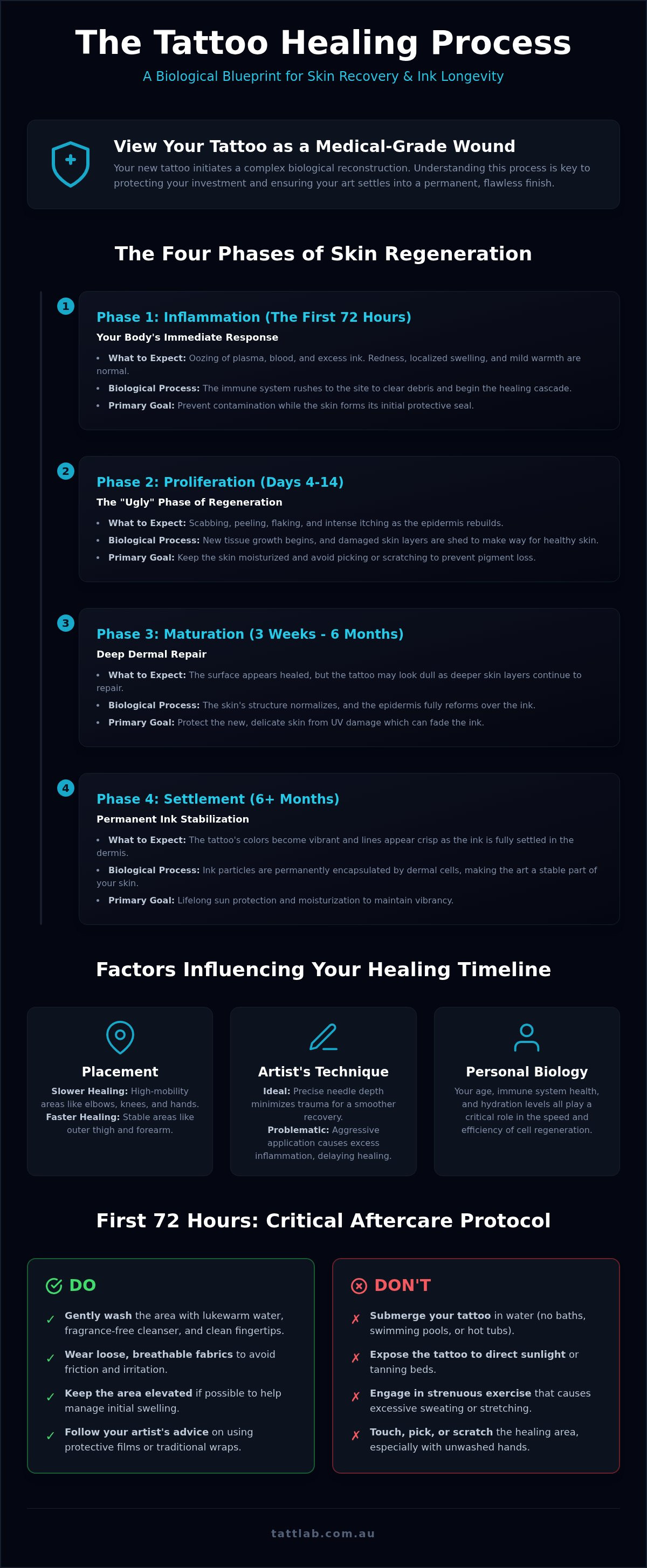
The tattoo healing process unfolds in four distinct stages. It begins with Inflammation, where the body manages the initial trauma and clears debris. This leads into Proliferation, characterized by the growth of new tissue and the shedding of damaged layers. Next is Maturation, where the skin's structure begins to normalize and the epidermis reforms. Finally, Settlement occurs as the ink becomes a permanent part of your anatomy. Each phase requires specific conditions and artist-vetted care to ensure the final result remains crisp and vibrant.
The Role of the Immune System in Ink Retention
Your immune system is the primary architect of your tattoo's longevity. As soon as ink enters the dermis, white blood cells known as macrophages arrive to "clean up" the foreign pigment. They engulf the ink particles in an attempt to remove them from the site. While some pigment is successfully transported to the lymph nodes or shed during epidermal turnover, the majority of the ink remains because the particles are too large for the macrophages to break down. Dermal settlement is the process where ink particles are permanently encapsulated by skin cells. This biological stalemate is what allows your tattoo to stay visible for a lifetime.
Factors Affecting Your Unique Healing Timeline
Recovery isn't a one-size-fits-all experience. Several variables dictate how quickly your skin returns to its natural state. Placement is a major factor; tattoos on high-mobility areas like elbows, knees, or hands often take longer to heal due to constant skin stretching and friction. Flat, stable areas like the outer thigh or forearm typically recover with fewer interruptions to the tissue repair cycle.
The artist's technique also plays a pivotal role. Precise needle depth ensures ink is deposited in the stable dermal layer without causing excessive trauma. If the application is too aggressive, the resulting inflammation can significantly delay the proliferative phase. Finally, your personal biology, including age, immune health, and hydration, influences how fast your cells regenerate. Maintaining high hydration levels and using professional-grade supplies provides the cellular environment necessary for efficient the tattoo healing process and long-term ink retention.
The Inflammatory Phase: Managing the Critical First 72 Hours
The initial 72 hours represent the most volatile phase of the tattoo healing process. During this window, your skin is an open wound, lacking its primary barrier and remaining highly susceptible to external pathogens. You'll likely notice a significant amount of oozing on Day 1. This fluid, often a dark mixture of plasma, blood, and excess pigment, is a healthy indicator that your body is flushing the site. It's a necessary part of the tattoo healing stages, signaling that your immune system is actively managing the dermal trauma.
By Day 3, this leakage should subside as the skin begins to form its first structural seal. You may feel a localized warmth around the area. While a mild increase in temperature is a normal byproduct of inflammation, it's vital to monitor for persistent, spreading heat or throbbing pain, which can indicate early infection. Keeping the area elevated and avoiding strenuous activity helps manage this initial swelling and keeps the recovery on a predictable track.
Immediate Aftercare Protocols
Your first wash is a delicate operation. The goal is to remove dried lymph without disrupting the emerging repair. Use lukewarm water and a gentle, fragrance-free cleanser, using only your clean fingertips. When it comes to protection, the choice between traditional bandages and medical-grade "second skin" films depends on your daily environment. Films provide a sterile, waterproof barrier that's ideal for active lifestyles, while traditional wraps allow for more frequent monitoring in the first few hours. Ensuring you have the right tattoo aftercare essentials ready before your appointment ensures you aren't scrambling for supplies while your skin is at its most vulnerable.
Avoiding Early-Stage Contamination
Contamination is the primary threat to ink settlement during these early days. Professional results start in the studio, where the use of high-quality medical supplies for tattoo artists ensures a sterile foundation for your recovery. Once you leave, the responsibility shifts to your environment. Friction from tight clothing can irritate the wound and pull out pigment, so opt for loose, breathable fabrics. Avoid environmental hazards like gym floors, public pools, and pet dander, which can introduce bacteria into the open skin. Treating your tattoo with the same rigor as a surgical site during this phase is the best way to guarantee a vibrant, complication-free result.
The Proliferative Phase: Navigating Peeling, Itching, and Scabbing
Between days 4 and 14, the tattoo healing process enters its most visually challenging stage. This "ugly phase" is characterized by intense peeling and a dull, cloudy appearance. While it might look concerning, it's actually a sign of successful cellular regeneration. Your body is shedding the damaged epidermis to make way for a new, protective layer. You'll likely notice the colors look muted; this is the "Silver Skin" phase, where the new skin is still thin and lacks its final transparency.
The mechanics of the itch are equally predictable. As the skin tightens and repairs, sensory nerves in the dermis become hypersensitive. It's a biological signal that the tissue is contracting and closing. Distinguishing between healthy peeling and trauma-induced scabbing is vital. Peeling should resemble a mild sunburn, with thin, flaky layers. Thick, hard scabs usually indicate deeper trauma or excessive moisture, which can jeopardize ink retention if they're prematurely removed. Monitoring these changes daily ensures the tattoo healing process stays within normal parameters.
Moisture Management and TEWL
Transepidermal Water Loss (TEWL) is the process where water evaporates through the skin's surface. Because the epidermis is still reforming, it can't yet regulate hydration effectively, leading to that characteristic "tight" feeling. Managing this requires clinical precision. We recommend the "Thin Layer" rule: applying just enough product to provide a barrier without suffocating the skin. Over-moisturizing leads to clogged pores and "bubbling," which can pull pigment from the dermis. Using specialized tattoo aftercare balms instead of generic lotions ensures the skin receives the exact lipid profile it needs for recovery.
The Golden Rule: Non-Intervention
Picking at a peeling tattoo carries a high biological cost. When you pull a flake or scab that isn't ready to drop, you risk tearing the underlying dermal tissue and removing encapsulated ink. This leads to "holidays" or gaps in the design and increases the risk of permanent scarring. To manage the itch without scratching, try gently tapping the area or applying a clean, cold compress. Following these dermatologist aftercare tips helps maintain skin integrity during this delicate window. If you notice "pitting" or deep, painful scabs, consult your artist immediately, as these may require a shift in your recovery protocol.
The Maturation Phase: Long-Term Skin Integrity and Color Settlement
Many collectors believe the tattoo healing process ends once the peeling stops and the skin feels smooth. While the surface appears intact by week three, the biological maturation of your skin is only just beginning. Between weeks 3 and 6, the epidermis finally completes its structural reform, restoring its natural barrier function. However, the deeper dermal layer requires a full six-month window to fully encapsulate and stabilize the pigment. During this period, your body is still working to lock ink particles into place through macrophages and fibroblast cells, a process that determines the final sharpness of your art.
Protecting this investment requires understanding the science of photodegradation. UV radiation is the primary enemy of vibrant art; it penetrates the skin to break down the chemical bonds of tattoo ink particles. Once these bonds break, your immune system can more easily carry the smaller fragments away, leading to premature fading. Long-term vibrancy also depends on internal variables. High hydration levels and a nutrient-dense diet maintain the skin's elasticity, ensuring the canvas remains supple and the ink remains sharp as the tissue fully stabilizes.
Maintaining the Barrier Function
Once you pass the one-month mark, you can transition from intensive healing balms to daily maintenance moisturisers. It's safe to resume normal skin care routines, but avoid aggressive chemical or physical exfoliation until the six-month mark has passed. Your new skin is still maturing and lacks the full resilience of established tissue. You should also be aware that significant weight changes or rapid muscle growth can subtly alter the appearance of matured ink as the skin's surface area expands or contracts, though well-settled ink typically moves naturally with the body.
Identifying Long-Term Complications
Distinguishing between normal settling and a blowout becomes easier once the initial inflammation has fully dissipated. A blowout occurs when ink is deposited too deeply into the subcutaneous fat, causing it to blur or "halo" beyond the original lines. While normal settling involves a slight softening of the edges, it shouldn't result in a blue or grey smudge around the design. It's also possible for ink allergies to manifest years later as localized swelling or itching, often triggered by specific pigments or environmental stressors. If your art has lost its intended contrast during the maturation narrative, a professional touch-up can restore the original clarity.
To support your skin through this six-month stabilization period and protect your investment, explore our range of artist-vetted tattoo aftercare supplies.
Professional Aftercare: Curating Your Recovery with Tatt Lab
The tattoo healing process is a delicate biological sequence that requires more than just patience; it demands a curated environment where cellular biology meets specialized science. While supermarket lotions might offer basic hydration, they often lack the sophisticated lipid profiles required to support dermal reconstruction. We prioritize artist-vetted tattoo supplies because the quality of your aftercare directly dictates the longevity and vibrancy of your art. By choosing professional-grade balms over common petrolatum-based alternatives, you avoid the risk of suffocating the wound. Petrolatum is a total occlusive, which can trap heat and bacteria; in contrast, specialized balms are designed to be semi-occlusive. This allows for essential gas exchange, ensuring your cells have the oxygen they need to regenerate efficiently.
As an artist-owned and operated facility, Tatt Lab understands that recovery is a partnership between the artist's precision and the collector's commitment. We support the Australian tattoo community by providing national distribution of professional medical PPE and consumables, ensuring that every stage of the process is grounded in safety. This commitment to physical integrity is what transforms a technical procedure into a successful narrative of self-assurance. When you use supplies vetted by industry experts, you're not just applying a cream; you're providing your body with the clinical tools it needs to preserve its new identity.
The Tatt Lab Selection Criteria
Our inventory isn't just a list of products; it's a vetted collection of tools that respect skin integrity above all else. We understand that the Australian environment presents unique challenges, from high UV indices to varying humidity levels. This is why we stock professional favorites like Dr. Pickles and other specialized tattoo creams that focus on botanical anti-inflammatories and moisture-retention without heavy residues. We also emphasize the importance of sterile, medical-grade disposables during the first wash. Using clean, professional-grade materials prevents the introduction of pathogens at the very moment your skin is most vulnerable, setting a baseline for a predictable, healthy recovery.
Next Steps for Your Ink Journey
Successful recovery is a collaborative effort. If you notice persistent redness, unusual discharge, or signs that the tattoo healing process has stalled, you should consult your artist immediately. They are your primary resource for identifying abnormal reactions and can provide guidance tailored to their specific technique. To prepare for your next session or manage your current recovery, you can order your aftercare essentials through our platform, featuring express nationwide shipping. We invite you to join the Tatt Lab community for ongoing skin health education, ensuring you remain a knowledgeable partner in your body's long-term wellness and aesthetic evolution.
Beyond topical treatments, supporting your body's internal recovery environment is essential; holistic relaxation sessions at City Cave Carnegie can help lower systemic stress, allowing your immune system to focus effectively on dermal repair.
Preserving Your Art Through Clinical Precision
At Tatt Lab, we bridge the gap between clinical safety and aesthetic excellence. As an artist-owned and operated specialist, we provide the Australian community with professional-grade medical and tattoo supplies that respect the complexity of your skin. Whether you're managing the critical first 72 hours or the long-term maturation phase, using artist-vetted products is the most effective way to protect your investment. Secure your professional aftercare essentials at Tatt Lab Australia today and benefit from our express nationwide shipping. Your journey toward a fully settled, flawless piece of art starts with the right foundation; we're here to ensure every stage of your recovery is met with meticulous care and expert support.
Frequently Asked Questions
How long does the tattoo healing process actually take?
Surface healing typically concludes within 2 to 4 weeks, but the full biological maturation of the dermis takes up to six months. While the epidermis reforms its protective barrier relatively quickly, the deeper layers of skin require a much longer window to fully encapsulate and stabilize the ink particles. Consistency in your aftercare during these first few months is what determines the long-term clarity and vibrancy of your design.
Is it normal for my tattoo to leak ink and fluid on the first day?
It's completely normal for a new tattoo to "weep" plasma, blood, and excess ink during the first 24 to 48 hours. This fluid is a healthy indicator that your body's inflammatory response is working to flush the wound and initiate repair. Simply clean the area gently with a fragrance-free cleanser as directed by your artist to prevent the fluid from drying into thick, problematic scabs.
What are the signs of a tattoo infection vs. normal healing?
Normal healing involves localized redness, mild swelling, and warmth that subsides within a few days. In contrast, an infection typically presents with spreading redness, intense throbbing pain, yellow or green discharge, and a persistent fever. If you notice red streaks extending from the site or if the heat around the tattoo increases after the third day, seek professional medical advice immediately to protect your health and your art.
Can I exercise or go to the gym while my tattoo is healing?
You should avoid strenuous exercise for at least 48 to 72 hours to prevent excessive sweating and skin stretching. Gym environments are high-risk zones for bacteria, which can easily enter an open dermal wound. If you must train, focus on movements that don't pull at the tattooed skin and ensure the area is protected from contact with equipment. Always clean the tattoo immediately after any physical activity.
Why does my tattoo look cloudy or dull in the second week?
This dullness is caused by "Silver Skin," a thin layer of new skin cells forming over the ink. During this stage of the tattoo healing process, the epidermis is still maturing and isn't yet transparent. As the skin continues to regenerate and settle over the next few weeks, the cloudiness will dissipate, and the original vibrancy of the pigment will return as the tissue regains its natural clarity.
When can I stop using specialized aftercare balm and switch to regular lotion?
You can typically transition to a daily maintenance moisturizer after the initial peeling phase is complete, usually around day 14. Specialized aftercare balms are essential during the first two weeks because they provide the specific lipid barrier needed for wound repair. Once the skin is no longer "open" or peeling, a high-quality, fragrance-free lotion is sufficient to maintain long-term skin elasticity and support ink stabilization.
What should I do if my tattoo starts scabbing heavily?
If heavy scabbing occurs, do not pick or pull at the crusts, as this can tear the dermal layer and cause permanent ink loss. Instead, ensure you are keeping the area clean and apply a very thin layer of artist-vetted aftercare balm to keep the scabs supple. Heavy scabbing is often a result of excess fluid drying on the skin; in future sessions, more frequent gentle washing on day one can prevent this.
How soon can I go swimming or submerge my new tattoo in water?
You must wait at least 3 to 4 weeks before submerging your tattoo in pools, oceans, or baths. Submerging an unhealed tattoo introduces bacteria and harsh chemicals like chlorine into the open skin, which significantly increases the risk of infection and fading. Stick to short, lukewarm showers and gently pat the area dry with a clean paper towel until the epidermal barrier has fully reformed.


Comments (0)
There are no comments for this article. Be the first one to leave a message!