

Your new tattoo isn't just art; it's a controlled dermal wound that requires the same clinical precision as a surgical recovery. It's natural to feel a surge of anxiety when that vibrant masterpiece starts to weep or itch, especially when the internet offers a chaotic mess of conflicting advice. You want to protect your investment and your skin, yet understanding the tattoo healing process often feels like a stressful guessing game. We recognize the vulnerability inherent in this transformation and the absolute priority of maintaining your physical integrity.
This guide demystifies the biological stages of recovery, providing a professional roadmap rooted in dermal science and medical-grade aftercare protocols. We'll break down the six-month invisible recovery timeline, helping you distinguish between healthy cellular regeneration and early signs of complication. By the end, you'll have the scientific justification for every step of your routine, replacing uncertainty with the controlled, predictable progress required for a successful outcome. You'll gain the confidence to ensure your ink remains a sharp, vibrant testament to your self-assurance.
Key Takeaways
- Understand the biological mechanics of how your immune system responds to pigment as a controlled medical-grade abrasion.
- Master the 30-day tattoo healing process by identifying the specific shifts between the acute inflammatory and proliferative phases.
- Learn why professional-grade, artist-vetted solutions are superior to petroleum-based products for maintaining dermal integrity.
- Gain the clinical insight to distinguish between standard healing inflammation and the critical red flags of a potential infection.
- Discover why dermal remodeling continues for up to six months and how to protect your tattoo's long-term vibrancy during this invisible recovery phase.
The Biology of Skin Trauma: Why Your Body Heals the Way It Does
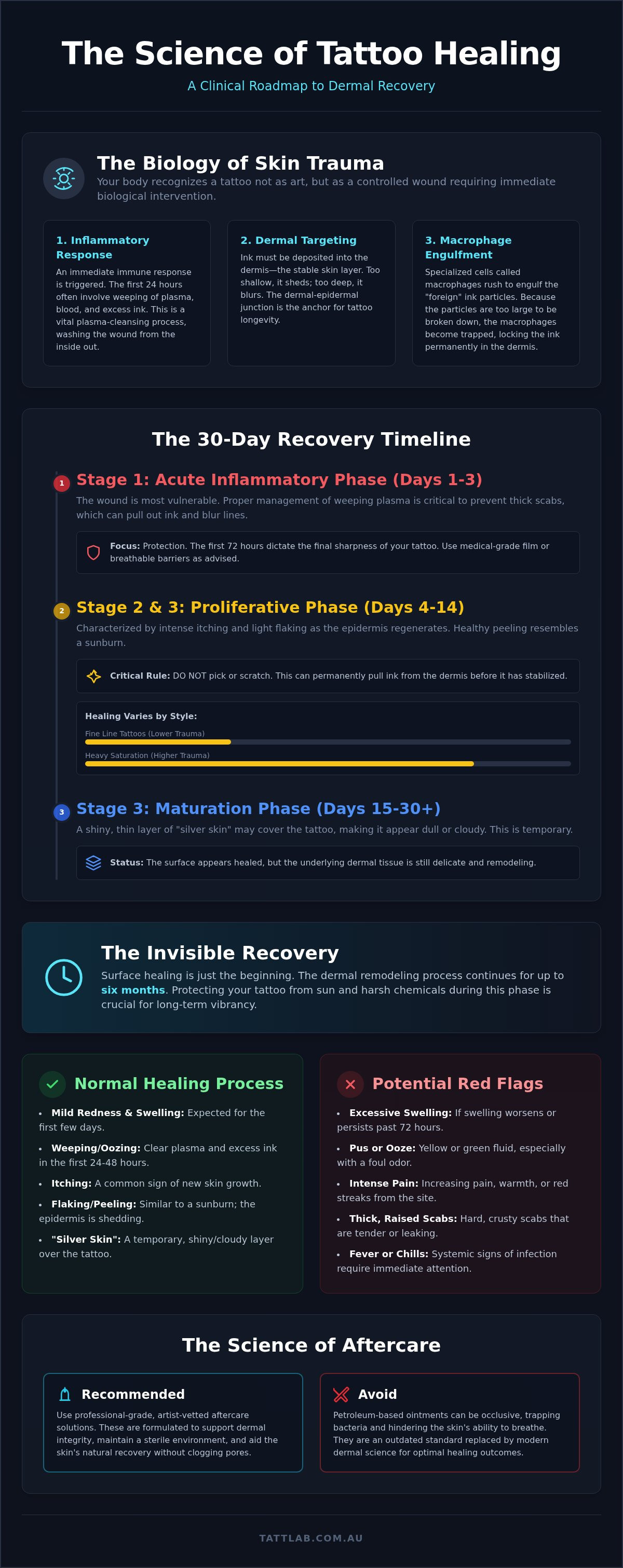
Your body doesn't recognize art; it recognizes an intrusion. While you see a meaningful design, your immune system identifies a series of controlled, medical-grade abrasions that require immediate cellular intervention. This triggers an immediate inflammatory response, which is the necessary first step in the tattoo healing process. To understand The Biology of Skin Trauma, you have to look past the surface at how your internal systems mobilize to protect your physical integrity. This isn't just a cosmetic change; it's a complex biological negotiation between your skin and the pigment.
During the first 24 hours, the site will likely weep a mixture of plasma, blood, and excess pigment. Don't be alarmed by this "oozing." It's a vital part of the plasma-cleansing process. Your body is effectively washing the wound from the inside out, clearing away cellular debris and damaged proteins to prepare the site for the next stage of dermal remodeling. It's a sign that your biological facility is operating at peak efficiency.
The Dermal-Epidermal Junction
Successful tattooing is a delicate balance of depth. If the ink is deposited too shallowly, it sheds with the epidermis; too deep, and it blurs into the subcutaneous fat. The target is the dermis, the stable layer of skin that doesn't regenerate as rapidly as the surface. Through a process called phagocytosis, your body immediately attempts to remove the foreign pigment, and some ink is naturally carried away by your lymphatic system during these early hours. The dermal-epidermal junction is the anchor for tattoo longevity.
Macrophages and Ink Stability
Specialized white blood cells called macrophages are the primary actors in ink retention. These cells rush to the site to "swallow" the ink particles, attempting to clear the foreign substance. Because the pigment particles are too large for these cells to digest, the macrophages become trapped in the dermis, effectively suspending the ink in place for years to come. This intense cellular activity explains why you might experience "tattoo flu" or localized heat during the first day. It's a sign of a healthy, high-functioning immune response working to stabilize your new ink and initiate the repair of your skin's protective barrier.
The 30-Day Timeline: A Day-by-Day Breakdown of Tattoo Recovery
The tattoo healing process follows a structured biological sequence. It doesn't occur overnight. Instead, it moves through specific phases of cellular repair and dermal stabilization. Understanding this schedule helps replace anxiety with a sense of controlled, predictable progress. Each stage requires a different level of attention to ensure the final result remains as sharp and vibrant as the day it was applied.
Stage 1: The Critical First 72 Hours
During days 1 to 3, your body is in an acute inflammatory state. This is when the wound is most vulnerable to external pathogens. Managing the mixture of plasma and excess ink is crucial. If this fluid dries on the surface, it forms thick, heavy scabs that can pull pigment and distort your artwork. You'll typically transition from "wet" healing, often involving medical-grade film, to "dry" healing with breathable barriers. These first 72 hours dictate the final sharpness of your lines. If the initial repair is disrupted, the edges of the design may lose their precision. Using professional tattoo aftercare helps maintain a sterile environment while supporting the skin's natural recovery.
Stage 2 & 3: Managing the Itch and Peel
From day 4 to day 14, you move into the proliferative phase. This stage is famously characterized by intense itching and light flaking as the epidermis begins to shed its damaged top layer. You must never pick or scratch the area. Picking risks pulling ink out of the dermis before the macrophages have fully stabilized the pigment. There's a clear difference between healthy flaking, which resembles a peeling sunburn, and problematic scabbing, which is thick and raised. Style plays a role here too. Fine line tattoos often heal with minimal visible peeling due to lower tissue trauma. In contrast, heavy traditional saturation involves more significant dermal disruption and usually results in more pronounced flaking.
Stage 4: Maturation and the 'Silver Skin'
By day 15, the tattoo enters the maturation phase. A thin, shiny layer known as "silver skin" often covers the site, making the ink look slightly dull or cloudy. While the tattoo looks "healed" on the surface, the underlying tissue remains delicate and prone to irritation. It's during this period that you should remain vigilant about Navigating Complications: Identifying Normal Healing vs. Potential Infection. Even as the visible peeling stops, your body continues to remodel the dermal structure. By day 30, the epidermis has largely regenerated, but the full stabilization of the ink particles is a long-term process that continues well beyond the first month.
The Science of Aftercare: Why Professional-Grade Solutions Matter
The success of your recovery depends heavily on the chemical environment you provide for your skin. While "life-hack" remedies like petroleum-based ointments were once the industry standard, modern dermal science has moved toward more sophisticated, breathable alternatives. Using heavy, occlusive products can inadvertently "suffocate" the wound. This creates an anaerobic environment that traps heat and moisture, which is a primary catalyst for bacterial growth. To master the tattoo healing process, you must prioritize medical-grade ingredients that support, rather than hinder, your body's natural repair mechanisms.
Specialized tattoo balms are formulated to mimic and support the skin's natural lipid barrier. Unlike generic lotions, these artist-vetted solutions contain sterile ingredients designed for high-performance recovery. Antimicrobial washes also play a critical role. They eliminate surface pathogens without the harsh surfactants found in scented commercial soaps, which can strip away the essential oils your skin needs to maintain its integrity during the proliferative phase.
Why Bepanthen and Aquaphor are Outdated
Products like Bepanthen and Aquaphor were originally designed for nappy rash or minor surface burns, not for the specific biological needs of ink suspension in the dermis. The heavy petroleum base in these ointments often leads to "bubbling." This occurs when the skin cannot breathe, causing the ink to rise to the surface and potentially distort the design. Professional Australian studios have shifted toward breathable, vegan-friendly balms that allow for vital oxygen exchange. Maintaining a pH-neutral environment through proper cleansing is equally essential. It ensures the skin remains calm and receptive to the healing agents in your aftercare routine.
The Role of Medical-Grade Barriers
Modern tattoo aftercare utilizes medical-grade film dressings, often referred to as "second skin," to create a controlled healing environment. These barriers act as an artificial scab, protecting the site from external contaminants while containing the vital plasma-cleansing fluids. This method is particularly effective during the first 24 to 48 hours when the wound is most vulnerable. By stabilizing the environment, these barriers help preserve the pigment vibrancy discussed in our tattoo ink guide. Adhering to The 30-Day Timeline: A Day-by-Day Breakdown of Tattoo Recovery with these professional tools ensures that your skin moves through each stage with minimal trauma and maximum clarity.
Navigating Complications: Identifying Normal Healing vs. Potential Infection
Distinguishing between the standard inflammatory phase and a genuine medical complication is a critical skill in the tattoo healing process. While minor swelling and localized redness are expected during the first 72 hours, these symptoms should steadily subside. If the discomfort intensifies or shifts in character after the third day, it may indicate that your dermal integrity has been compromised. Identifying these markers early ensures you can act with precision rather than panic, maintaining the health of both your skin and your art.
Watch for these specific red flags that indicate your recovery has moved outside the normal biological parameters:
- Localized heat: The area feels significantly hotter to the touch on day four or five than it did on day one.
- Foul odour: Any unusual or unpleasant smell emanating from the wound site.
- Purulent discharge: Thick, opaque fluid that is yellow or green in colour, distinct from the clear plasma seen in the first 24 hours.
- Systemic symptoms: Experiencing fever, chills, or extreme fatigue shortly after your session.
Allergic reactions can also occur, often manifesting as localized "ink rejection." This typically appears as raised, itchy bumps specifically on one colour of the tattoo, most commonly red pigments. Finding the "Goldilocks zone" of hydration is equally vital for avoiding minor complications. Over-moisturising often leads to small white pimples, indicating clogged pores, while under-moisturising causes the skin to crack and bleed. To ensure your recovery stays on track, utilize medical-grade tattoo aftercare designed to maintain optimal moisture levels without suffocating the tissue.
The Difference Between Irritation and Infection
It's easy to confuse mechanical irritation with a bacterial infection like Staph or Strep. Friction from tight clothing or a heavy-handed application can cause prolonged redness, but this usually stays localized to the tattoo's edges; choosing loose, high-quality apparel from Memento Mori Clothing can help minimize this irritation. In contrast, an infection often spreads beyond the initial boundaries of the ink. If you notice small, pimple-like bumps, these are usually a sign of over-clogged pores from using too much ointment rather than a bacterial invasion. Any red streaks radiating from the tattoo site toward your heart indicate a serious medical emergency requiring immediate clinical attention.
Your artist is your dedicated partner for aesthetic troubleshooting. If you notice pigment fallout, uneven shading, or fading during the maturation phase, they are the best resource for professional review. However, artists are not medical professionals. If you experience clinical symptoms like spreading heat or pus, you must consult a doctor for a potential course of antibiotics. Document your progress with daily photos in consistent lighting to provide both your artist and your physician with a clear narrative of your recovery.
Invisible Recovery: Protecting Dermal Integrity for Long-Term Vibrancy
Many clients assume the tattoo healing process concludes once the flaking stops and the skin feels smooth to the touch. This is a common misconception that can lead to premature neglect of the site. While the epidermis typically regenerates within 30 days, the deeper dermal layers remain in a state of active repair. This "invisible recovery" is where the long-term integrity of your art is established. It's a biological window that dictates whether your tattoo remains a sharp, high-contrast masterpiece or begins to lose its definition prematurely. You must view the first six months as a period of continued dermal stabilization.
The 6-Month Dermal Remodelling Phase
During this extended half-year period, your body is actively remodelling the collagen structures around the suspended ink particles. You'll likely notice your lines slightly "settling" or softening as the skin matures and returns to its baseline thickness. This isn't a defect; it's the natural result of the dermis reaching a state of homeostasis. Because the tissue is still remodeling, professional standards dictate that touch-ups should rarely be performed before the 8-week mark. Re-traumatizing the site before the initial tattoo healing process has stabilized the dermal structure can lead to unnecessary scarring or poor pigment retention.
Sun Protection as Permanent Aftercare
UV exposure is the single most significant factor in long-term ink degradation. Ultraviolet rays penetrate the skin and break down pigment particles into smaller fragments. Once these fragments are reduced in size, your lymphatic system will attempt to carry them away, leading to permanent fading. Based on 2026 clinical standards, you should apply a broad-spectrum sunscreen with an SPF of 30 or higher to any healed tattoo exposed to the sun. Physical blockers containing zinc oxide or titanium dioxide are often superior for tattooed skin because they reflect rays rather than absorbing them into the dermal layers where the ink resides.
Long-term maintenance is essentially aftercare for life. Keeping the skin hydrated through consistent lifestyle habits ensures the dermal structure remains supple, which helps the ink stay trapped and vibrant for decades. Protecting your physical integrity is a lifelong commitment that begins with the quality of the initial procedure. Ensure your studio is equipped with the best medical supplies for tattoo artists to support client healing from the very first needle strike.
Commit to the Long-Term Integrity of Your Art
Mastering the tattoo healing process requires a shift in perspective, moving from short-term wound care to long-term dermal maintenance. By navigating the clinical stages of recovery with medical-grade precision, you ensure your ink remains a sharp and vibrant narrative of your personal transformation. Remember that the first 30 days are just the beginning; the underlying dermal structure continues to stabilize for up to six months. This journey is a partnership between your body's natural resilience and the professional protocols you choose to follow.
As an artist-owned and operated facility, Tatt Lab provides the specialized expertise and premium medical-grade supplies needed for professional results. We offer express nationwide shipping across Australia to ensure you have the tools required for every stage of your recovery. Shop Professional Tattoo Aftercare & Supplies at Tatt Lab and invest in the permanent health of your skin. Your commitment today defines the clarity of your ink for years to come.
Frequently Asked Questions
How long does the tattoo healing process actually take?
The visible tattoo healing process typically concludes within two to four weeks, but biological recovery is much longer. While the epidermis regenerates quickly, the underlying dermis continues to remodel itself around the pigment for up to six months. You should treat the area with care during this entire window, as the tissue remains delicate. Full stabilization of the ink particles only occurs once the deep dermal layers have completely settled.
Is it normal for my tattoo to still be red after 3 days?
Slight redness is standard during the acute inflammatory phase of the first 72 hours. However, if the redness intensifies, spreads, or feels increasingly hot after the third day, it may indicate a complication. Normal inflammation should steadily subside as you move into the proliferative phase. Persistent or expanding redness is often a mechanical irritation or an early warning sign that requires professional review from your artist or a clinician.
What happens if I accidentally pick a scab off my new tattoo?
Accidentally removing a scab can lead to pigment fallout or localized scarring. When a scab is pulled prematurely, it often takes the underlying ink from the dermis with it, resulting in a patchy appearance once healed. If this happens, don't attempt to scrub the area; instead, keep it clean and sterile with a medical-grade wash. You'll likely need a minor touch-up after the 8-week dermal stabilization period is complete.
Can I exercise or go to the gym while my tattoo is healing?
You should avoid intensive exercise for at least 48 to 72 hours after your session. Sweat, bacteria, and friction from gym equipment pose significant risks of secondary infection and mechanical irritation. Large tattoos or those near joints require even more rest to prevent the skin from stretching and cracking. Once you’re fully recovered and ready to resume your fitness routine, sourcing reliable home equipment from Gym Pros allows you to train in a controlled, clean environment. Once you return to activity, ensure the area is cleaned immediately after your workout to remove any accumulated salts or pathogens.
This dullness is caused by the formation of "silver skin," a thin layer of new skin cells regenerating over the wound. During the second week, these cells are translucent but not yet fully matured, which creates a cloudy or milky appearance over the pigment. It's a healthy sign of progress in the tattoo healing process. The vibrancy will return once the epidermis fully matures and the skin's natural texture is restored.
How often should I apply aftercare cream to my new tattoo?
Most artists recommend applying a thin layer of professional aftercare 2 to 3 times daily. The goal is to keep the skin supple without suffocating the pores, which can lead to whiteheads or ink bubbling. Always wash your hands before application and ensure the tattoo is completely dry after cleaning. If the skin feels tight or itchy, a very light application is sufficient to maintain the necessary lipid barrier.
What should I do if my tattoo starts to smell or ooze yellow fluid?
A foul odour or opaque yellow fluid are clear indicators of a bacterial infection. While clear plasma is normal in the first 24 hours, thick or coloured discharge suggests that pathogens have compromised the site. If you notice these symptoms, especially when combined with localized heat or fever, you must consult a medical professional immediately. Early intervention with clinical treatment is essential to protect your health and the integrity of the artwork.
When can I stop the intensive aftercare routine and switch to normal lotion?
You can typically transition to a fragrance-free normal lotion once the peeling and flaking have completely stopped, usually after 2 to 4 weeks. By this stage, the epidermis has closed, and the risk of infection is significantly reduced. However, you should continue to prioritize sun protection and hydration for the long term. Even after the intensive phase ends, maintaining skin elasticity is vital for preserving the sharpness and contrast of the pigment.


Comments (0)
There are no comments for this article. Be the first one to leave a message!